

Garment dyeing colors a piece of clothing after it has been cut and sewn. Piece dyeing colors the fabric, in rolls or lengths, before it is cut. Garment dye gives you a soft, lived-in look with some natural variation. Piece dye gives you tighter color consistency from one garment to the next. Which one is right depends on the look you want, how much color risk your brand can tolerate, and when you need to commit to a color.
This guide is written for brand owners, designers, merch buyers and team organizers who have to pick a blank or plan a run. It covers what actually happens in each process, where they differ in look, shrinkage and cost, and what to check before you place an order.
TL;DR
- Piece dye colors the fabric before cutting and sewing. It is the standard route to uniform, repeatable solid colors.
- Garment dye colors the finished garment. It gives a softened, worn-in feel and subtle shade variation, and it lets you commit to color later.
- Garment dyeing can leave thread, trims and synthetic components a slightly different shade from the body fabric. Piece dyeing avoids most of that because the color is set before construction.
- Shrinkage and fit are mostly a matter of how well the fabric or garment was prepared, not which method was used. Ask for wash-test results.
- Choose garment dye for a vintage, premium streetwear look. Choose piece dye when strict color matching across large or repeat orders matters most.
Table of Contents
- The core difference: when the color goes on
- How piece dyeing works
- How garment dyeing works
- Color consistency: what to expect
- Shrinkage and fit
- Cost, scale and lead time
- Which one should you choose?
- What to check before you place an order
- Printing on garment-dyed vs piece-dyed blanks
- Our perspective
- Garment-dyed blanks and printing at Tekton LA
- FAQ
- Sources
The core difference: when the color goes on
The two methods differ in one thing: the stage of production at which color is added.
With piece dyeing, fabric is knit or woven first, then dyed as a continuous length or in a batch, and only then cut and sewn into garments. Everything that comes out of that dyed roll starts with the same color. The thread, labels and trims are added afterward, so they are usually matched to the finished fabric rather than dyed with it.

With garment dyeing, the fabric is cut and sewn undyed, then the finished garments go into an industrial dyeing machine. Cotton Incorporated describes garment dyeing as dyeing garments after they are cut and sewn, and notes that it is commonly done on prepared, absorbent cotton garments.
That one change in timing explains almost every other difference you will see between the two.
A quick side-by-side
| Piece dye | Garment dye | |
|---|---|---|
| When color is applied | After knitting or weaving, before cutting | After cutting and sewing |
| Typical look | Clean, uniform, crisp | Soft, slightly faded, worn-in |
| Color consistency | Tighter within a fabric lot | More variation garment to garment |
| Thread, labels, trims | Added after dyeing, matched to color | Go through the dye bath with the garment and may take color differently |
| Color commitment | Early, before cutting | Late, after the garments exist |
| Best for | Repeat, strict-spec colors | Vintage, premium, limited-run colors |
How piece dyeing works
Piece dyeing is the workhorse of the apparel industry. The fabric is dyed in one of two broad ways: passed through a dye solution as continuous fabric, or processed in rope form in a vat. Either way, a large amount of fabric is colored at once, and the result is a roll that can be laid out and cut into hundreds or thousands of identical pieces.
That is why piece-dyed blanks tend to look the same from shirt to shirt. You also get a cleaner, flatter surface, which many printers prefer for fine detail and crisp edges.
The tradeoff is commitment. Once the fabric is dyed, those meters of cloth are that color. If a color does not sell, the fabric is already dyed and cut.
How garment dyeing works
Garment dyeing flips the order. The garment is built from undyed (often called “prepared for dyeing”) fabric and then tumbled in dye. The mechanical action of the machine, plus the finishing that follows, creates the signature feel.
Cotton Incorporated notes that garment dyeing can create a wrinkled or worn appearance, and that tumble drying gives a soft hand. Levi’s describes garment-dyed clothing in similar terms: a softened, worn-in look with subtle color variation.
For brands, the practical upside is flexibility. You can sew a batch of garments in neutral undyed fabric and decide on colors later, closer to when you know what the market wants. The same cotton research also points out that garment dyeing reduces apparel-fabric waste, because the leftover goods are undyed material with minimal or no finish.
Pigment dye is a cousin, not the same thing
You will often see “garment dyed” and “pigment dyed” used as if they were interchangeable. They are not. Pigment dyeing is one way to garment dye, and it sits on the surface of the fiber rather than bonding deeply into it. Cotton Incorporated’s pigment-dyeing bulletin says it can produce a weathered or distressed appearance, but that reproducing color between dye lots may be difficult without precise process control.

If you want the faded, vintage-wash look and you are fine with each batch having a slight personality of its own, pigment and garment dyeing both deliver. If you need to match a Pantone swatch to the letter, go carefully.
Color consistency: what to expect
This is the area where brands are most often surprised.
Piece dye: Because the color is applied to a large, uniform length of fabric, shade consistency within a lot is typically tight. Differences between lots can still happen, but you can usually compare and approve them at the fabric stage, before anything is sewn.
Garment dye: Each garment goes through the bath as a finished object, so small differences are part of the product. A few things drive that:
- Mixed fibers. Cotton Incorporated reports that when cotton is combined with blended components, synthetic fibers can be left undyed, producing tonal effects.
- Components. Thread, ribbing, labels, interlinings and hardware may take dye differently from the body fabric, so small shade differences between parts are normal. The same source says construction, thread, zippers, interlinings, pocketing, labels and other trims must be evaluated for dye compatibility.
- Process control. The bulletin on pigments stresses that an acceptable color tolerance depends on careful selection of components, dyes and chemicals, plus close monitoring of the process.
So garment-dyed color is not “worse.” It is different. The softened, slightly tonal result is what many streetwear and lifestyle brands are paying for. Where it becomes a problem is when a buyer expects a uniform, corporate color and gets a lived-in one.
Shrinkage and fit
A common claim is that garment-dyed pieces shrink less because they have already been through a hot, tumbling wash. There is truth in the idea, since a garment that has been wet-processed and dried in a machine has already done much of its relaxing. But the reality is more nuanced.
Cotton Incorporated’s guidance on cotton knit fabrics says knits are inherently more prone to shrinkage than wovens, and that knitting parameters, processing tension, relaxation and finishing all affect dimensional stability. In plain terms: how well the fabric was made and finished matters more than the label “garment dyed” or “piece dyed.”
What that means when you order:
- Ask for the finished measurements after dyeing and washing, not only the pattern measurements.
- Wash-test a sample at the temperature and dryer setting your customers will actually use.
- Size your pattern for the process. If you are developing cut-and-sew pieces, tell your factory which dye method you plan to use early, so the pattern accounts for it.
For a boxy, oversized streetwear fit, a little movement after dyeing is often part of the design. For a tailored team or uniform shirt, you want the numbers confirmed before the full run.
Cost, scale and lead time
We do not publish price lists for dye methods, and costs vary by factory, color and volume, so treat this as a framework rather than a quote.
- Piece dyeing is generally the more efficient way to color very large quantities of one shade. It is the logical choice when you are producing thousands of identical units.
- Garment dyeing shines on smaller, flexible runs. You can hold undyed inventory and color to order, which cuts the risk of being stuck with the wrong color.
- Mistakes are expensive in either method. In a lab-to-plant study, Cotton Incorporated reported that a production color correction can add as much as 30% to dyeing costs, and that stripping and redyeing can cost an additional 170% compared with a normal dyeing. That study concerns jet dyeing of fabric, but the lesson carries over: approve color on a lab dip or sample before committing the run.
Lead time follows the same logic. Piece-dyed programs require you to decide on color before cutting, which means earlier commitments. Garment dyeing lets you postpone that decision, which can shorten the window between a trend and a product on the rack.
Which one should you choose?
Use this as a decision shortcut.
Choose garment dye when:
- You want a soft, vintage, premium feel right off the rack.
- Your brand identity is built on washed, earthy or faded colors.
- You want to run smaller batches or add colors late in the season.
- Slight variation between pieces fits the story you are telling.
Choose piece dye when:
- Color must match tightly across large or repeat orders, such as team uniforms, corporate merch or retail programs with a strict color spec.
- You are using lots of components that need to match precisely.
- You want a crisp, clean surface for detailed printing.
Consider both when you run a core line in consistent piece-dyed colors and a seasonal capsule in garment-dyed shades.
Neither is universally better. They are two different products that put the color decision at different moments.
What to check before you place an order
Whatever method you pick, run through this list with your supplier:
- Ask for a physical sample in the exact color, not a screen swatch. Garment-dyed colors especially look different in person.
- Ask about components. What are the thread, labels and trims made of, and do they take dye? Mixed-fiber garments will show tonal differences.
- Confirm fabric composition. A 100% cotton garment dyes evenly. Blends can leave undyed fibers.
- Ask about shrinkage. Request post-wash measurements.
- Plan your decoration. Garment-dyed fabric has a softer, slightly textured surface, and color can shift with heat. Test your print method on the final blank, especially if you use heat-pressed transfers or high-temperature curing.
- Confirm color tolerance in writing if your order has a strict color requirement.
- Ask about reorders. If you want to repeat the color next season, ask how the supplier tracks dye recipes.
Printing on garment-dyed vs piece-dyed blanks
Decoration is where the dye decision meets your artwork, so it is worth planning together.
- Screen printing works well on both, and the soft, matte hand of garment-dyed fabric pairs nicely with water-based and discharge-style looks. Test cure temperatures on a sample.
- DTG (direct-to-garment) performs best on prepared cotton, which both methods can offer. Darker garment-dyed colors may need an underbase for brightness.
- DTF (direct-to-film) transfers are flexible across fabrics and a reliable choice when you want vivid color on a washed-look blank.
- Embroidery adds a premium finish, but remember that stitched thread is a separate component. Thread color should be checked against the final dyed fabric. Our guide to embroidery thread color matching walks through how small brands can test it.
A practical rule: always produce a printed sample on the actual blank in the actual color before you commit to a full run.
Our perspective
We are based in Downtown Los Angeles, and our work with independent brands has taught us that this decision is rarely about chemistry. It is about brand story. Founders who want a garment that looks like it has already lived a life tend to land on garment dye. Teams and corporate buyers who need every shirt to match tend to land on a uniform blank.
We offer Tekton Garment Dye™ because so many of the brands we work with want the softer, washed look, and because dyeing finished garments suits small, flexible runs. It also fits how we work: production made in Los Angeles, no minimums on blanks, and fast turnaround, including same-day or next-day options for urgent jobs.
Our advice is simple. Pick the look first, then the process. Test a sample in the color you want, wash it the way your customer will, and print on it before you place a bigger order. Variation is a feature when you expect it and a defect when you do not, so set that expectation with your customers too.
— Christian
Garment-dyed blanks and printing at Tekton LA
If you are building a line around the washed, worn-in look, we stock garment-dyed tees, sweatshirts and long sleeves that you can browse, such as the Garment-Dyed Heavyweight Shirt, the Garment Dyed Sweatshirt and the Garment Dyed Heavyweight Long Sleeve. We can decorate them with DTG, DTF, screen printing, embroidery and more, and add woven labels and private label finishing to complete the brand.
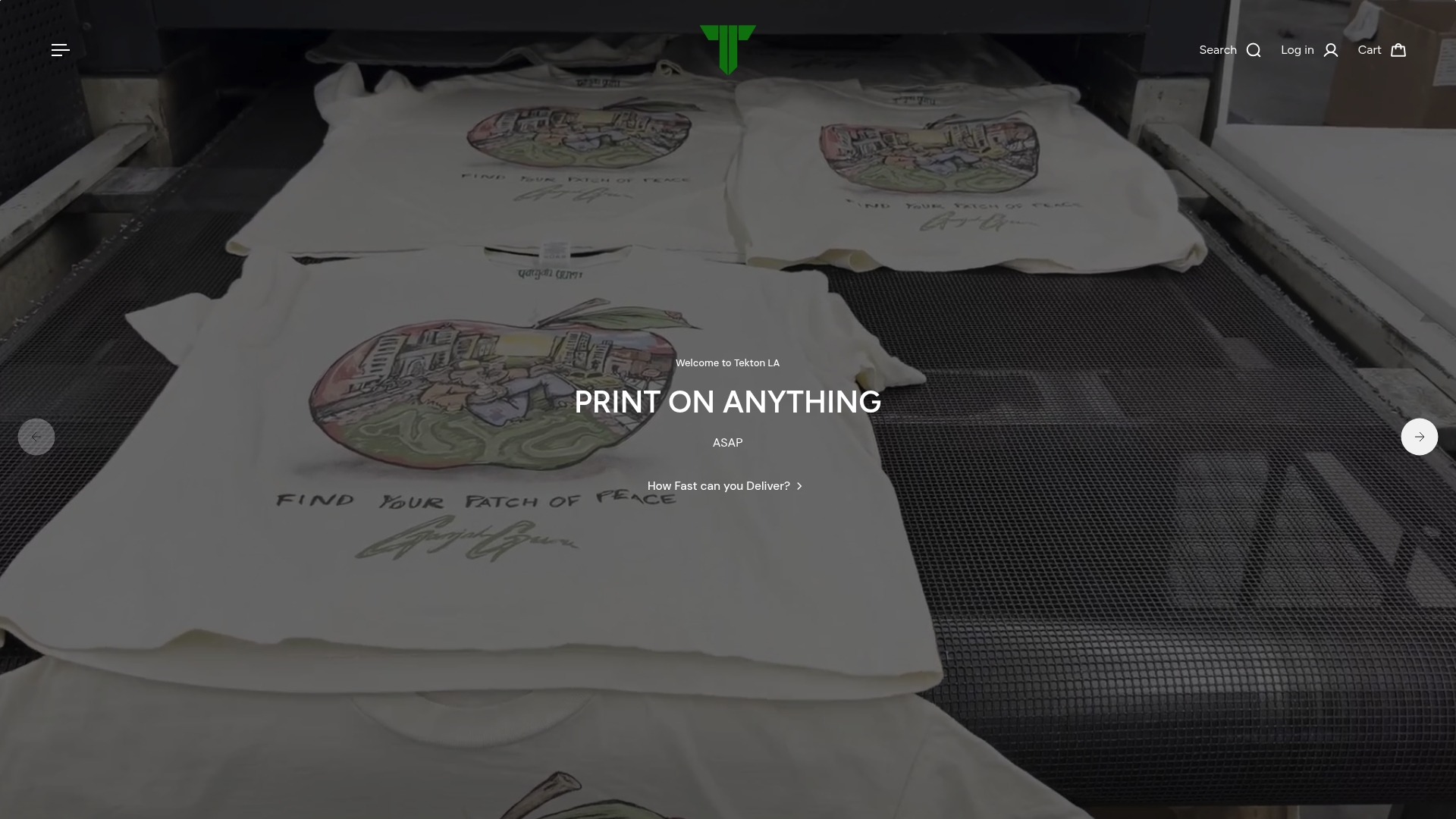
If you are planning your own pieces from scratch, our cut and sew service is the place to start. Prefer to talk through your project? Start at tektonla.com and tell us what you are making, how many you need and when.
FAQ
What does “garment dye” mean?
It means the clothing was dyed after it was cut and sewn, rather than being made from fabric that was dyed beforehand. The finished garment goes into a dyeing machine as a whole. The result is usually a softer, more lived-in look.
Is garment dye better than piece dye?
Neither is better across the board. Garment dye gives a worn-in feel and flexibility on color timing, while piece dye gives more uniform color. Pick based on the look you want and how much variation you can accept.
Do garment-dyed shirts shrink?
Any cotton knit can shrink, and how much depends on how the fabric was knitted, processed and finished, not just the dye method. Garment-dyed pieces have already been through wet processing and tumbling, but you should still ask for post-wash measurements and wash-test a sample.
Can you print on garment-dyed shirts?
Yes. Screen printing, DTG, DTF and embroidery all work on garment-dyed blanks. Because the color and fabric surface differ from a piece-dyed blank, test your artwork on a real sample first, especially for dark colors and heat-sensitive methods.
Why do garment-dyed pieces look slightly different from each other?
Each garment is dyed as a finished object, and the body fabric, thread, ribbing and trims can take dye a little differently. Blended fibers can leave some components lighter. That subtle variation is part of the garment-dyed look.
Sources
- Cotton Incorporated: Garment Dyeing of Cotton Apparel
- Cotton Incorporated: Garment Dyeing With Pigments
- Cotton Incorporated: Proper Processing of 100% Cotton Knit Fabrics
- Cotton Incorporated: Lab-to-Plant Correlation in Jet Dyeing
- Levi’s: What is Garment Dye?