

If you sell clothing in the United States, the label must carry four things: fiber content, the identity of the company behind the garment, the country where it was made, and care instructions. Fiber content, company identity and country of origin come from the Textile Fiber Products Identification Act rules at the FTC. Care instructions come from the FTC’s Care Labeling Rule. Imported garments also face a customs marking rule on top. This guide shows what each rule asks for, where each piece of information goes, who is exempt, and how to check your labels before a shipment leaves.
TL;DR
- Every garment ready for sale needs a label with fiber names and percentages, a company name or FTC Registered Identification Number (RN), and the country of origin.
- Care instructions are a separate requirement under 16 CFR Part 423. Hang tags can fill in only where packaging hides the care label.
- Country of origin on an upper-body garment belongs at the inside center of the neck. Pants and skirts use a conspicuous spot such as the waistband.
- “Made in U.S.A.” is reserved for products made completely in the U.S. of U.S.-made materials. Otherwise, say what is domestic and what is imported.
- Exemptions exist, but they are narrow. Check each one against your exact product before you skip a label.
Table of Contents
- Which rules cover clothing labels in the US
- The three label fields every garment needs
- Care labels: what the FTC requires
- Where each label goes
- “Made in USA” claims
- Who is exempt, and what that really means
- A pre-ship label checklist
- Our perspective
- Get labels made with the order
- FAQ
- Sources
Which rules cover clothing labels in the US
Three sets of rules do most of the work, and they overlap in practice.
- Textile Fiber Products Identification Act (FTC, 16 CFR Part 303). Covers fiber content, company identity and country of origin on the label.
- Care Labeling Rule (FTC, 16 CFR Part 423). Covers regular care instructions for textile wearing apparel.
- Country of origin marking (CBP, 19 U.S.C. 1304). Applies to foreign-origin goods entering the country and sets how the marking must look and where it sits.
Customs also notes that clothing must carry labels showing fabric content and washing instructions in addition to origin marking. Children’s products can add further requirements, which we cover in our guide to CPSIA apparel labels.
No single agency hands you one master checklist. A brand that prints its own designs on blank garments, sews cut-and-sew pieces or imports finished goods will touch all three rules in some way. Knowing which rule answers which question saves time when a retailer or inspector asks.
The three label fields every garment needs
The core of the Textile Act is spelled out in 16 CFR 303.16. The required label information includes:
- The generic fiber names and their percentages by weight, for fibers present at 5 percent or more, listed in order of predominance.
- The name or RN of the manufacturer, or of one or more persons marketing or handling the product.
- The name of the country where the product was processed or manufactured.
All of it must be clearly legible, conspicuous and readily accessible to the prospective purchaser.
Fiber content
Use generic fiber names, not trade names alone, and list them from most to least by weight. A shirt that is 60 percent cotton and 40 percent polyester reads that way, with cotton first. This is the field brands most often get wrong when they switch blanks or blend ratios between production runs, because the label from a previous run stays in the template. Whenever a fabric changes, the fiber line changes with it.
Company name or RN
The label must identify the manufacturer, importer or another firm marketing, distributing or handling the product. You can use the company name or an RN. According to the FTC’s labeling guide, an RN is a number issued and registered by the FTC to a U.S. firm that manufactures, imports, markets, distributes or otherwise handles textile, wool or fur products. RNs are not issued to businesses outside the U.S.
For a young brand, an RN keeps the label compact and avoids printing a full business name and address on a small tag. If your brand name differs from your legal entity name, decide which one you will use and keep it consistent across production runs.
Country of origin
The label must name the country where the garment was processed or manufactured. Under 16 CFR 303.15(b), each textile fiber product with a neck needs a label disclosing country of origin at the inside center of the neck, midway between the shoulder seams, or close to another label at that spot. The origin disclosure always appears on the front side of the label.
For imported goods, customs adds its own requirement: every article of foreign origin must be legibly marked with the English name of its country of origin, unless an exception applies. The CBP page on marking country of origin covers the general rule.
Care labels: what the FTC requires
The Care Labeling Rule requires manufacturers and importers of textile wearing apparel and certain piece goods to provide regular care instructions when the products are sold. Care labels must state the regular care needed and be visible or easily found at the point of sale. If the packaging hides the label, the care information must also appear on the package or a hang tag.
Two practical points follow from that:
- A care label is about the garment you actually ship. If you print on a blank, the care instructions that came with the blank may no longer fit your product. Check them against the finished garment.
- The responsibility sits with the manufacturer or importer. If you are the brand putting your name on the product, assume that is you.
Placement of care information on kids’ garments has its own practical quirks, such as where a tag goes so it does not irritate skin. This overview of care label placement on kids’ clothes shows where each piece of information commonly sits. For the full pre-shipment routine, see our six pre-ship care label checks.
Where each label goes
Placement is not a style choice. It is part of the rule.
| Garment type | Where country of origin goes | Source |
|---|---|---|
| Shirts, blouses, coats, sweaters, dresses | Inside center of the neck, midway between the shoulder seams or in that immediate area | CBP wearing apparel guide |
| Trousers, slacks, jeans and similar | Permanent label in a conspicuous location, such as the inside of the waistband | CBP wearing apparel guide |
For upper-body garments, customs expects a fabric or film label sewn or otherwise permanently affixed at the neck, or a permanent marking there. The Federal Register decision that kept this rule in place states that hang tags and paper labels are not acceptable for upper-body garments. The reasoning given is the long-standing expectation that buyers will look at the neckline for a sewn-in label.
So a hang tag can carry extra brand information, but it cannot be your only origin marking on a tee, hoodie or jacket. For a deeper walk-through of every tag position, see our guide to label placement on apparel.
Tagless and printed labels
Many brands want a soft, tagless neck. A permanent mark at the neck is within what customs describes, as the rule allows a label sewn or affixed or a permanent marking in that area. The rule is about permanence and legibility, not about the label being a woven tag. Whichever method you choose, the information still has to be complete: fiber content, company identity, origin and care. If you want a branded, woven option, our custom woven labels are made to your size and artwork.

“Made in USA” claims
The FTC’s guide draws a firm line. A label may say “Made in U.S.A.” only if the product is made completely in the U.S. of materials made in the U.S. A product made in the U.S. from imported materials must show both the U.S. processing and the imported component, and it can say simply “Made in U.S.A. of imported fabric.”
That distinction matters for local production. A garment cut, sewn and printed in Los Angeles from imported fabric does not become unqualified “Made in U.S.A.” Say what is true: where it was made and where the fabric came from. Our walkthrough on getting Made in USA labeling right covers wording choices for apparel orders.
Who is exempt, and what that really means
Exemptions exist, and they are specific.
Care label exemptions. According to the FTC’s Clothes Captioning guide, shoes, gloves and hats are exempt from care instructions. Handkerchiefs, belts, suspenders, neckties and non-woven garments made for one-time use are excluded. Institutional buyers for commercial use need not receive care information. Hosiery needs no permanent label but must have care instructions on a hang tag, package or other conspicuous place.
Under 16 CFR 423.8, totally reversible apparel without pockets is exempt. So are products that can be cleaned safely under the harshest procedures: machine washing in hot water, machine drying on high, hot ironing, bleaching with all commercially available bleaches and drycleaning with all commercially available solvents.
Fiber content exclusions. 16 CFR 303.45 excludes items such as belts, suspenders, arm bands, permanently knotted neckties, garters, labels themselves, shoe laces, coated fabrics, and non-woven disposable products for one-time use.
Who the Act does not reach. The FTC guide lists common and contract carriers shipping textile products in the ordinary course of business, processors or finishers working under contract to a manufacturer (unless they change the fiber content contrary to the contract), sellers of products made for export only, and advertising agencies or publishers running ads about textile products.
Intermediate-stage goods. The Textile and Wool Act requirements do not apply until products are ready for sale to consumers. Items shipped in an intermediate stage without the required label must come with an invoice disclosing fiber content, country of origin, manufacturer or dealer identity, and the name and address of whoever issues the invoice. That is the same guide, and it is why a blank or a decorated-but-unlabeled garment can move between businesses with paperwork instead of a finished label.
Read exemptions against your exact product. A hat is exempt from care instructions, but that does not make it exempt from the other label fields on products the Textile Act covers.
A pre-ship label checklist
The FTC’s labeling guide and its care labeling guide are the authoritative checklists, and CBP publishes customs-specific guidance. Use them as the backbone of an internal check. Before any production run ships, confirm:
- Fiber names and percentages match the fabric actually used, in order of predominance.
- Company name or RN is correct and current.
- Country of origin is stated, and its wording matches your Made in USA or imported claim.
- Origin placement sits at the inside center of the neck for upper-body garments, or a conspicuous permanent spot such as the waistband for pants.
- Care instructions match the finished garment, not just the blank.
- Legibility and permanence hold up: the label must stay readable and attached for the life of normal use.
- Special products such as kids’ wear or hosiery have been checked against their own rules.
If your blanks arrive with someone else’s label and you are putting your brand on them, see our guide on relabeling shirts legally.
Our perspective
Most label problems we see start at the planning stage, not at the printer. A brand designs the graphic, picks the blank, and only then asks what the neck label should say. We think the label should be decided at the same time as the garment.
Because our production happens in Los Angeles, we can talk through fiber content, origin wording and label placement with you before a run starts, rather than discovering a mismatch when boxes arrive. We offer woven labels, private label and white label options, so a brand can put its own identity on the neck and keep the required information in the right place.
Our approach is to make compliance part of the order: confirm the fabric, confirm the wording, confirm where it sits, then print. We also set no minimums on blanks, so a young brand can test a label layout on a small batch before committing to a full order.
Christian
Get labels made with the order
If you are building a line, the simplest path is to handle labels and decoration with the same partner. At Tekton LA we offer DTG, DTF, screen printing, embroidery and embossing, plus woven labels and private label finishing. Details on the finishing side are on our private labeling and finishing pricing page. Our claim is fast turnaround, no minimums on blanks, and production done in Los Angeles.
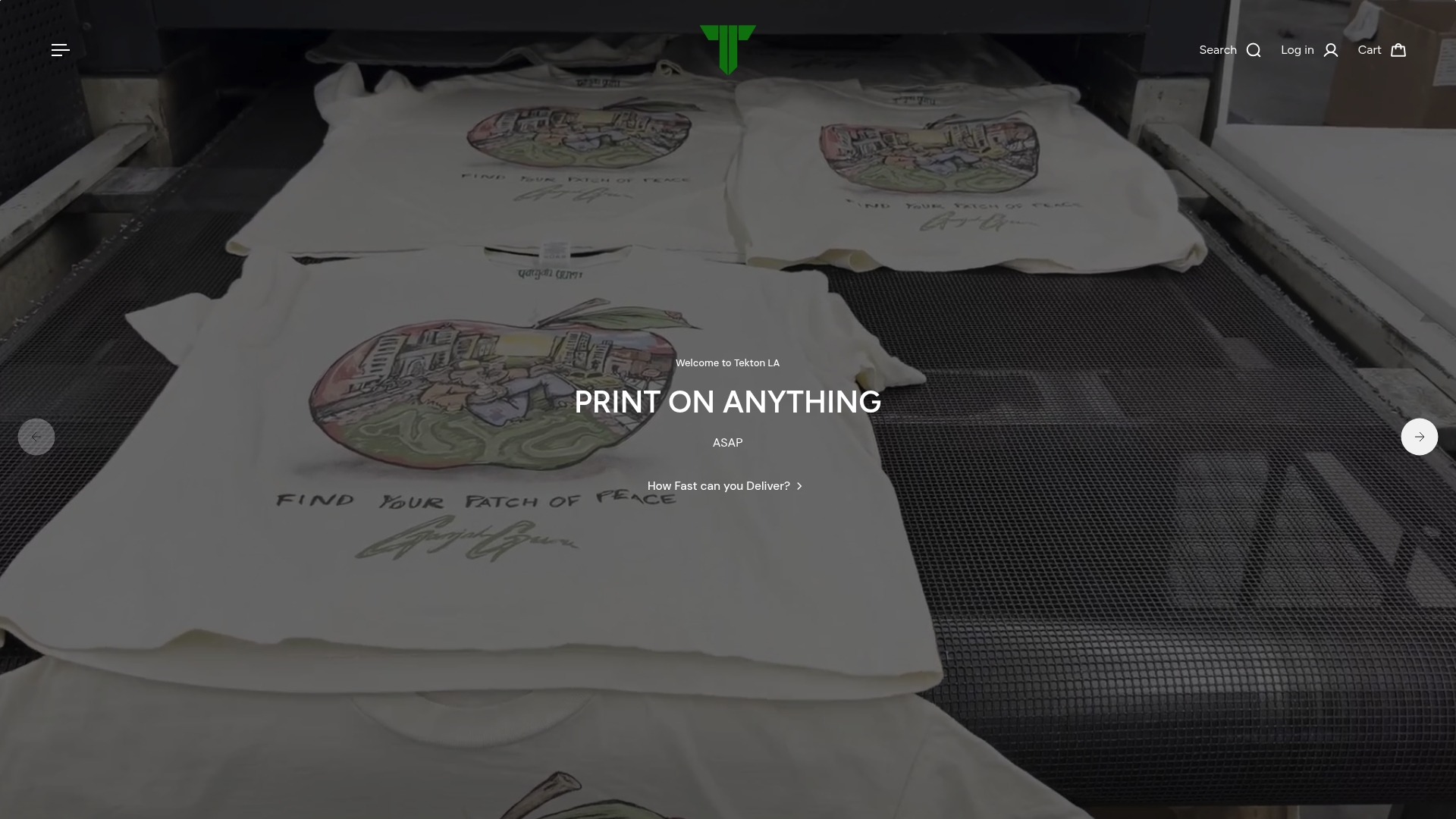
To start a branded run with labels that fit your garment, tell us about your product through our main site. If you want a U.S.-standard blank base, browse the US Standard Apparel collection.
FAQ
Do I need a care label if I only print on blank shirts?
If you are the brand selling the finished garment, the care labeling requirement applies to the product you sell. The FTC rule places the duty on manufacturers and importers of textile wearing apparel. Make sure the care instructions on the label are correct for the garment after decoration.
Can I use an RN instead of my company name?
Yes. The label must identify the manufacturer or another firm marketing or handling the product, and either a company name or an RN satisfies that. An RN is issued by the FTC to U.S. firms only, so a business outside the U.S. cannot get one.
Can a hang tag replace a sewn-in neck label?
Not for country of origin on upper-body garments. Customs does not accept hang tags or paper labels there, and the marking needs to be a sewn or permanent mark at the inside center of the neck. A hang tag is acceptable as extra information, or for care instructions when packaging hides the care label.
When can I say “Made in U.S.A.”?
Only when the product is made completely in the U.S. of materials made in the U.S. If the fabric is imported, the FTC guide says you can say “Made in U.S.A. of imported fabric,” or otherwise show the U.S. processing and the imported component.
Are hats and gloves exempt from labeling?
They are exempt from care instructions under the Care Labeling Rule. That exemption does not remove the other requirements that may apply to your product, so check fiber content and origin rules separately.
Sources
- Marking of Country of Origin on U.S. Imports, CBP
- 16 CFR 303.16, eCFR
- 16 CFR 303.15, eCFR
- 16 CFR Part 423, eCFR
- Threading Your Way Through the Labeling Requirements, FTC
- Marking Requirements for Wearing Apparel, CBP
- Federal Register, April 7, 1997
- Clothes Captioning: Complying with the Care Labeling Rule, FTC
- 16 CFR 423.8, Cornell LII
- 16 CFR 303.45, Cornell LII