


Choosing the wrong garment printing technique can cost your brand more than money. It can cost you credibility. A logo that cracks after three washes, a color that fades before the season ends, or a print that looks stunning on screen but muddy on fabric — these are real outcomes that happen when businesses pick a method without understanding what each technique actually does. This guide breaks down the most important garment printing methods, compares them side by side, and gives you a clear framework for matching the right technique to your specific branding goals.
Table of Contents
- Key factors for choosing a garment printing technique
- Direct-to-garment (DTG) printing
- Heat transfer vinyl (HTV)
- Sublimation printing
- Comparison of major garment printing techniques
- Which technique fits your branding and production needs?
- Why technique flexibility beats any single method
- Bring your brand vision to life with premium garment printing
- Frequently asked questions
Key Takeaways
| Point | Details |
|---|---|
| DTG excels at detail | Direct-to-garment is best for complex or photographic designs and short runs. |
| HTV adds dimension | Heat transfer vinyl stands out for names, numbers, and simple branding with a slight raised feel. |
| Sublimation offers all-over prints | Sublimation shines on synthetic fibers and enables vibrant, full-coverage graphics. |
| Match method to need | Consider fabric, order size, and design complexity before choosing a printing technique. |
| Flexibility is key | Successful apparel brands combine diverse techniques to deliver on branding and performance. |
Key factors for choosing a garment printing technique
Before you commit to any printing method, you need to define what success looks like for your project. The garment printing techniques overview is broad, and the right choice depends on several variables that are specific to your brand and production context.
Here are the core factors to evaluate before you decide:
- Volume and scalability: Are you printing 10 samples or 10,000 units? Some methods have high setup costs that only make sense at scale, while others are cost-effective at low quantities.
- Design complexity: A photorealistic graphic with gradients and hundreds of colors needs a different approach than a two-color logo or a set of jersey numbers.
- Fabric and material type: Cotton, polyester, blends, and specialty fabrics each respond differently to heat, ink, and adhesives. The wrong combination produces poor adhesion, color shift, or fabric damage.
- Budget and turnaround: Some methods require expensive equipment, setup fees, or longer production timelines. Fast-turnaround needs push you toward certain techniques.
- Durability and wash resistance: A promotional tee handed out at an event doesn’t need the same longevity as a retail garment someone will wear and wash for years.
- Perceived quality and branding goals: Texture, finish, and vibrancy all affect how a customer perceives your brand. A raised vinyl logo reads differently than a smooth, full-color DTG print.
Pro Tip: Before requesting a quote, create a simple brief that lists your quantity, garment type, number of colors, and expected wash frequency. This single document will help any print partner give you accurate recommendations and pricing without back-and-forth guesswork.
Promotional tees for a single event can tolerate a more economical method, while a retail fashion line needs a technique that holds up to repeated wear and washing. Knowing your scenario upfront saves time and prevents costly reprints.
Direct-to-garment (DTG) printing
DTG is the method most businesses think of first when they want high-detail, full-color prints without committing to a large run. It works like a standard inkjet printer, but instead of paper, the garment sits flat on a platen and the print head moves across it depositing ink directly into the fabric fibers.
DTG is inkjet-style printing that applies water-based ink directly onto the fabric, often followed by pretreatment and curing with a heat press. The water-based inks give DTG its reputation for soft hand-feel, meaning the print doesn’t sit stiffly on top of the fabric the way some other methods do.
Key advantages of DTG:
- No minimum order: You can print one shirt as easily as one hundred. This makes DTG ideal for sampling, limited drops, and on-demand fulfillment.
- Photographic detail: Gradients, shadows, skin tones, and complex artwork reproduce accurately without color separation or additional setup.
- Fast turnaround for small runs: Once the file is ready, production can begin immediately without screen setup or vinyl cutting.
- Soft finish: Water-based inks absorb into the fabric rather than sitting on top, giving a natural feel that customers prefer for everyday wear.
The limitations are real, though. DTG works best on 100% cotton or high-cotton blends. Polyester and synthetic fabrics don’t absorb water-based inks as well, which leads to faded or washed-out results. For DTG printing in retail apparel, cotton-rich garments are the standard choice for a reason.
“Dark garments typically require pretreatment and a white underbase to prevent color bleed and ensure white ink adhesion.”
This is one of the most common sources of DTG failures. Skipping pretreatment on a black or navy shirt leads to dull colors and poor adhesion. If you’re using DTG with cotton tees in dark colorways, always confirm that your print partner uses proper pretreatment and curing protocols.
Pro Tip: Request a wash test on your first DTG sample before approving a full run. A properly cured DTG print should survive 50+ washes without significant fading. If the sample fades after five washes, the curing process was inadequate.
Heat transfer vinyl (HTV)
HTV is a physical material, not an ink-based process. A vinyl sheet is cut into the desired shape using a digital cutter, the excess material is removed (a process called weeding), and the remaining design is heat-pressed onto the garment. The heat activates an adhesive backing that bonds the vinyl to the fabric.
HTV is typically cut from vinyl and heat-pressed onto garments, producing a raised feel and commonly used for names, numbers, simple text, and small graphic elements. This raised texture is both a feature and a limitation depending on your branding context.
Key advantages of HTV:
- Crisp, clean edges: Because the design is cut rather than printed, lines are sharp and precise. This makes HTV excellent for logos with defined shapes.
- Special material effects: Metallic, holographic, neon, glitter, and matte finishes are all available in vinyl form, giving you branding options that ink-based methods can’t replicate.
- Durability when applied correctly: A properly pressed HTV application on the right fabric resists washing and wear effectively.
- Low equipment cost for small operations: A vinyl cutter and a heat press are relatively affordable compared to DTG or sublimation setups.
The cons are equally important to understand. HTV is not suited for designs with many colors or fine details because each color layer requires a separate cut and press step. Complex designs become labor-intensive and expensive. The raised texture can also feel uncomfortable on large print areas, and poorly applied vinyl will peel or crack, which reflects badly on your brand.
For HTV for branding and labels, the technique works well when you need a premium tactile finish on a limited number of garment pieces, such as custom team uniforms or branded staff apparel with names and numbers.
Pro Tip: Always test your heat press temperature and dwell time on the specific fabric before committing to a full run. A few degrees too hot or too long on a synthetic blend can scorch the fabric or cause the vinyl to bubble.
Sublimation printing
Sublimation is a fundamentally different process from both DTG and HTV. Instead of depositing ink on top of fabric or pressing a material onto it, sublimation converts dye into a gas under heat and pressure, and that gas bonds directly with polyester fibers at a molecular level. The result is a print that is literally part of the fabric, not a layer sitting on top of it.
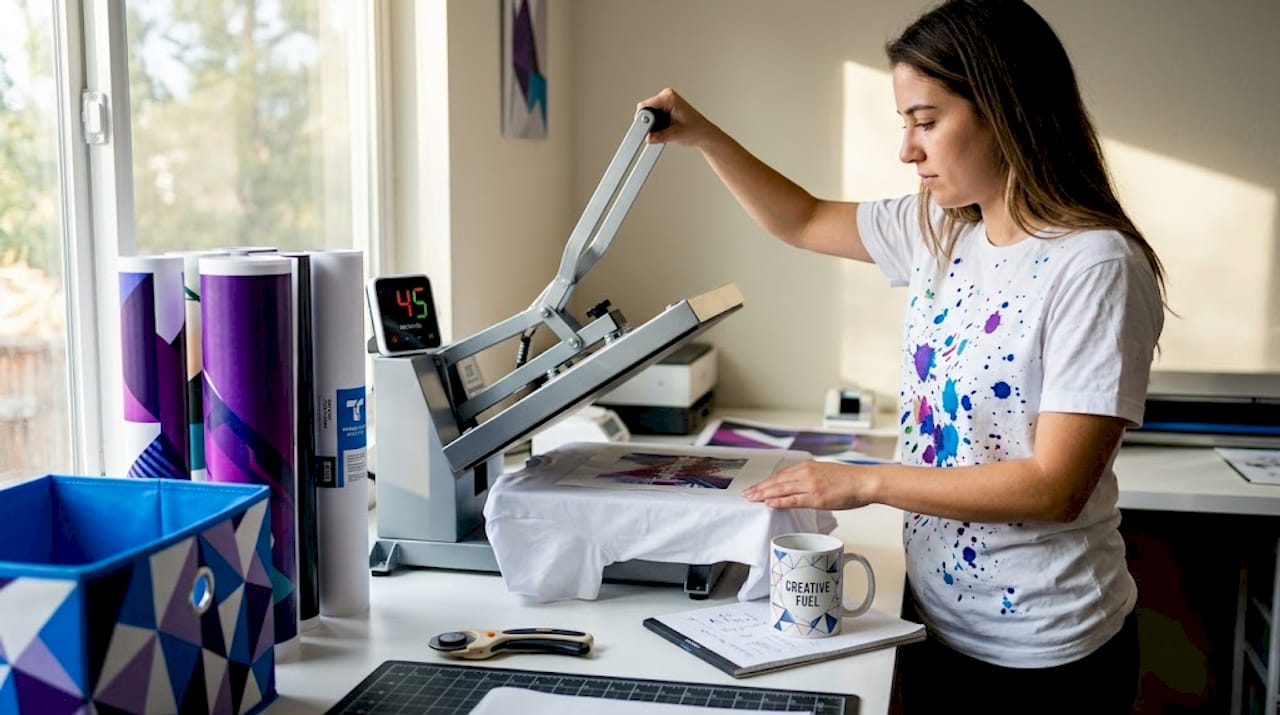
This is why sublimation produces the most vibrant, all-over prints available in the industry. Athletic wear, sportswear, and fashion pieces with edge-to-edge graphics are the signature use cases for this method.
Key advantages of sublimation:
- Unlimited color and detail: Because the dye becomes part of the fiber, there are no color limits or setup fees based on color count.
- All-over printing: Sublimation can cover the entire garment including seams and edges, which no other method handles as seamlessly.
- Exceptional durability: Since the dye bonds with the fiber rather than sitting on top, it doesn’t crack, peel, or fade in the same way surface-based methods can.
- Smooth hand-feel: There is no texture added to the fabric at all. The garment feels exactly as it did before printing.
The critical limitation is substrate compatibility. Sublimation only works on polyester or poly-coated materials. Cotton absorbs the dye differently and won’t produce vivid or lasting results. This is non-negotiable. The best garment printing methods for all-over designs on athletic or performance wear consistently point back to sublimation on the right substrate.
“Correct temperature, pressure, time, and substrate coating matter; otherwise prints may fail via issues like ghosting, low transfer, or uneven bonding.”
Ghosting happens when the transfer paper shifts slightly during pressing, creating a blurry double image. Uneven color occurs when pressure isn’t consistent across the platen. These are process-control issues, not design issues, and they’re entirely preventable with proper equipment and technique.
Pro Tip: If you’re ordering sublimated garments for a sports team or corporate event, always request a test print on the exact fabric you’ll use in production. Color output varies significantly between polyester blends and 100% polyester, even when the design file is identical.
Comparison of major garment printing techniques
| Method | Best for | Compatible materials | Durability | Detail level | Cost range |
|---|---|---|---|---|---|
| DTG | Small runs, photo-quality art | Cotton, high-cotton blends | Good with proper cure | Very high | Low to mid per piece |
| HTV | Names, numbers, simple logos | Cotton, cotton/poly blends | Good if applied correctly | Low to medium | Low to mid per piece |
| Sublimation | All-over prints, athletic wear | Polyester, poly-coated only | Excellent | Very high | Mid to high per piece |
This table is a starting point, not a final answer. Your specific garment, design, and production volume will always shift the calculus. For garment printing for heavy shirts, for example, DTG with proper pretreatment is typically the strongest option for detailed branding.
Which technique fits your branding and production needs?
Use this decision framework when planning your next apparel project:
- Promotional tees for an event (100+ units, simple design, budget-conscious): Screen printing or HTV are typically the most cost-effective options at this volume with simple artwork.
- Limited-edition retail drop (under 50 units, complex artwork, cotton garments): DTG is the clear winner. No setup fees, photographic quality, and fast turnaround.
- Athletic wear or sports team uniforms (all-over design, polyester fabric): Sublimation is the only method that delivers edge-to-edge vibrancy on performance fabrics.
- Custom staff uniforms with names and numbers (small quantities, simple text): HTV gives you clean, durable results without the cost of setting up a full print run.
- Fashion brand with mixed garment styles and artwork types: Plan for a hybrid approach. Use DTG for graphic tees, sublimation for activewear, and HTV for accessories or labels.
The checklist before any order should include: quantity, garment material, number of colors in the design, expected wash frequency, and your per-unit budget ceiling. Run through these five points and the right method usually becomes obvious.
Why technique flexibility beats any single method
Here’s what most technique guides won’t say out loud: the brands that consistently produce great custom apparel are not loyal to one printing method. They’re loyal to the outcome, and they pick the tool that serves the outcome.
We’ve seen businesses lock themselves into DTG-only workflows because they invested in equipment or found a reliable vendor. Then a client comes in needing 500 sublimated jerseys, and they either turn down the work or outsource it awkwardly. That rigidity costs revenue and limits what your brand can offer.
The smartest custom apparel businesses treat printing techniques the way a good contractor treats tools. You don’t use a hammer for every job. You build a network of capabilities, whether in-house or through trusted partners, so that any project that walks through the door can be handled with the right method.
Multi-technique campaigns also produce stronger branding results. A product launch that includes a DTG-printed tee, a sublimated cap, and HTV-branded tote bags creates a cohesive visual identity across different substrates and product types. Each item looks intentional because the technique was chosen to serve that specific product, not because it was the only option available.
Pilots and samples are your best investment before scaling. Run a small test batch using two different methods, wash them the same number of times, and compare the results side by side. The data you get from that test is worth more than any spec sheet. Staying current with adapting print strategies as new materials and techniques emerge is what separates growing brands from stagnant ones.
Bring your brand vision to life with premium garment printing
Knowing the right technique is only half the equation. The other half is working with a print partner who can execute it at the quality your brand deserves.
At Tekton LA, we work across DTG, sublimation, HTV, screen printing, embroidery, and more, so your project gets the right method, not just the available one. Whether you’re building a retail line on a garment-dyed heavyweight shirt, adding finishing details with custom woven labels, or launching a full brand identity across multiple product types, we bring the technical knowledge and production flexibility to make it happen. Explore our full range of custom apparel solutions or reach out to request samples before your next production run.
Frequently asked questions
What is the most durable garment printing technique?
Sublimation is often considered the most durable method for synthetic garments because the dye bonds into the fabric rather than sitting on top, but properly cured DTG and correctly applied HTV both offer strong durability on cotton.
Why do DTG prints sometimes crack or fade?
DTG prints crack or fade when ink isn’t properly cured after printing. Proper curing and pretreatment are essential for ink adhesion, especially on dark garments where a white underbase is required.
What garments are not suitable for sublimation?
Cotton and cotton-blend fabrics won’t yield vivid or lasting sublimation results. The process requires polyester or poly-coated substrates to bond the dye effectively.
Can I use HTV on any type of garment?
HTV works best on cotton and cotton/poly blends. Results vary on synthetics and heat-sensitive fabrics, where improper temperature settings can damage the material or prevent proper adhesion.