


For brands and screenprinters buying blanks to decorate and resell, the practical target is 340–450+ GSM (10–13.5 oz) ring-spun fleece with cross-grain construction. That weight range prints clean, holds up through repeat washes, and reorders consistently batch to batch. Tekton LA supplies no-minimum heavyweight blanks and handles the private-label finishing that turns a plain hoodie into a sellable product.
TL;DR:
- Heavier fabrics over 400 GSM (12 oz) resist distortion and puckering from heavy ink deposits and embroidery, especially with cross-grain constructions.
- Ring-spun cotton and 3-end fleece improve print quality and reduce pilling, with pre-shrunk enzyme washes preserving shape and sizing.
- Drying method affects decoration longevity, with low-heat air drying protecting prints better than high-heat tumble drying.
- Sampling on multiple weight classes before bulk orders helps detect shrinkage, ink cracking, or fit issues that only appear after laundering.
- Sourcing from a single vendor that handles all production steps, like Tekton LA, reduces delays and quality issues in custom heavyweight hoodie orders.
Table of Contents
- What Makes a Hoodie “Heavyweight” for Decorators?
- Fabric Weights, Blends, and Construction: What the Numbers Mean
- Which Decoration Methods Work Best on Heavy Blanks?
- How Should You Plan a Sourcing and Ordering Timeline?
- How Tekton LA Supports Brands Sourcing Heavyweight Blanks
- What Does a Heavyweight Hoodie Actually Cost Wholesale?
- How Does Sizing and Fit Vary Across Heavyweight Hoodie Brands?
- Which Fabric Brands Deliver the Best Quality for Custom Decoration?
- Beyond GSM: What Else Determines Real Comfort and Weight?
- How Should Customers Care for Heavyweight Decorated Hoodies?
- Editor Perspective: When Ultra-Heavyweight Actually Pays Off
- Ready to Source and Decorate Your Heavyweight Blanks?
- Sources
- FAQ
What Makes a Hoodie “Heavyweight” for Decorators?
Weight alone doesn’t tell you if a blank will print well or hold its shape after ten wash cycles. Brands buying at volume need a short list of criteria that separates a fabric built for decoration from one that just feels thick on the rack.
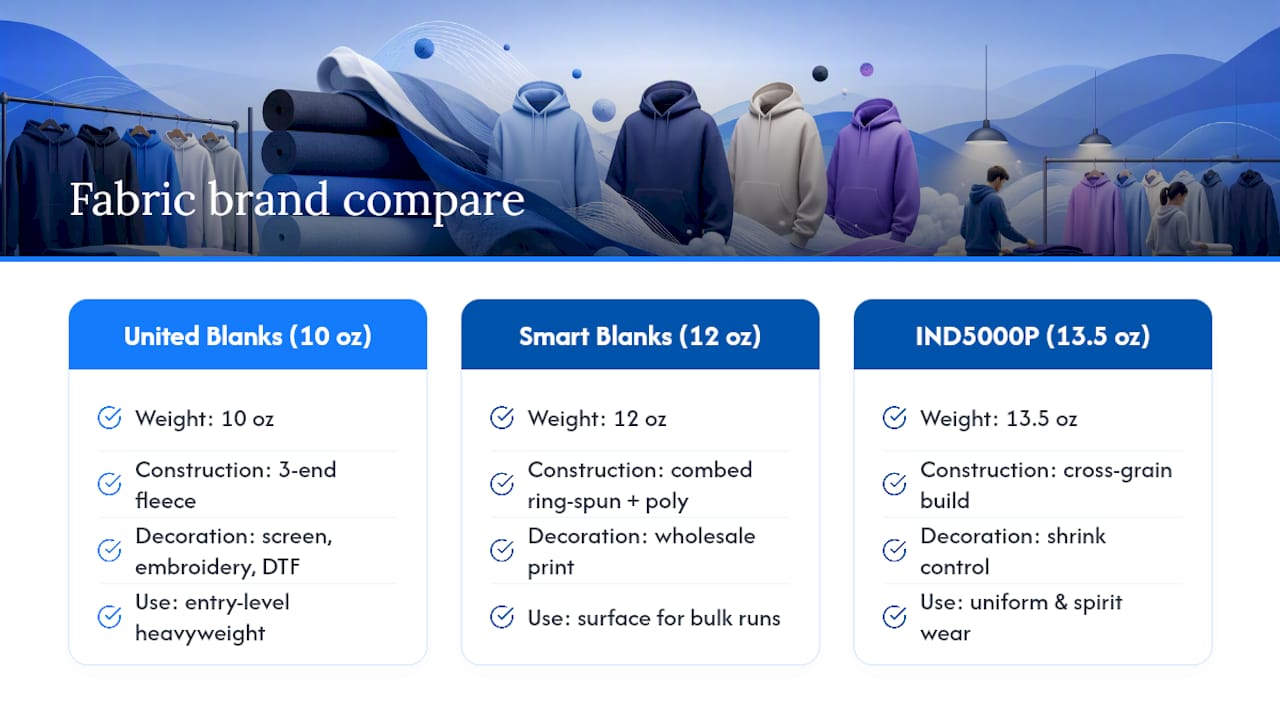
GSM and ounce weight set the baseline, but they’re a starting point, not the whole story. A 10 oz (roughly 340 GSM) fleece like the United Blanks LS19001 sits at the entry point of “heavyweight” and works fine for single-color prints and embroidery. Push to 13.5 oz (about 450 GSM), like the Independent Trading Co. IND5000P, and you get a blank that resists distortion under heavy ink deposits and multi-needle embroidery.
Beyond weight, four things matter most when you’re sampling for a production run:
- Fiber and yarn: ring-spun cotton faces print cleaner than open-end because the yarn surface is smoother and less prone to fuzzing under ink.
- Knit construction: 3-end fleece and cross-grain builds resist the vertical shrinkage that throws off placement on reorders.
- Private-label readiness: check whether the supplier offers tear-away or woven label swaps before you commit to a bulk order.
- Packaging and box counts: ask how blanks arrive (folded, bagged, by size run) since that affects your own receiving and inventory process.
Pro Tip: Order a sample dozen across two weight classes before committing to a bulk run. Print your actual design on both, wash them five times, and compare shrinkage and ink cracking side by side. The difference often shows up only after laundering, not off the rack.
Fabric Weights, Blends, and Construction: What the Numbers Mean
GSM (grams per square meter) is the metric side of the equation; ounces per square yard is the American convention most US suppliers quote. The conversion isn’t exact across brands because loft and density vary, but the rough bands below hold up in practice.
| Weight class | Typical GSM | Typical oz | Best use case |
|---|---|---|---|
| Mid-heavy | 340 GSM | 10 oz | Everyday screen printing, embroidery, DTF |
| Upper-heavy | 400 GSM | 12 oz | Wholesale branding, tighter knit face |
| Premium heavy | 425 GSM | 12 oz | Shape retention with enzyme wash treatment |
| Cross-grain heavy | 450 GSM | 13.5 oz | Uniform programs needing shrink control |
| Ultra-heavy | 500 GSM | 15 oz | Streetwear drops, sculpted oversized fit |
The Smart Blanks 8001 lands at 12 oz / 400 GSM with a 60/40 combed ring-spun cotton and polyester blend, a common middle ground between cotton’s ink absorption and poly’s shrink resistance. Carhartt’s heavyweight fleece runs 55/45 cotton-poly at 13 oz, showing how workwear brands lean on the blend for durability over pure cotton feel.
A few construction and treatment notes worth flagging before you buy:
- Ring-spun yarn at 20 singles gives screen printers a smoother surface for large-area, multi-color prints with less pilling over time.
- Cross-grain construction, as used on the IND5000P, cuts vertical shrinkage that would otherwise misalign a logo after the first wash.
- Garment dyeing and enzyme washing soften hand feel and pre-shrink the fabric, but confirm with your supplier that the wash happens before decoration, not after, or your print adhesion suffers.
Which Decoration Methods Work Best on Heavy Blanks?
Fabric weight changes how every decoration method performs. Match the method to the fabric face before you commit to a production run, not after a botched sample batch.
- Screen printing rewards a tight, cotton-face knit. Heavier ink deposits sit better on 12 to 13.5 oz fleece than on thin knits, and a smooth ring-spun face reduces dot gain on halftones.
- DTG needs a flatter surface. Brushed or loopback fleece can trap ink and dull color saturation, so pre-treatment volume often needs adjusting upward on heavier cotton blends.
- DTF and heat transfer perform best on a stable, low-stretch surface. Cross-grain construction helps here too, since it resists the puckering that shows up around transfer edges on looser knits.
- Embroidery demands fabric stability more than weight. A 400 to 450 GSM fleece holds stitch density well with proper backing, but stitch counts above 8,000 on lighter blanks risk puckering around dense logos.
Pro Tip: If you’re running the same design across DTG and screen print for different order sizes, test both on the exact GSM you plan to stock. A design that looks perfect on a 340 GSM sample can show ink cracking on a 450 GSM cross-grain fabric because the surface texture differs more than the weight difference suggests.
How Should You Plan a Sourcing and Ordering Timeline?
Getting from sample to shelf-ready inventory takes more coordination than most first-time buyers expect. Build your timeline around these steps, not around the supplier’s stated lead time alone.
- Order a small sample run (6 to 12 pieces per colorway) and run your actual decoration process on them before locking a bulk purchase order.
- Ask suppliers directly about minimum order quantities, standard box counts, and which colorways are stocked versus made-to-order, since stocked colors ship faster.
- Budget longer lead times for made-to-order runs, especially with custom colorways or garment dyeing added to the process.
- Inspect arriving inventory for color consistency across the batch, actual weight versus spec sheet claims, and any shrinkage variance before you decorate the full run.
- If you need private labeling, request woven or tear-away labels and specify placement and quantity when you request the quote, not after the blanks arrive.
Suppliers who offer no-minimum blanks give smaller brands room to test a design before scaling to a bulk order, which matters most when you’re trying a new weight class for the first time.
How Tekton LA Supports Brands Sourcing Heavyweight Blanks
Tekton LA operates out of Downtown Los Angeles and covers the full production chain for heavyweight blanks: screen printing, DTG, DTF, embroidery, embossing, and garment dyeing through its Tekton Garment Dye process. Private-label finishing, including woven labels and tear-away tags, runs through the same production floor, so a sample order and a finished retail-ready run come from one source instead of three vendors.
Blanks ship with no minimum order quantity, which means a brand testing a new 450 GSM fleece hoodie style can order a handful for sampling before committing to a full production run. Small-batch reorders follow the same process as first orders, without renegotiating terms each time.
What Does a Heavyweight Hoodie Actually Cost Wholesale?
Wholesale pricing on heavyweight blanks tracks weight and fiber content more than brand name. Entry-level 10 oz fleece from stock suppliers typically prices lowest per unit, while 13.5 oz cross-grain constructions and certified organic cotton blanks command a premium tied to fiber cost and finishing.
Bulk discounts kick in at case-pack quantities rather than individual units. Most wholesale suppliers price by the dozen or by case, with per-unit cost dropping as order volume climbs past a few dozen pieces. A brand ordering a single colorway across multiple sizes typically sees better per-unit pricing than one spreading a small order across many colors, since color changeovers add setup cost on the supplier side.
Custom finishing adds cost on top of the blank price: private labeling, garment dyeing, and multi-color screen printing each carry their own line-item pricing that varies by decoration complexity and run size. Buyers comparing suppliers should ask for an itemized quote that separates blank cost from decoration cost, since bundled pricing can obscure where the real markup sits. Current pricing for Tekton LA’s blanks and decoration services is available directly through the Tekton LA product catalog, since rates depend on quantity, fabric weight, and decoration method selected.
How Does Sizing and Fit Vary Across Heavyweight Hoodie Brands?
Sizing runs inconsistent across heavyweight blank suppliers, which creates real problems for brands trying to maintain a consistent fit across reorders from different sources. A size Large from one supplier’s 10 oz fleece line can measure differently in chest width and body length than a size Large from a different brand’s 13.5 oz cross-grain construction, even when both list the same size on the tag.
Heavier fabrics also behave differently after washing than lighter blanks. A cross-grain construction, like the IND5000P, is built specifically to resist vertical shrinkage, which keeps garment length stable through repeated laundering, a real concern for uniform and spirit-wear programs that need predictable sizing across seasonal reorders.
Oversized and sculpted fits, like the boxy silhouette on Organic Blank’s 500 GSM Sculpter model, intentionally run larger through the body and sleeve than a standard athletic-cut hoodie. Brands building a size chart for their own labels need to measure actual garments rather than relying on a supplier’s stated size, particularly when switching between fabric weights or suppliers mid-season. Requesting a full size run as part of your sample order catches these discrepancies before a bulk purchase order locks you into inconsistent fit across your product line.
Which Fabric Brands Deliver the Best Quality for Custom Decoration?
No single supplier wins across every metric, but the weight class you need narrows the field fast. For a dependable entry point into heavyweight decoration, the United Blanks LS19001 at 10 oz offers a tight-knit 3-end fleece that handles screen printing, embroidery, and DTF without requiring specialized equipment adjustments.
Stepping up to 12 oz, Smart Blanks 8001 blends combed ring-spun cotton with polyester for a surface built specifically for wholesale branding runs. At the premium end, the IND5000P’s 13.5 oz cross-grain build targets uniform and spirit-wear programs where shrink control matters more than raw fabric weight.
Brands prioritizing sustainability credentials over raw weight should look at organic cotton options carrying GOTS or OEKO-TEX certification, which matter more to certain retail buyers than GSM numbers alone. Workwear-oriented brands like Carhartt lean on cotton-polyester blends specifically for triple-stitched seam durability rather than print surface quality, which matters if your resale audience cares more about longevity than decoration crispness. Matching the brand to your actual use case, not just chasing the highest GSM number, produces better results than defaulting to the heaviest option on a spec sheet.
Beyond GSM: What Else Determines Real Comfort and Weight?
GSM measures density, not how a fabric actually feels on the body or performs through a wash cycle. Two hoodies at identical GSM can feel completely different depending on loft, brushing, and yarn twist, and that difference matters more to your customer than the number on a spec sheet.
Enzyme washing and pre-shrinking treatments, common on premium heavyweight knits, soften hand feel without reducing the fabric’s actual density. A 425 GSM French terry that’s been enzyme washed can feel softer against skin than an untreated 400 GSM fleece, even though the untreated fabric weighs less on paper. Brushing the interior face, common on loopback fleece, adds perceived warmth and softness without changing the GSM reading at all.
Drape and stretch recovery matter just as much as raw weight for how a garment wears over a full day. A dense, tightly knit fleece at 340 GSM can feel stiffer and less comfortable than a looser 400 GSM knit with better stretch recovery, depending on the yarn twist and knit gauge used. Buyers evaluating comfort for a resale line should request physical swatches and wear them, not just review a spec sheet, since GSM alone doesn’t predict hand feel, breathability, or how the fabric moves once it’s on a body rather than folded on a shelf.
How Should Customers Care for Heavyweight Decorated Hoodies?
Print and embroidery longevity depends heavily on how the end customer washes a heavyweight hoodie after decoration, and brands should pass along basic care guidance with every order to protect their investment in decoration.
Cold water washing and turning the garment inside out before machine washing protects both the print surface and the fabric face from abrasion against other items in the load. Heat is the bigger threat than water for decorated garments: high-heat drying accelerates plastisol ink cracking on screen prints and can shrink even cross-grain constructions faster than the fabric was engineered to handle. Air drying or low-heat tumble drying preserves both print integrity and garment shape far longer than high-heat cycles.
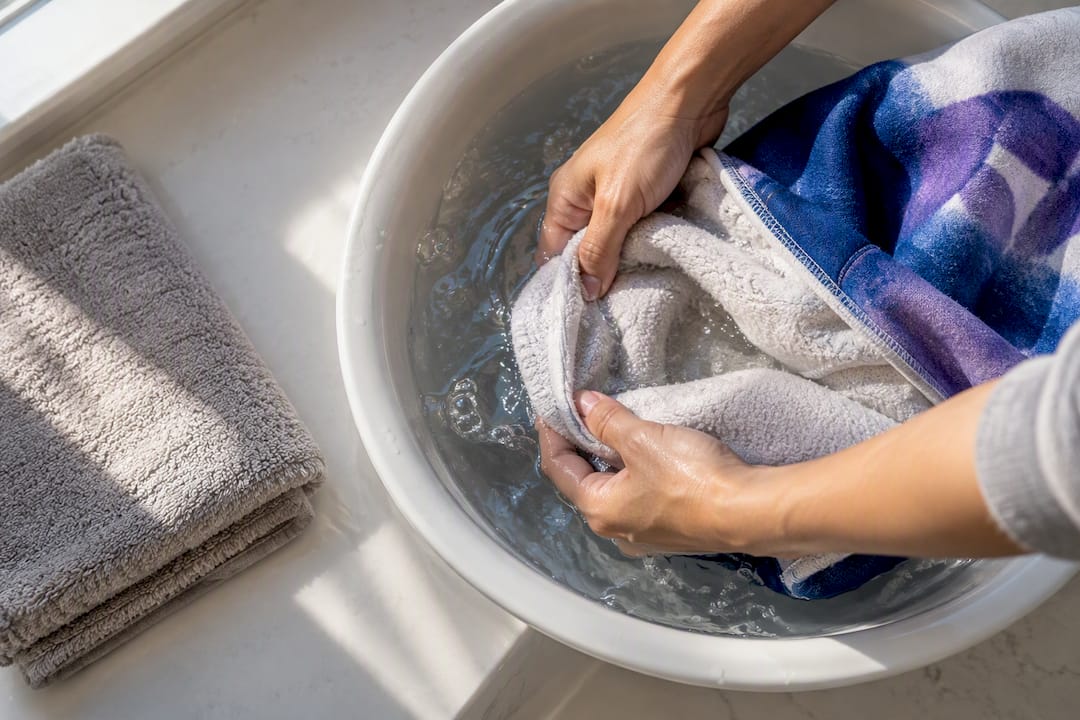
Garment-dyed and enzyme-washed heavyweight fleece, already pre-shrunk during manufacturing, tends to hold its size better through repeat washing than untreated heavyweight cotton, which can still lose some length even at higher GSM if it wasn’t pre-treated. Brands selling ultra-heavy pieces, like the 500 GSM organic cotton class, should flag on the care label that these denser fabrics take longer to dry fully and can hold moisture in the interior fleece longer than a standard 10 oz hoodie, which matters for customers storing garments promptly after washing.
Editor Perspective: When Ultra-Heavyweight Actually Pays Off
Ultra-heavyweight blanks (450 to 500 GSM) work best as a signature piece, not your whole catalog. The margin only justifies the fabric cost when the design and positioning earn a premium price point. Most brands do better running a tiered assortment, a 340 GSM workhorse alongside a limited 450+ GSM drop, and testing the heavier weight in small seasonal runs before scaling it into a permanent line.
— Christian
Ready to Source and Decorate Your Heavyweight Blanks?
Most brands sourcing heavyweight blanks juggle separate vendors for fabric, decoration, and private labeling, which adds shipping time and quality-control gaps between each handoff. Tekton LA runs all three under one roof in Downtown Los Angeles, meaning your sample, your print run, and your woven label swap happen without shipping garments between three different companies.
Start by requesting a sample order through Tekton LA’s product catalog. Before you reach out, have your target GSM range, preferred colorways, estimated quantity per size, and decoration method ready, whether that’s screen printing, embroidery, or DTF. If you need custom woven labels or garment dyeing added to the run, mention it in your initial quote request so pricing and turnaround reflect the full job from the start.
Sources
- Independent Trading Co. IND5000P Legend Premium Heavyweight Cross-Grain Hooded Sweatshirt | Wholesale Bulk Hoodie
- Smart Blanks 8001 ULTRA HEAVY ADULT HOODIE Desert Taupe
FAQ
What Is the Heaviest Hoodie Made?
Ultra-heavy hoodies in the 500 GSM (15 oz) range, like organic cotton sculpted styles, sit near the top of the commercial market. Some niche workwear brands market fabrics claimed at 22+ oz, but those are rare outliers built for extreme durability rather than everyday decoration work.
Where Can I Buy High-Quality Blank Hoodies Wholesale?
Wholesale blank suppliers range from stock fleece brands to specialty mills offering cross-grain or organic constructions. Tekton LA offers no-minimum heavyweight blanks alongside in-house decoration, which removes the need to source fabric and printing from separate vendors.
Who Makes the Best Heavyweight Hoodie for Screen Printing?
The best choice depends on your print complexity and budget. A 10 oz United Blanks fleece handles standard screen printing well, while a 13.5 oz cross-grain construction like the IND5000P suits multi-color designs needing tighter shrink control.
Who Has the Best Blank Hoodies for Custom Branding?
No single brand wins across every use case, since fiber blend, construction, and finishing all shift depending on whether you need print performance, sustainability certification, or workwear durability. Matching the blank’s weight class and construction to your specific decoration method and resale positioning matters more than chasing one “best” brand.
What GSM Should I Choose for a New Hoodie Line?
Start with 340 to 400 GSM (10 to 12 oz) for a versatile everyday line that handles screen printing, DTF, and embroidery without special equipment adjustments. Reserve 450 GSM and above for premium drops where the higher fabric cost supports a higher retail price point.