


Private label products are exclusive, customizable goods made for one brand; white label products are pre-made goods rebranded by multiple sellers. Choose private label when you need brand defensibility and control over specs, and white label when you need speed and low upfront cost. Either way, compliance and supplier due diligence are not optional extras.
TL;DR:
- Private label products require longer development times and higher minimum orders but offer full control over formulation, packaging, and exclusivity.
- White label products ship faster, cost less upfront, and are ideal for testing markets or quick seasonal launches but are available to competitors.
- Both models depend on supplier reliability; verifying lead times, quality processes, and compliance is essential before committing.
- Apparel labeling laws in the US mandate disclosure of fiber content, country of origin, and manufacturer identification, with woven labels being most common.
- Starting with small private label runs can validate demand and streamline scaling to full exclusivity, especially when working with local, full-service production partners.
Table of Contents
- What is private label and how does it work
- What is white label and how does it work
- Private label vs white label across the decisions that matter
- Pros and cons of private label and white label
- How to choose between private label and white label
- Getting labeling and compliance right before you sell
- Why a local production partner matters for private label apparel
- Start your private label run with Tekton LA
- Sources
- FAQ
What is private label and how does it work
Private label means a manufacturer produces a product exclusively for your brand, built to your specifications, and no other retailer sells the identical item. According to Shopify’s explainer, private-label products are exclusive and customizable for a retailer, which is what separates them from off-the-shelf goods. NetSuite’s overview adds that this model typically allows control over formulation, specs and packaging, letting a brand differentiate itself from national competitors.
In apparel, that usually means you choose the fabric blend, fit, trim, and label placement, while the manufacturer handles cutting, sewing, and finishing. You are still relying on someone else’s factory floor, so lead times run longer than off-the-shelf sourcing, and minimum order quantities tend to sit higher because the supplier is tooling up a run just for you.
Private label tends to pay off when:
- You have evidence that customers want a particular product and are ready to defend a market niche.
- You can accept a longer development cycle in exchange for a unique SKU that competitors cannot copy exactly.
- Your margins rely more on brand strength than on offering the lowest price.
A streetwear founder who wants a signature garment dye finish, or a gym owner who wants team hoodies with a woven brand tag instead of a printed tag, are both private label scenarios. The tradeoff is patience and cash up front for exclusivity later.
What is white label and how does it work
White label means a manufacturer makes one standard product and sells it, unbranded, to any retailer who wants to slap on a logo. Shopify describes white-label goods as pre-made and generic, sold to multiple retailers who each rebrand the same underlying item, usually with a faster time-to-market than a custom build.
You can change the label, the hang tag, and the packaging. You generally cannot change the fabric weight, the stitch count, or the construction, because the factory is running the same specification for every customer buying that item. That is the entire point: shared tooling keeps costs low and turnaround fast.
White label works well when:
- You want to test a new category without committing to product development.
- You need to fill out an assortment quickly for a seasonal push or a trend that might not last.
- Your differentiation lives in marketing and community rather than the physical product itself.
A reseller who buys blank tote bags and prints a seasonal graphic, or a gym launching branded water bottles it did not design, is operating in white label territory. It is the fastest route to a rebranded shelf, but the same base product is often available to a direct competitor next week.
Private label vs white label across the decisions that matter
The two models trade off against each other on nearly every axis a founder cares about, and the right call depends on which constraint is tightest for you right now.
- Customization and control: private label wins because you set specs and packaging; white label limits you to cosmetic changes on someone else’s product.
- Exclusivity: private label goods are yours alone; white label goods can sit on a rival’s shelf under a different name.
- Time to market: white label ships faster since the product already exists; private label requires development and sampling cycles.
- Upfront investment and MOQ: white label usually asks for less cash and smaller minimums; private label MOQs and tooling costs run higher.
- Margins: private label typically supports better margins once volume justifies the tooling; white label margins are thinner but arrive sooner.
- Supply risk: both models depend on a single factory relationship, so audits and multi-source planning matter regardless of which route you pick.
Pro Tip: Run a white-label pilot to prove demand before committing private-label capital to the same SKU.
That pilot-then-scale pattern shows up often in industry comparisons of the two models, which note that many brands validate with a smaller white-label run before investing in private-label development and higher minimums. It is a reasonable hedge: you learn what sells before you pay for exclusivity.
Pros and cons of private label and white label
Every sourcing decision is a bet on where your time and cash are best spent, and each model carries a distinct set of risks.
- Private label pros: brand differentiation, better long-term margins, and SKUs a competitor cannot buy off the same shelf.
- Private label cons: higher initial cost, longer development timelines, and dependency on a supplier who now knows your specification.
- White label pros: fast launch, lower research and development spending, and minimal design risk.
- White label cons: direct competition from anyone else stocking the same item, weaker brand defensibility, and less control over quality if the manufacturer changes materials.
Operationally, the two models also behave differently once product is on shelves. Private label goods tend to have lower return rates because packaging and fit were built to your customer, while white label goods sometimes generate more returns when sizing or materials do not match buyer expectations. Inventory turnover matters too: white label lets you restock quickly from a shared production line, while private label restocks are bound to your original supplier’s schedule and minimums.
How to choose between private label and white label
Match the model to the constraint that is actually limiting you, not the one that sounds more impressive.
- Budget: if cash is tight, start white label; move to private label once a SKU has proven repeat sales.
- Timeline: if you need product on shelves in weeks, white label is the realistic option.
- Margins and IP needs: if long-term margin and a defensible product matter more than speed, private label is worth the wait.
- Sales channel fit: wholesale and marketplace listings often tolerate white label; direct-to-consumer brands usually need private label to stand apart.
- Regulatory risk: apparel and textiles carry federal labeling obligations regardless of which model you choose, so build compliance into either path from day one.
Pro Tip: Ask any supplier for three references from brands your size before signing a purchase order, not just their biggest client.
Before committing to either path, run a short supplier checklist: confirm lead times in writing, ask about sample policy and sample lead time, request their quality control process, and ask what contingency plan exists if a shipment fails inspection. The U.S. Department of Commerce recommends checking a supplier’s financial stability, certifications and references rather than relying on a directory listing alone.
Red flags worth walking away from include a factory that will not name its actual production location, vague or evasive answers about compliance testing, and lead time quotes that sound too fast to be real for the order size you are placing.
Getting labeling and compliance right before you sell
Apparel and textile sellers in the United States carry specific legal obligations regardless of whether goods are private label or white label. The FTC’s Textile and Wool Acts guidance requires disclosure of fiber content, country of origin, and the identity of the manufacturer or responsible party on every covered item.

You do not need to print your full business name on every tag. The same FTC guidance confirms that a Registered Identification Number, issued to the business responsible for the product, satisfies the manufacturer identity requirement in place of a full name.
Separately, the Care Labeling Rule requires a permanent care label with washing and drying instructions, and it requires you to have a reasonable evidentiary basis for those instructions before you print them, not a guess.
Practical steps before your first sale:
- Attach fiber content, country of origin, and RN or business identity to every unit, not just the packaging.
- Keep documentation supporting your care instructions on file in case of a compliance review.
- Confirm whether your goods are imported or domestically produced, since that affects your country-of-origin disclosure.
- If you are making a “Made in USA” claim, review what that claim actually requires before printing it on a tag.
Woven labels are the most common way brands satisfy these disclosure requirements while also reinforcing their branding, and they are worth sourcing from a supplier who understands both the design side and the compliance side.
Why a local production partner matters for private label apparel
Private label apparel lives or dies on how fast you can prototype, test, and adjust before committing to a full run. A production partner offering direct-to-garment printing, direct-to-film printing, screen printing, embroidery, and custom woven labels under one roof removes a lot of the back-and-forth that slows down a first launch, since sampling, label production, and finishing do not have to bounce between separate vendors.
A local production partner offering services such as direct-to-garment printing, direct-to-film printing, screen printing, embroidery, and custom woven labels alongside no-minimum blanks can be important for a founder who wants to test a design before committing to a large private-label order. Local, fast-turnaround production can shorten the sampling loop that a pilot run depends on, and eco-friendly practices like locally sourced materials and garment dyeing address a sustainability question more buyers are asking, a point echoed in broader industry discussion of reducing textile waste.
None of this replaces your own due diligence. Whatever partner you choose, verify capacity, review samples in hand before a full production run, and confirm labeling compliance is built into the process rather than added as an afterthought.
Start your private label run with Tekton LA
Some production partners handle key parts of private label apparel that often cause the most delay: sampling, woven labels, and small-batch runs without a large minimum order. That can allow you to test a design at a real quantity, not a factory’s minimum, before scaling.
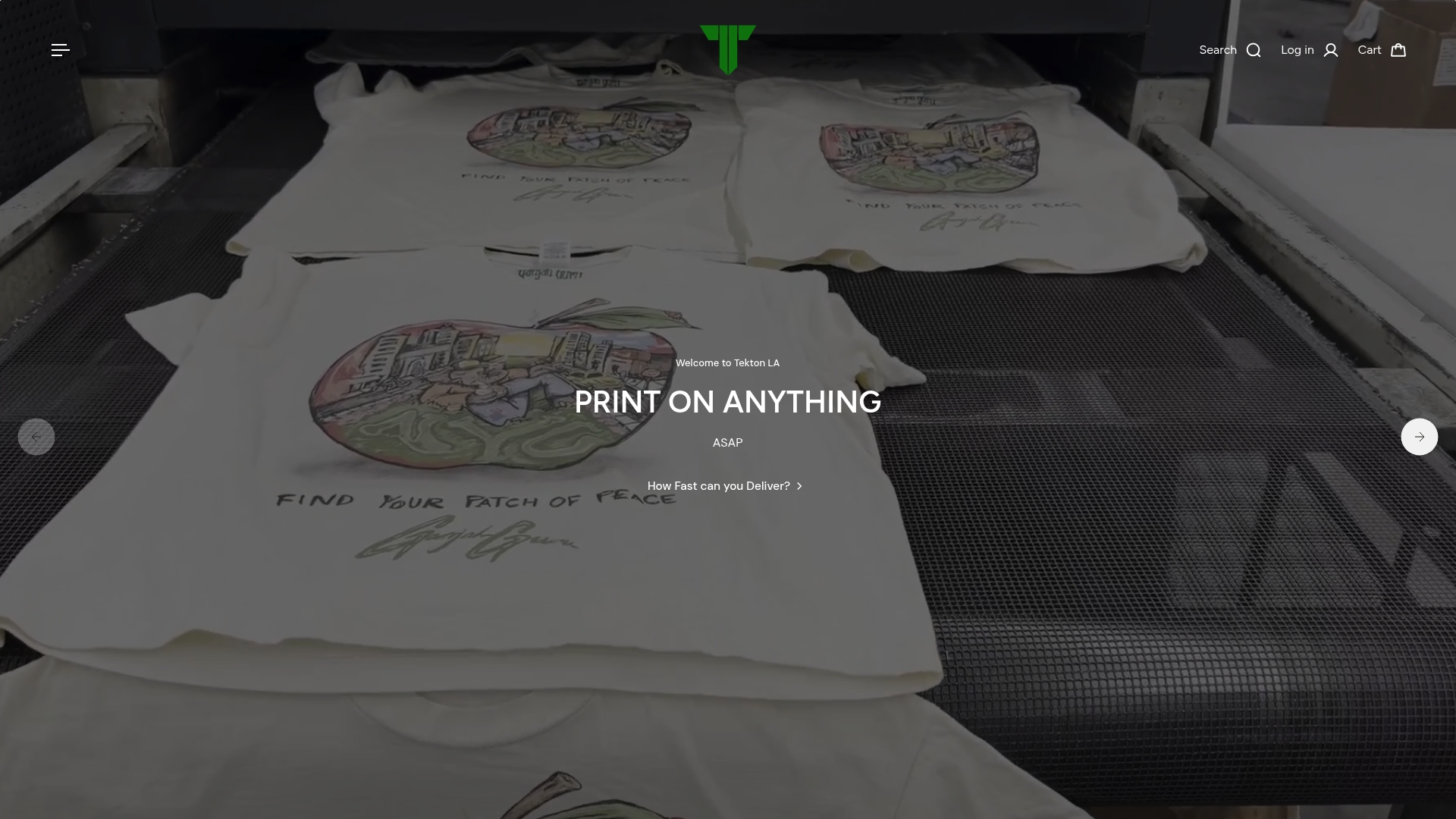
Request a sample, ask about woven label and RN placement, or get pricing for a 50 to 250 unit run to see what a private label launch actually costs before you commit further. Start at Tektonla or look directly at the custom woven labels page if labeling is your immediate need.
Sources
- Threading your way through labeling requirements under the textile and wool acts | FTC
- What Is Private Label? How Private Labels Work (2026) - Shopify
- What Is a Private Label? Private Labeling Explained | NetSuite
FAQ
Is private label the same as white label?
No. Private label products are made exclusively for one brand and can be customized to that brand’s specifications, while white label products are pre-made items sold to multiple retailers who apply their own branding to an identical base product.
Is Trader Joe’s white label or private label?
Trader Joe’s is widely cited as a private label example because its store-brand products are formulated and packaged exclusively for the chain rather than sold as identical goods to competing retailers. This distinguishes it from a white label arrangement, where the same base product would appear under multiple brand names.
Why are private label brands cheaper?
Private label brands often cost less than national brands because they skip the marketing and distribution overhead that established brand names carry, even though the manufacturer may control formulation and specs. The savings come from reduced brand-building costs, not necessarily from cheaper materials or production.
How long does it take to launch a private label product versus a white label product?
White label products can launch quickly since the item already exists and only branding and packaging need to be finalized. Private label products take longer because they require product development, sampling, and supplier tooling before the first unit ships.
What should I check before choosing a private label or white label supplier?
Confirm lead times, minimum order quantities, sample policy, and quality control process in writing before placing an order. The Department of Commerce recommends verifying a supplier’s certifications, financial stability, and references rather than relying on directory listings alone.
— Christian