


Ring-spun cotton delivers a softer, finer hand and higher strength at a higher price, while open-end (rotor) cotton delivers faster production and lower cost with a bulkier, less refined feel. Choose ring-spun for premium tees, fitted basics, and anything close to skin; choose open-end for heavyweight workwear, towels, and budget-driven runs where cost per piece matters more than hand feel. The sections below walk through the spinning processes, lab-backed performance data, and printing implications behind that call.
TL;DR:
- Testing found rotor spun knits can offer better air permeability and wicking, while ring spun fabrics had higher bursting strength and retained softness after laundering.
- Use combed ring spun fabric for detailed DTG or DTF artwork; heavier rotor spun blanks suit bold screen prints, towels, and abrasion resistant workwear.
- Open end spinning uses up to 57% less energy in some facilities and accepts more recycled fiber, although results vary by production site.
- Request a washed and dried preproduction sample to check shrinkage and surface feel, since finishing and laundering can narrow softness differences.
Table of Contents
- Ringspun vs Open End at a Glance
- How Each Yarn Is Made: Ring Spinning vs Open-End Spinning
- Softness, Strength, and Breathability: What the Lab Data Shows
- Cost, Production Scale, and Sustainability Tradeoffs
- Matching Yarn Type to Garment and Print Method
- Care, Shrinkage, and Keeping That Softness Over Time
- Our Approach to Fabric and Print Selection
- The Simplest Rule of Thumb for Choosing Between Them
- Get Your Fabric Choice Right Before You Print
- FAQ
- Sources
Ringspun vs Open End at a Glance
Before getting into how each yarn is made, it helps to see the attributes side by side. Ring-spun and open-end (OE) cotton start from the same raw fiber but diverge sharply once they hit the spinning frame, and that divergence shows up in everything from drape to print clarity.
- Hand and softness: ring-spun feels smoother and drapes better; OE feels bulkier and coarser.
- Hairiness: OE yarn has fewer protruding fibers thanks to wrapper fibers that wind around the core, giving a cleaner surface in some respects.
- Evenness: OE yarn is often more uniform along its length, with fewer thick-thin spots.
- Strength: ring-spun generally tests stronger in bursting strength; peer-reviewed knit fabric testing found ring-spun structures outperforming rotor-spun equivalents on this measure.
- Production speed and cost: OE wins decisively on throughput, which keeps blank prices lower.
Open-end spinning can run several times faster than ring spinning on comparable equipment, according to CottonWorks’ denim construction guide, because it skips the roving and winding steps that ring spinning requires. Ring-spun yarn typically carries a Z-twist and can be engineered with varying twist multiples for different hand feels; OE yarn relies on wrapper fibers wound around a straighter core, which changes how light reflects off the fabric and how ink sits on the surface. For a buyer, the practical takeaway is simple: softness and print brightness favor ring-spun, while unit cost and consistent supply favor open-end.
How Each Yarn Is Made: Ring Spinning vs Open-End Spinning
The feel of a finished T-shirt traces back to a handful of mechanical choices made long before the fabric is cut.
Ring spinning starts with carded (and often combed) fiber formed into a loose rope called sliver, which is drawn down into roving. The roving feeds onto a ring frame, where a traveler circles the ring at high speed, twisting the fiber into yarn while winding it onto a bobbin. This extra step, drawing roving down before the final twist, is what aligns fibers so tightly and produces the smooth, strong strand associated with ring-spun cotton.
Open-end spinning skips roving entirely. Carded or combed sliver feeds directly into a spinning rotor, where fibers separate and collect against the rotor wall before being twisted into yarn as they’re pulled through a navel at the center. The shape of that navel, along with rotor speed and groove design, determines how many “wrapper fibers” wind around the yarn’s core, and wrapper fibers are the main reason OE yarn looks and feels different from ring-spun.
- Ring spinning: carding, (optional combing), roving, ring frame twisting.
- Open-end spinning: carding, (optional combing), direct rotor feed, navel twisting.
Mills can tune OE navels and rotor grooves to mimic some ring-spun characteristics, including softer finishes and deliberate slub effects, though Cotton Incorporated’s testing on combed rotor yarns notes OE still tops out around 40/1 Ne, limiting how fine a count it can reliably produce. Rotor machines routinely spin yarn several times faster than ring frames, a gap that explains most of the price difference between the two yarn types, per CottonWorks.
Softness, Strength, and Breathability: What the Lab Data Shows
Fiber alignment is the mechanical reason ring-spun feels the way it does. Because roving compresses and straightens fibers before final twisting, the strands lie parallel along the yarn’s length, which reads as smoothness against skin and allows fabric to drape rather than stand stiff. Combing, often paired with ring spinning for premium goods, removes shorter fibers and amplifies this effect further.
Open-end yarn earns its keep elsewhere. Experimental testing on weft-knitted fabrics found rotor-spun structures showing higher air permeability and better wicking than ring-spun counterparts in several constructions, which makes OE a reasonable pick for fabrics where airflow matters more than hand feel. The same research recorded higher bursting strength for ring-spun fabrics, along with better retained softness after repeated laundering, a detail that matters for any brand promising a tee that still feels good after twenty washes.
- Ring-spun advantages: softer hand, higher bursting strength, better retained feel after washing.
- OE advantages: higher air permeability, often better wicking, fewer protruding fibers on the surface.
- Practical measures to compare on a swatch: hairiness, drape when held up, feel before and after a cold wash.
Pro Tip: Request a fabric swatch and wash it once before judging softness: ring-spun and OE can feel closer off the roll than they do after laundering.
Cost, Production Scale, and Sustainability Tradeoffs
Cost differences between the two yarns come down almost entirely to process steps and machine speed. OE spinning removes roving and winding from the production line and runs at multiples of ring-spinning speed, which keeps labor and machine time per kilogram low. Ring-spun yarn requires more processing stages and runs slower, and when combing is added for premium counts, cost climbs further.
- Fewer steps and faster rotors make OE cotton the lower-cost option at scale.
- Combing and lower throughput are the main cost drivers behind ring-spun pricing.
- OE spinning also tends to accept higher recycled-fiber content without a major quality penalty.
Textile World’s analysis of sustainable denim production reports energy reductions as high as 57% for open-end spinning compared with ring spinning in some facilities, alongside less fiber waste overall. That combination, lower energy use plus better compatibility with recycled fiber, makes OE a practical choice for large, cost-sensitive product lines or for brands building a recycled-content line. For a small brand, the rule of thumb is this: if the garment will be heavyweight, loose-fit, or marketed on price, the OE savings usually outweigh the softer hand of ring-spun.
Matching Yarn Type to Garment and Print Method
Picking the right yarn depends on what the garment is for and how it will be printed.
- Premium T-shirts and fashion basics: combed ring-spun cotton gives the smooth, tight surface that DTG and DTF printing need for bright, crisp ink coverage.
- Denim: many mills run ring-spun yarn in the warp and OE in the fill, which keeps the visible outer face looking premium while controlling cost on the hidden fill yarn.
- Towels and workwear: OE’s bulk and abrasion resistance suit heavy-use goods where softness matters less than durability and price per unit.
- Screen printing on heavier fabrics: OE’s coarser surface holds thicker ink deposits well, making it a sound match for bold, simple graphics on workwear-weight blanks.
Fabric weight should follow the same logic as yarn choice: lighter, finer ring-spun fabric supports detailed, photo-realistic prints, while heavier OE fabric supports bold graphics and higher wash counts in rugged settings.
Care, Shrinkage, and Keeping That Softness Over Time
How a garment is washed matters almost as much as how it was spun. Cold water, a mild detergent, and either a low tumble or a hang-dry cycle preserve fiber alignment and reduce the pilling that shows up fastest on loosely twisted yarns. Enzyme washes and garment dyeing, both finishing techniques, soften the hand further and can narrow the gap between ring-spun and OE fabrics, though the underlying yarn structure still shows through after enough wash cycles.
- Wash cold, use a mild detergent, and skip high heat in the dryer when possible.
- Enzyme washing and garment dyeing both soften hand feel regardless of spinning method.
- Request a pre-production wash sample before committing to a full run, so shrinkage and feel are confirmed ahead of time.
Pro Tip: Ask for a washed and dried sample, not just a fresh-off-the-roll swatch. Shrinkage and surface change after one wash tell you more than the fabric does straight out of the box.
Our Approach to Fabric and Print Selection
We steer brand owners toward combed ring-spun blanks when the goal is a premium tee meant to sit close to skin and hold detailed artwork, and toward open-end or hybrid constructions when the priority is cost control on heavier pieces like fleece or workwear. We pair ring-spun fabrics with DTG and DTF for bright, detailed prints, and reserve screen printing for heavier OE-leaning fabrics where bold graphics and thicker ink deposits make sense. We produce without minimum order quantities, so brand owners can request swatches or a single sample shirt before committing to a production run and private labeling.

The Simplest Rule of Thumb for Choosing Between Them
If a garment touches skin and sells on feel, go ring-spun. If it sells on durability or price per unit, open-end earns its keep. Order a sample before committing either way, because fabric photos never tell the full story.
— Christian
Get Your Fabric Choice Right Before You Print
We produce both combed ring-spun and open-end leaning blanks with no minimum order quantities, so you can match fabric to your product line without overbuying.
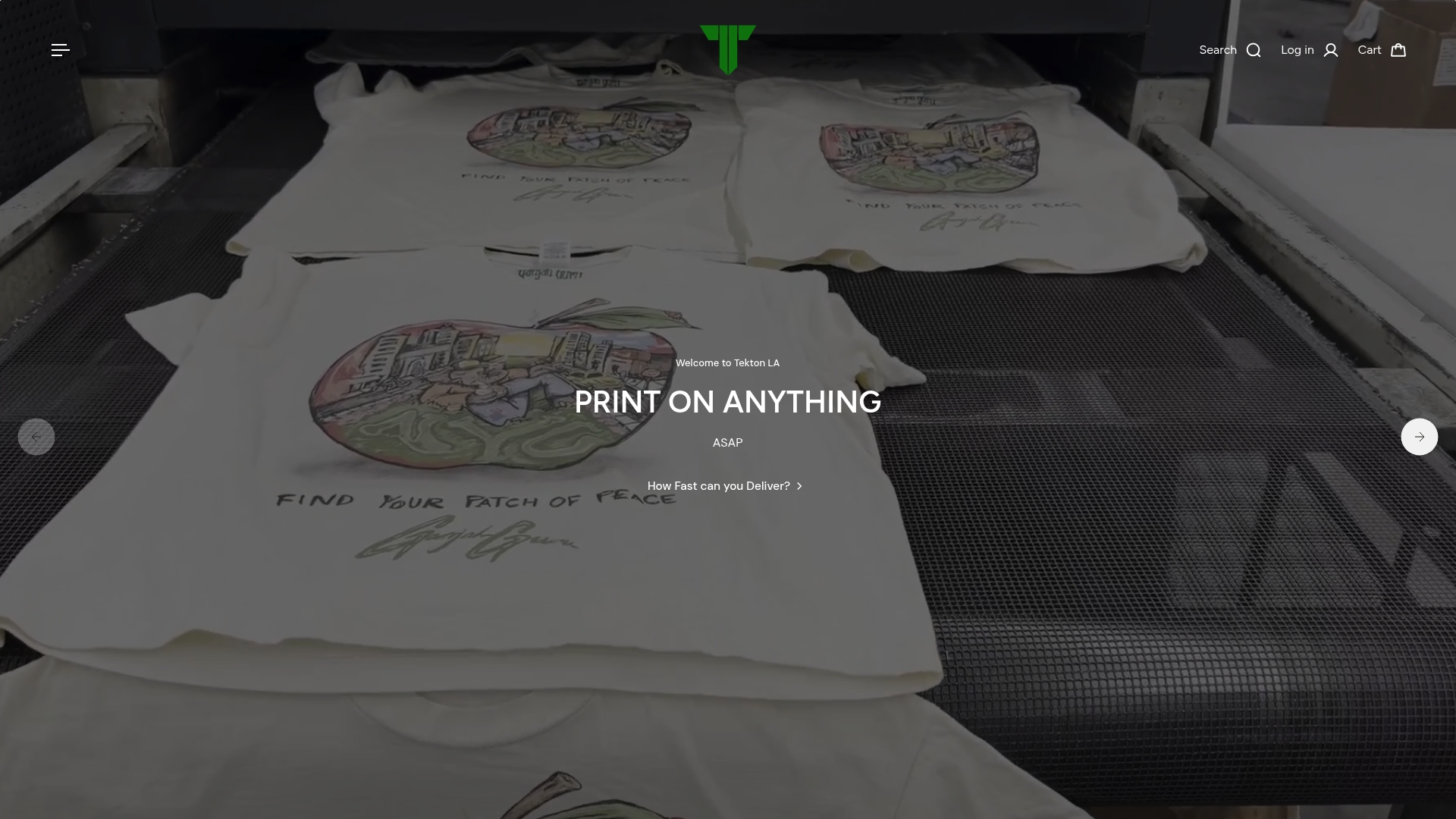
- Request a swatch or a single sample shirt before committing to a production run.
- Pair your combed ring-spun tee with DTG or DTF for crisp, detailed artwork.
- Explore private-label finishing options once your fabric and print method are confirmed.
Start by browsing our printing and blank production services or review private labeling and finishing pricing to plan your next run.
FAQ
Is 100% ringspun cotton the same as 100% cotton?
Not exactly.
Is ringspun cotton better?
Ring-spun cotton tends to feel softer, drape better, and test stronger in bursting strength than open-end cotton, according to peer-reviewed fabric testing. It is not universally better, though, since open-end cotton often shows better air permeability and costs less to produce at scale.
What is open-ended cotton?
Open-end cotton, also called rotor-spun cotton, is yarn spun by feeding fiber directly into a spinning rotor rather than drawing it into roving first. This skips a processing step compared with ring spinning, which is why open-end spinning runs considerably faster and typically costs less per unit.
Will 100% ringspun cotton shrink?
Ringspun cotton can shrink like any untreated cotton fabric, with the amount depending on fabric construction and finishing rather than the spinning method itself. Washing in cold water and avoiding high heat in the dryer helps minimize shrinkage and preserve the fabric’s softer hand.
Sources
- Denim construction | CottonWorks™
- Production and evaluation of combed rotor spun yarns and fabrics (Cotton Incorporated technical bulletin)
- Experimental analysis on the effect of ring and rotor spun yarns for comfort characteristics of weft knitted fabric structures (Textile Research Journal)
- Sustainable denim production using open-end versus ring-spun yarn (Textile World)