


Pick reactive dye for cotton, rayon, or lyocell garments that need to survive 40 or more washes without losing softness or color. Pick pigment dye when you need light artwork on dark shirts, a fast turnaround, or a lower price on a large seasonal run. The choice hinges on wash count, fiber type, budget, and how much you care about hand feel versus opacity.
TL;DR:
- Reactive dye offers superior durability and softness, typically lasting over 40 washes, but requires steaming and a wash-off process suitable only for cotton, rayon, and lyocell.
- Pigment dye is faster and cheaper to produce, with a shorter lifespan of about 20 to 30 washes, and is ideal for dark fabrics requiring opacity without extensive finishing steps.
- The main difference lies in chemistry: reactive dye forms a covalent bond with fibers, while pigment sits on the surface held by a binder, affecting hand feel and wash fastness.
- Producers should consider fiber type, wash longevity, opacity needs, time constraints, and environmental impact when choosing between the two methods.
- Testing small batches on actual fabric before full production helps determine which dye type best fits the garment’s intended use and desired quality.
Table of Contents
- Pigment Dye vs. Reactive Dye: What Actually Separates Them
- How Reactive Dye Works and Why It Feels Different
- How Pigment Dye and Printing Actually Work
- Pigment Dye vs. Reactive Dye: The Full Comparison
- How to Choose Between Pigment and Reactive Dye
- What Tektonla Brings to a Pigment or Reactive Dye Decision
- Christian’s Take on Reactive vs. Pigment
- Get a Sample Before You Commit to a Dye Method
- Sources
- FAQ
Pigment Dye vs. Reactive Dye: What Actually Separates Them
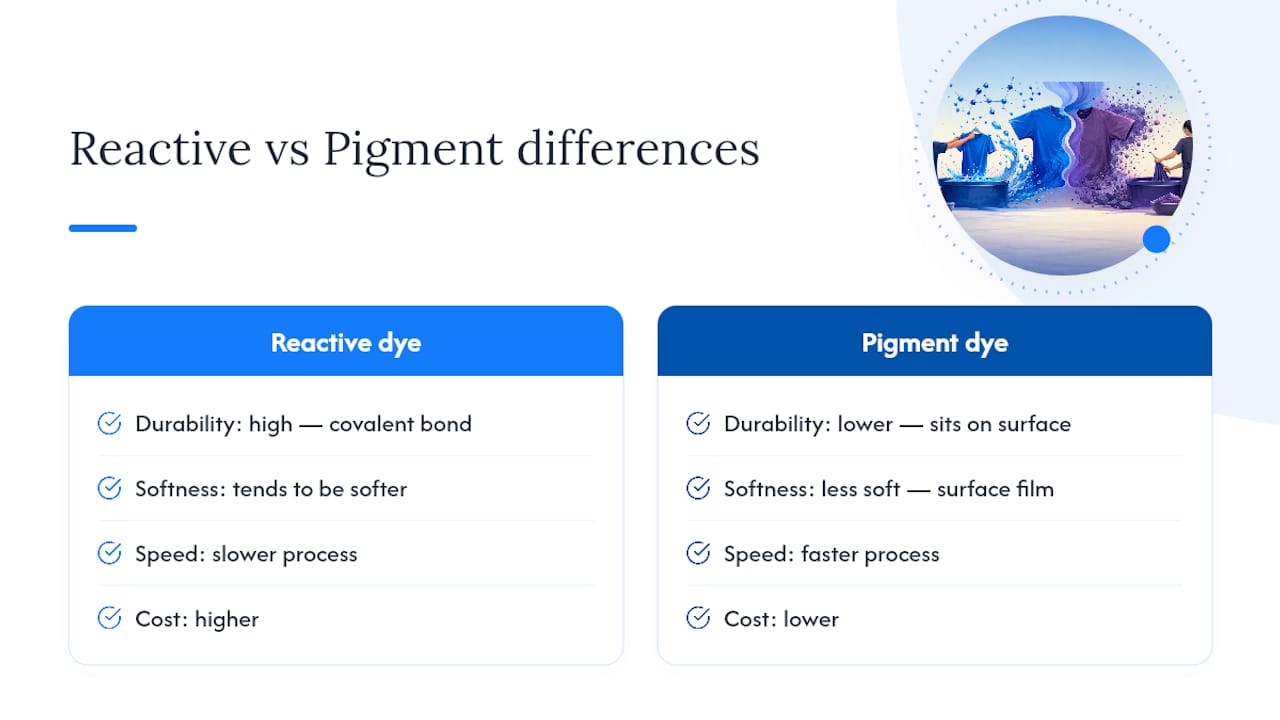
The real difference isn’t color, it’s chemistry. Reactive dye molecules react with the cellulose in the fiber itself and form a covalent bond, so the color becomes part of the fabric. Pigment color sits on top, held in place by a binder that acts like a thin adhesive film. That single distinction explains almost every practical difference you’ll run into: hand feel, wash life, cost, and even how the fabric behaves at the end of its life.
Reactive dyeing tends to win on durability and softness because there’s nothing sitting on the surface to crack or peel. Pigment dyeing tends to win on speed, cost, and its ability to put light colors on dark backgrounds without requiring a white underbase. Neither one is the universal answer, which is exactly why so many brands end up briefing printers with the wrong vocabulary and getting a result they didn’t expect.
How Reactive Dye Works and Why It Feels Different
Reactive dye forms a genuine chemical bond with cellulosic fibers like cotton, rayon, and lyocell. The process needs steaming at roughly 102 to 104 degrees Celsius followed by a wash-off stage that removes unfixed dye, salt, and alkali left over from the reaction. That wash-off step is why reactive-dyed fabric keeps its original drape instead of feeling coated.
A typical reactive process runs through a few distinct stages:
- Pre-treatment: the fabric is prepped so the dye can penetrate evenly.
- Dyeing or printing: reactive dye is applied and begins bonding with the cellulose.
- Steaming or fixation: heat and moisture drive the chemical reaction to completion.
- Wash-off: excess chemicals and unfixed dye are rinsed away, leaving only bonded color.
The payoff is a soft hand, deep and even color saturation, and wash performance that holds up over years of laundering. The catch is fiber compatibility. Reactive dye works on cellulosic fibers, not on polyester or most synthetic blends, so it’s the wrong call for performance wear or poly-heavy athletic gear.
How Pigment Dye and Printing Actually Work
Pigment systems use insoluble color particles suspended in a binder, then cured with heat, usually between 150 and 170 degrees Celsius. There’s no steaming stage and no wash-off step at the printing point, which is the single biggest reason pigment jobs move faster and use less water.
Key mechanics worth knowing:
- No chemical bond: color sits on the fiber surface, held by the cured binder film.
- Opacity on demand: pigment can print light or white ink directly on black or navy fabric without a separate underbase layer.
- Fewer production steps: skipping steaming and wash-off shortens lead time and cuts labor cost.
- Cure-dependent quality: undercured pigment prints can crock or transfer color onto other fabric, so oven temperature and dwell time matter.
The trade-off is texture. A heavy binder layer can feel stiff or slightly plasticky unless the printer specifies a soft binder formulation and finishes with a silicone softener. Colors also read a touch more matte than the jewel tones reactive dye produces, though that’s rarely noticeable to anyone who isn’t standing next to both fabrics under the same light.
Pigment Dye vs. Reactive Dye: The Full Comparison
Here’s where the decision gets concrete. Run your project against these seven factors and the right method usually becomes obvious.
- Bonding mechanism. Reactive dye chemically bonds to cellulose fiber. Pigment dye relies on a surface binder film. This is the root cause of every other difference on this list.
- Hand feel. Reactive-dyed fabric keeps its original softness because nothing sits on top of the fiber. Pigment can feel stiffer, though soft binder formulations plus a post-cure softener close most of that gap at a modest added cost.
- Wash and rub fastness. A peer-reviewed comparison of cotton fabrics found reactive dyeing gave better rubbing fastness and tear strength, while tensile strength and general wash fastness came out roughly comparable between the two systems.
- Color vibrancy and opacity. Reactive dye produces deep, saturated color that reads almost translucent in the fiber. Pigment’s advantage is opacity: it can lay light or white ink directly on black fabric with no underbase, which reactive dye simply cannot do.
- Cost and lead time. Skipping the steaming and wash-off stages makes pigment printing meaningfully cheaper and faster to turn around. Mill data suggests reactive dyeing runs 20 to 35 percent more expensive than pigment printing, largely due to water, energy, and the extra finishing steps.
Statistic Callout: Industry mill comparisons show reactive-dyed prints commonly holding color past 40 to 50 wash cycles, while pigment prints often show visible fading by the 20 to 30 wash mark. If your product needs to survive more than 30 trips through the laundry, that gap should drive the decision by itself.
- Environmental footprint. Pigment printing uses far less water at the printing stage, since there’s no steaming or rinse cycle to fix the color. But binder residues left behind by pigment systems can complicate mechanical recycling, leaving a polymer film on the fiber that reactive dye, being chemically bonded, doesn’t produce.
- Best fabric and product matches. Reactive suits premium apparel, export-quality basics, and anything in rayon or lyocell where mills default to it unless cost pushes them toward pigment. Pigment fits promotional merchandise, seasonal or one-off runs, and dark-garment prints where opacity and turnaround matter more than a five-year wash life.
How to Choose Between Pigment and Reactive Dye
Work through this in order and you’ll land on the right method almost every time:
- Check fiber first. Cotton, rayon, and lyocell can take reactive dye. Poly blends and most synthetics can’t, so pigment or a print method built for synthetics becomes the default.
- Estimate wash count. Anything expected to survive more than 30 washes leans reactive. Seasonal or promotional items rarely need that.
- Weigh opacity needs. Printing light colors on dark fabric without an underbase points straight to pigment.
- Set the budget and deadline. Tighter budgets and faster deadlines favor pigment’s shorter production path.
- Factor in sustainability priorities. If end-of-life recycling matters to your brand, reactive’s lack of binder residue is worth the added water use upfront.
When you brief a printer, ask specific questions instead of just naming a dye type: what wash-fastness grade do they guarantee, what’s the wet and dry rub rating, what binder chemistry are they using, what’s the cure temperature and dwell time, and do they run a sample wash protocol before full production.
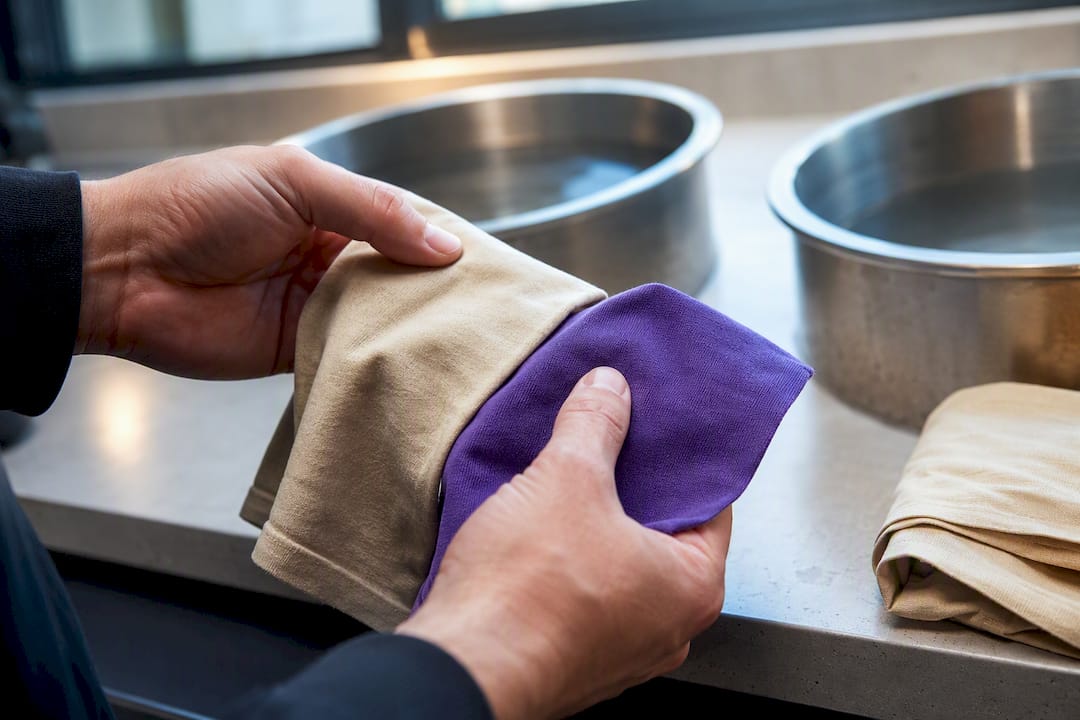
Pro Tip: If you genuinely can’t decide, order a small test run first. Request two samples on your actual fabric, wash one 20 times and the other 40, and compare hand feel and color retention side by side before committing to a full order.
What Tektonla Brings to a Pigment or Reactive Dye Decision
Tektonla runs both pigment dye work and its own garment dye process out of its Los Angeles production floor, alongside DTG, DTF, screen printing, and embroidery. That range means you can compare a pigment-dyed crewneck against a garment-dyed alternative on the same order, with no minimum quantity required.
- In-house pigment dyeing, garment dyeing, and screen printing under one roof
- No minimum order quantity on blanks, useful for testing both methods before scaling
- Eco-conscious options including the Neo Poly Dye process for lower-impact runs
- Sample and quote requests handled directly through the Tektonla site
Christian’s Take on Reactive vs. Pigment
Reactive earns its cost on anything cotton that people will wear and wash for years. Pigment wins the moment opacity, speed, or budget outrank longevity. The mistake I see most: brands defaulting to pigment on apparel meant to last, then wondering why the color fades by wash 25.
— Christian
Get a Sample Before You Commit to a Dye Method
This provider is an option for brands who want to test pigment dye against reactive-style garment dyeing without guessing which one fits, since both run through the same Los Angeles facility with no minimum order quantity holding you back. That means a small brand can order pigment-dyed crewnecks and garment-dyed tees in the same week and compare hand feel, color depth, and cost side by side instead of committing blind to a large run.
To get a sample or quote, reach out through Tektonla with your fiber content, expected wash count, and artwork file. That’s the information Tektonla needs to recommend pigment, reactive style garment dye, or another method entirely. Check out the Garment Dye Designer Tee or a 2-color screen print setup for a concrete starting point, then request pricing directly on the site.
Sources
- Comparison of properties of cotton fabric dyed with pigment and reactive dye (DOI record)
- Reactive Dye vs Pigment Print: Quality & Cost Comparison | Apex Fashion Lab
- Reactive Dyeing vs Pigment Printing — Which Lasts Longer? | Sora Fabrics
- What is the difference between pigment and reactive dyes? | Fashion Sustainability Directory
FAQ
What Are the Disadvantages of Reactive Dyes?
Reactive dyeing needs steaming and a wash-off stage, which adds water use, energy cost, and production time. It also only works on cellulosic fibers like cotton, rayon, and lyocell, so it’s off the table for polyester and most synthetic blends.
Is Pigment Dye Better Than Reactive Dye?
Neither is universally better. Peer-reviewed testing found pigment dyeing performs better for pilling resistance and light fastness in deep shades, while reactive dyeing gave stronger rubbing fastness and tear strength on the same cotton fabric.
What Are the Disadvantages of Pigment Ink?
Pigment ink sits on the fiber surface rather than bonding with it, so it can feel stiffer unless a soft binder and post-cure softener are used. It’s also less durable long term, with visible fading commonly showing up by 20 to 30 wash cycles compared to reactive dye’s longer wash life.
What Are Examples of Reactive Dyes?
Reactive dyes are typically classified by their reactive group, such as vinyl sulfone or triazine types, and they’re the standard choice for dyeing cotton, rayon, and lyocell in premium apparel. Tektonla applies this bonding logic through its own garment dye process, which produces a similar soft, color-saturated result on finished garments.
Which Dye Lasts Longer, Pigment or Reactive?
Reactive dye lasts longer on cellulosic fabrics in almost every wash-fastness comparison available. Mill data points to reactive prints holding up past 40 to 50 washes, while pigment prints tend to show fading well before that mark.