


Textile waste means any garment, fabric scrap, or fiber material discarded before or after consumer use, and in the United States it adds up to 17 million tons a year, with 11.3 million tons going straight to landfills. The takeaway that matters most: recycling technology cannot keep pace with how much gets thrown away, so reducing consumption and reusing what already exists do far more good than waiting for better recycling.
TL;DR:
- Less than 15% of U.S. textile waste is recycled, with most discarded fabric ending up in landfills or being downcycled into low-quality products.
- The environmental impact includes shedding microplastics from synthetic fibers and methane emissions from natural fiber decomposition in landfills.
- Most clothing blends are extremely difficult to recycle due to mixed materials and contamination, making fabric separation a major challenge.
- To reduce textile waste, individuals should buy mono-material garments, repair clothing, and prioritize resale, while brands should focus on designing for recyclability and on-demand production.
- Shifting focus from recycling to reducing overproduction and extending garment lifespan offers more effective solutions than relying solely on current recycling technologies.
Table of Contents
- The Textile Waste Numbers That Actually Matter
- How Textile Waste Harms the Environment
- Why Recycling Textiles Is Harder Than It Sounds
- Practical Ways to Reduce Textile Waste
- Policy and Industry Responses Shaping the Next Decade
- How to Responsibly Dispose of Old Textiles Today
- Tekton LA’s Take: Cutting Waste Before It’s Made
- What This Data Actually Tells Us
- Sources
The Textile Waste Numbers That Actually Matter
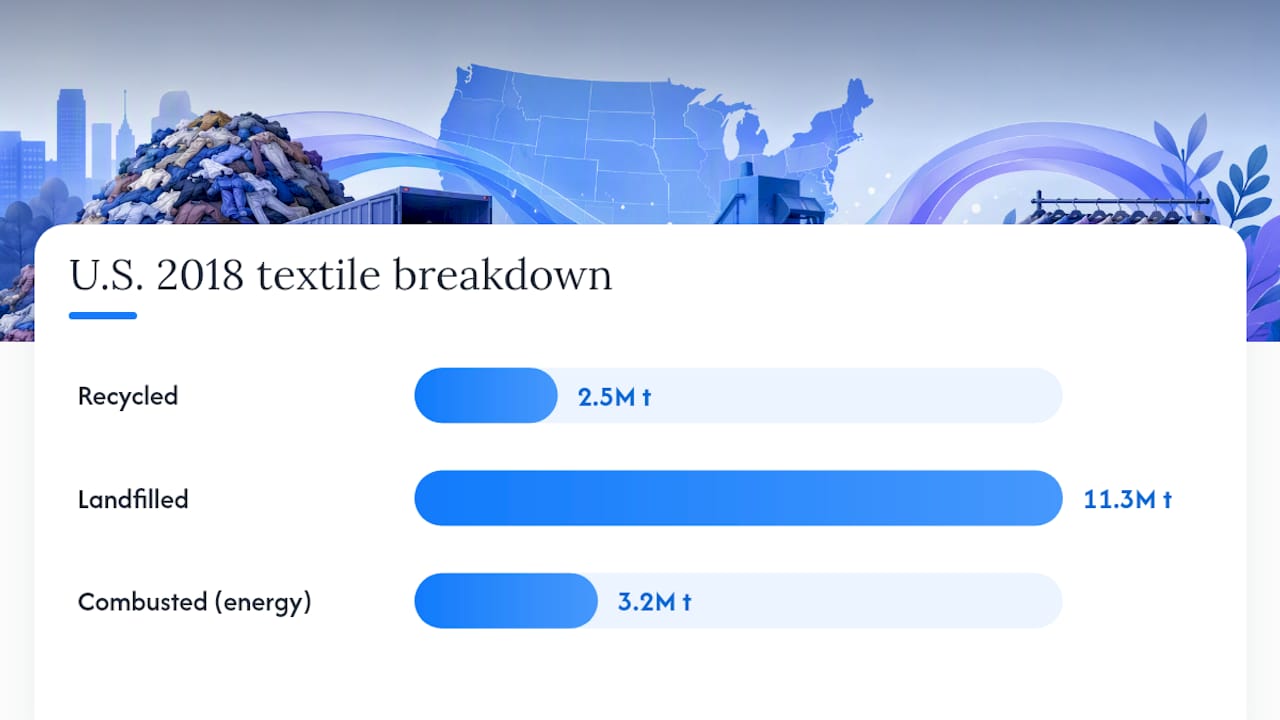
The EPA’s most recent material-specific breakdown found the U.S. generated 17 million tons of textile municipal solid waste in 2018. Of that, only 2.5 million tons got recycled. The rest, 11.3 million tons, went into landfills, and a smaller portion were combusted for energy.
Globally, the scale is even harder to grasp. Estimates put annual textile waste at roughly 92 million tonnes, with some projections showing that climbing toward 134 million tonnes by 2030 as fast-fashion production accelerates. That growth curve tracks almost directly with how many new garments get manufactured each year, not with how many people actually need new clothes.
You’ve probably seen the claim that “85% of textiles end up in landfills.” That figure gets tossed around loosely, but it typically refers to a specific slice of post-consumer textile waste in specific studies or regions, not a universal global or U.S. rate. The real U.S. landfill share, based on EPA’s own tonnage, comes out closer to two-thirds of total textile waste generated.
Key figures worth remembering:
- U.S. textile waste generated: 17 million tons (2018)
- U.S. textile waste recycled: 2.5 million tons
- U.S. textile waste landfilled: 11.3 million tons
- Global textile waste estimate: approximately 92 million tonnes annually
The number that should worry you: less than 15% of U.S. textile waste gets recycled, and most of what does get “recycled” is downcycled into insulation or wiping rags rather than turned back into new fabric.
How Textile Waste Harms the Environment
Every garment carries an environmental cost long before it hits a landfill. Cotton is famously water hungry: growing enough cotton for a single T shirt can consume over 700 gallons of water, and dyeing and finishing add heavy chemical and energy loads on top of that.
Once textiles reach a landfill, synthetic fibers like polyester don’t break down the way natural fibers do. They sit for decades, and as they slowly degrade, they shed microplastics that work into soil and waterways. Natural fibers decompose faster but still generate methane as they break down in oxygen-poor landfill conditions, adding to greenhouse gas totals that already make apparel one of the more resource-intensive consumer categories.
The practical consequences show up in a few consistent ways:
- Synthetic garments shed microplastic fibers during washing and after disposal, and those fibers accumulate in water systems.
- Landfilled natural fibers produce methane as they decompose.
- Water and energy used to produce a garment are lost entirely once that garment is discarded rather than reused.
- Dyeing and finishing chemicals embedded in fabric can leach into soil at disposal sites.
Why Recycling Textiles Is Harder Than It Sounds
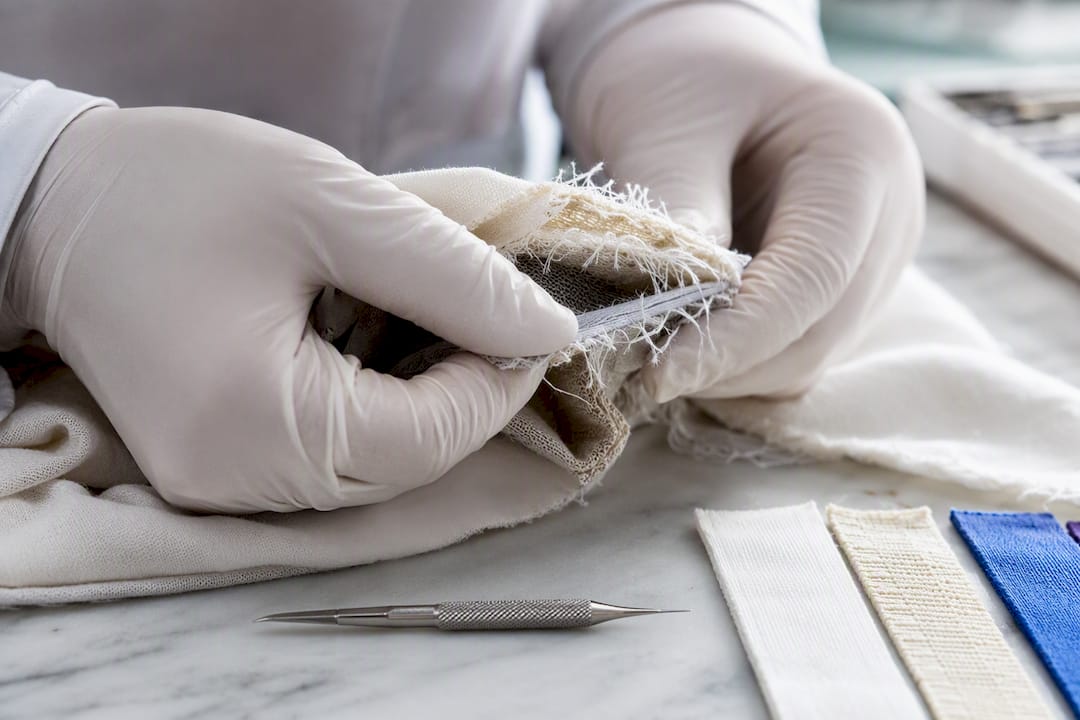
Most clothing is not made from one material. A hoodie might combine cotton, polyester, and spandex in a single seam, and that blend is exactly what makes recycling difficult. According to a GAO technology spotlight, mechanical recycling, which shreds fabric back into raw fiber, works reasonably well on single-material items but degrades fiber length and strength every time it runs. That means mechanically recycled fiber usually has to be blended with virgin fiber just to be usable again, and true closed-loop recycling of most garments isn’t realistic with current mechanical methods.
Chemical recycling, which breaks polyester or cellulosic fibers down at the molecular level and rebuilds them, can produce higher-quality output. The catch is scale: chemical recycling remains largely at pilot stage, limited by energy costs and how much contamination the feedstock can tolerate.
The operational bottlenecks compound the technical ones:
- Blended fabrics require separation before either recycling method works well, and that separation is labor-intensive.
- Sorting facilities often lack the capacity or equipment to process fashion textiles at the volume being discarded.
- Missing or inaccurate fiber-content labels make automated sorting unreliable.
- Contamination from buttons, zippers, and mixed dyes reduces recycled fiber quality further.
Pro Tip: Check the label before you buy. A 100% cotton or 100% polyester garment is dramatically easier to recycle than a cotton-poly-spandex blend, even if the blend feels softer on the rack.
Practical Ways to Reduce Textile Waste
The waste hierarchy that environmental agencies use for every material category applies directly here: refuse and reduce first, repair and reuse second, recycle only as the last resort. Recycling gets the most attention, but household-level behavior changes like buying less and repairing more move faster than any technology upgrade will.
For individuals, the highest-leverage actions are:
- Buy mono-fiber, durable pieces. A single-material garment lasts longer and is easier to recycle when it finally wears out.
- Repair before replacing. A $10 tailoring fix on a seam or zipper often adds years to a garment’s life.
- Use resale and consignment channels. Platforms and local consignment shops keep usable clothing circulating instead of landfilled.
- Organize or attend clothing swaps. Swaps redistribute wearable items with zero manufacturing footprint.
- Wash and dry with care. Cold washes and air drying reduce fiber breakdown, which extends garment life and cuts microplastic shedding.
Organizations carry more responsibility because their decisions scale. Brands that produce inventory speculatively, guessing at demand and printing runs before orders exist, generate the overproduction that fuels landfill totals, highlighting the importance of effective turnover magazzino practices to reduce waste. On-demand production flips that model: nothing gets made until someone actually orders it, which eliminates unsold stock entirely.
Beyond production timing, organizations should prioritize:
- Design for recyclability. Mono-material construction and detachable hardware make end-of-life recycling realistic instead of theoretical.
- Build takeback programs. Collecting worn garments directly from customers keeps textiles out of general waste streams.
- Tighten inventory controls. Smaller, more frequent production runs reduce the deadstock that eventually gets discarded.
- Set procurement policies favoring recycled or reclaimed content. Textile Exchange’s guidance on recycled materials gives buyers a standard to evaluate supplier claims against.
Pro Tip: If you run a brand, track your unsold-inventory rate quarterly. It’s the single clearest signal of how much textile waste your business is generating before a single item reaches a customer.
Policy and Industry Responses Shaping the Next Decade
International attention on textile waste has sharpened considerably. UNEP has flagged fashion and textiles as a focus area for its International Day of Zero Waste, pointing specifically to how little of the fiber supply currently comes from recycled sources.
Circular-economy frameworks, including extended producer responsibility (EPR) policies that make manufacturers financially accountable for what happens to their products after sale, are gaining traction in the European Union and starting to surface in U.S. state-level proposals. The Ellen MacArthur Foundation has pushed this framing for years, arguing that systemic redesign, not better disposal, is the real fix. Industry pilots for large-scale sorting and fiber-to-fiber recycling are expanding in the U.S., though most remain regional rather than national in reach.
How to Responsibly Dispose of Old Textiles Today
Before anything goes in the trash, run through this sequence:
- Check if it’s wearable. Clean, intact clothing goes to donation centers or resale platforms first, always.
- Look for specialized textile recyclers. Many cities have drop-off programs separate from curbside recycling, since municipal bins usually can’t process fabric.
- Remove hardware and hazards. Strip buttons, zippers, and buckles when a recycler requests unmixed fabric.
- Wash before donating or recycling. Clean items are more likely to be accepted and reused rather than discarded on arrival.
- Discard only true waste as a last resort. Heavily soiled, moldy, or structurally destroyed textiles may need to go to general waste if no recycler accepts them.
Municipal curbside recycling almost never accepts textiles, so check local program listings before assuming your recycling bin is the right destination.
Tekton LA’s Take: Cutting Waste Before It’s Made
Most textile waste gets created before a garment ever reaches a closet, back at the production stage, when brands overprint based on guesswork. Running on-demand printing with no minimum order quantities removes that guesswork entirely: nothing gets made until a real order exists, so unsold inventory never accumulates in the first place.
Material choice matters just as much. A mono-material blank stays easier to recycle at end of life than a poly-cotton blend, and clear fiber-content labeling helps whoever handles that garment next, whether that’s a resale buyer or a recycler, make the right call. Brands that want to go further can build small private-label runs, favor repair-friendly construction over disposable seams, and explore takeback partnerships with customers.
What This Data Actually Tells Us
The conventional advice on textile waste leans hard on recycling as the solution, and that’s the part worth pushing back on. The GAO’s own analysis makes clear that mechanical recycling degrades fiber quality with every pass, and chemical recycling is still pilot-scale. Betting on recycling technology to catch up with 17 million tons of annual U.S. waste is optimistic at best.
What the data actually supports is less exciting but more effective: reduce what gets produced, and keep what already exists in circulation longer. That means brands rethinking speculative production runs before they rethink their recycling partnerships, and it means individuals treating repair and resale as the default, not the backup plan.
If you take one thing from this, prioritize prevention over disposal solutions. Fix the seam. Buy the mono-material shirt. Ask your supplier about minimum order quantities before you ask about their recycling program. The technology will improve eventually, but the waste sitting in landfills right now was mostly avoidable.
— Christian
Sources
- Textiles: Material-Specific Data | US EPA
- Science & Tech Spotlight: Textile Recycling Technologies | U.S. GAO
- Circular Economy and Sustainability of the Clothing and Textile Industry - PMC
- How to Reduce Clothing and Textile Waste | RethinkWaste