

Starting a clothing startup does not require a factory floor, a massive budget, or a fashion degree. What it does require is a clear definition of what you are actually building. A clothing startup is a new business designed to create and sell apparel with a repeatable, scalable growth system. It is not just a side project or a one-off T-shirt drop. According to Stripe’s apparel business guide, most successful founders narrow to a specific segment, then build their sourcing, sales channels, and marketing around that focus. This guide walks you through every layer of that process.
Table of Contents
- Key takeaways
- What is a clothing startup, really?
- Choosing the right business model
- Legal and operational setup for a clothing startup
- Sourcing, manufacturing, and sales channels
- Marketing, branding, and your launch strategy
- My honest take on starting a clothing brand
- Launch your clothing startup with Tektonla
- FAQ
Key takeaways
| Point | Details |
|---|---|
| A startup is a system, not a side hustle | A clothing startup needs a repeatable growth model, not just a product idea. |
| Business model shapes everything | Your choice of Print on Demand, private label, or cut-and-sew determines cost, timeline, and margin. |
| Legal setup matters early | Registering your LLC and checking trademarks before launch protects your brand and personal assets. |
| Niche targeting beats broad appeal | Specific audiences convert better and allow tighter marketing spend for new brands. |
| Multi-channel selling builds resilience | Combining DTC, wholesale, and marketplaces reduces reliance on any single revenue stream. |
What is a clothing startup, really?
Before you write a single business plan, you need to get clear on what separates a clothing startup from a hobby or a small shop. The difference is intent. A clothing startup is built to grow. It is a business focused on designing and selling apparel within a specific niche, supported by a model for repeatable production, customer acquisition, and revenue scaling.
The misconception that stops a lot of people before they start is the belief that launching a brand requires deep manufacturing connections or six-figure funding. That is outdated thinking. POD platforms and internet tools have dramatically lowered the entry barriers, making it possible to launch from a home office with a few hundred dollars and a clear idea.
What actually matters is structure. Good fashion startup ideas fail constantly because the founder had passion but no plan. The ones that survive treat the brand like a business from day one, with a defined niche, a chosen production model, a legal entity, and a customer acquisition strategy.
Niche selection: the foundation of your brand
Choosing your niche is not just a marketing decision. It shapes your product design, your pricing, your supplier relationships, and who you talk to on social media. Here is what effective niche targeting looks like in practice:
- Maternity activewear: A small but underserved segment where fit and function matter more than fashion trends
- Sustainable streetwear: Captures the growing consumer demand for eco-conscious clothing with strong visual identity
- Team and event apparel: High repeat purchase potential, easy to scale with screen printing techniques
- Size-inclusive basics: A real gap in the market that has built loyal brand communities quickly
Customer research does not need to be expensive. Spend time in relevant Reddit threads, Facebook groups, and product review sections on competing sites. What do customers consistently complain about? What do they wish existed? That gap is your opportunity.
Pro Tip: Run a quick competitor audit before committing to a niche. Search your product idea on Instagram, Etsy, and Amazon. If you find fewer than five strong brands serving that niche with good branding, you have found an opening.
Choosing the right business model
This is where the clothing line business plan gets real. Your business model determines how much money you need to start, how long it takes to launch, and how much profit you keep per sale. There are three primary models every aspiring founder should understand.
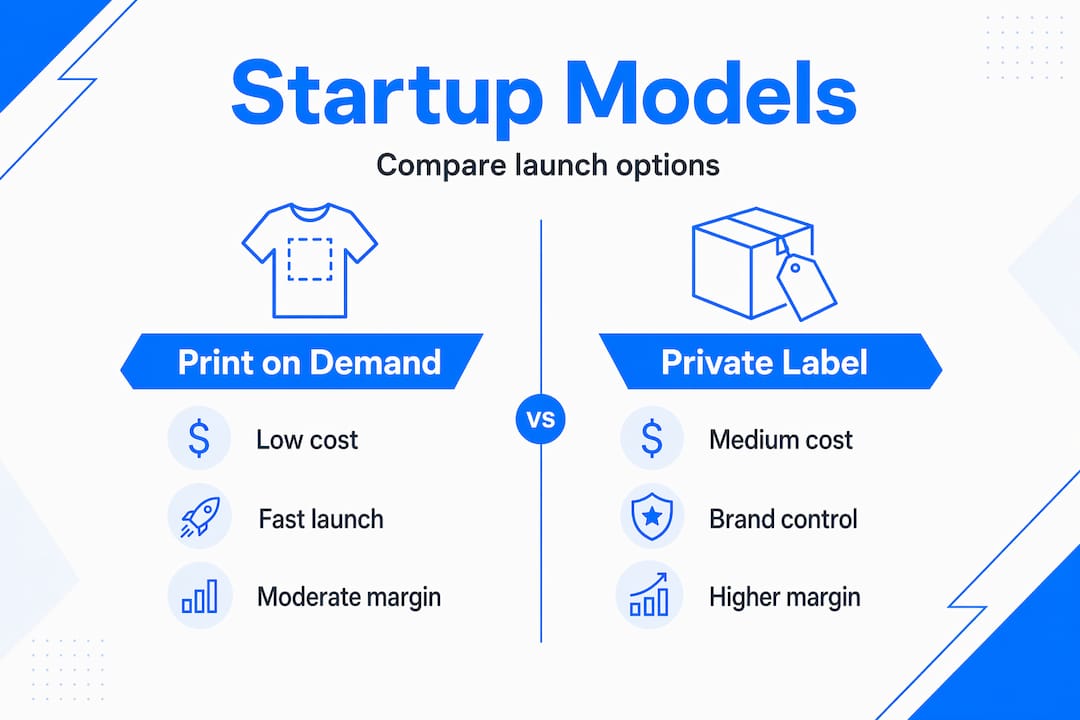
Print on Demand (POD) is the lowest-risk entry point. You upload designs to a platform, and items are printed and shipped only when a customer orders. Startup costs can be as low as $500, there is no inventory to hold, and you can test multiple designs without financial exposure. The trade-off is thin margins and limited product differentiation.
Private label means purchasing blank garments from a manufacturer and adding your own branding through printing, embroidery, or labels. Costs typically run from $2,000 to $10,000 for an initial run. You get more brand control than POD and faster turnaround than custom manufacturing. This model suits founders who want a real brand feel without building from scratch.
Cut-and-sew custom manufacturing is the highest-investment option. You are designing and producing original garments from raw materials. Startup costs range from $10,000 to over $50,000 for a first run, but the payoff is a truly unique product with the best margin potential and the strongest brand differentiation. This is the path for founders who have validated demand and are ready to scale.
| Model | Startup cost | Time to launch | Margin potential | Best for |
|---|---|---|---|---|
| Print on Demand | ~$500 | 1 to 2 weeks | Low | Testing ideas, minimal risk |
| Private label | $2,000 to $10,000 | 4 to 8 weeks | Moderate | Brand-focused founders |
| Cut-and-sew | $10,000 to $50,000+ | 3 to 6 months | High | Scaled, differentiated brands |
Pro Tip: You do not have to commit to one model forever. Many founders start with private label to build a customer base, then shift to cut-and-sew once they have consistent revenue and validated product preferences.
Legal and operational setup for a clothing startup
Getting your legal and financial structure right before you launch is not optional. These steps protect your personal assets, make you fundable, and signal to partners and suppliers that you are a real business. The essential steps for a fashion startup follow a straightforward sequence:
- Choose your business structure. Most clothing startups form an LLC. It separates your personal finances from business liability and is simpler to manage than a corporation. If you plan to raise outside investment, a C-Corp may be more appropriate.
- Run a trademark search. Before you print a single item with your brand name, search the USPTO database. Discovering a conflict after launch is expensive and disruptive.
- Open a dedicated business bank account. Mixing personal and business finances creates accounting headaches and weakens your legal protection. Set this up before your first sale.
- Set up basic accounting software. QuickBooks, Wave, or a similar tool tracks expenses and income from the start, making tax time manageable and funding conversations credible.
- Review any permits or import considerations. If you are sourcing from overseas manufacturers, understand import duties and customs regulations. If you are printing locally, check whether your city or county requires a resale or business license.
These five steps take a weekend to complete. Most founders delay them, then regret it when they face an audit, a trademark dispute, or an investor asking for clean financials.
Sourcing, manufacturing, and sales channels
Where you make your product and where you sell it are two decisions that interact constantly. Getting them right together matters more than optimizing either one in isolation.
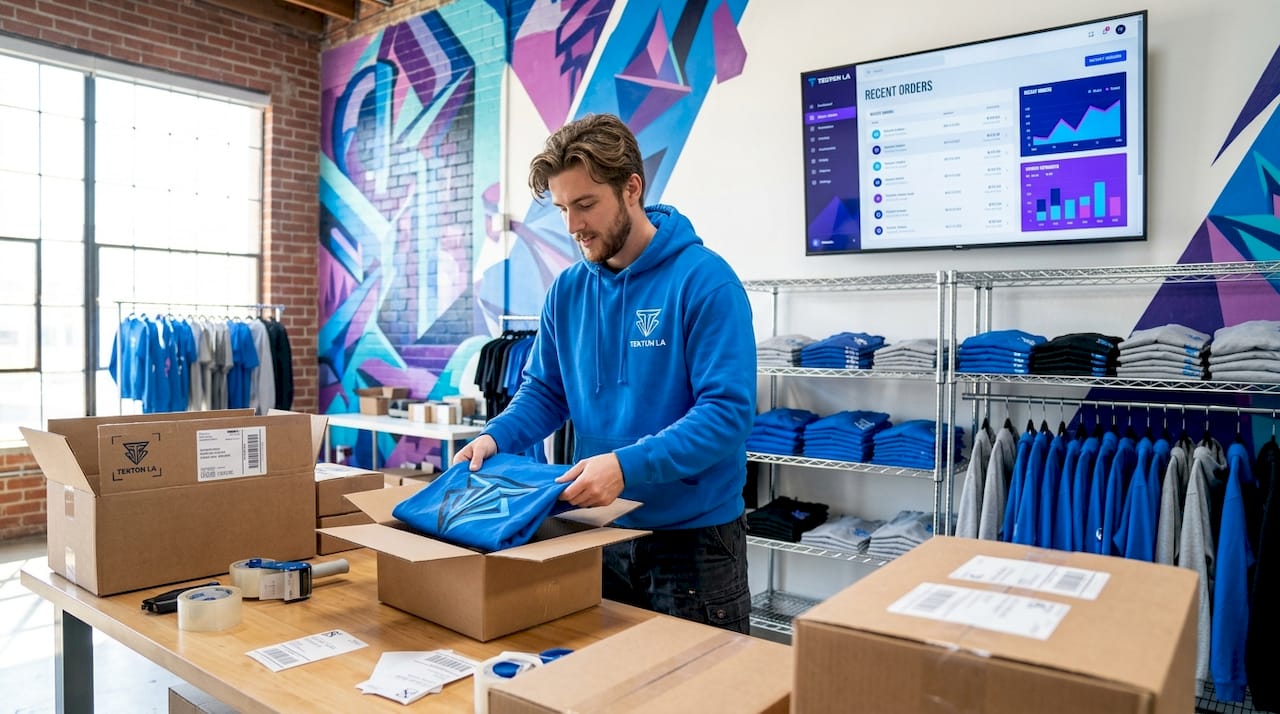
On the sourcing side, domestic manufacturing like what you can access through a Los Angeles-based partner costs more per unit but offers faster communication, shorter lead times, and easier quality control. Overseas manufacturing in countries like Bangladesh or Vietnam offers lower unit costs but longer lead times, higher minimum order quantities, and more complex logistics. Supply chain reliability is one of the most underrated success factors in this industry. A single delayed shipment can miss a key sales window and damage customer trust.
Here is a practical breakdown of sales channel options:
- Direct-to-consumer (DTC) online store: Higher margins because you cut out the middleman. Shopify and similar platforms make this accessible from day one.
- Wholesale to retailers: Lower per-unit revenue but higher volume per order. Good for brand exposure but requires consistent inventory.
- Marketplaces like Etsy or Amazon: Built-in traffic, but platform fees eat into margins and you own less of the customer relationship.
- Brick-and-mortar pop-ups: Great for brand building and customer feedback. Low long-term cost if done occasionally and strategically.
DTC selling typically yields higher margins than wholesale due to lower overhead, which is why most clothing startups build their own website first. Understanding your custom apparel pricing before you set retail prices is critical to protecting those margins.
Pro Tip: Start with no-minimum-order suppliers while you are testing products. Locking into large production runs before you have validated customer demand is one of the most common and costly mistakes early-stage founders make.
Marketing, branding, and your launch strategy
Your brand identity is more than a logo. It is the combination of your visual style, your tone of voice, your packaging, and the emotional response your brand creates in a customer. Strong brand identity is what makes a customer choose your hoodie over a nearly identical one at a lower price.
Build your brand identity around these four elements before you think about ads or influencers:
- Visual identity: Logo, color palette, typography, and photography style. Keep it consistent across every touchpoint.
- Brand voice: Are you playful or serious? Minimal or expressive? Write this down and apply it to every caption, product description, and email.
- Price positioning: Your price signals quality. Understand your cost of goods, target a minimum 60% gross margin for DTC, and price accordingly.
- Emotional hook: What does your brand stand for beyond the product? Sustainability, community, self-expression? Customers buy stories, not just shirts.
Once your identity is clear, your marketing strategy should follow this sequence for launch:
- Build your Instagram and TikTok presence at least 4 to 6 weeks before launch. Post content that shows the process, not just the product.
- Identify 3 to 5 micro-influencers in your niche with under 50,000 followers and high engagement rates. Gifting product for honest posts is often more effective than paid placements.
- Create product mock-ups that look professional and match your visual identity. A guide on mocking up custom apparel can save hours of trial and error.
- Launch with a small, focused product line. Three to five SKUs that represent your brand clearly beats twenty products that dilute your message.
Durable fashion brands prioritize product quality and a multi-channel go-to-market strategy rather than betting everything on one platform or one campaign.
My honest take on starting a clothing brand
I have seen a lot of founders stumble not because they lacked creativity, but because they treated the startup like a creative project instead of a business. The most common version of this mistake is spending months perfecting the product before talking to a single potential customer. By the time they launch, they have no audience and no feedback loop.
Balancing creative passion with business fundamentals is genuinely hard. Most people are wired to lean one way. The founders I see succeed are the ones who ship early, gather real customer responses, and iterate fast. They do not wait for the perfect product. They build toward it.
What I have also learned is that protecting your brand identity early costs almost nothing compared to the legal and reputational mess of dealing with a trademark conflict or a copycat brand after you have built an audience. Register your name. Document your designs. Treat your IP like an asset from the start.
The founders who last are the ones who stay adaptable without losing the core of what their brand stands for. That tension is not a problem to solve. It is the actual work.
— Christian
Launch your clothing startup with Tektonla
If you are ready to move from planning to production, Tektonla in Downtown Los Angeles is built for exactly where you are right now. Whether you are testing your first design or producing a launch collection, Tektonla offers no-minimum-order options on blanks, fast turnaround, and a full range of printing methods including screen printing, direct-to-garment, embroidery, and garment dyeing.
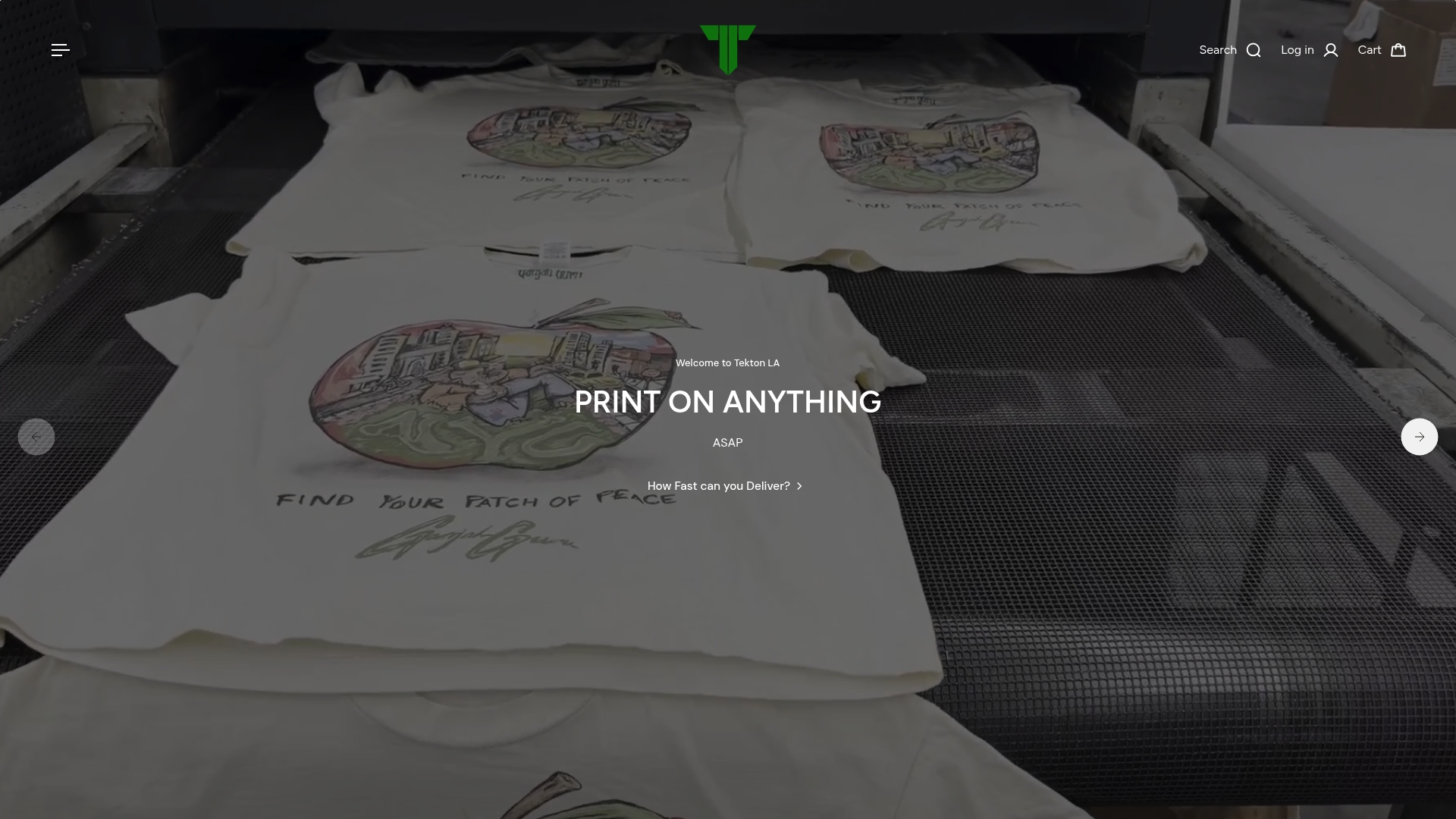
Their Printers Shirt is a popular starting point for new brands looking for quality and versatility. For founders who want something more distinctive, the Garment Dye Shirt 3.0 delivers a unique worn-in aesthetic that customers respond to strongly. Tektonla also offers two-color screen printing for founders who want bold, cost-effective branding on their first run. This is the kind of production partner that makes the gap between idea and launch much smaller.
FAQ
What is a clothing startup exactly?
A clothing startup is a new business focused on designing, producing, and selling apparel with a scalable growth model. It differs from a casual side project because it is built around a repeatable system for customer acquisition and revenue growth.
How much does it cost to start a clothing brand?
Startup costs range widely depending on your business model. Print on Demand can start near $500, private label typically costs $2,000 to $10,000, and cut-and-sew manufacturing can require $10,000 to over $50,000 for a first production run.
Do I need an LLC to start a clothing brand?
You are not legally required to form an LLC, but it is strongly recommended. An LLC separates your personal finances from business liabilities and makes your brand more credible to suppliers, partners, and future investors.
What is the best business model for a first-time clothing founder?
Print on Demand or private label are the most practical starting points for most first-time founders. Both models reduce upfront financial risk while allowing you to test product demand and build a customer base before committing to larger production runs.
How do I market a new clothing brand with no audience?
Start building social media content 4 to 6 weeks before launch, focusing on brand story and process content rather than just product photos. Partner with niche micro-influencers and prioritize building an email list from day one to own your customer relationship directly.