

Setting the right custom apparel pricing for resale is one of the most consequential decisions an independent brand owner makes, and most get it wrong in the same direction: too low. You cover your production costs, feel good about the margin, send out a wholesale offer, and then wonder why retailers pass or why your own profitability evaporates after a few seasons. The real problem is not finding a low enough cost. It is understanding the full math, from your unit cost to wholesale to retail, before you commit to a price that shapes every channel relationship you build.
Table of Contents
- Understanding cost and margin basics for custom apparel pricing for resale
- Calculating wholesale and retail prices with industry-standard formulas
- Common pricing mistakes and how to avoid them
- Optimizing pricing strategy to compete and grow your resale brand
- Why many brands misunderstand resale pricing — and how to get it right
- Explore custom apparel solutions and competitive pricing at Tekton LA
- Frequently asked questions
Understanding cost and margin basics for custom apparel pricing for resale
To price your apparel effectively, you need to understand every cost that touches your product before it reaches a buyer. Most brand owners start with the obvious: blank garment cost and printing. But wholesale custom clothing costs go much further than that.
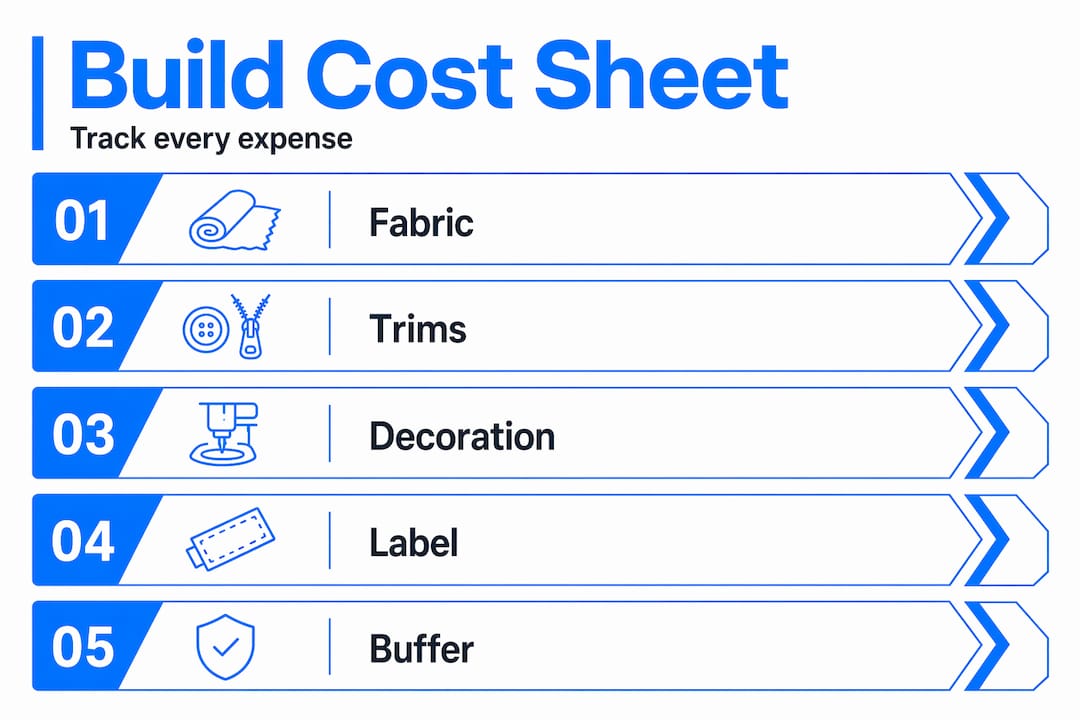
Your total unit cost includes fabric or blank garment, all trims and labels, decoration (whether screen printing, DTG, embroidery, or DTF), domestic and international shipping, import duties, payment processing fees, and a proportional share of overhead like sampling and photography. Miss any one of these and your margin math is fiction.
Here is where it gets critical. Two margin layers are required for sustainable pricing: your gross margin after all costs, and the retailer’s margin on top of your wholesale price. Most independent brands only think about the first layer and completely ignore the second. That is the mistake that gets wholesale orders rejected.
Your two margin layers:
- Brand gross margin: The spread between your total unit cost and your wholesale price. This needs to cover your profit and any brand-level operating expenses.
- Retailer channel margin: The spread between your wholesale price and the retail selling price. Retailers typically expect 50% or more. If your wholesale price does not allow them that room, they will not stock your product.
Understanding this channel math also shapes how you mock up custom apparel designs for your line. The decoration method you choose, DTG versus screen print versus embroidery, directly changes your unit cost and, therefore, where your price floor sits.
Pro Tip: Before finalizing any product, build a simple cost sheet that captures every line item. Include a 10% buffer for cost overruns, because fabric prices shift and shipping surcharges appear without warning. Smart sourcing textiles strategies can also help lower your landed cost before you even touch a pricing formula.
Calculating wholesale and retail prices with industry-standard formulas
With clear costs and margin layers defined, you calculate prices by applying standard multipliers. These are not arbitrary. They reflect decades of channel economics in the fashion industry and are the baseline retailers and buyers expect.
Step-by-step pricing process:
- Calculate your total landed cost per unit. Add every cost element: blank, printing, labels, shipping, duties, and fees.
- Apply a wholesale markup multiplier of 2.0x to 2.5x to your total cost. A $12 total unit cost becomes a $24 to $30 wholesale price.
- Apply a retail markup multiplier of 2.2x to 2.5x to your wholesale price to arrive at your suggested retail (MSRP). A $24 wholesale price becomes a $52.80 to $60 retail price.
- Check that your MSRP is competitive in your product category by comparing to the market range where your brand sits.
- Adjust your multipliers based on brand positioning, category norms, and whether you also sell direct-to-consumer at retail yourself.
Wholesale price is 2.0x to 2.5x the cost, and retail price is 2.2x to 2.5x the wholesale price, which gives both you and the retailer the margin needed to run sustainable businesses.
Sample pricing breakdown by tier:
| Total unit cost | Wholesale (2.2x) | Retail MSRP (2.3x wholesale) | Brand margin | Retailer margin |
|---|---|---|---|---|
| $8.00 | $17.60 | $40.48 | 54.5% | 56.5% |
| $12.00 | $26.40 | $60.72 | 54.5% | 56.5% |
| $18.00 | $39.60 | $91.08 | 54.5% | 56.5% |
| $25.00 | $55.00 | $126.50 | 54.5% | 56.5% |
The math holds regardless of cost tier, which is why the multiplier method is trusted across resale apparel markup structures. Where brands differ is in how they set the starting cost, which is where fabric choice, printing method, and order volume all matter.
Pro Tip: If you sell direct-to-consumer as well as through retailers, always price your own site at MSRP. Undercutting your wholesale accounts online is one of the fastest ways to lose a retail relationship permanently. Understanding pricing formulas for apparel retailers across both channels matters just as much as the formulas themselves.
When thinking about multichannel marketing examples, the brands that manage both wholesale and DTC successfully are almost always the ones that maintain strict price discipline from day one.
Common pricing mistakes and how to avoid them
Knowing formulas helps, but avoiding these pitfalls is what separates brands that scale from those that stall.
Many sellers neglect channel margin and end up with wholesale prices that retailers find unworkable, or retail prices so low they signal cheap positioning regardless of actual quality.
The most damaging pricing mistakes:
- Ignoring retailer margin needs. If your wholesale price leaves a retailer with only 30% margin, they will skip your line for one that offers 50%. Retailers have their own overhead to cover.
- Underestimating hidden costs. Returns, chargebacks, trade show fees, lookbook production, and sample costs all eat into margin. If you did not account for them upfront, your “profitable” wholesale price may actually be running at a loss.
- Setting retail without aligning with wholesale. Some brands set a retail price that feels competitive, then work backward to wholesale without checking that the retailer margin holds. The numbers stop working fast.
- Skipping competitor and market research. Custom t-shirt pricing on a premium basics brand sits in a completely different range than a streetwear graphic tee. Pricing without knowing your category benchmarks is pricing blind.
“The margin you leave for your retail partner is not charity. It is the cost of distribution, and brands that ignore it do not stay on shelves long.”
Understanding screen printing pricing considerations is a good example of where hidden costs surprise brands. Screen printing has setup fees, minimum quantities, and color-count variables that can swing your unit cost by several dollars depending on how the order is structured.
Pro Tip: Build a simple pricing audit into your seasonal planning. Before you finalize any wholesale line sheet, run each SKU through the full cost sheet and confirm that both margin layers still hold after any cost changes since the last season.
Optimizing pricing strategy to compete and grow your resale brand
Once prices are set, the work does not stop. Fashion resale cost strategies that work in year one need revisiting as costs shift, competitors move, and your brand builds equity.
Proper pricing balancing cost, margin, and market positioning is what drives consistent apparel business profitability, and it is not a one-time exercise.
Strategies by brand positioning:
| Brand type | Suggested wholesale multiplier | Retail multiplier | Pricing notes |
|---|---|---|---|
| Premium / luxury basics | 2.3x to 2.5x | 2.3x to 2.5x | Higher cost materials justify higher MSRP |
| Mid-market graphic tees | 2.0x to 2.2x | 2.2x to 2.4x | Volume matters more; keep cost tight |
| Streetwear / limited drops | 2.0x to 2.5x | 2.5x to 3.0x+ | Brand premium can support elevated MSRP |
| Basics / blank resale | 1.8x to 2.0x | 2.0x to 2.2x | Lower margin per unit, made up in volume |
Steps for ongoing pricing optimization:
- Review cost sheets every season, not just when you reorder.
- Audit competitor retail pricing at least twice a year for your core categories.
- Reassess your wholesale vs. direct-to-consumer revenue split and adjust multipliers if the balance shifts.
- Communicate MSRP clearly on every line sheet and enforce it consistently. Retailers who find your product cheaper elsewhere will pull their orders.
- Test price increases on new SKUs before rolling them across existing lines. Customers anchor to existing prices quickly.
Bulk clothing pricing also plays a significant role here. The more units you order, the lower your per-unit cost, which gives you room to either improve your margin or price more competitively without sacrificing profitability. Exploring custom branding apparel strategy at higher volumes often reveals meaningful cost-per-unit improvements that change the entire pricing model.
Why many brands misunderstand resale pricing — and how to get it right
Here is the uncomfortable truth most pricing guides skip: the biggest pricing errors in custom apparel are not math errors. They are perspective errors.
Most independent brand owners price from their side of the transaction. They calculate their cost, apply a multiplier that feels fair, and present a wholesale offer without ever asking whether the retailer can actually operate profitably on it. That is not pricing strategy. That is cost-plus thinking dressed up as a business model.
Many brands price wholesale profitably but neglect the retailer’s margin entirely, which leads to poor adoption, inconsistent retail pricing across accounts, and eventually the brand pulling back from wholesale because it “doesn’t work.” The wholesale model did not fail. The pricing model did.
The brands that get this right think in reverse. They start with the retail price that makes sense in their category and for their positioning. Then they work backward: what wholesale price allows the retailer to hit 50% or better? And then: what is the maximum unit cost that allows us to hit 50% or better at that wholesale price? That reverse-engineering discipline forces smart decisions about which products to build, which decoration methods to use, and what price point to occupy in the market.
There is also the question of brand premium. Apparel pricing for retailers is not purely about covering costs. A brand with strong visual identity, consistent MSRP enforcement, and a clear customer following can command higher wholesale prices than an identical blank from a generic supplier. Retailers pay for brands that pull customers in, not just for shirts. Developing that brand premium through consistent quality and insights on pricing strategy is what separates brands that stay on shelves from those that rotate out after one season.
The practical lesson: run the full channel math before you design a product, not after you have already committed to a supplier and a printing method. Cost and price need to work together from the start.
Explore custom apparel solutions and competitive pricing at Tekton LA
Ready to put these pricing insights to work? The right production partner makes the math easier from the start.
Tekton LA offers premium custom apparel options, including garment dye shirts, garment dyed sweatshirts, and garment dye long sleeve shirts, all produced with high-quality printing and finishing that supports resale pricing at the margins your business needs. Based in Downtown Los Angeles, Tekton LA provides fast turnaround, private label options, and no minimums on blanks, so you can build a product line that fits your pricing model rather than forcing your pricing to fit your production constraints. Talk to the team about how their decoration methods and blank selection can help you hit your cost targets.
Frequently asked questions
How do I calculate the wholesale price for my custom apparel?
Multiply your total cost per unit, including decoration and shipping, by a wholesale markup between 2.0 and 2.5. The wholesale price formula ensures your margin and retailer margin needs are both covered.
What margin should I expect when selling wholesale?
Typical wholesale margins for apparel brands run from 50% to 60% at the brand level, based on a 2.0x to 2.5x markup on your landed cost per unit.
How do I set a retail price if I already have a wholesale price?
Multiply your wholesale price by a retail multiplier between 2.2 and 2.5 to arrive at a competitive MSRP. This retail markup multiplier preserves enough margin for the retailer to operate profitably.
What if my retail price is fixed and I need to find the wholesale price?
Divide your retail price by your retail multiplier, typically between 2.2 and 2.5, to work backward to a suitable wholesale price. This reverse calculation method is how most experienced brands start the pricing process.
How important is market research for pricing resale apparel?
It is essential. Combining market research with full fee and cost awareness lets you set prices that are both competitive and genuinely profitable rather than just intuitively reasonable.