


Custom coach apparel is clothing designed specifically for coaches and team staff, personalized with team colors, logos, names, and branding. It goes far beyond a generic polo or jacket. When you understand what is custom coach apparel and what it can do, you start to see it as a real tool for building team identity, projecting professionalism, and creating the kind of visual cohesion that makes a staff look like they belong together. This guide walks you through every decision you will face: apparel types, customization methods, materials, and how to order smart.
Table of Contents
- Key takeaways
- Types and styles of custom coach apparel
- Customization techniques for coach apparel
- Materials and performance features
- How to select and order custom coach apparel
- The benefits of custom apparel for team culture
- My take on what coaches get wrong about custom apparel
- Get your custom coach apparel from Tektonla
- FAQ
Key takeaways
| Point | Details |
|---|---|
| More than functional clothing | Custom coach apparel unifies staff appearance and reinforces team branding on and off the field. |
| Multiple customization methods | Embroidery, screen printing, and sublimation each offer different quality, cost, and order size trade-offs. |
| Materials affect performance | Fabric choice directly impacts comfort, durability, and how well apparel performs in outdoor coaching conditions. |
| Ordering requires planning | Design, budget, sizing, and turnaround time all need to be locked in before you place an order. |
| Team culture is the real payoff | Personalized apparel builds coaching staff confidence and creates recognition that extends to players, fans, and opponents. |
Types and styles of custom coach apparel
The range of coach apparel options is wider than most coaches expect. You are not limited to a polo shirt and a wind jacket. Apparel types include batting shirts, polos, warm-up jackets, hoodies, and quarter zips, each designed to suit a different context on the sideline.
Here is a breakdown of the most common categories and when coaches actually use them:
- Polos: The most recognizable choice for game day. They look professional in photos, on broadcasts, and during sideline interactions. Perfect for spring and fall sports where weather stays moderate.
- Hoodies and crew sweatshirts: Standard for practice settings and colder climates. Sizes run up to 5XL, so you can outfit an entire coaching staff regardless of body type.
- Quarter zips: A practical middle ground between a hoodie and a polo. Coaches wear them for travel days, post-game walkthroughs, and cool evening games.
- Warm-up jackets: Game-ready outerwear that coordinates directly with player warm-up sets. Great for creating a full-program look when your players step off the bus.
- Batting shirts and performance tees: Common in baseball, softball, and track programs where coaches are on the field demonstrating technique. Movement matters here.
- Long sleeves and layering pieces: Useful for programs in variable climates where a coach might start a practice in cold air and finish in direct sun.
The smartest programs treat coach apparel the way they treat player uniforms: with a seasonal rotation. You wear one thing during pre-season camp, another during travel, and something else on game day. That intentional layering creates a consistent image all year.
Customization techniques for coach apparel
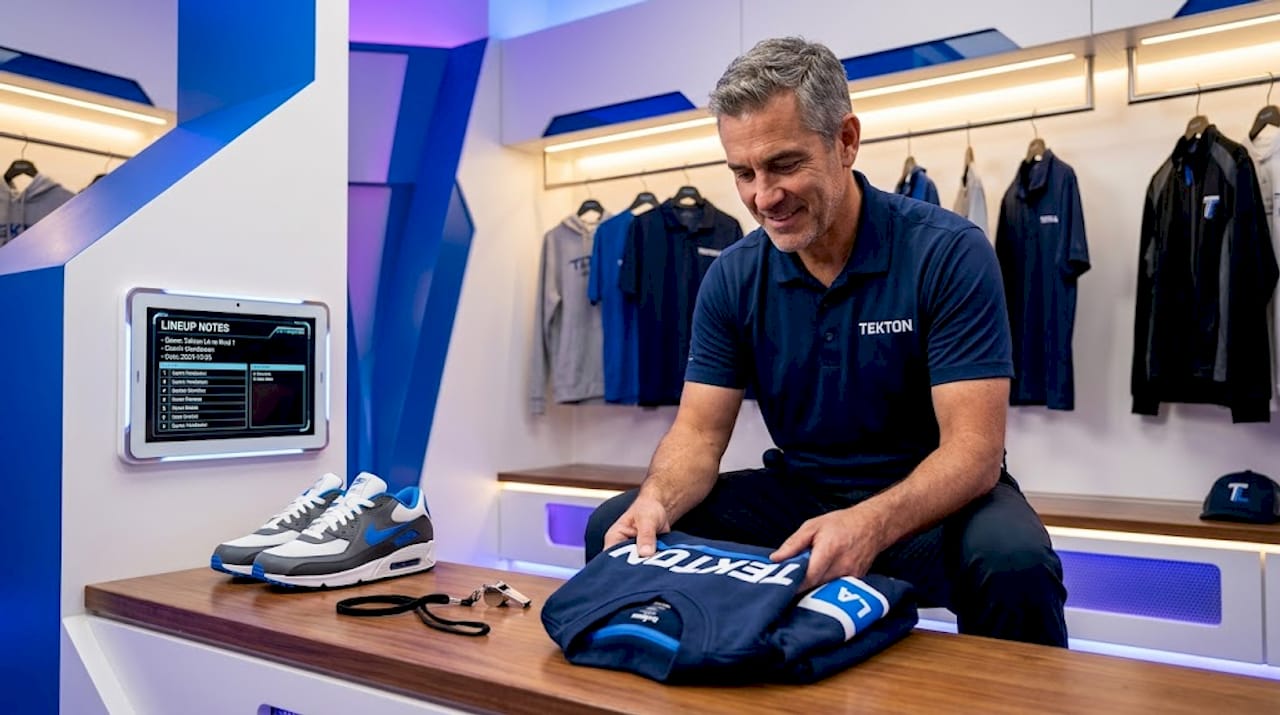
Once you have selected the garments, you need to decide how to personalize them. This is where the real decisions get made, and where most coaches leave quality on the table by defaulting to whatever the supplier recommends.
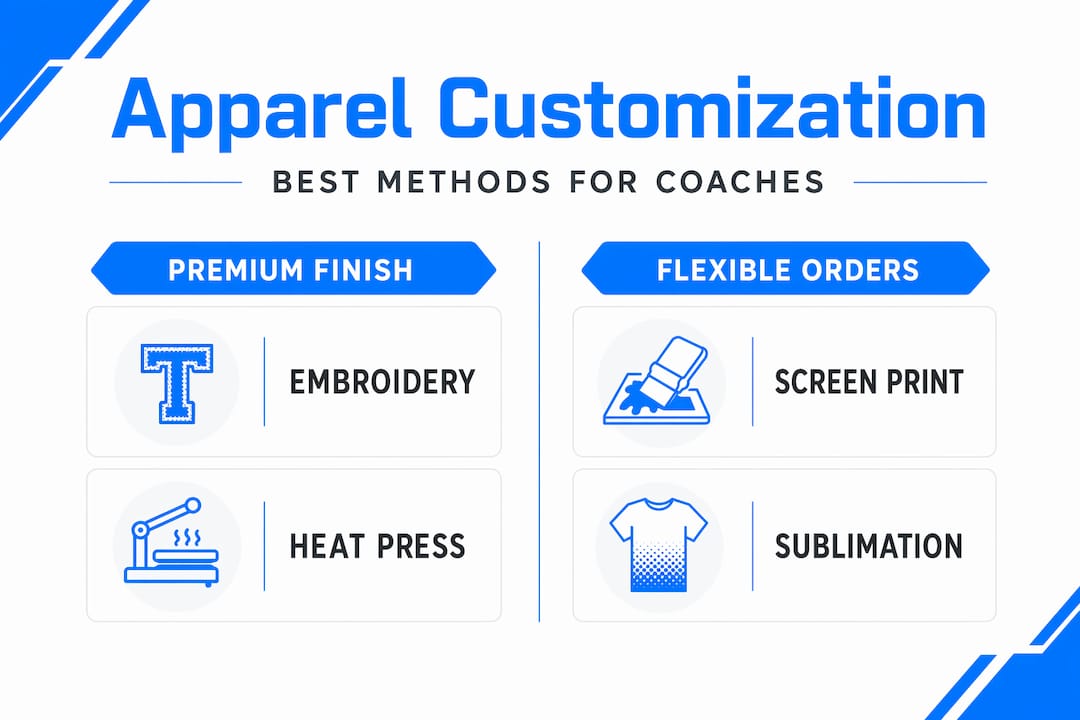
The four main customization methods each have distinct strengths:
| Method | Best for | Durability | Min. order |
|---|---|---|---|
| Embroidery | Logos, chest crests, premium feel | Very high | Typically 6+ pieces |
| Screen printing | Large back prints, bold graphics | High | Usually 12+ pieces |
| Sublimation (DTF) | Full-color designs, performance wear | High (color-embedded) | Low or single piece |
| Heat press / tackle twill | Simple names, numbers, letters | Medium | As low as one piece |
Embroidery is the gold standard for a polished look. A chest logo stitched in thread carries a different visual weight than a printed patch. It holds up through hundreds of wash cycles without fading. The trade-off is cost and flexibility. 3D embroidery techniques typically require minimum orders of 5 to 15 pieces, which means planning ahead for your full staff roster.
Sublimation, also called DTF printing, embeds the design directly into the fabric rather than sitting on top of it. This makes it ideal for performance wear and full-color graphics that would crack or peel with other methods. For coaches who want bold, detailed artwork on a moisture-wicking shell, sublimation is the right call. You can learn more about garment printing techniques to understand which method fits your design before committing.
Customization frequently includes front left chest logos, the coach’s name or initials, and “COACH” printed across the back. That simple combination does a lot. It signals authority, creates recognition, and ties the coaching staff visually to the program.
Pro Tip: If your program mixes budget levels, use screen printing for practice gear and embroidery for game-day pieces. You get the professional look where it matters without blowing your apparel budget on training shirts.
Materials and performance features
A lot of coaches pick apparel based on how it looks in a product photo. That approach fails quickly when you are standing on a turf field in August or coaching a winter indoor session in an overheated gym.
Fabric choice determines how comfortable and functional your coaching clothing actually is. Here are the most important material categories and what each one gives you:
- 100% polyester: The performance default. Lightweight, quick-dry, and resistant to shrinking. Most athletic polos and warm-up jackets use polyester. The downside is that it can feel less premium than natural fibers.
- Cotton: Breathable and soft, but absorbs sweat and takes longer to dry. Better for lower-intensity coaching environments or off-field wear.
- Cotton-polyester blends: Balance comfort and performance. Common in hoodies, quarter zips, and casual training tops where you want the feel of cotton with better moisture management.
- Nano bamboo blends: An emerging option that offers natural odor control and four-way stretch for compression and mobility. Particularly useful for coaches who are physically active during practice.
- Performance mesh and woven shells: Ventilated construction that moves heat away from the body. Smart choice for outdoor spring and summer programs.
Beyond the fabric itself, look for specific performance features: UV protection ratings for outdoor coaching, moisture-wicking finishes, and four-way stretch for coaches who squat, demonstrate, or move frequently. Athletic designers consider material stretch for squatting, ventilation zones, and sweat-wicking capability when building professional coaching wear.
Fit matters too. Standard retail sizing often misses coaches who are broader, taller, or need athletic cuts. AI-driven sizing tools are now entering the custom apparel space, promising precision fits based on body measurements. AI-customized kits currently range from $450 to $755 per set, which makes them a premium-tier option but one worth watching as the technology becomes more accessible.
Pro Tip: Order a sample garment in your intended fabric before committing to a full run. What reads as “athletic fit” varies significantly by manufacturer, and a coach who gets the wrong cut will avoid wearing the apparel entirely.
How to select and order custom coach apparel
The ordering process trips up more coaches than the design process. Here is a practical sequence that helps you avoid the most common mistakes:
- Audit your team brand first. Pull your official team colors, logo files, and any brand guidelines your athletic department has issued. A supplier cannot match your colors accurately without proper color codes or approved art files. Vector files in .AI or .EPS format work best.
- Decide on your apparel mix. Identify how many pieces each coach needs, what situations they cover, and whether you need a game-day look, a practice look, and a travel look separately.
- Choose your customization method based on order size. If you have fewer than six staff members, heat press or sublimation gives you flexibility. If you have a larger staff, embroidery becomes cost-effective per piece. Turnaround times for custom-cut designs run approximately two weeks, so build that into your pre-season schedule.
- Set a realistic budget per staff member. A solid game-day polo with embroidery typically runs $35 to $65 per piece at reasonable quality. Full warm-up sets cost more. Know your ceiling before you talk to suppliers.
- Mock up your designs before approving production. A design that looks sharp on screen can look crowded on an actual garment. Tools for creating custom apparel mockups help you visualize placement, size, and color contrast before a single piece is printed.
- Collect staff sizing early. This sounds obvious and gets skipped constantly. Give your staff a sizing deadline two weeks before your order deadline. Late submissions delay everything.
- Confirm delivery and production timelines in writing. Especially before major events like season openers or tournaments.
The benefits of custom apparel for team culture
Custom coaching clothing is not a luxury item for well-funded programs. It is an investment in how your program is perceived and how your staff performs within it.
The measurable benefits go beyond appearance:
- Visual unity with players. Coordinating apparel colors and styles between coaches and players reinforces the message that everyone is part of the same program. Players notice when coaches invest in looking the part.
- Professional credibility. A coaching staff in matching, branded apparel signals organization and commitment. That impression matters to recruits, parents, and opponents before a single word is spoken.
- Coaching staff confidence. Wearing apparel that fits well, looks sharp, and represents your program changes how coaches carry themselves on the sideline. It is a small psychological edge that adds up over a season.
- Brand recognition beyond the facility. Coaches wearing personalized coach uniforms at community events, clinics, or recruiting visits extend your program’s visibility far beyond game day.
“When your coaching staff looks like a unit, your players believe they are part of something organized and worth committing to.”
Custom team apparel sends a signal that the people leading the program take it seriously. That signal reaches everyone in the building.
My take on what coaches get wrong about custom apparel
I have watched coaches put enormous energy into designing custom player uniforms and then throw together staff apparel as an afterthought. That disconnect undercuts everything the player uniforms are trying to do.
What I have learned is this: the details you skip in apparel selection are exactly what people notice. A coaching polo with a logo that is slightly too small, printed on the wrong side of the chest, in a color that does not quite match the team’s actual brand? That is what shows up in every sideline photo for the next two seasons.
The other mistake I see constantly is ordering based purely on price. The cheapest option often means lower-grade fabric, inconsistent color matching, and a fit that nobody on the staff actually wants to wear. Coaches who go that route end up with $18 shirts sitting in lockers because nobody will put them on in front of a crowd.
My honest advice: spend a little more on fewer pieces done right. Two or three well-made, well-designed items that coaches actually wear consistently will always outperform a full wardrobe of mediocre gear that stays in the equipment room. AI fitting tools are interesting territory worth watching as costs come down. For now, ordering samples and getting real fit feedback from your staff before committing to a full run is the most reliable process I have seen work.
— Christian
Get your custom coach apparel from Tektonla
If you are ready to move from research to production, Tektonla has the capabilities and the product range to handle exactly what coaches and team managers need.
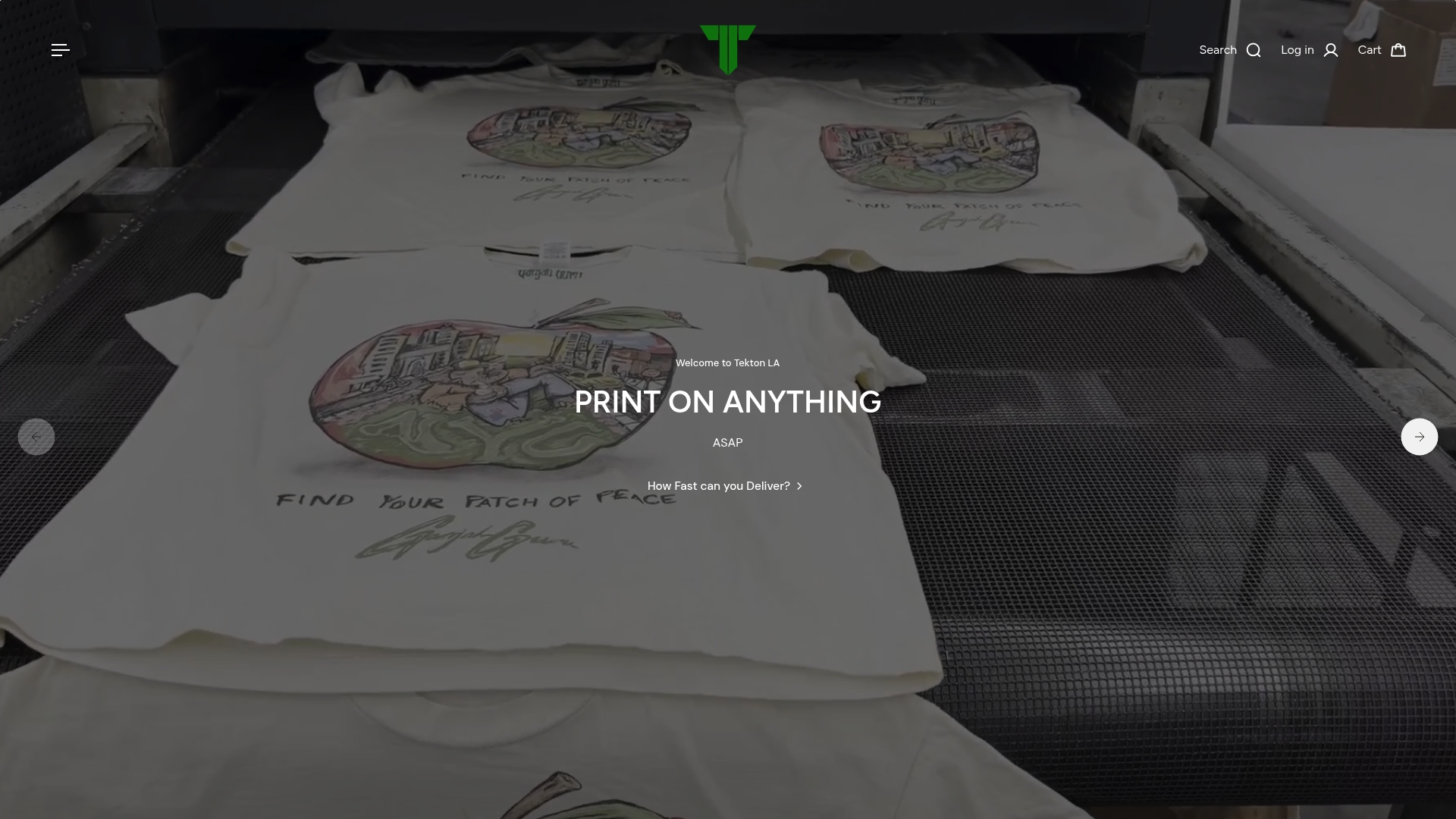
Tektonla, based in Downtown Los Angeles, offers garment-dyed shirts, garment-dyed sweatshirts, long sleeve options, and the men’s coach camo jacket, all customizable through embroidery, DTG, sublimation, screen printing, and more. No minimum order requirements on blanks means you can outfit a small coaching staff without being forced into bulk quantities you do not need. Fast turnaround, quality materials, and real customization support make Tektonla the right partner for programs that want their staff apparel to match the standard they hold for everything else.
FAQ
What is custom coach apparel exactly?
Custom coach apparel refers to clothing worn by coaches and team staff that has been personalized with team branding, logos, colors, and names. It includes items like polos, hoodies, jackets, and warm-ups produced through techniques like embroidery, screen printing, or sublimation.
What customization methods work best for small coaching staffs?
Heat press and sublimation are the most flexible options for small groups because some techniques allow orders of one piece. Embroidery typically requires larger minimum orders but delivers a more premium finish.
How long does it take to receive a custom apparel order?
Timelines vary by method and provider. Standard orders often ship within one to two weeks, while custom-cut and designed kits can take approximately two weeks from design approval to delivery. Always confirm timelines before a season deadline.
Does coach apparel need to match player uniforms?
It does not have to match exactly, but coordinating colors and styles between coaches and players creates a stronger, more unified program image. Many programs design their coaching apparel to complement player uniforms directly.
What fabrics are best for outdoor coaching in hot weather?
Polyester and performance blends with moisture-wicking finishes are the best choice for warm, outdoor coaching environments. Look for fabrics with four-way stretch and ventilation features for maximum comfort during active practice sessions.