


You spend months planning an event. You nail the venue, the speakers, the schedule. Then you hand out merch with cracked logos and washed-out colors, and that’s what people take home. Understanding why print quality matters for event merch is not a minor production detail. It’s the difference between merch that stays in a drawer and merch that walks around town advertising your brand for years.
Table of Contents
- Key takeaways
- Why print quality matters in event merch
- How print quality drives brand impressions and sales
- Common print quality problems and how to fix them
- How to evaluate and select a print vendor for events
- The long-term benefits of high-quality printed merch
- My honest take on print quality and event merch
- Get event merch that actually holds up
- FAQ
Key takeaways
| Point | Details |
|---|---|
| Print quality shapes brand perception | Blurry prints or fading colors signal carelessness, directly eroding audience trust in your brand. |
| Durable merch multiplies brand impressions | High-quality prints last longer, generating thousands of brand impressions from a single item. |
| Retention depends on quality | Nearly 65% of consumers keep branded products six months or longer when durability and design meet expectations. |
| Vendor accountability prevents inconsistency | Fragmented sourcing across multiple vendors creates color and quality mismatches that damage brand credibility. |
| Fewer, better items outperform bulk giveaways | Strategic investment in print quality drives more engagement than distributing large volumes of low-quality merch. |
Why print quality matters in event merch
Print quality in the context of event merchandise refers to three interconnected factors: sharpness, color accuracy, and durability. A sharp print means crisp lines, legible text, and clean edges on logos or artwork. Color accuracy means the red on your tee matches your brand guidelines, not some faded approximation of it. Durability means the design survives washing, wearing, and time.
Common quality failures include blurry artwork from low-resolution files, color shifting caused by poorly calibrated equipment, and print cracking from improper ink curing. These issues show up on every merch type you might produce. A screen-printed tee, a sublimated bag, a digitally printed banner. Each format has its own technical requirements for achieving a clean result.
The print method you choose matters enormously. Screen printing delivers bold, durable results on apparel but requires precise setup for each color. Direct-to-garment (DTG) printing handles complex, multicolor artwork well but demands compatible fabric blends for sharp output. Sublimation works beautifully on polyester but fades on cotton. Screen printing for brands is a proven choice for event apparel precisely because the ink bonds directly with the fabric fiber.
- Sharpness: Minimum 300 DPI resolution for print files
- Color accuracy: Confirm Pantone or CMYK color specs with your vendor before production
- Durability: Ask specifically about ink type, curing method, and expected wash cycles
- Compatibility: Match your print method to the fabric content of each garment
Pro Tip: Before approving any order, request a physical sample printed on the actual garment material you plan to use. Digital mockups do not show how ink interacts with fabric texture.
How print quality drives brand impressions and sales
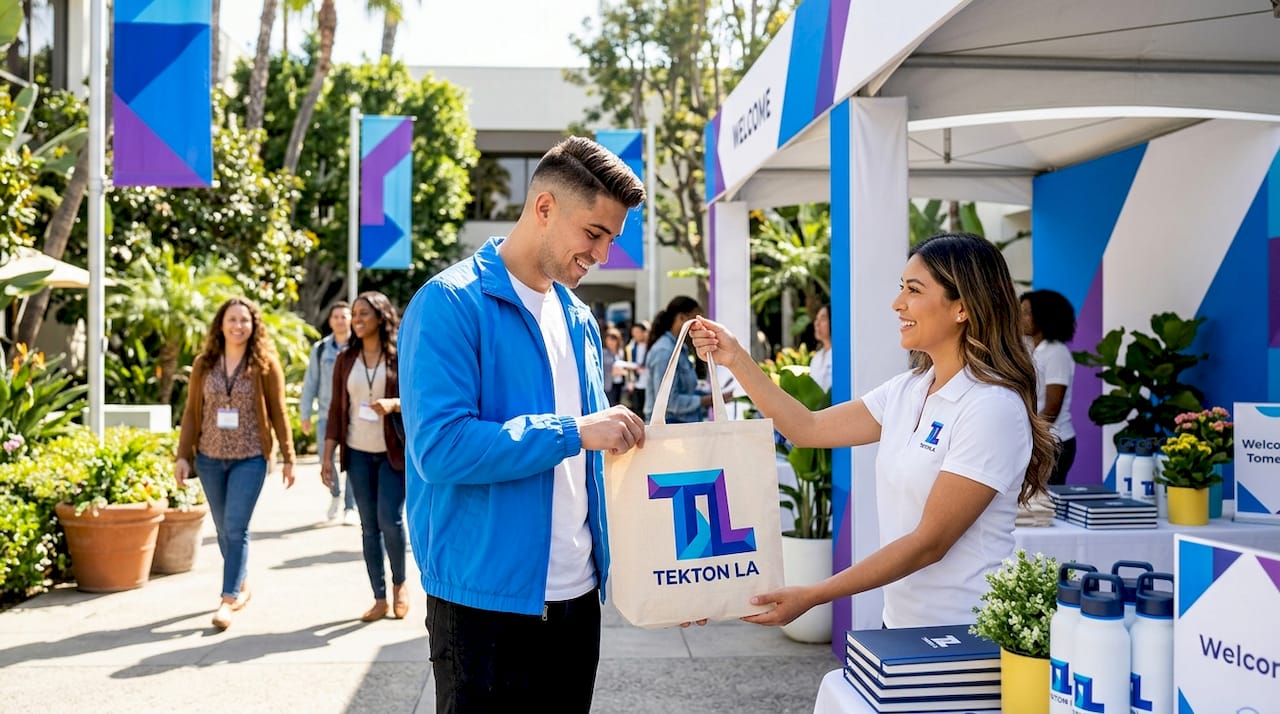
The importance of print quality goes well beyond aesthetics. Research shows promotional items keep rates correlate directly with whether the item feels useful and well-made. A $6 tote bag can generate roughly 5,000 brand impressions over its lifetime, at a cost-per-impression of just $0.001. That math only works if the item is good enough to keep using.
Poor print quality breaks the chain. When someone receives a shirt with a cracked logo after two washes, they stop wearing it. The brand impressions stop accumulating. The ROI disappears. Blurry or inconsistent prints also communicate something subtler and more damaging: that your organization does not pay attention to details.
“Brands that invest in print quality signal to their audience that the experience they deliver is worth caring about.”
There is also neuroscience behind why this matters. Printed materials require 21% less cognitive effort than digital media, and physical print generates 75% brand recall compared to 44% for digital. When your event merch is beautifully printed, it activates a level of engagement that a social media post simply cannot match. People touch it, wear it, and remember it.
How print quality affects sales is also measurable. 78% of consumers report viewing a brand more favorably after receiving high-quality promotional merchandise. Favorable perception translates directly into purchase intent and repeat engagement.
Pro Tip: When calculating your merch budget, factor in cost-per-impression rather than unit cost alone. A $25 premium tee that gets worn 200 times outperforms a $5 tee that gets discarded after one wash.
Common print quality problems and how to fix them
Understanding the pitfalls is half the battle. Here is a direct comparison of the most common print quality problems event organizers face, alongside the fixes that actually work.
| Problem | Root Cause | Solution |
|---|---|---|
| Colors shift between batches | Different vendors with uncalibrated equipment | Use a single vendor with shared color standards like GRACoL |
| Prints crack after washing | Over-curing or under-curing of ink | Confirm curing temperature stays within the correct range |
| Artwork looks blurry on garment | Low-resolution print files | Submit vector files or 300 DPI+ rasterized artwork |
| Color on merch doesn’t match brand guidelines | No Pantone color specs provided | Send Pantone codes with every order brief |
| Fading after minimal use | Incompatible ink and fabric pairing | Match ink chemistry to garment fabric content |
Fragmented vendor sourcing is one of the most overlooked causes of brand inconsistency. When you source blank apparel from one supplier and printing from another, you lose a single point of accountability. Each vendor’s equipment runs to different calibrations. The result is batch-to-batch color drift that slowly makes your brand look disorganized across an event season.
Ink curing is another technical detail worth understanding. Exceeding 350°F during curing damages ink elasticity, which causes premature cracking. Under-curing leaves ink vulnerable to washing out. Both failures are preventable with proper quality control at the production stage, but only if you ask the right questions before production begins.
- Ask your vendor for written curing temperature specs for your garment type
- Request a wash test on samples before approving the full run
- Insist on using the same printer for all items within a single event campaign
- Build a written brief that includes color specs, file formats, fabric content, and print method
How to evaluate and select a print vendor for events
Choosing the right print partner is where event merch quality is won or lost. The decision happens before a single shirt is printed, and it shapes everything that follows.
Start with samples. Not digital proofs. Physical samples printed on the exact garment and ink combination you plan to order. Evaluate them under natural light, check color accuracy against your brand assets, and run a wash cycle before approving anything.
- Review vendor equipment. Ask whether they own their printing equipment or outsource production. Outsourced production means you lose direct quality control.
- Confirm ink and fabric compatibility. For garment-dyed apparel or performance fabrics, the ink chemistry must match the fiber content. Eco-friendly fabric printing requires specific ink formulations to maintain color vibrancy and durability.
- Specify your color standards. Provide Pantone codes or CMYK breakdowns in your order brief. Do not rely on the vendor to interpret your brand colors from a JPEG.
- Request a production timeline with quality checkpoints. A reputable vendor builds in review stages, not just a final delivery.
- Ask about longevity. Specifically ask how many wash cycles the print is tested for and whether they guarantee color retention.
- Check for sustainability practices. 49% of consumers trust brands more when they demonstrate genuine eco-commitment. Vendors using water-based inks and locally sourced materials give you an edge with this audience.
Pro Tip: Ask your vendor directly: “What causes prints from your facility to fail, and what do you do to prevent it?” The quality of their answer tells you more than any portfolio.
The long-term benefits of high-quality printed merch
Event merch doesn’t stop working when your event ends. That’s the strategic opportunity most organizers miss. A well-printed piece of apparel keeps circulating in the world, generating brand impressions long after the last session wraps.
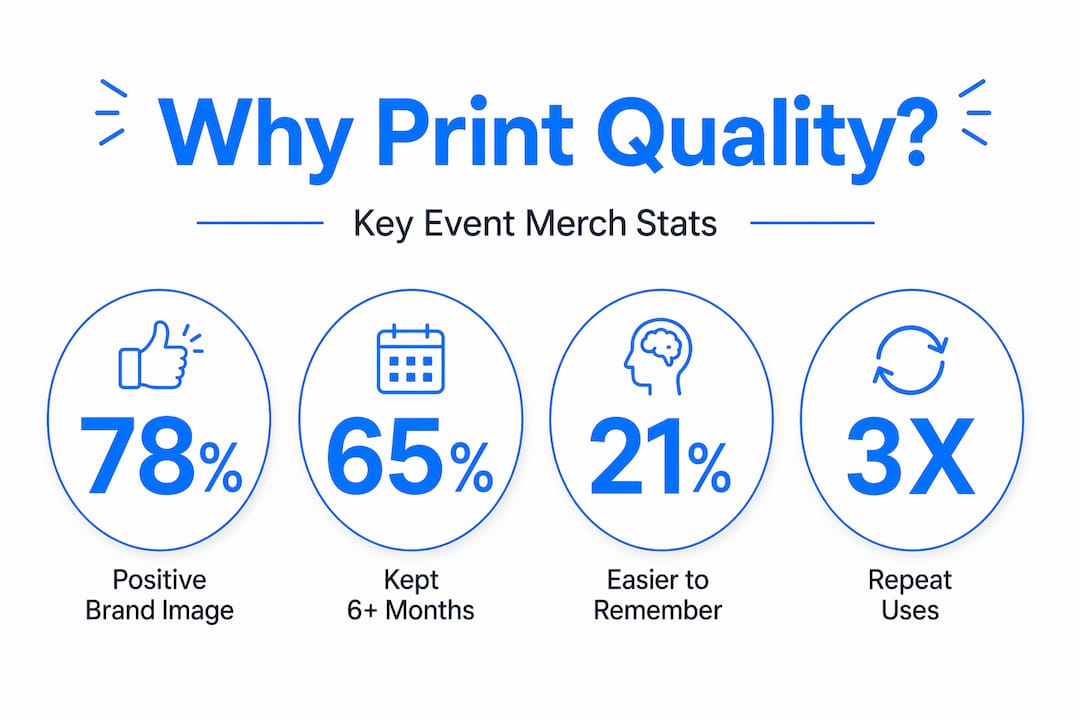
65% of consumers keep branded products for six months or more when the quality meets their expectations. That retention window is an ongoing marketing channel. Every time someone wears your event tee to the gym or carries your branded bag to the grocery store, your brand gets seen by new eyes.
The benefits of high-quality prints extend into brand trust and perceived value. There’s a direct connection between the quality of the physical item someone holds and the impression they form about the organization behind it. A premium print on a premium garment communicates that your brand invests in the experience it delivers. A faded, cracked print communicates the opposite.
- Brand recall: High-quality physical merchandise generates stronger memory associations than digital touchpoints alone
- Shelf life: Durable prints stay in rotation longer, extending the ROI window well beyond event day
- Sustainability alignment: 68% of consumers prefer recycled or reusable materials, and high-quality items that last reduce waste by default
- Emotional connection: Premium merch becomes a keepsake, not just a giveaway, strengthening loyalty between your audience and your brand
- Reduced waste cost: Cheap merch that gets discarded represents sunk cost. Quality merch that stays in circulation justifies its price
Brands viewing merch as consumer experiences are moving away from volume-based thinking and toward fewer, better items. The event organizers winning on merch in 2026 are the ones treating a printed tee as a brand touchpoint with a multi-year lifespan, not a line item to be minimized.
My honest take on print quality and event merch
I’ve watched a lot of event organizers make the same mistake. They spend serious money on the design phase, hire a great graphic designer, build a strong visual identity, and then hand the production brief to whoever gives the lowest quote. The design is great. The print is terrible. And the merch undermines every dollar spent on branding.
What I’ve learned from working with event teams is that the gap between a good-looking mockup and a great-looking garment is entirely about production quality. Color in a PDF looks nothing like color printed on a washed cotton tee unless someone calibrated the whole chain. Most budget vendors have not done that calibration work.
My contrarian view: fewer, better items consistently outperform large-volume giveaways. I’ve seen a custom branded apparel campaign with 200 premium shirts generate more social media visibility and word-of-mouth than an event that handed out 2,000 cheap bags. People photograph things they’re proud to wear. They don’t photograph things they’re embarrassed by.
The vendor relationship matters as much as the vendor’s equipment. A printer who asks questions about your brand, your audience, and your goals for the merch is worth more than one who just takes the file and runs the job. Print quality is collaborative. Treat it that way.
— Christian
Get event merch that actually holds up
If you’ve made it this far, you already understand that print quality is a brand decision, not just a production detail. Tektonla builds event merchandise for organizations that take their brand seriously, from garment dye shirts with vibrant, wash-resistant prints to the latest Garment Dye Shirt 3.0 engineered for superior color retention and comfort. Every item is produced in Downtown Los Angeles using durable inks, locally sourced materials, and print methods matched to the garment. Whether you need screen printing, DTG, or sublimation, Tektonla gives you a single point of accountability from blank to finished product. Explore the full range at Tektonla and build merch your audience will actually keep.
FAQ
What does print quality mean for event merchandise?
Print quality in event merch refers to the sharpness, color accuracy, and durability of the printed design on items like apparel, bags, and signage. High-quality prints maintain their appearance after repeated use and washing, while poor-quality prints crack, fade, or blur quickly.
How does print quality affect brand perception?
Poor print quality signals that a brand does not pay attention to details, which can erode customer trust and damage professional credibility. High-quality prints communicate investment and care, both of which strengthen brand perception.
Why do consumers keep high-quality promotional merchandise longer?
Research shows that 65% of consumers retain branded items for six months or more when durability, design, and material quality meet their expectations. Items that look and feel premium are kept, worn, and used, which directly extends the brand impression window.
What causes print cracking on event merch garments?
Print cracking is most often caused by improper ink curing during production. Exceeding 350°F during the curing process damages ink elasticity, while under-curing leaves ink insufficiently bonded to the fabric.
How many brand impressions can a single piece of quality merch generate?
According to ASI research, a well-made promotional item like a tote bag can generate approximately 5,000 impressions over its lifetime at a cost-per-impression of $0.001, making high-quality merch one of the most cost-effective brand awareness channels available.