


On demand printing is a fulfillment model where products are manufactured only after a customer places an order, eliminating inventory entirely. This approach, formally called print on demand (POD), connects your design files to automated production systems that print, pack, and ship directly to the buyer. Platforms like Shopify and providers like Tektonla have made this model accessible to solo designers and growing brands alike. With digital printing technologies advancing rapidly, understanding how POD works is now a practical requirement for anyone building a custom apparel or promotional product business in 2026.
How does the on-demand printing process work?
On-demand printing is a five-step fulfillment process that begins with design and ends with delivery, with zero inventory held at any point. Each step is tightly connected through automation, which is what makes the model financially viable for small businesses.
- Design creation. You upload a print-ready file to a POD platform or provider. File quality directly affects output quality, so following print file best practices before submission prevents costly reprints.
- Order placement. A customer purchases through your storefront, whether that’s a Shopify store, an Etsy shop, or a direct website.
- Automated routing. The order triggers an API call that sends production details directly to the print facility. API triggers linking storefronts to POD providers create a zero-inventory warehouse model, enabling on-demand manufacturing without any manual handoff.
- Printing and quality control. The item is printed using DTG, sublimation, or screen printing, then inspected before packaging.
- Direct shipping. The finished product ships from the print facility straight to the customer, bypassing your hands entirely.
This workflow means you never touch physical inventory. The entire chain from purchase to delivery can operate while you sleep, which is the core operational advantage POD holds over traditional fulfillment.
Pro Tip: Always order a sample of every new product before listing it publicly. What looks correct on screen can print differently depending on fabric weight, color, and the specific printing method used.
What are the key benefits of on-demand printing for entrepreneurs and designers?
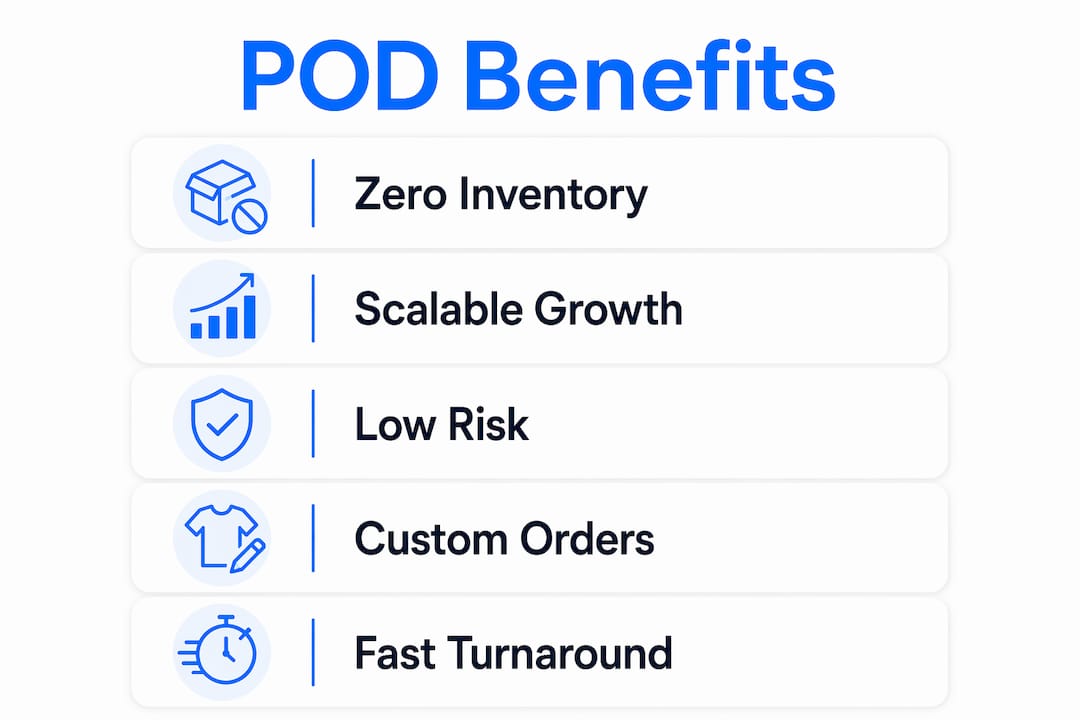
The benefits of on-demand printing are structural, not cosmetic. They change the financial risk profile of launching a product-based business.
- Zero inventory costs. POD eliminates storage fees, insurance, and inventory taxes entirely. For a startup, this can mean the difference between launching and waiting another year to save capital.
- No minimum order quantities. Modern POD operates without minimums, which lets you test a new t-shirt design with a single unit before committing to a full collection. That flexibility is genuinely transformative for designers who want to experiment.
- Personalization at scale. Variable data printing allows high levels of product personalization even within large orders. A brand can offer 50 variations of a hoodie without producing a single unit in advance.
- Reduced waste. Because nothing is printed until it’s sold, overproduction waste drops to near zero. This matters both environmentally and financially.
- Global reach without upfront investment. Entrepreneurs using POD can launch custom apparel and promotional products without large capital requirements, reaching international customers through eCommerce platforms from day one.
“Print on demand is a strategic transformation enhancing creativity and relationship-building rather than replacing them, allowing rapid personalized customer engagement.” — ASI Central
The ability to scale your apparel brand without warehousing costs is the single most underappreciated advantage POD offers. Most entrepreneurs focus on the design side and underestimate how much capital traditional inventory ties up.
How does on-demand printing compare to traditional bulk printing?
The comparison between POD and traditional offset or screen printing comes down to one variable: volume. At low quantities, POD wins on cost and speed. At high volumes, traditional printing wins on unit price.
| Factor | On-demand printing | Traditional bulk printing |
|---|---|---|
| Minimum order | 1 unit | Typically 24 to 500+ units |
| Cost per unit (low volume) | Lower | Higher due to setup fees |
| Cost per unit (high volume) | Higher | Lower with economies of scale |
| Turnaround time | 2 to 5 business days | 1 to 3 weeks |
| Inventory required | None | Yes, upfront purchase required |
| Customization per unit | Full personalization possible | Limited without reprinting |
| Financial risk | Minimal | Significant upfront commitment |
The cost crossover point is concrete. Digital POD is cost-effective below approximately 4,200 units; offset printing only becomes financially superior beyond that volume. For most independent designers and early-stage brands, that threshold is never reached, which means POD is the rational default choice.
Speed is the other decisive factor. Traditional screen printing requires film separations, screen burning, and press setup before a single shirt is printed. POD skips all of that. A DTG printer can go from file to finished garment in under an hour, which matters enormously for event-specific merchandise or campaign drops with tight deadlines.
Pro Tip: If you’re producing branded merchandise for a one-time event or product launch, POD is almost always the right call. Reserve bulk printing for proven bestsellers where you can accurately forecast demand and benefit from the lower per-unit cost.
What technologies and fulfillment models power modern on-demand printing?
The technology behind POD is what separates it from simple custom printing. POD is a digital, automated production ecosystem relying on demand signals, printing hardware, and fulfillment logistics working together in real time.
Core printing technologies
Direct-to-garment (DTG) printing uses inkjet technology to apply water-based inks directly onto fabric, producing photographic-quality detail on cotton and cotton-blend garments. Dye sublimation (DTF) transfers ink into synthetic fibers under heat, creating prints that are part of the fabric rather than sitting on top of it. UV printing works on rigid surfaces like phone cases, water bottles, and signage. Each technology serves a different product category, and choosing the right one affects both quality and cost.
eCommerce and API integration
Integration with eCommerce platforms like Shopify and dedicated POD apps enables automated order routing and fulfillment logistics without manual intervention. When a customer checks out, the order data flows through an API directly to the print provider’s production queue. This automation is what allows a single person to run a multi-SKU apparel brand without a warehouse or a fulfillment team.
Cloud-based workflow tools
POD relies on integrated digital ecosystems including cloud document management, API print automation, and workflow tools for consistent operation. For regulated industries, this also means printing only the latest approved version of a document or design, which reduces compliance risk and waste simultaneously. The same version-control logic applies to apparel brands managing seasonal design updates.
Understanding the POD business model at a technical level helps you ask better questions when evaluating providers and avoid costly integration mistakes.
How is on-demand printing used for branding and promotional products?
Custom printing services are most powerful when they serve a specific marketing moment. POD makes that possible without requiring weeks of lead time or a minimum order commitment.
- Custom apparel for brand identity. T-shirts, hoodies, and hats printed with your logo or artwork function as wearable advertising. A consistent visual identity across apparel reinforces brand recognition at events, on social media, and in everyday use.
- Event-specific merchandise. A product launch, pop-up shop, or trade show can have custom merchandise designed, ordered, and delivered within a week using POD. Traditional printing cannot match that turnaround for small runs.
- Campaign-driven drops. Limited-edition product drops tied to a marketing campaign create urgency and exclusivity. POD lets you run these without pre-purchasing inventory that may not sell.
- Personalized customer gifts. Sending a customer a product with their name or a custom message printed on it creates a memorable brand interaction. Variable data printing makes this scalable across large customer lists.
- Promotional product sampling. Before committing to bulk branded merchandise, POD lets you test multiple designs with real customers and collect feedback. This approach reduces the risk of ordering 500 units of a design that underperforms.
Pairing POD with a strong social media presence amplifies its impact. A designer who drops a new shirt design on Instagram and fulfills orders through a POD provider can go from concept to customer in under 48 hours, with no capital at risk.
Key takeaways
On demand printing is the most financially accessible production model for entrepreneurs and designers launching custom apparel or promotional products, because it removes inventory risk, enables personalization, and scales with demand rather than against it.
| Point | Details |
|---|---|
| Zero inventory model | POD produces items only after orders are placed, eliminating storage costs and overproduction waste. |
| Cost advantage below 4,200 units | Digital POD is cheaper than offset printing for runs under approximately 4,200 units. |
| Automation drives efficiency | API integrations between storefronts and print providers remove manual steps from order to delivery. |
| Personalization is a competitive edge | Variable data printing enables unique, customer-specific products even within large order volumes. |
| Technology choice matters | DTG, sublimation, and UV printing each serve different products and quality requirements. |
Why workflow discipline separates POD winners from the rest
I’ve watched a lot of entrepreneurs treat POD as a passive income setup and then wonder why their reviews are inconsistent. The technology is reliable. The gap is almost always in the workflow around it.
Effective POD workflows require processes beyond equipment, including version control, proofing, pricing, and customer communication. That sentence sounds obvious until you’re managing 12 active SKUs and a customer receives last season’s design because you never updated the production file. Version control is not glamorous, but it’s what keeps your brand’s quality consistent at scale.
The other thing I’d push back on is the idea that POD is only for small operators. The same model that lets a solo designer test a hoodie design also powers corporate document management systems where compliance depends on printing only the current approved version. The infrastructure is identical. The discipline required is the same. What changes is the stakes.
My honest advice: treat your POD setup like a real production system from day one. Document your file naming conventions, set up approval steps before any new design goes live, and build a feedback loop with your print provider. The brands that scale well with POD are not the ones with the best designs. They’re the ones with the tightest processes.
— Christian
Start printing custom apparel with Tektonla
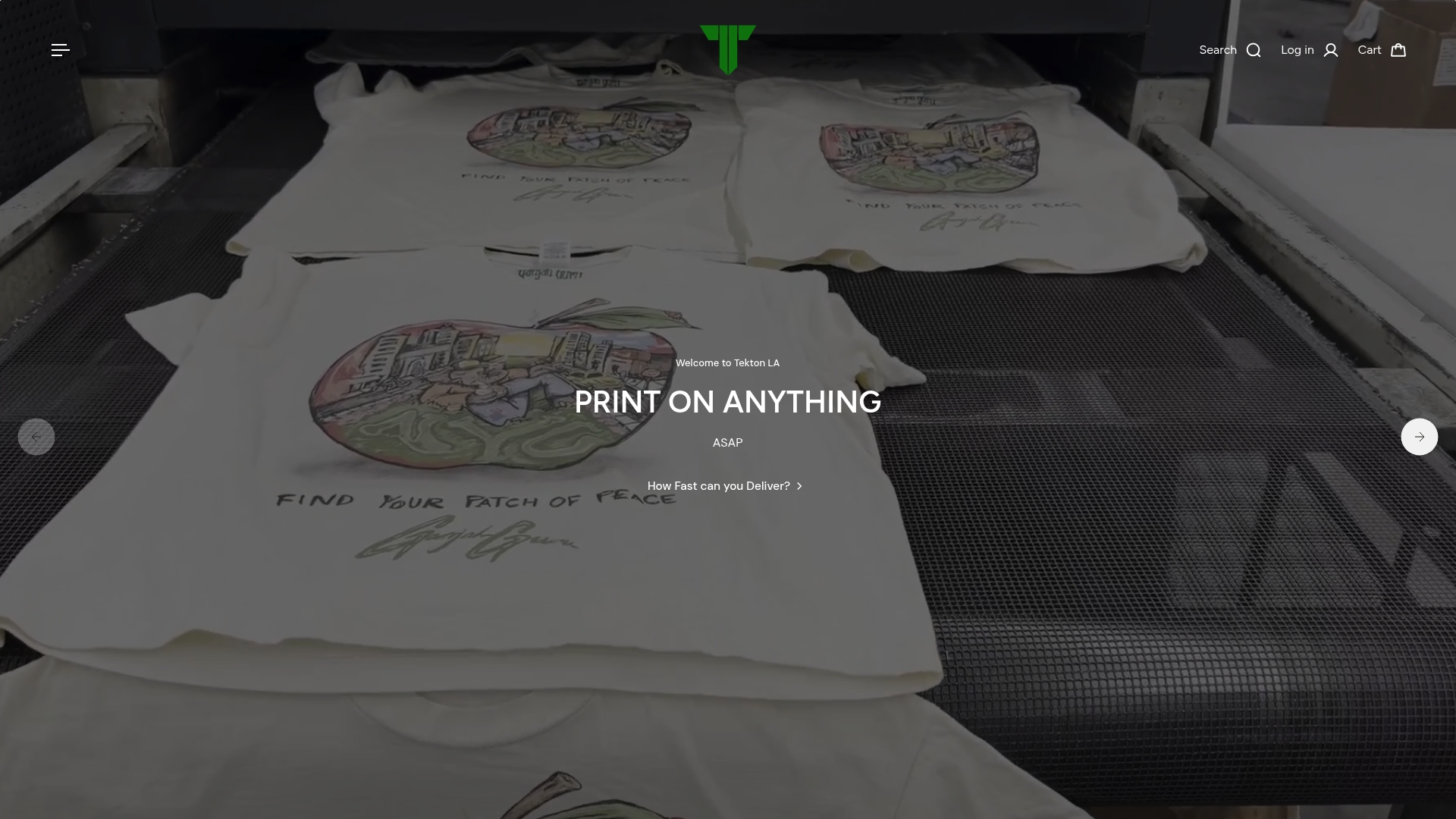
Tektonla is based in Downtown Los Angeles and offers DTG, sublimation, embroidery, screen printing, and embossing with no minimum order quantities on blanks. Whether you’re testing a new design or fulfilling a branded merchandise order for an event, Tektonla’s fast-turnaround production and private label options give you the quality and flexibility POD demands. Start with the Printers Shirt for a clean, print-ready canvas, or explore the Garment Dye Shirt for a premium washed aesthetic that photographs well for social content. Contact Tektonla directly to discuss your project and request samples before committing to a full run.
FAQ
What is on demand printing in simple terms?
On demand printing is a production model where items are printed only after a customer orders them, with no inventory held in advance. It connects your design to an automated print and ship workflow.
How does on demand printing differ from traditional printing?
Traditional printing requires large minimum orders and upfront payment for inventory, while POD produces single units with no minimums. Digital POD is cost-effective for runs below approximately 4,200 units, after which bulk offset printing becomes cheaper per unit.
What printing methods are used in on demand printing?
The most common methods are direct-to-garment (DTG) for fabric, dye sublimation for synthetics and hard goods, and screen printing for high-volume runs. The right method depends on the product, fabric type, and design complexity.
Can on demand printing work for promotional products and events?
Yes. POD’s fast turnaround, typically two to five business days, makes it well-suited for event merchandise, campaign drops, and branded giveaways where lead time is short and quantities are unpredictable.
Do I need a Shopify store to use on demand printing?
No, but eCommerce platforms like Shopify simplify the process by automating order routing to your print provider via API. You can also work directly with a provider like Tektonla without a dedicated storefront.