


Custom tees at festivals are the single most cost-effective tool for group visibility, brand promotion, and personal expression in a crowded event environment. Whether you’re coordinating a crew of 10 volunteers or launching a merchandise line for 10,000 attendees, personalized tees for festivals solve practical problems while creating emotional connections that outlast the event itself. The benefits of custom t-shirts extend far beyond aesthetics. They function as wearable infrastructure, turning every wearer into a moving signal in a sea of strangers. This guide breaks down exactly why custom tees work at festivals and how to get the most out of them.
Why custom tees work at festivals for group cohesion
The most immediate reason custom tees work at festivals is simple: matching shirts help groups stand out at stages, walkways, and crowded gathering points, reducing the stress of separation in large crowds. When your group of friends or your event crew wears the same shirt, you create a visual anchor that works even when cell service fails and noise makes shouting useless.
This benefit extends well beyond friend groups. Festival crews, volunteers, and security teams all rely on matching apparel to signal role and authority at a glance. Branded uniforms boost pride, professionalism, and cohesion while solving the practical problem of identifying who belongs where. A staff member in a plain shirt is invisible. The same person in a bold, branded tee is instantly readable from 30 feet away.
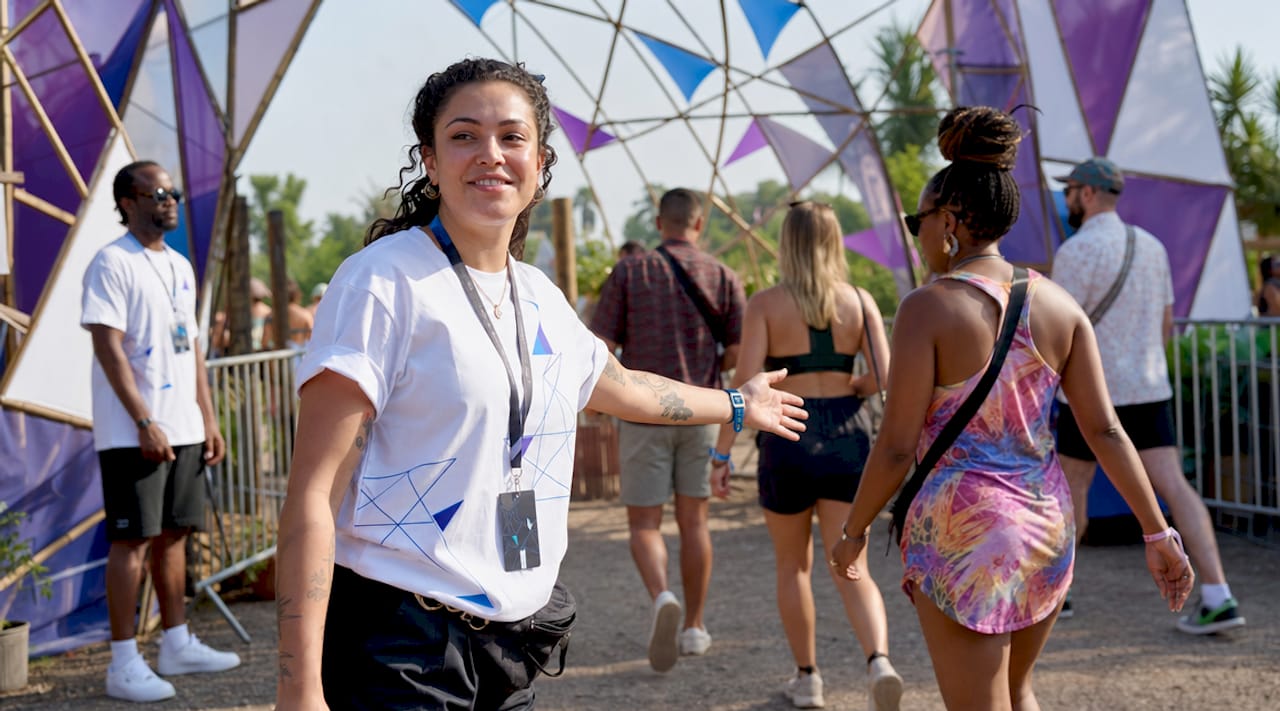
Design choices amplify this effect significantly. Bold, high-contrast design elements increase tee visibility and group recognition in festival crowds. Groups consistently gravitate toward neon colors, vintage band tee aesthetics, and playful slogans because these elements are readable at distance and memorable at a glance. A psychedelic print that looks stunning up close also needs to read as a unified shape from across a field.
Custom tees also solve the outfit coordination problem that plagues group festival planning. Instead of debating what to wear, everyone shows up in the same shirt and builds their look around it. This shared garment creates a sense of belonging before the first act even takes place.
Pro Tip: Choose a tee color that contrasts sharply with the most common festival backgrounds: grass, dirt, and night sky. Neon yellow, electric blue, and bright coral outperform black and white in low-light and outdoor conditions.
- Use large, bold typography over intricate patterns for maximum distance readability
- Limit your design to two or three colors to keep production costs down and visual impact up
- Consider a back print with a group name or slogan so the shirt reads clearly from behind in a crowd
What marketing advantages do custom festival tees offer organizers?
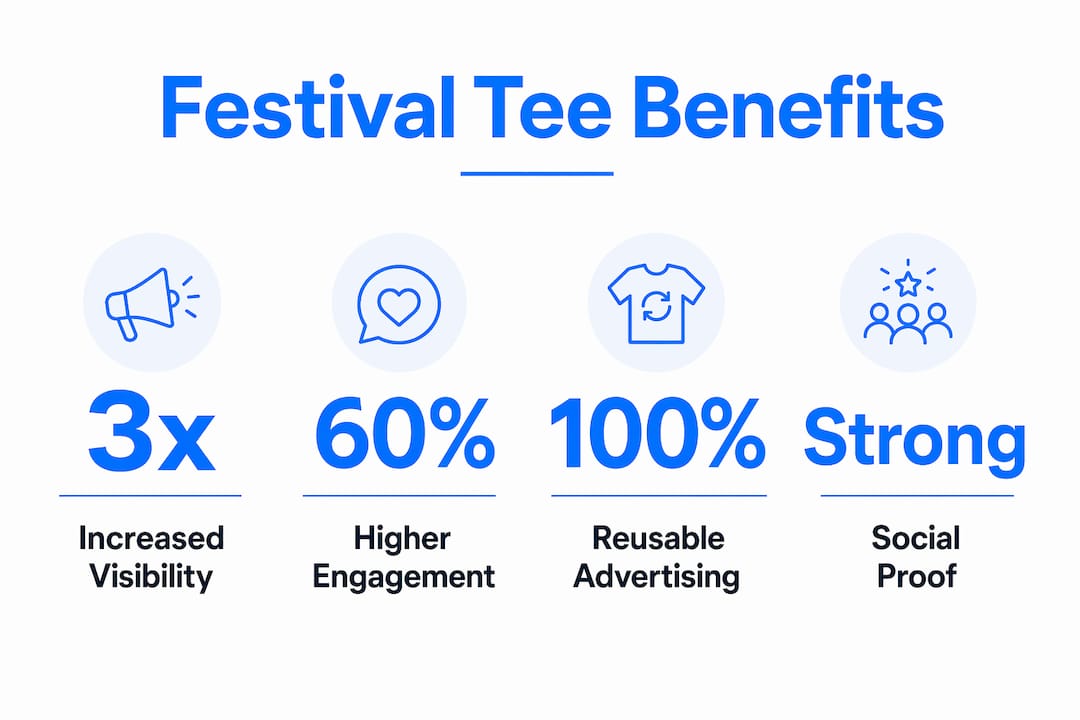
For event organizers and vendors, custom tees for events function as a marketing channel with a cost structure that digital advertising cannot match. Custom apparel converts casual wearers into loyal ambassadors extending brand impressions well beyond festival boundaries. A digital ad disappears the moment a user scrolls past it. A well-designed festival tee gets worn to the grocery store, the gym, and the next concert for years afterward.
The psychological mechanism behind this is social proof. When attendees wear custom shirts, they become organic ambassadors, building trust more effectively than paid advertising because the endorsement is voluntary. Nobody is paid to wear a Coachella tee in their neighborhood coffee shop. That voluntary display carries more credibility than any sponsored post.
“Custom apparel bridges the gap between online and offline brand presence, strengthening lasting impressions.” — iLounge
Sponsors and vendors who distribute branded tees at festivals get something banner ads and flyers cannot deliver: physical presence in the daily lives of their audience. A sponsor logo on a tee worn at a festival reaches every person that wearer encounters for the next three years. The return on investment compounds with every wear.
Integrating custom tees with social media campaigns multiplies this effect further. When you design a tee that photographs well and pair it with a festival hashtag, you create a feedback loop. Attendees post photos wearing the shirt, the brand gets organic reach, and the shirt itself becomes associated with a positive shared experience.
Pro Tip: Print a short URL or QR code on the inside collar or sleeve hem. Attendees who love the shirt can find your brand online without the design being cluttered by a web address.
- Distribute tees to media and influencers before the event to seed organic content
- Use limited-edition colorways to create scarcity and drive demand among collectors
- Coordinate tee design with your event’s visual identity so every photo taken at the festival reinforces the brand
Which materials and printing methods work best for festival tees?
The practical demands of festival wear are specific. Attendees spend hours in direct sun, move constantly, and may encounter rain, dust, or mud. Fabric choice is not a secondary consideration. It is the difference between a tee that gets worn once and one that becomes a staple.
Lightweight, breathable cotton and cotton-poly blends are the standard for good reason. They manage heat, dry quickly after rain or sweat, and hold prints well. Garment-dyed fabrics add a vintage, lived-in aesthetic that aligns with festival culture and holds up through repeated washing without fading to a flat, institutional look.
For printing, two methods dominate festival merch production in 2026. DTG printing allows quick, vivid, multi-color custom festival merch production without long lead times, making it ideal for organizers who finalize designs close to the event date. DTF printing is favored by vendors for vibrant, durable full-color designs with no minimums and rapid on-demand production, including in-booth decoration that lets vendors respond to what the crowd actually wants to buy.
| Printing method | Best for | Key advantage | Limitation |
|---|---|---|---|
| DTG (Direct-to-Garment) | Complex, photographic designs | High resolution, no setup fees | Slower on very large runs |
| DTF (Direct-to-Film) | Vendors, small batches, bold graphics | No minimums, fast turnaround | Slightly stiffer hand feel |
| Screen printing | Large uniform runs | Low per-unit cost at volume | High setup cost, limited colors |
| Embroidery | Staff and VIP apparel | Premium, durable finish | Not suited for photographic detail |
Design philosophy matters as much as technique. Festival merch design excels when it balances simplicity for distance visibility with creative details for personal connection. A design that reads as a bold shape from 20 feet away and rewards close inspection with fine detail is the gold standard. Think of the best vintage band tees: a strong central graphic, a readable band name, and enough detail to make the shirt feel like an artifact rather than a uniform.
Sustainability is a growing factor in festival apparel decisions. Eco-conscious attendees respond positively to garment-dyed shirts made from organic cotton, locally sourced blanks, and water-based inks. Brands that communicate these choices on the shirt itself, through a printed tag or a small label, turn an environmental commitment into a visible brand statement.
Pro Tip: Order a sample in your chosen fabric and print method before committing to a full run. Wear it for a full day outdoors. If it feels uncomfortable by hour four, your attendees will feel the same way.
How do festival tees create value long after the event ends?
The most underrated benefit of custom t-shirts is their lifespan. A festival tee is not consumed at the event. It enters a person’s wardrobe and continues to work for years. Designs that feel wearable help festival-goers preserve the experience and express personal identity long after the event ends. This is why the design brief for a festival tee should always include the question: would someone wear this on a Tuesday in October?
The emotional dimension of this is significant. A tee worn at a memorable event carries the weight of that memory every time it is pulled from the drawer. For attendees, it is a souvenir that requires no shelf space and actually gets used. For brands, it is a recurring impression delivered at zero additional cost after the initial production run.
The collectible dimension of festival tees is a real driver of perceived value. Limited-edition designs, year-specific prints, and artist collaborations turn a $30 shirt into something people actively seek out and refuse to discard. This collector mentality is not limited to music festivals. Food festivals, art events, and community gatherings all produce tees that become markers of participation and identity.
Consider these outcomes that well-designed festival tees consistently produce:
- Repeat wear in everyday settings, extending brand exposure across new audiences
- Social media posts months or years after the event, generating organic content with no additional spend
- Community storytelling, where attendees connect over shared memories triggered by the shirt
- Increased loyalty to events that produce desirable merch, driving repeat attendance
The role of t-shirt design in personal expression is well documented in apparel research. People use clothing to signal group membership, values, and experiences. A festival tee that captures the spirit of an event gives wearers a way to carry that identity into their daily lives, which is exactly what organizers and brands want.
Key takeaways
Custom tees work at festivals because they solve real problems for groups, create measurable marketing value for organizers, and produce emotional connections that extend the event’s impact for years.
| Point | Details |
|---|---|
| Group visibility | High-contrast, bold designs help groups stay connected and identifiable in large festival crowds. |
| Brand ambassador effect | Voluntary wearers generate organic brand impressions that outlast any digital ad campaign. |
| Print method selection | DTG suits complex designs with fast turnaround; DTF suits vendors needing on-demand, no-minimum production. |
| Fabric and comfort | Lightweight, breathable, garment-dyed fabrics perform best in outdoor festival conditions and encourage repeat wear. |
| Post-event value | Tees designed for everyday wearability continue generating brand exposure and community connection long after the event ends. |
What I’ve learned watching festival tees work in the wild
I’ve watched a lot of festival marketing strategies come and go, and custom tees remain the one tool that consistently outperforms expectations. Not because they are cheap or easy, but because they work on multiple levels simultaneously. A single well-designed shirt solves a logistics problem for your crew, creates a marketing asset for your brand, and gives an attendee something they genuinely want to own. That combination is rare.
What I’ve noticed is that the organizers who treat tee design as an afterthought always regret it. They order something generic two weeks before the event, it arrives in a color nobody loves, and it sits in a box. The organizers who brief their designer the same way they brief a poster artist, with a clear concept, a strong visual identity, and a real understanding of who will wear it, end up with shirts that people fight over.
The material question is where I see the most consistent mistakes. Organizers default to the cheapest blank available and then wonder why nobody wears the shirt after day one. Spending an extra few dollars per unit on a quality garment-dyed blank changes the entire experience. The shirt feels different. It photographs differently. It gets worn differently. That investment pays back every time a wearer puts it on in public.
My honest recommendation: treat your festival tee like a product, not a giveaway. Design it to be desirable. Print it on something worth wearing. And make sure the people distributing it understand what it represents. The shirt is not just merchandise. It is the most portable piece of your event’s identity.
— Christian
Get your festival tees from Tektonla
Tektonla produces custom festival apparel from its Downtown Los Angeles facility, with DTG, DTF, screen printing, and garment dyeing all available under one roof. Whether you need 20 shirts for a volunteer crew or 500 pieces for a merchandise booth, Tektonla delivers fast turnaround without sacrificing print quality. Their garment dye shirt is a standout choice for festival organizers who want that premium, vintage-washed look that attendees actually keep and rewear. For a classic, high-quality canvas that holds bold prints beautifully, the Printers Shirt is built for exactly this kind of use. Explore the full range at Tektonla and get your order started before your deadline hits.
FAQ
Why do custom tees work better than other festival merch?
Custom tees combine utility, visibility, and emotional value in a single item. Unlike flyers or digital promotions, a well-designed shirt gets worn repeatedly, generating brand impressions long after the event ends.
What printing method is best for festival t-shirts?
DTG printing suits organizers who need photographic-quality, multi-color designs with fast turnaround. DTF printing is the better choice for vendors who need on-demand production with no minimum order quantities.
How do I choose the right fabric for outdoor festival wear?
Lightweight cotton or cotton-poly blends with moisture-wicking properties perform best in outdoor festival conditions. Garment-dyed fabrics add a premium aesthetic and hold up well through repeated washing.
Can custom tees actually improve brand visibility at events?
Yes. Branded apparel acts as social proof and voluntary brand endorsement, building trust more effectively than paid advertising because the endorsement is organic and self-selected.
How far in advance should I order custom festival tees?
Order at least three to four weeks before your event to allow time for design approval, production, and shipping. If your timeline is tighter, DTG and DTF providers like Tektonla offer fast-turnaround options that can compress production to days rather than weeks.