


On-demand apparel printing is defined as a production model where garments are printed only after a customer places an order, eliminating the need to hold pre-made inventory. The benefits of on-demand apparel printing are direct and measurable: zero warehouse costs, no unsold stock, and the freedom to test designs without financial risk. The industry term for this model is print-on-demand (POD), and it has reshaped how startups, independent designers, and established brands approach custom clothing. The fashion industry generates between $70 billion to $140 billion in annual losses from excess stock. POD exists to solve exactly that problem.
1. Benefits of on-demand apparel printing: zero upfront inventory costs
The single biggest financial advantage of POD is that you never buy product until it is already sold. Traditional manufacturing requires brands to commit capital to bulk orders before a single customer has expressed interest. On-demand printing flips that model entirely.
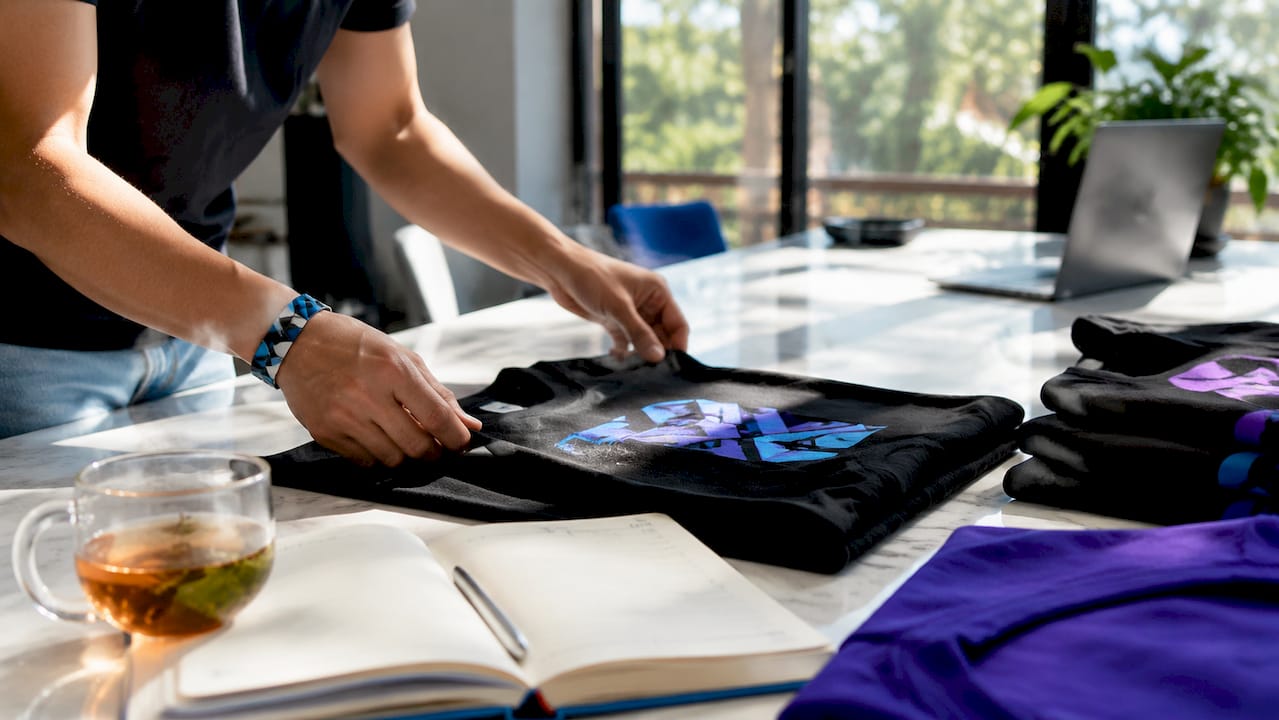
Startup capital expenditure drops by an estimated 70 to 90% when brands eliminate wholesale purchasing and storage fees. That figure means a brand that would have needed $50,000 to launch a traditional clothing line can enter the market for as little as $5,000 to $15,000. The freed capital goes toward marketing, design, and customer acquisition instead.
The cost structure also removes markdown risk. In traditional retail, unsold inventory gets discounted, sometimes below cost, to clear warehouse space. With POD, there is no warehouse and no markdown cycle. Every unit produced is a unit already paid for.
- No minimum order quantities on most POD platforms
- No storage, warehousing, or logistics overhead
- No end-of-season clearance losses
- Cash flow stays positive from the first sale
Pro Tip: When calculating your POD margins, factor in the per-unit cost difference upfront. Per-garment costs can run up to 31% higher than bulk manufacturing. Price your products to reflect the premium, not to compete with fast fashion.
2. Sustainability advantages that also build brand equity
Sustainable apparel printing is not a marketing trend. It is a structural outcome of producing only what customers actually buy. The fashion industry’s overproduction problem is staggering: excess stock valued at up to $140 billion is generated every single year. On-demand production eliminates that waste at the source.
The environmental impact goes beyond unsold inventory. On-demand apparel manufacturing can reduce carbon emissions by more than 60% by aligning production with actual demand rather than forecasted demand. That reduction comes from shorter supply chains, localized production through microfactories, and the elimination of long-haul freight for bulk shipments.
Water-based inks used in direct-to-garment (DTG) printing further reduce chemical runoff compared to traditional screen printing with plastisol inks. Brands that communicate these practices clearly build loyalty with customers who prioritize environmental responsibility. Sustainability is not just good ethics here. It is a competitive differentiator that justifies premium pricing.
3. Creative freedom to test, iterate, and launch fast
On-demand printing gives entrepreneurs the ability to launch limited editions and respond to viral trends within days, not months. Traditional print runs lock brands into a single design for hundreds or thousands of units. POD removes that constraint entirely.
A streetwear brand can drop a culturally relevant design on a Monday and have it available for purchase by Tuesday. If it sells out, they print more. If it underperforms, they retire it with no financial loss. This is the kind of agility that fast turnaround startups use to build audiences and test brand identity without betting the business on a single collection.
The personalization advantages of custom apparel printing extend beyond trend responsiveness. Brands can offer name customization, event-specific designs, team uniforms, and limited-run collaborations, all from the same production workflow.
- Launch seasonal drops in days instead of months
- Test multiple colorways or design variations simultaneously
- Offer personalized options without production complexity
- Retire underperforming designs instantly with no sunk cost
Pro Tip: Use digital mockup tools before committing to a design. Platforms that support custom apparel mockups let you validate designs with real customers before a single shirt is printed, reducing creative risk to near zero.
4. Scalability without traditional production risks
Automated fulfillment networks allow brands to scale from single-piece orders to enterprise volume without adding inventory overhead. This is the structural advantage that separates POD from every other apparel model. Growth does not require proportional capital investment.
When an order comes in through Shopify, WooCommerce, or Etsy, the fulfillment workflow triggers automatically. The order routes to the print provider, gets produced, and ships directly to the customer. The brand owner never touches the product. This automated order routing minimizes manual tasks and accelerates delivery across the entire operation.
Quality consistency at scale is maintained through digital printing technologies. DTG and dye sublimation produce identical output on every unit because the design is rendered digitally, not by hand. Advanced AI tools embedded in apparel ERP systems now improve demand forecasting and quality control, giving growing brands data-driven production alignment with market trends.
| Factor | Traditional manufacturing | On-demand printing |
|---|---|---|
| Minimum order | 50 to 500+ units | 1 unit |
| Upfront cost | High (bulk purchase required) | Near zero |
| Scaling speed | Weeks to months | Immediate |
| Inventory risk | High | None |
| Quality consistency | Variable (manual processes) | High (digital reproduction) |
5. Custom apparel as a cost-effective marketing asset
Custom printed clothing increases brand exposure at a lower cost per impression than most traditional advertising channels. A branded shirt worn in public generates repeated impressions over months or years. A digital ad generates one impression per view, then disappears.
This reframes the economics of custom apparel printing entirely. A $30 branded shirt worn 100 times in public delivers a cost per impression that no paid media channel can match. For startups with limited marketing budgets, on-demand printed apparel functions as a walking billboard that customers pay you to carry.
The personalized apparel printing benefits extend to events, corporate gifting, and influencer seeding. Brands that use custom apparel at events report stronger brand recall and higher social media engagement than brands relying solely on digital activations. The physical object creates a tangible connection that digital content cannot replicate.
6. Margin management: choosing the right blanks and pricing strategy
Margin compression is the most cited challenge in POD, and it is entirely manageable with the right approach. Using higher-quality blanks enables premium pricing that more than offsets the higher per-unit production cost. A $6 blank sold at $25 produces a worse margin profile than a $14 premium blank sold at $55.
Customer retention also improves with quality. A customer who receives a soft, well-constructed garment with a sharp print becomes a repeat buyer. A customer who receives a thin, poorly printed shirt does not come back. Selecting premium fabrics transforms apparel from a commodity into a brand asset, which increases customer lifetime value and justifies the higher retail price point.
Brands that test new designs using real customer data and adjust their product catalogs based on actual sales performance operate leaner and more profitably than brands guessing at demand. POD makes this iterative approach possible without financial exposure.
7. Choosing the right printing method for your brand
The three primary on-demand printing methods are DTG, dye sublimation (also called DTF), and screen printing. Each serves a different use case, and selecting the wrong method for your design or fabric type produces suboptimal results.
DTG printing works best on 100% cotton garments with complex, multi-color designs. It handles photographic detail well and requires no setup fees, making it ideal for small runs and one-off personalization. Digital printing methods like DTG and dye sublimation enable high-quality, fast turnarounds on customization that traditional screen printing cannot match at low volumes.
Dye sublimation produces vibrant, all-over prints on polyester fabrics and is the standard for athletic wear, swimwear, and fully custom cut-and-sew pieces. Screen printing remains cost-effective for high-volume runs of simple, one to three color designs on cotton.
When selecting a provider, prioritize these factors:
- Turnaround time and rush order capabilities
- Integration with your e-commerce platform (Shopify, WooCommerce, Etsy)
- Sample ordering policy and quality review process
- Private label and custom branding options (woven labels, hang tags)
- Local vs. overseas production and its impact on delivery speed
For brands in California, working with a local provider like Tektonla means faster turnaround, direct quality oversight, and the ability to participate in on-site garment printing for retail and event activations.
Key takeaways
On-demand apparel printing reduces startup costs by up to 90%, eliminates inventory risk, and gives entrepreneurs the creative and operational flexibility to build brands that scale without traditional manufacturing constraints.
| Point | Details |
|---|---|
| Cost reduction at launch | POD cuts initial capital expenditure by 70 to 90%, freeing budget for marketing and design. |
| Sustainability built in | Producing only sold items eliminates overstock waste and can cut carbon emissions by over 60%. |
| Creative agility | Brands can launch, test, and retire designs in days without financial exposure. |
| Scalability without overhead | Automated fulfillment handles single orders to enterprise volume with no inventory risk. |
| Margin strategy matters | Premium blanks justify higher retail prices and increase customer retention and lifetime value. |
Why on-demand printing is the smartest bet for new brands in 2026
I have worked with enough entrepreneurs to know that the biggest mistake in apparel is not a bad design. It is a warehouse full of good designs that nobody bought. On-demand printing removes that risk entirely, and I think most founders still underestimate how transformative that is.
What I find most compelling about the current moment is that the technology has caught up with the business model. DTG quality in 2026 is genuinely excellent on the right fabrics. Sublimation on performance wear looks as good as anything produced in a traditional factory. The gap between POD output and bulk-manufactured product has narrowed to the point where most customers cannot tell the difference.
The entrepreneurs I see winning with POD are not the ones chasing the lowest per-unit cost. They are the ones investing in better blanks, sharper branding, and faster creative cycles. They treat each design drop as a market test, not a permanent commitment. That mindset, combined with the print-on-demand business model, is what separates brands that grow from brands that stall.
My honest advice: start with three to five core designs, price them at a premium, and let customer data tell you what to expand. Do not try to build a full catalog on day one. The flexibility of POD is only valuable if you actually use it to iterate.
— Christian
Start printing with Tektonla in Downtown Los Angeles
Tektonla brings together DTG, sublimation, embroidery, screen printing, and embossing under one roof in Downtown Los Angeles, with no minimum order quantities on blanks and fast turnaround times built for entrepreneurs who move quickly.
If you are ready to launch your first collection or expand an existing line, the Printers Shirt and the Garment Dye Shirt 3.0 are two of the most popular starting points for brands that want quality without bulk commitments. Both are available for custom printing with private label options, woven labels, and branding add-ons. Tektonla also runs live printing events across California, giving brands a direct experiential marketing channel. Explore the full range at tektonla.com and place your first order without the overhead of traditional manufacturing.
FAQ
What are the main benefits of on-demand apparel printing?
On-demand apparel printing eliminates inventory risk, reduces startup costs by up to 90%, and gives brands the flexibility to test and launch designs without bulk purchasing. It also supports sustainable production by creating only what customers order.
Is on-demand printing cost-effective for small businesses?
Yes, because it removes warehouse costs, minimum order requirements, and unsold inventory losses. Per-unit costs are higher than bulk manufacturing, but the elimination of overhead and markdown risk makes the overall model more profitable for low-to-medium volume brands.
What printing method is best for custom apparel?
DTG works best for detailed, multi-color designs on cotton. Dye sublimation is the standard for all-over prints on polyester. Screen printing is most cost-effective for high-volume, simple designs. The right choice depends on your fabric, design complexity, and order volume.
How does on-demand printing support sustainable apparel businesses?
By producing only sold items, on-demand printing eliminates the overstock that costs the fashion industry up to $140 billion annually. It also reduces carbon emissions by over 60% compared to traditional bulk manufacturing through localized production and shorter supply chains.
Can on-demand apparel printing scale with my business?
Yes. Automated fulfillment networks handle everything from single-piece orders to thousands of units without requiring additional inventory investment. Integrations with platforms like Shopify and WooCommerce automate order routing and fulfillment tracking as volume grows.