


Most brands ordering custom stretch apparel discover the hard way that traditional printing methods crack, peel, or bleed after a handful of washes. What is performance fabric printing, and why does it solve problems that conventional screen printing simply cannot? The answer lies in a digital process engineered specifically for stretchable, technical fabrics, using flexible inks that move with the garment instead of fighting it. This guide breaks down the technology, the environmental advantages, and the practical applications that make performance fabric printing the smartest production choice for fashion brands, startups, and corporate marketing teams in 2026.
Table of Contents
- Understanding performance fabric printing and its key features
- The digital printing process for durable, stretchable fabrics
- Environmental benefits and sustainability of performance fabric printing
- Performance fabric printing vs. other printing methods: pros and cons
- How to leverage performance fabric printing for your fashion brand or startup
- Why performance fabric printing is the future of custom apparel branding
- Explore Tekton LA’s eco-friendly custom garments with performance fabric printing
- Frequently asked questions
Key Takeaways
| Point | Details |
|---|---|
| Flexible ink technology | Performance fabric printing uses specialized inks that stretch with fabrics to prevent cracking and maintain durability. |
| Eco-friendly process | Digital printing methods reduce water use and eliminate chemical waste compared to traditional screen printing. |
| High durability | Properly cured prints can last over 50 washes while preserving fabric elasticity and vibrant colors. |
| Versatile fabric compatibility | Performance fabric printing works on polyester/spandex blends and other materials, ideal for activewear and promotional apparel. |
| Ideal for on-demand production | Digital printing supports small runs and custom designs, helping startups and brands reduce inventory waste. |
Understanding performance fabric printing and its key features
Performance fabric printing is a category of digital textile printing designed for technical, stretchable fabrics used in activewear, athletic gear, and performance apparel. Unlike traditional screen printing, which deposits thick, rigid ink layers on top of the fabric, performance fabric printing uses flexible polymer inks that bond at the fiber level, allowing the print to stretch and recover without cracking.
The fabrics most commonly used in this process are polyester/spandex blends, with a typical composition of 79% polyester and 21% spandex. These blends provide four-way stretch, moisture-wicking properties, and the tight weave structure that holds digital ink consistently. Cotton alone cannot handle the same ink chemistry, which is why the fabric blend matters as much as the printing method itself.
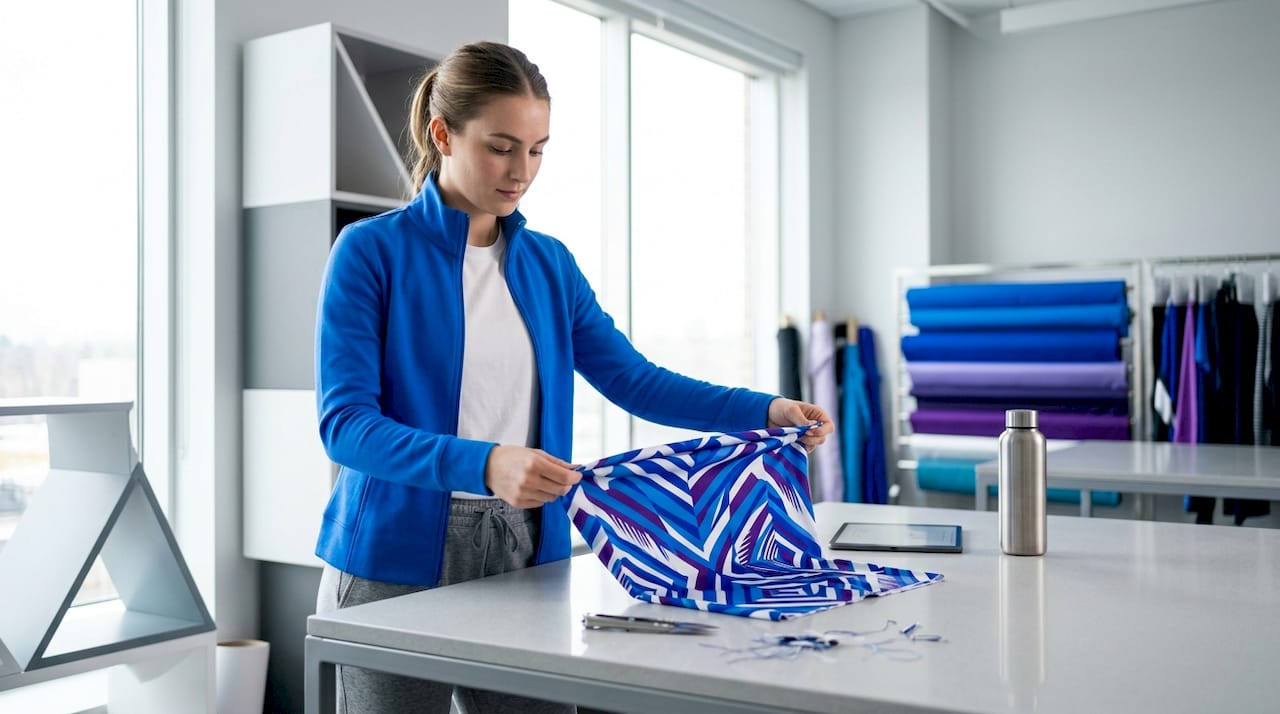
What separates performance fabric printing from other garment printing techniques is the ink formulation. Flexible polymer inks are engineered to elongate under tension without breaking the ink film. After printing, the garment goes through a heat curing stage at 160 to 170 degrees Celsius for 10 to 20 seconds. That curing window is precise for a reason: too short and the ink won’t bond fully, too long and the fabric loses its elasticity.
Key features that define performance fabric printing:
- Four-way stretch compatibility so prints survive real athletic movement
- Flexible polymer ink formulations that prevent cracking through 50+ wash cycles
- Digital direct-to-fabric (DTF) or direct-to-garment (DTG) application for precise color reproduction
- Heat curing at 160 to 170°C to lock in durability without stiffening the hand feel
- Compatibility with moisture-wicking and compression fabrics used in sportswear
The digital printing process for durable, stretchable fabrics
Understanding how performance fabric printing works removes the guesswork when you’re briefing a print partner or reviewing samples. The process has three distinct stages, and each one affects the final quality of the print.
-
Pre-treatment. The fabric is treated with a bonding agent that opens the fiber structure, improves ink adhesion, and reduces bleeding at the edges. On polyester/spandex blends, this step is critical because synthetic fibers are naturally resistant to water-based inks. Skipping or rushing pre-treatment is the most common cause of washed-out prints.
-
Inkjet printing with flexible polymer inks. A digital inkjet system deposits the design layer by layer onto the treated fabric. Because the system is digital, there are no screens, no color separation fees, and no minimum run requirements tied to setup costs. The heat-curing process at 160 to 170°C then drives ink penetration deeper into the fiber, enhancing both elasticity and wash durability.
-
Heat curing and finishing. The printed fabric passes through a heat press or conveyor dryer at the target temperature. Dwell time, typically 10 to 20 seconds, must be calibrated to the specific fabric weight and ink load. Under-curing leaves ink on the surface where it will crack. Over-curing degrades spandex content and kills stretch recovery.
Two pitfalls trip up brands working with new print vendors. First, ink over-saturation: loading too much ink onto a lightweight stretch fabric causes the weave to stiffen and the print to crack under tension. Second, insufficient curing: prints that look fine off the press fail after two or three washes because the ink never fully bonded. Ask your vendor for wash test results before committing to a production run.
Pro Tip: Request a physical wash test on your specific fabric blend before approving production. A vendor confident in their process will provide samples washed 10 to 15 times. If they hesitate, that tells you something important about their quality controls.
The contrast with screen printing benefits is worth noting. Screen printing excels on stable, heavyweight cotton but requires rigid ink deposits that cannot flex with stretch fabrics. For performance apparel, digital printing is not just a preference; it is a technical necessity.
Environmental benefits and sustainability of performance fabric printing
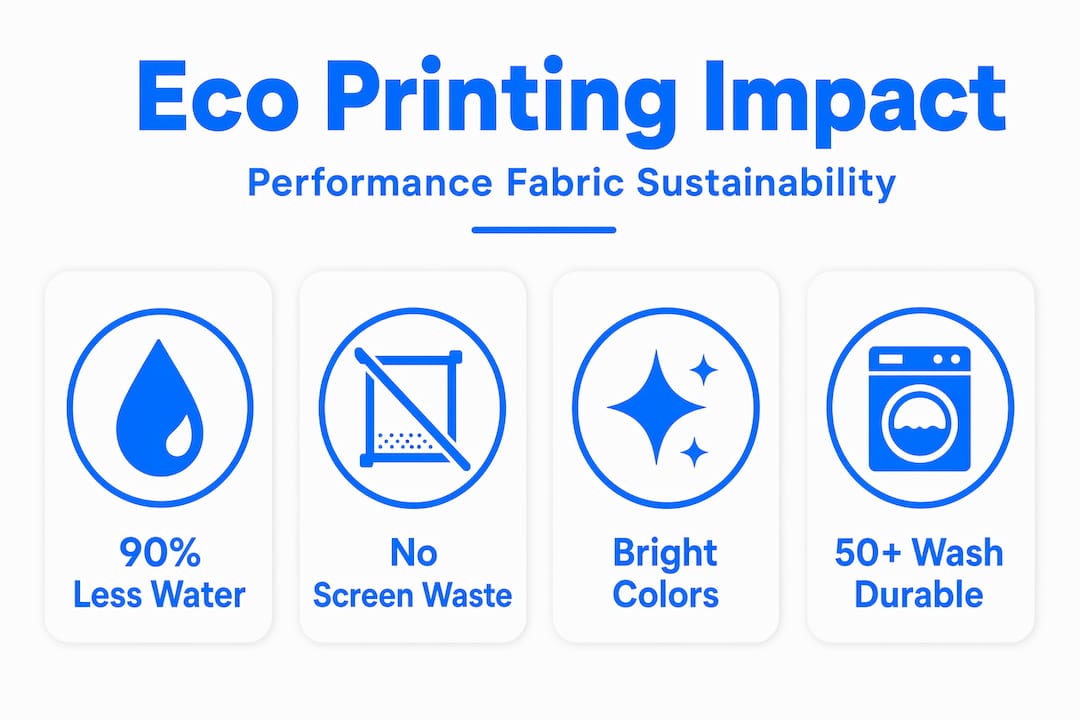
The sustainability case for performance fabric printing is not a marketing talking point. It is measurable. Digital performance fabric printing reduces water consumption by up to 90% compared to traditional screen printing and uses eco-friendly OEKO-TEX certified water-based inks, making it a direct answer to the sustainability pressure fashion brands face in 2026.
Screen printing requires water at multiple stages: screen coating, exposure, reclaiming, and ink cleanup. A single screen printing run for a multicolor design can consume hundreds of gallons of water before a single garment is finished. Digital performance printing eliminates screens entirely. There is no reclaim process, no chemical stripping, and no washout station.
“Digital textile printing reduces CO2 emissions by nearly 90% through ink and process innovations, positioning it as the most environmentally responsible production method available for custom apparel brands today.”
The inks used in performance fabric printing are water-based and OEKO-TEX certified, meaning they meet strict limits on harmful substances. This matters for brands selling eco-friendly apparel because certification gives you a verifiable claim to put in front of conscious consumers. You can also point buyers toward eco-friendly performance apparel as a real-world example of what sustainably produced activewear looks like at retail.
Key environmental advantages at a glance:
- Up to 90% less water consumed compared to screen printing
- No screen waste, no chemical strippers, no reclaim sludge
- OEKO-TEX certified water-based inks that are safe for skin contact and safe to dispose of
- On-demand production capability that eliminates overstock and deadstock waste
- CO2 emission reductions driven by ink efficiency and the absence of pre-press chemistry
For startups and corporate marketing teams, these numbers are also a business advantage. Sustainability compliance is increasingly a procurement requirement, not just a brand value. Brands that can document their production footprint win contracts that others cannot.
Performance fabric printing vs. other printing methods: pros and cons
Choosing the right printing method comes down to three variables: fabric type, production volume, and the finish you need. Here is how the main methods compare across the metrics that matter most for activewear and promotional merchandise.
| Feature | DTF printing | DTG printing | Screen printing |
|---|---|---|---|
| Fabric compatibility | All fabric types | Best on 100% cotton | Best on stable wovens/knits |
| Print feel | Slightly raised, flexible | Soft, part of fabric | Thick, can feel stiff |
| Durability | 50+ wash durability | Good on cotton, less on blends | Excellent on cotton |
| Setup cost | Low, no screens needed | Low, no screens needed | High, per-color screen fees |
| Color complexity | Unlimited, photo-quality | Unlimited, photo-quality | Limited by screen count |
| Environmental impact | Low water, low waste | Low water, low waste | High water, chemical waste |
| Best for | Activewear, stretch fabrics | Cotton tees, hoodies | High-volume, simple designs |
DTF printing is the clear winner for performance fabrics. It handles stretch blends that DTG struggles with, produces brighter opaque colors than either alternative, and scales from single samples to medium production runs without cost penalties. DTG is excellent for custom apparel printing for startups working primarily with cotton basics. Screen printing remains cost-effective only when you’re printing thousands of units with a simple two or three color design.
Pro Tip: If your product line includes both cotton basics and stretch activewear, don’t force a single printing method across both. Use DTG for your cotton pieces and DTF for your performance styles. The quality difference in the final product is significant enough to justify running two processes.
How to leverage performance fabric printing for your fashion brand or startup
Knowing the technology is one thing. Putting it to work for your brand requires a clear production process and a few decisions made before you place your first order.
-
Design for stretch. Graphics that look great flat can distort when the fabric is under tension. Keep key design elements away from seam lines and areas of maximum stretch. Use vector files and confirm your print partner can handle the resolution your design requires.
-
Start with a small test run. Digital printing’s low setup cost means you can order 12 to 24 pieces to validate color accuracy, hand feel, and wash durability before committing to a larger production run. This is one of the biggest advantages over screen printing, where setup costs pressure brands into larger minimums.
-
Build your sustainability story. Digital textile printing powers on-demand fashion by reducing water and chemical usage, enabling brands to meet 2026 sustainability standards without sacrificing print quality. Document your production choices and use that data in your marketing.
-
Test wash durability before scaling. Run your sample pieces through 10 washes before approving production. Check for color fade, cracking at stress points, and any change in hand feel. A print that fails at wash five will cost you far more in returns and reputation than the time spent testing.
-
Plan your inventory around on-demand production. One of the most underused advantages of digital performance printing is the ability to produce exactly what you need, when you need it. This eliminates the cash tied up in overstock and the environmental waste of unsold inventory.
Checklist for brand managers and marketing teams before ordering:
- Confirm fabric blend composition with your supplier
- Verify your print partner uses OEKO-TEX certified inks
- Request wash test samples on your specific fabric
- Confirm curing temperature and dwell time protocols
- Check turnaround time for your target production volume
- Align your sustainability claims with documented production data
Pro Tip: When briefing your print partner, ask specifically about their curing calibration for your fabric weight. A vendor who can give you a precise answer (temperature, dwell time, and conveyor speed) is operating at a professional level. Vague answers are a red flag. You can also explore custom garment options to find base products already suited to performance printing applications.
Why performance fabric printing is the future of custom apparel branding
Here is the uncomfortable truth most apparel consultants won’t say out loud: the brands still defaulting to screen printing for their activewear lines are not saving money. They are paying for it in returns, in wasted inventory, and in sustainability credibility they cannot build back easily.
The conventional wisdom in custom apparel has always been that screen printing is the cost-effective default and digital printing is the premium option for small runs. That framing made sense in 2015. It does not hold in 2026. Digital printing significantly reduces waste, water use, and CO2 emissions while enabling versatile, on-demand, high-quality production, which is exactly what future-focused brands need in a competitive market.
What we see consistently with startups and emerging fashion brands is that the ones who invest early in digital performance fabric printing gain two advantages their competitors cannot easily replicate. First, they build a production model that scales without the inventory risk that kills cash flow. Second, they develop a sustainability narrative grounded in real, documented production data rather than vague brand promises.
The brands that treat performance fabric printing as a niche technology for athletic wear are missing the bigger picture. The same process that produces a durable, stretch-compatible logo on a compression top can produce a full-bleed photographic print on a promotional tee with zero setup cost and a 48-hour turnaround. That kind of flexibility is a genuine competitive advantage, not a technical footnote.
Our perspective is direct: invest in technology integration before you invest in large initial stock. The ability to produce 50 units of five different colorways on demand beats producing 500 units of one colorway every time, both financially and environmentally. Brands that understand this are the ones building apparel production innovation into their core business model rather than treating it as a production afterthought.
Explore Tekton LA’s eco-friendly custom garments with performance fabric printing
If you’re ready to move from understanding to production, Tekton LA makes it straightforward. Based in Downtown Los Angeles, we specialize in high-quality, fast-turnaround custom printing on garments built for performance fabric applications. Our garment dye shirts are a strong starting point for brands wanting rich color and a soft hand feel that pairs well with digital performance printing.
For brands building out a full line, our garment dyed sweatshirts and garment dye long sleeves offer the same eco-conscious base with options for custom branding at any scale. We work with no minimum order quantities on blanks, use locally sourced materials, and support private label options for brands that need full customization. Whether you’re testing a concept or scaling a product line, our team is set up to support on-demand production that meets your sustainability and quality standards.
Frequently asked questions
What fabrics are best suited for performance fabric printing?
Performance fabric printing works best on stretchable blends like 79% polyester/21% spandex, which are standard in sportswear and activewear, because these compositions support ink flexibility and maintain durability through repeated wear and washing.
How durable are prints made with performance fabric printing?
Prints produced with properly calibrated performance fabric printing can last 50+ washes without cracking or significant fading, provided the ink is cured at 160 to 170°C for the correct dwell time.
Is performance fabric printing environmentally friendly?
Yes. It reduces water consumption by up to 90% compared to screen printing, eliminates screen waste entirely, and relies on OEKO-TEX certified water-based inks that are safe for skin contact and responsible disposal.
Can performance fabric printing handle detailed, multicolor designs?
Absolutely. DTF printing produces bright, opaque, photo-quality multicolor prints on a wide range of fabrics, including stretch blends, with no color count limitations or per-color setup fees.
What maintenance is required for digital performance fabric printing?
Water-based DTF printing requires daily printhead maintenance to prevent ink clogs, but it eliminates the screen reclaim chemicals and pre-press waste that make screen printing significantly more labor-intensive and environmentally costly to maintain.