


Yes, you can screen print on polyester, and it holds up fine, but only if you treat it as a different fabric than cotton, not a stand-in for it. The single most important move is controlling dye migration: pick a method suited to the fabric, use low-bleed or low-cure inks, and keep your cure temperature as conservative as the ink chemistry allows.
TL;DR:
- Sublimation is ideal for light-colored, high-polyester garments, offering durable, in-fiber colors without changing the fabric hand feel.
- DTF effectively prints on dark polyester and blends over 65% polyester, but requires proper powder adhesive coverage and full cure to prevent peeling.
- Controlling dye migration involves using low-bleed inks, printing a barrier layer, curing conservatively, and immediately cooling garments to avoid ghosting and color shifting.
- Accurate pretesting of dye lots and fabric composition is essential, as even identical shirts can behave differently depending on dye energy.
- Proper surface preparation, including removing finishes and static, improves ink adhesion and helps prevent issues like cracking, peeling, or scorch marks.
Table of Contents
- How Do You Choose the Right Method for Printing on Polyester?
- Why Does Polyester Behave Differently Than Cotton Under Ink?
- Screen Printing Best Practices for Polyester
- Sublimation, DTF, and HTV: When to Skip Screen Printing Entirely
- Troubleshooting: Migration, Ghosting, Adhesion, and Scorch
- What Tekton LA Has Learned Running Polyester Jobs
- How Should You Prep Polyester Fabric Before Printing?
- How Do Fabric Blends Change Your Printing Settings?
- How Do You Calibrate Equipment Specifically for Polyester?
- Do Humidity and Temperature Affect Polyester Printing?
- A Practical Note on Hand, Durability, and Speed Tradeoffs
- Let Tekton LA Handle Your Polyester Print Run
- Sources
- FAQ
How Do You Choose the Right Method for Printing on Polyester?
The right technique depends on garment color, fabric percentage, and order volume, not personal preference. Sublimation, DTF, HTV, and screen printing each solve a different version of the same problem, and picking the wrong one is the fastest way to end up with pink-tinted whites or a print that peels after three washes.
- Sublimation works best on light or white garments that are at least 65% polyester, since the dye needs synthetic fiber to bond with. It produces zero hand feel because the color becomes part of the fiber itself.
- DTF (direct-to-film) handles dark polyester and cotton/poly blends that sublimation can’t touch, since it lays color on top of the fabric rather than into it.
- HTV (heat transfer vinyl) suits small runs and simple one or two color logos, particularly on jerseys and low-quantity team orders.
- Screen printing remains the most cost-effective choice at volume, once you account for the ink and cure adjustments polyester demands.
A youth soccer jersey run in high-polyester calls for sublimation. A batch of dark hoodies with a photo-quality graphic calls for DTF. A one-off screen-printed tee for a local band’s merch table is where traditional screen printing still wins on cost per unit.
Why Does Polyester Behave Differently Than Cotton Under Ink?
Polyester fibers are dyed with disperse dyes that stay dormant at room temperature but reactivate under heat. That reactivation is called dye migration: the dye essentially gasses back out of the fiber during curing and bleeds up into your ink layer, especially white.
The symptoms are easy to spot once you know what you’re looking at. A crisp white print comes out of the dryer looking slightly pink or gray. Sometimes the shirt looks fine right off the belt, then develops a ghosted halo around the print a day or two later as residual heat keeps triggering migration in the fabric.
Dye lot matters more than most printers expect. Two shirts from the same supplier, same color, same style number, can carry different dye energy depending on when and where they were dyed. That’s why pretesting a swatch from every new lot before running a full order isn’t optional. It’s the only way to catch a hot batch before it ruins fifty shirts.
Screen Printing Best Practices for Polyester
Getting clean, durable prints on polyester comes down to five variables you can actually control: ink chemistry, barrier layers, mesh count, cure temperature, and preflight testing.
- Choose the right ink. Low-bleed polyester-specific plastisol or dedicated low-cure poly white formulations resist dye reactivation far better than standard plastisol. Water-based inks can work on lighter blends but tend to struggle with opacity on saturated polyester colors.
- Print a barrier base under white or light colors. A charcoal or gray blocker traps dye particles before they reach your top color. Screenprinting points to a mesh count between 86 and 110 for the barrier layer, low enough to deposit a thick, protective film.
- Balance mesh and squeegee pressure. You need enough ink deposit to block dye gas, but too much deposit adds unnecessary hand and slows curing. A firm squeegee stroke with a slightly off-contact screen keeps deposit consistent across the print.
- Cure conservatively and cool immediately. Push cure temperature as low as your ink allows, and avoid any spike above that target. Pull garments off the belt into forced air or a cooling conveyor right away; stacking warm shirts lets residual heat keep triggering migration for hours afterward.
- Run a preflight on every job. Check ink volume against your deposit charts, print a bleed test swatch, and confirm the dye lot before committing the full run.
Pro Tip: Keep a logbook of dryer temperature, belt speed, and bleed-test results by fabric brand and dye lot. When a supplier switches mills, that log tells you in seconds whether your old settings still apply or whether you need a new test swatch.
Sublimation, DTF, and HTV: When to Skip Screen Printing Entirely
Screen printing isn’t always the right call, and knowing when to hand a job to a different method saves you from fighting the fabric instead of working with it.
- Sublimation delivers the best long-term durability on 65 to 100% polyester because the color lives inside the fiber rather than on top of it, according to Printable Press. It’s the natural choice for light-colored sportswear, all-over prints, and jerseys that need to survive years of washing without cracking.
- DTF is the practical answer for dark garments and cotton/poly blends where sublimation simply won’t show up. Full cure and correct powder adhesive coverage matter here, since undercured DTF transfers are the most common cause of early peeling, a point covered in more depth in Tekton LA’s guide to DTF printing.
- HTV rated specifically for polyester, applied at a lower temperature than standard vinyl, works well for short runs and single-color graphics where setup speed matters more than unit cost.
The tradeoffs come down to setup cost, hand feel, and expected wash life. Screen printing wins at high volume on straightforward colorways; DTF and HTV win when you need flexibility across small batches, as this comparison of DTF and HTV lays out; sublimation wins whenever the fabric composition allows it and durability is the priority.
Troubleshooting: Migration, Ghosting, Adhesion, and Scorch
Most polyester print failures trace back to one of four causes, and each has a specific fix.
- Before you print anything, confirm the actual fabric percentage on the tag, check for finishes like anti-microbial or stain-guard treatments that change how ink adheres, and pull a test swatch from the current dye lot.
- If you see pink or gray tinting in whites, drop your cure temperature, switch to a thicker barrier base or a stronger blocker formulation, and increase base deposit before running the fix through the dryer again.
- If prints peel or crack after a few washes, check DTF powder adhesive coverage first, then verify the garment wasn’t undercured or overcured, since both extremes weaken the bond.
- If you notice scorch marks or a shiny glaze on the fabric, lower dwell time and temperature, add a Teflon cover sheet, and never stack hot shirts straight off the press.
- Send customers home with clear care instructions: cold wash, no fabric softener, and air dry or a low tumble cycle to protect print longevity over time.
Avient’s best-practices guide treats this kind of systematic preflight testing as the strongest defense against surprise migration between runs, not just a one-time fix.
What Tekton LA Has Learned Running Polyester Jobs
Routing decisions happen before the first screen is coated. A dark 50/50 blend heading to a corporate order usually goes to DTF; a 100% poly team jersey almost always goes to sublimation; a straightforward one or two color logo on cotton/poly stays on the press. That triage step avoids problems instead of fixing them later.
Every run gets logged: dryer temperature, belt speed, bleed-test results, and cooling method. When a fabric mill changes, that record shows immediately whether existing settings still hold or a fresh test swatch is needed before a full order runs.
[author_bio] [brand_signal] [internal_data]
How Should You Prep Polyester Fabric Before Printing?
Surface prep matters more on polyester than on cotton because synthetic fibers hold onto manufacturing residue that natural fibers tend to shed. Sizing agents, moisture-wicking finishes, and anti-microbial treatments are common on performance polyester, and every one of them can interfere with ink adhesion if you print straight out of the bag.
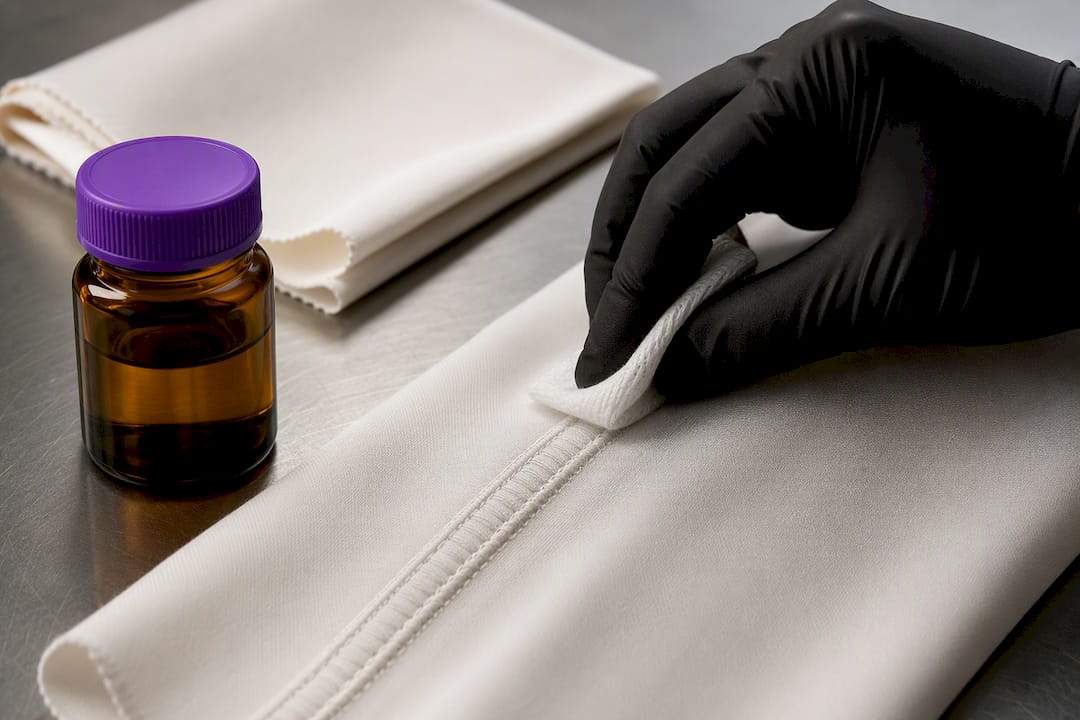
Start by inspecting the garment under good light for visible finishes or coatings; a slightly waxy or slick feel to the fabric usually signals a durable water repellent or similar treatment. A quick wipe with isopropyl alcohol on a hidden seam can reveal whether a finish is present, since it will often leave a faint residue on the cloth.
For DTG work specifically, Epson’s technical guidance calls for a specialized polyester pretreatment formulated to grip synthetic fibers, since standard cotton pretreat doesn’t bond the same way. Applying too much pretreat leaves a stiff hand and can actually reduce ink adhesion, so light, even coverage matters more than saturation.
Before any method touches the garment, press it flat to remove packaging wrinkles and check for static cling, which throws off DTF film alignment and screen registration alike. A five-minute inspection routine at the start of a job catches problems that would otherwise show up as adhesion failures three days after the order ships.
How Do Fabric Blends Change Your Printing Settings?
The polyester content still carries some dye migration risk, but the cotton fibers absorb ink differently, which changes both your cure temperature and your ink deposit needs.
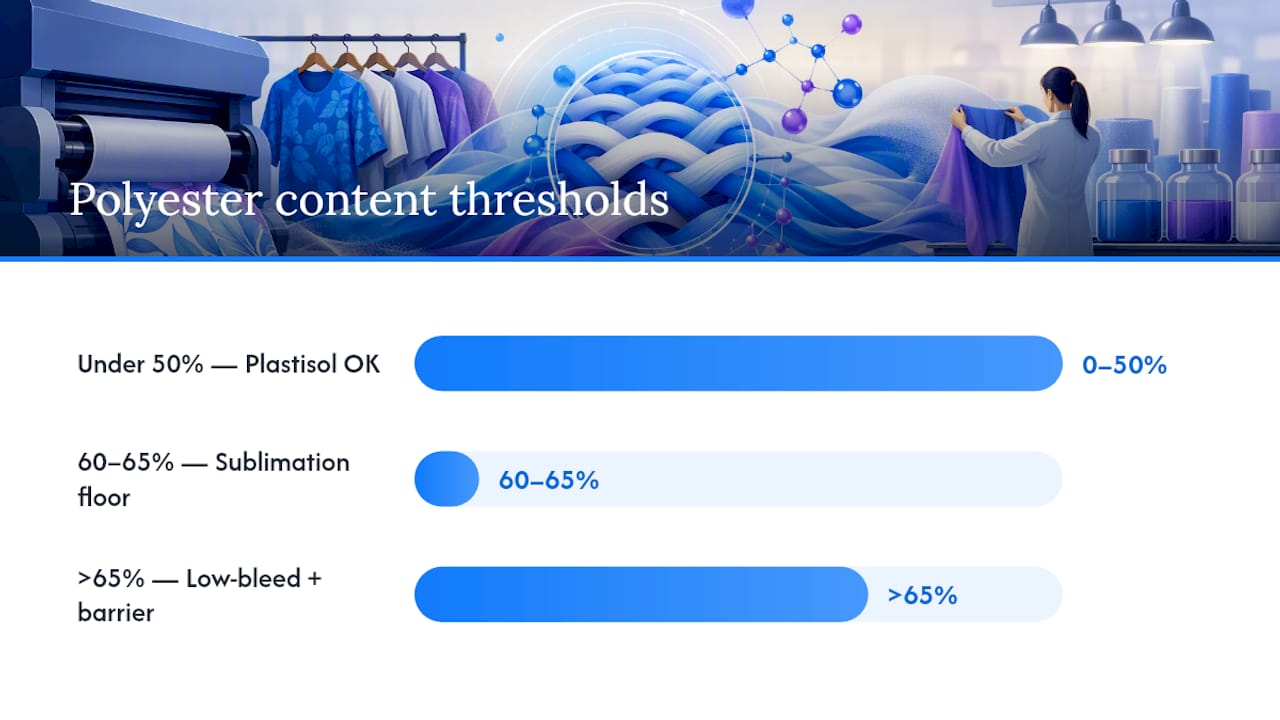
On blends under 50% polyester, standard plastisol usually performs fine with only minor adjustments to cure time. Once polyester content climbs above 65%, migration risk rises sharply enough that a low-bleed formulation and a barrier base become worth the extra step, even on a blend rather than a pure synthetic.
Sublimation loses saturation fast on blends, since the dye has nothing to bond to once cotton fibers enter the mix. TVF Inc.'s guidance puts the practical floor at 60 to 65% polyester for sublimation to produce bright, even color. Below that threshold, DTF or screen printing becomes the more reliable route.
Mesh count and squeegee pressure need small adjustments for blends too. Cotton/poly fabric tends to have a slightly rougher weave than pure polyester, which can pull more ink through the screen than expected. Dropping your squeegee angle slightly and running a test print on scrap fabric from the same roll catches over-deposit before it becomes a full order problem.
How Do You Calibrate Equipment Specifically for Polyester?
Calibration on polyester starts with the dryer, not the press, because heat control is what prevents dye migration in the first place. Map your conveyor dryer by running a thermometer strip or heat gun check across the belt width, since most tunnel dryers run hotter at the edges than the center.
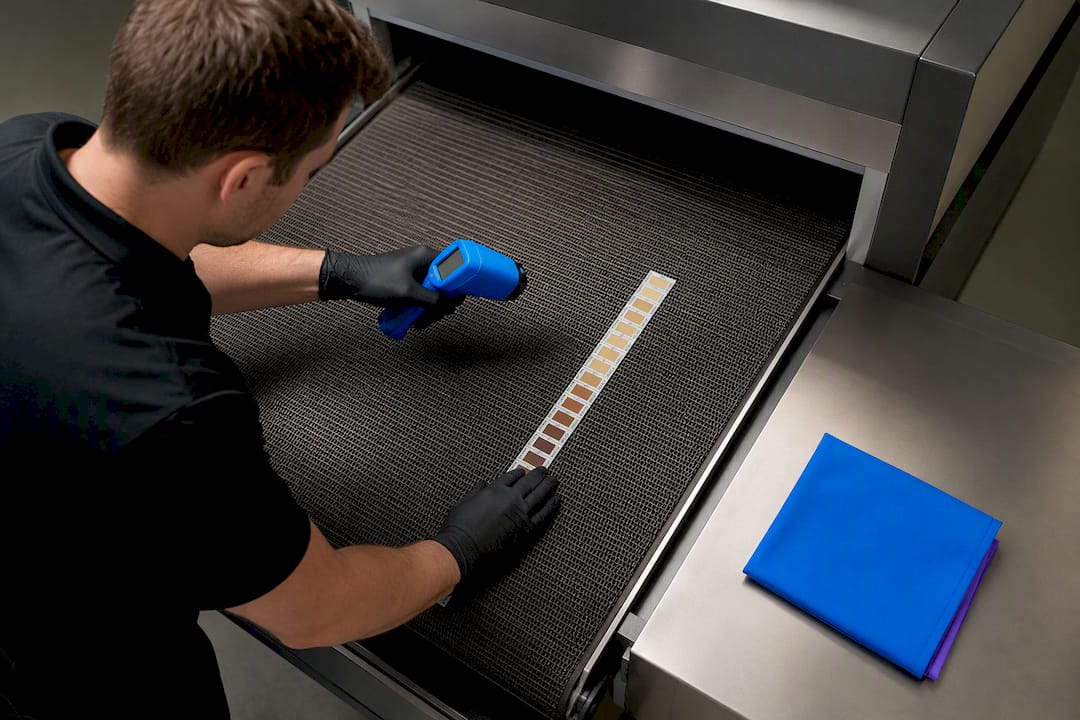
Set your target cure temperature at the low end of your ink manufacturer’s range, then confirm actual garment surface temperature with an infrared thermometer rather than trusting the dryer’s dial. Belt speed adjustments matter as much as temperature. A slower belt at a lower temperature often cures ink fully without spiking the fabric hot enough to trigger migration.
On the press side, screen tension affects deposit consistency more on polyester’s smoother surface than on cotton’s textured weave. Check tension with a tension meter before each run rather than relying on feel, since a screen that’s even slightly loose lays down uneven ink thickness across a barrier base.
Flash units need their own check too. A flash that runs too hot for even a few seconds can pre-trigger migration before the garment ever reaches the main dryer. Run a timed test flash on a scrap swatch, check for tinting, and adjust the flash height or dwell time before committing to a production run.
Do Humidity and Temperature Affect Polyester Printing?
Shop environment changes print results more on polyester than most printers expect. High humidity slows ink curing and can leave plastisol tacky even after a full dryer cycle, which then attracts dust and lint that shows up as texture in the final print.
Ambient shop temperature affects flash and cure consistency too. A shop running warm in summer means garments enter the dryer already hotter than in winter, which can push a marginal cure setting into migration territory without any change to the dryer itself. Printers running in un-air-conditioned spaces during hot months often need to drop dryer temperature slightly to compensate.
Cold shop conditions create the opposite problem: ink that’s too viscous to lay down evenly, leading to thin spots that don’t fully block dye migration in a barrier base. Storing inks at a consistent room temperature, rather than in an unheated back room, keeps viscosity predictable across a full production day.
Static buildup during dry winter months is worth watching too, particularly for DTF and vinyl work where film alignment depends on the garment lying flat and still under the heat press.
A Practical Note on Hand, Durability, and Speed Tradeoffs
Every polyester print job is a negotiation between three things: how soft the final print feels, how long it lasts, and how fast you can turn the order around. Chasing all three at once usually means chasing none of them well.
Sublimation wins on hand and wash life but only works within a narrow fabric window. Screen printing wins on speed at volume but demands the most technical control. Test conservative settings before every new job, not just the risky ones.
— Christian
Let Tekton LA Handle Your Polyester Print Run
If you’re weighing sublimation against DTF against screen printing and don’t want to burn a dozen test shirts figuring out which one fits your fabric, that decision is exactly what Tekton LA handles daily for brands, teams, and event organizers across its Downtown Los Angeles shop. Rather than guessing at cure temperatures on your own equipment, you get a production partner that already knows how a given poly blend, dye lot, or performance finish behaves before the first screen ever gets coated.
Custom printing providers often run DTF, sublimation, and screen printing under one roof, sometimes with no minimum order requirement on blanks, so small batches and full production runs can be accommodated without forcing projects into whichever method happens to be cheapest that week. If you’re not sure which method your fabric needs, request a test swatch or sample run on the Printers Shirt blank before committing to a full order, and get a straight answer on what will actually hold up on your garment.
Sources
FAQ
Can You Print Onto Polyester?
Yes. Screen printing, sublimation, DTF, and HTV all work on polyester, but each requires different settings to avoid dye migration and ensure the print bonds properly to synthetic fiber.
What Is the Best Way to Print on Polyester?
For light-colored, high-polyester garments, sublimation gives the most durable, in-fiber result. For dark garments and blends, DTF or screen printing with low-bleed inks and a barrier base tends to work better.
Can I Heat Press on 100% Polyester?
Yes, but keep press temperature on the lower end of your material’s recommended range and use a Teflon cover sheet to avoid scorching or leaving shiny press marks on the fabric.
How Do I Stop Dye Migration When Screen Printing Polyester?
Use low-bleed or low-cure inks, print a barrier base under white or light colors, keep cure temperature conservative, and cool garments immediately after curing instead of stacking them warm.