


If you’re stocking a team store this season, start with these eight: a soft-blend crewneck tee, a heavyweight hoodie, an embroidered cap, a stainless water bottle, a sublimated scarf, a numbered patch, a sticker pack, and a felt pennant. Round it out with a beanie and a lanyard if your budget stretches further. That’s the core shortlist. Everything else in this guide is about picking the right versions of these items, pricing them so they actually fund your program, and launching them so they sell instead of sitting in a closet.
Here’s who each one is built for:
- Crewneck tee — the entry point for parents, alumni, and casual fans who want something affordable
- Hoodie — your highest-margin item; players and diehard fans buy this first
- Embroidered cap — durable, unisex, and a favorite with coaches and staff
- Water bottle — practical enough that even non-fans will buy one
- Sublimated scarf — a European-soccer-style item that reads as premium for a low unit cost
- Numbered patch — a collectible for players and alumni who want their year represented
- Sticker pack — cheap, easy to reorder, and perfect for younger siblings
- Felt pennant — a nostalgia item that grandparents and long-time boosters love
- Beanie — a cold-weather add-on with strong impulse appeal at late-season games
- Lanyard — a $5-and-under item that pads your average order without feeling like an upsell
Pick three to five of these to start, set a firm closing date on your sale, and build from there once you see what moves.
Key Takeaways
Successful team merch programs anchor around apparel staples, use presales to eliminate inventory risk, and run short, deadline-driven sales windows to create urgency.
| Point | Details |
|---|---|
| Start with apparel | Hoodies, tees, and crewnecks drive the majority of team store sales and deserve your best design work. |
| Use a hybrid stock model | Preorder sized apparel to avoid inventory risk; keep one-size accessories in stock for event sales. |
| Keep drops short | A two to three week sales window with a firm deadline consistently outperforms an open-ended store. |
| Match decoration to product | Embroidery for caps and polos, screen print for bulk tees, DTG or DTF for small complex runs, sublimation for all-over designs. |
| Work with a no-minimum printer | Tektonla’s DTG, DTF, screen print, and embroidery services with no minimum order let teams test designs before committing to bulk runs. |
Table of Contents
- Team Merch Ideas That Start With Apparel Essentials
- Accessories and Small Items That Move Fast
- Creative and Limited-Edition Merch Ideas
- Fundraising Bundles and Basic Pricing Rules
- Production and Decoration Methods, Compared
- How to Launch and Sell Team Merch
- Sustainable and Material Choices for Team Merch
- Design and Personalization That Feels Like Team Spirit
- Why Tektonla Backs Up These Ideas With Real Production Capability
- What Actually Moves the Needle on Team Merch
- Get Your Team Merch Made Without the Minimum-Order Headache
- Frequently Asked Questions
- Sources
Team Merch Ideas That Start With Apparel Essentials
Apparel isn’t just the biggest category in a team store. It’s usually the only category that matters if you can only launch a few items. Hoodies, t-shirts, and crewnecks consistently drive the majority of sales in modern team stores, according to Chipply’s merch store research, which is exactly why they anchor almost every successful program. If you’re going to spend your design budget on one graphic, put it on these three items first.
Sizing is where a lot of programs quietly lose money. Adult unisex sizing alone will leave out younger siblings, and youth teams especially need a junior size run alongside adult smalls through 2XL. A safe spread for most youth club stores is: youth small through youth large, then adult small through 2XL, with 3XL available as a special order rather than stocked inventory. Skewing your presale toward the middle sizes (M, L, XL) and treating the extremes as custom orders keeps your upfront costs predictable.
Decoration method matters just as much as fit. Here’s the general rule of thumb:
- Screen printing for tees ordered in bulk with one or two colors. It’s the cheapest per-unit method at volume and holds up to repeated washing.
- Embroidery for caps, polos, and jacket chest logos. Thread holds texture and durability that print can’t match on structured items.
- Direct-to-garment (DTG) for complex, multi-color, small-run designs. If you need 12 hoodies with a photo-quality graphic, DTG beats setting up screens for a run that small.
- Direct-to-film (DTF) when you need vibrant color on dark fabric without the setup cost of screens. It’s become the go-to for mixed-color small batches.
- Sublimation for all-over prints and items like scarves, where the design needs to wrap the entire product rather than sit on top of it.
Quality upgrades are worth flagging even though they raise your unit cost. A garment-dyed heavyweight tee or a fleece-lined hoodie costs more per piece, but it also cuts your return and complaint rate, because the fabric doesn’t pill or fade after three washes the way a cheap blank does. If your program has taken heat in past years for merch that looked worn out by October, this is usually why.
Pro Tip: Order one sample in your actual decoration method before you commit to a full print run. A screen-printed proof and a DTG proof can look different on the same shirt, and catching that on one sample saves you from a 100-piece reprint.
Accessories and Small Items That Move Fast
Apparel gets the attention, but accessories are what keep your table busy between games. These are the impulse buys, the items someone grabs on their way out because it’s $12 and doesn’t require picking a size.
The standouts, in rough order of how fast they sell:
- Baseball caps and beanies — unisex, one-size, and easy to display on a rack where people can grab and go
- Stainless steel water bottles — practical enough that parents buy them regardless of team loyalty, and they double as a walking billboard at practice
- Sticker packs — the lowest price point in your lineup, which makes them a natural add-on at checkout
- Enamel pins — collectible by nature, especially if you release a new design each season
- Lanyards — cheap to produce, useful for keys or badges, and almost never a hard sell
Decoration choice changes per item. Caps hold embroidery better than print because the curved surface and texture make screen printing look flat. Water bottles need laser engraving or a durable vinyl wrap, since a standard heat transfer will scratch off within a season. Stickers and pins are usually outsourced to a specialty printer, but they’re worth the extra vendor relationship because the margin on a $3 sticker that costs 40 cents to produce is hard to beat anywhere else in your catalog.
One-size items like hats, bottles, and lanyards are also the exception to the presale rule. Because there’s no sizing risk, it makes sense to hold a small batch of physical stock rather than making everyone wait for a print run. A useful operational pattern here: run preorders for apparel to lock in correct size spreads, while keeping a small on-hand stock of one-size accessories for impulse sales at games or events. You get the best of both. Sized items are made to order, so you’re never stuck with unsold 3XLs, while a parent walking by your table can buy a beanie on the spot instead of filling out a form and waiting two weeks.
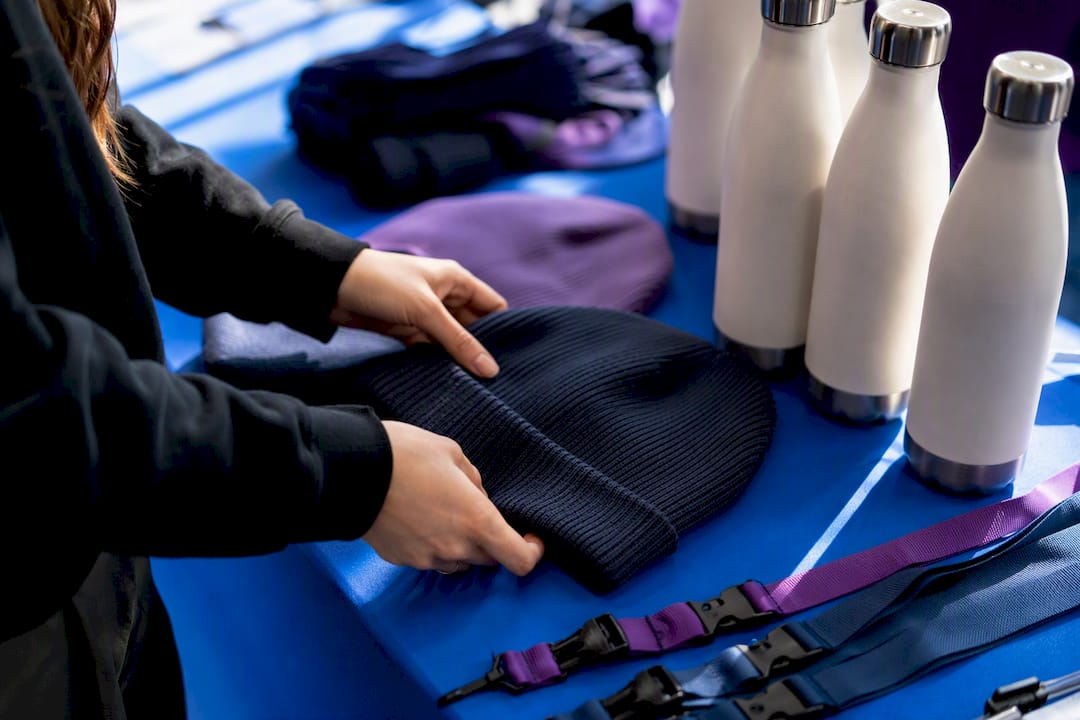
Pricing psychology matters more here than anywhere else in your store. A sticker priced at $2 feels like a throwaway. Priced at $4, paired with a pin for $10, it becomes part of a bundle that feels like a deliberate purchase rather than loose change. Round numbers ($5, $10, $15, $25) also outperform odd pricing like $11.50 for impulse items, because the whole point of an impulse buy is that the person isn’t doing math. If your goal is turnover rather than margin on any single item, keep everything under $15 and let volume do the work.
Creative and Limited-Edition Merch Ideas
This is where team merch stops being functional and starts being something people actually want to collect. A limited drop works because scarcity changes behavior. If a scarf is available all season, it’s just a scarf. If it’s only available for a two-week window to mark a rivalry game or an anniversary season, it becomes something a fan feels like they need to grab before it’s gone.
A few concepts worth building into your calendar:
- Numbered collector pieces. A patch, pin, or print run capped at a specific number (say, 150 pieces for a 15th-anniversary season) and individually numbered on the item itself. The production cost barely changes; the perceived value goes up considerably.
- Inside-joke sub-branding. Every team has a nickname, a chant, or a running bit from the season. A small side line built around that inside joke, sold only to the roster and immediate families, builds loyalty in a way your main-line logo gear never will.
- Anniversary or milestone drops. Tie a special design to a specific year, a championship, or a coach’s retirement. These sell themselves because the story is already built in.
- QR-linked digital tie-ins. A patch or tag with a QR code linking to a highlight video, a roster page, or a private fan group adds a layer of engagement that a static design can’t. It also gives you a natural reason to post about the item on social media, since the digital piece is inherently shareable.
Structuring a drop takes a bit more planning than a standard catalog order. Set a hard quantity cap before you announce anything, not after demand shows up. Bundle limited items with a staple piece (a numbered patch that only comes attached to the hoodie order, for example) to lift your average order value rather than selling the collectible on its own. And keep the launch window tight. A drop that runs for six weeks doesn’t feel limited anymore, it just feels like inventory.
Pro Tip: Announce the exact quantity publicly before the drop opens (“only 100 made”) rather than letting people guess. Vague scarcity (“limited quantities available”) reads as a sales tactic. A specific number reads as fact, and it’s the specific number that drives people to actually buy before checking with a friend first.
Limited editions aren’t worth the production complexity for every team. If you’re a small youth club with 40 families on your list, a numbered drop of 150 pieces doesn’t create scarcity, it just creates unsold inventory. Reserve this play for programs with enough alumni, boosters, or social reach to actually sell through a capped run within the launch window.
Fundraising Bundles and Basic Pricing Rules
Merch only helps your budget if the pricing accounts for both production cost and the margin you actually need to fund the season. Bundles are the easiest lever here, because they raise your average order size without requiring you to convince anyone to buy more items.
Some bundle structures that consistently work:
- Starter bundle: tee + sticker pack, priced a few dollars below buying each separately
- Fan pack: hoodie + cap + water bottle at a set bundle price, positioned as your “best value” option
- Rookie kit: for youth programs, a tee + shorts + water bottle sold as a single new-player package
- Alumni bundle: crewneck + pennant + patch, marketed specifically to former players and parents
On pricing, a workable rule of thumb is to mark up your blank-and-decoration cost by roughly 40 to 60 percent for standard items, with a smaller premium (10 to 15 percent) clearly framed as your fundraising contribution. People are willing to pay a bit more when they understand where the extra dollar or two is going. Hiding the markup feels like padding; naming it as a program contribution feels like participation.
Sponsor and co-branded products need their own rule: cap sponsor logos at one, maybe two, per item, and keep them smaller than your team’s primary mark. A jersey with five sponsor logos stops looking like team gear and starts looking like a race car. Clubs that treat merch seriously combine direct sales margin with sponsorship co-branding and member-retention value, and that balance only works if the sponsor placement stays secondary to the team identity.
Operationally, your biggest revenue window is registration day and the two weeks after. Bundle your presale announcement with registration paperwork so buying merch feels like a natural next step rather than a separate ask three weeks later.
Production and Decoration Methods, Compared
Choosing a production method comes down to run size, design complexity, and how fast you need the goods. Here’s how the main methods stack up:
- Embroidery — best for caps, polos, and jacket logos; durable and premium-feeling, but not practical for large, multi-color designs
- Screen printing — best for bulk tees with one to three colors; the cheapest per-unit cost at volume, but setup costs make small runs inefficient
- DTG/DTF — best for small runs with complex, full-color art; no screen setup required, which makes a 10-piece order as feasible as a 100-piece one
- Sublimation — best for all-over prints, scarves, and polyester-based items where the design needs to cover the full surface
- Pad printing — best for small, rigid items like pens or bottle caps where fabric-based methods don’t apply
Print-on-demand and presale campaigns are worth building into your plan regardless of which decoration method you choose, because they let you avoid holding inventory before you know what will actually sell. Shopify’s merch guidance points to presales specifically as a way to validate demand and sidestep the inventory risk that sinks a lot of first-time merch programs. Tektonla’s no-minimum blanks policy fits the same logic: a coach testing a new design doesn’t need to commit to 50 units to find out if it works.
Turnaround time shapes your entire launch calendar more than most organizers expect. Bulk screen-printed runs typically need a longer lead time than small-batch DTG or DTF orders, since screens have to be prepped and cured before printing starts. Build your presale close date backward from your event date, then add a buffer, because a “just in time” delivery leaves zero room for a reprint if a proof comes back wrong.
Before signing off on any order, request three checkpoints from your vendor: a vector file check on your logo (a blurry raster logo will print blurry no matter the method), a color proof against your team’s actual Pantone or hex values, and a physical sample if the order is above a few dozen units. Skipping the sample step is the single most common reason teams end up reordering.
How to Launch and Sell Team Merch
The store format you choose changes everything downstream. A time-bound pop-up or presale store works for seasonal drops, tournament gear, or anything tied to a specific date. A year-round catalog store works for staple items like your base logo tee or team water bottle that people will want to buy any time of year, not just during a launch window. Most well-run programs use both: a permanent catalog for the basics, and pop-up windows layered on top for special releases.
A workable launch sequence looks like this:
- Announce two to three weeks out. Jersey Ink’s research on team stores points to a two to three week sale window as the sweet spot, long enough to promote properly, short enough that the deadline still creates genuine urgency.
- Promote on a repeat cadence, not a single announcement. One email plus one social post gets ignored. A sequence (initial announcement, mid-window reminder, “48 hours left” push) consistently outperforms a single blast.
- Use short video over static photos. A 10 to 20 second talking-head clip of a coach or player holding up the merch tends to outperform a flat product photo for engagement, because it feels like a person recommending the item rather than an ad.
- Close on a firm deadline and place the order the next business day. A deadline that quietly slides gives people permission to keep waiting.
For distribution, the hybrid model mentioned earlier applies here too: run presales for sized apparel so you order exact quantities per size, and keep a small stock of one-size accessories on hand for in-person sales at games. This keeps your production side clean while still letting you capture the parent who didn’t preorder but wants a beanie at Saturday’s game.
Track sell-through rate as your core metric, meaning what percentage of your target quantity actually sold within the window. A healthy presale for a mid-size club typically closes north of 70 percent of projected inventory before the deadline hits. If you’re consistently landing well below that, the issue is usually promotion cadence or price, not the product itself.
Pro Tip: Send your “closing in 48 hours” reminder from a real person’s name, not a generic team account. A message from “Coach Martinez” gets opened more often than one from “Eagles Booster Club.”
Sustainable and Material Choices for Team Merch
Material choice affects both perceived value and your ability to talk about sustainability honestly. Organic cotton feels heavier and holds color better over time than standard cotton blends, which matters if your program gets asked to justify a higher price point. Recycled polyester works well for performance gear and moisture-wicking items, though it can feel less premium than a cotton blend for casual wear. There’s a real trade-off here between fabric feel and environmental sourcing, and it’s worth testing a sample of both before committing to a full run.
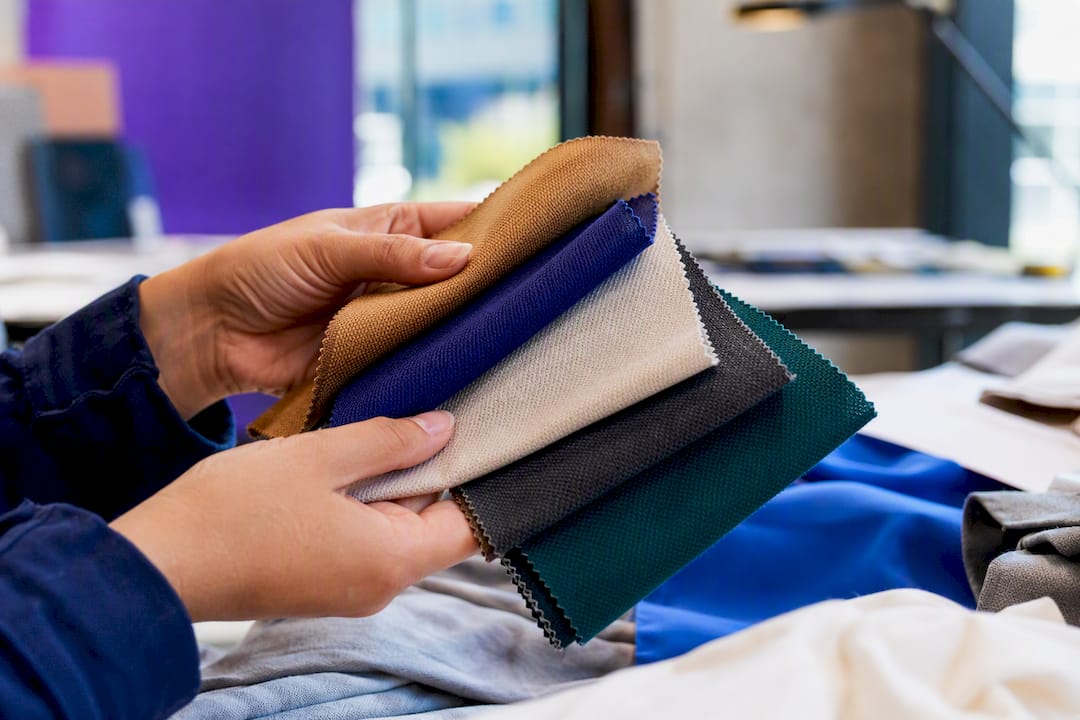
Look for verifiable labels rather than vague claims. Certifications like GOTS (Global Organic Textile Standard) or OEKO-TEX carry actual verification behind them, unlike a blank that’s simply marketed as “eco-friendly” with nothing to back it up. If you’re evaluating fabric options in more depth, First Rise Outfitters’ breakdown of sustainable materials covers the trade-offs between organic cotton, recycled polyester, and blended fabrics in more detail.
Packaging matters too, even though it gets less attention than the garment itself. Poly mailers made from recycled content and paper-based hang tags instead of plastic ones are small changes that add up, especially if you’re shipping a few hundred presale orders at once.
The key rule on messaging: only claim sustainability where you can back it up with a specific material or certification. “Made with organic cotton” is a claim you can defend. “Eco-friendly merch” with no detail behind it reads as greenwashing the moment someone asks a follow-up question.
Design and Personalization That Feels Like Team Spirit
Good team merch design usually comes down to restraint. One hero graphic, a limited color palette (two to three colors max for print methods), and typography that’s legible from ten feet away will outperform a busy design every time. The instinct to add the mascot, the slogan, the year, and the sponsor logo all on one shirt is understandable, but it usually produces a design that looks cluttered on a small chest print and unreadable from a distance.
Personalization is where merch turns from “team logo apparel” into something a family keeps for years. Names and numbers on the back of a jersey-style tee, a player’s initials on a patch, or a customizable back panel for parents ordering multiple kids’ items all add real value without adding real production complexity, especially with DTF or DTG methods that don’t require a new screen setup for each variation.
Before committing to a full print run, validate the design cheaply. A quick mockup shared in a team group chat or a two-option poll in your program’s social stories catches problems (per Shopify’s guidance on testing designs before production) that are hard to see in isolation, like a color that reads differently on screen versus fabric, or a logo placement that looks off-center once it’s actually on a shirt.
The two mistakes that show up most often: low-resolution artwork pulled from a website instead of a proper vector file, and logo overload, where every sponsor, mascot, and slogan competes for space on one small area of fabric.
Pro Tip: If you’re unsure whether a design will translate well to fabric, request a digital mockup from your printer before approving the order. It’s a five-minute step that catches problems a flat file preview never will.
Why Tektonla Backs Up These Ideas With Real Production Capability
Every idea in this guide, from a numbered patch drop to a hybrid presale, depends on having a printer that can actually execute it without forcing you into a huge minimum order. Tektonla runs direct-to-garment, direct-to-film, screen printing, embroidery, and private label production out of Downtown Los Angeles, with no minimum order quantities on blanks.
That matters for teams specifically because:
- A coach testing a new design can order a small batch without committing to bulk pricing tiers
- Private label and woven label options let programs build a real sub-brand around anniversary or alumni gear
- Locally sourced materials and garment dyeing support the sustainability claims covered above
- Live printing events give teams a way to sell merch on-site at games or tournaments
- Fast turnaround keeps a two-to-three week launch window realistic instead of aspirational
Whether you need a proof-of-concept run of 12 hoodies or a full seasonal catalog across a dozen SKUs, the production side is built to scale without punishing you for starting small.
What Actually Moves the Needle on Team Merch
The conventional advice treats merch like a checklist: pick some products, slap on a logo, open a store. What the research here actually supports is narrower and more useful: apparel does the heavy lifting, urgency drives conversion, and presales remove the risk that kills most first-time programs before they even launch.
Where most teams go wrong isn’t product selection, it’s restraint. They try to launch fifteen SKUs in week one instead of proving out three or four first. A well-organized assortment can work at scale, but it has to be earned through a track record of what actually sells, not guessed at from a supplier catalog.
If you take one thing from this guide, let it be this: treat your first drop as a test, not a finished catalog. Start small, watch your sell-through rate, and expand only where the data tells you to.
Get Your Team Merch Made Without the Minimum-Order Headache
Most printers make you commit to 50 or 100 units before they’ll even quote you, which is exactly backward for a team testing a new design or running a first-time presale. Tektonla works the other way: no minimum order quantities on blanks, DTG, DTF, screen printing, and embroidery all available under one roof in Downtown Los Angeles, and fast turnaround that actually fits a two-to-three week launch window instead of blowing past it.
If you’re planning a hoodie-and-cap bundle for this season, start with a small proof run on the printers shirt or explore the garment dye shirt for a heavier, premium option that holds color better than a standard blank. Private label and woven label options are available if your program wants real sub-branding for alumni or anniversary gear, and live printing events are available for teams in California who want merch made on-site at games or tournaments. Get a quote on your first design and see the turnaround for yourself.
Frequently Asked Questions
What are the best team merch ideas to start with? A hoodie, a crewneck tee, an embroidered cap, and a water bottle cover most of your audience with minimal SKU complexity. Add a sticker pack or pennant if you want a low-cost impulse item at your table.
How do I price team merch for fundraising? Mark up your blank-and-decoration cost by roughly 40 to 60 percent for standard apparel, and frame a small additional premium (10 to 15 percent) clearly as a fundraising contribution rather than hiding it in the base price.
Should I use a pop-up store or a year-round catalog? Use a time-bound pop-up or presale for seasonal drops and limited items, and a year-round catalog for staples like your base logo tee. Most successful programs run both at once.
What decoration method is best for team merch? Embroidery for caps and polos, screen printing for bulk tees with one to three colors, DTG or DTF for small complex-color runs, and sublimation for all-over prints like scarves.
How long should a team merch sale run? A two to three week window works best. It gives you enough time to promote properly while keeping the deadline tight enough to create real urgency.
Do I need a minimum order to get custom team apparel printed? Not necessarily. Some printers require bulk minimums, but providers like Tektonla offer no-minimum blanks, which lets you test a design on a small batch before committing to a full run.
Sources
A few resources worth bookmarking if you’re building out a full merch program:
- How To Make Merch Your Fans Will Love (2026) - Shopify
- What To Include in Your Team’s Online Merch Store in 2026