


Custom apparel branding is the practice of designing and producing clothing that communicates a startup’s identity, values, and story through every stitch, print, and label. The strongest custom apparel branding examples from startups share one trait: they treat clothing as a marketing channel, not just a product. Brands like Bespoken™ and Goliath prove that founders with limited budgets can build powerful brand identities through smart design choices, sustainable materials, and authentic storytelling. This article breaks down the real strategies behind those wins so you can apply them directly to your own brand.
1. Standout custom apparel branding examples from startups
The industry term for what most founders are chasing is branded merchandise strategy. Custom apparel branding examples from startups show that the most memorable brands connect product design to a clear mission from day one.
Bespoken™ is one of the clearest examples. Founder Claudia launched a faith-driven apparel line without a formal design background or a photography budget. She used Kittl to design artwork, refine typography spacing, and generate production-ready mockups that replaced expensive photoshoots entirely. The result was a confident, professional launch that looked like it came from a seasoned brand.
Goliath, a Singapore-based outdoor gear startup, took a different path. The founders built their brand around authentic outdoor storytelling, testing gear in the Himalayas and feeding that real-use experience back into product design. Their branding communicates function first, which resonates deeply with performance-focused customers.
DesignPlus grew from a home-based personalized shirt operation into a recognized brand by prioritizing quality, customization, and repeat customer trust. The lesson there is that scale is not a prerequisite for brand credibility. Consistency is.
“A brand is not what you say it is. It’s what they say it is.” Startup apparel brands that earn customer loyalty do so by making every garment a proof point for their values.
Pro Tip: Study brands outside your niche. Goliath borrowed storytelling techniques from outdoor lifestyle brands like Patagonia, then applied them at a fraction of the budget.
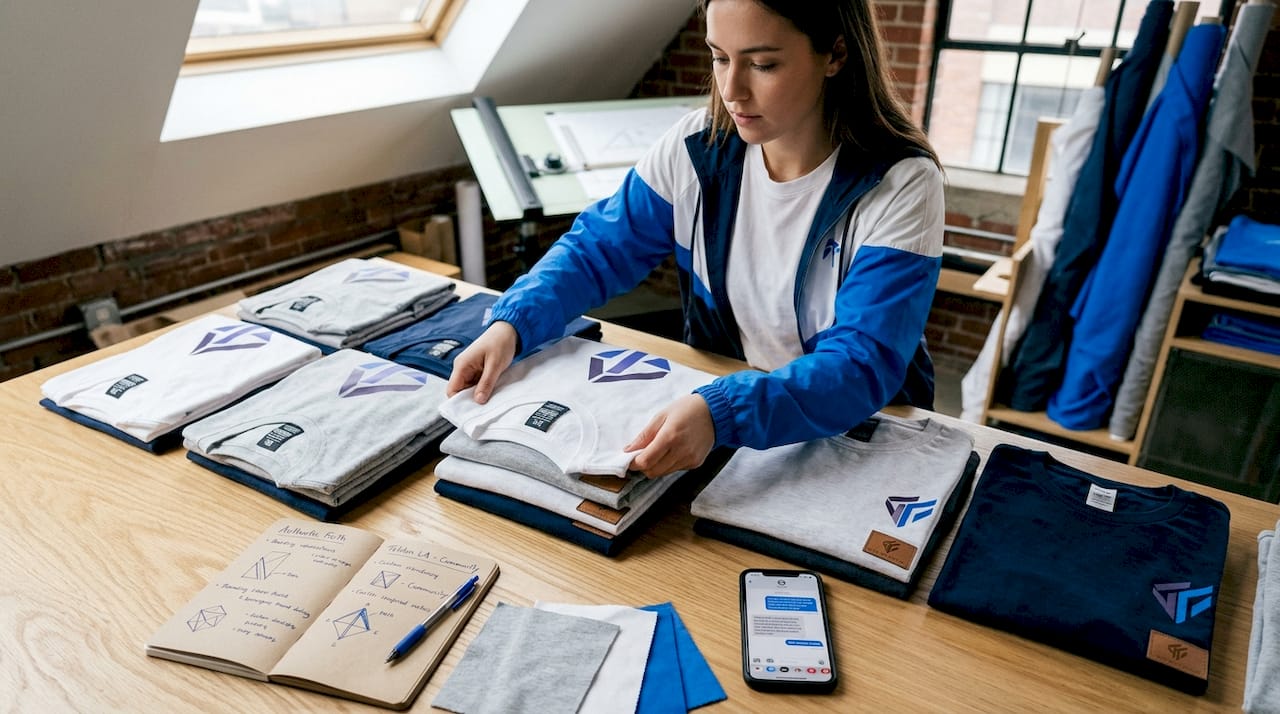
Sustainable brands add another layer by using woven and leather patches instead of printed logos. These physical branding elements signal quality and longevity before a customer even reads the tag.
2. How startups design and test branded apparel before launch
The biggest mistake early-stage founders make is spending money on production before validating their designs. The fix is a mockup-first workflow, and it costs almost nothing.
- Create digital mockups before ordering samples. Platforms like Kittl let you place artwork on photorealistic garment templates. Bespoken™'s Claudia used this exact approach to iterate on typography and layout without printing a single shirt. Visual consistency from one platform also speeds up the iteration cycle significantly.
- Run A/B tests on social media or email. Post two design variants to your audience and measure engagement before committing to a print run. This is free market research that most founders skip.
- Use AI tools for rapid design iteration. AI-assisted design features inside platforms like Kittl or Adobe Firefly generate multiple layout options from a single prompt. Founders without formal design training can produce professional-grade visuals in hours, not weeks.
- Build a brand style guide early. Document your color palette, font choices, and logo placement rules before you go to production. Brand consistency across design, production, and marketing is what separates a recognizable brand from a collection of shirts.
- Order small sample runs before scaling. Once your mockups are validated, order 6 to 12 units from your chosen printer. Wear them, wash them, and photograph them in real conditions before placing a larger order.
Pro Tip: When testing designs online, use identical product photos and change only the graphic. This isolates the variable and gives you clean data on which design performs better.
The garment printing techniques you choose also affect how your design translates from screen to fabric. Screen printing holds color vibrancy on cotton better than DTG on dark garments, so factor your fabric choice into the mockup stage.
3. Physical branding elements that boost authenticity and longevity
Printed logos fade. Woven and leather patches do not. That distinction matters more than most founders realize when building a brand meant to last.
| Branding method | Durability | Perceived value | Best for |
|---|---|---|---|
| Screen printed logo | Moderate (fades with washing) | Mid-range | High-volume, budget-conscious runs |
| Embroidered patch | High | Premium | Caps, jackets, workwear |
| Woven label | Very high | Premium to luxury | Inside collar, cuffs, hem |
| Leather patch | Very high | Luxury | Denim, bags, outdoor gear |
| DTG print | Low to moderate | Mid-range | Short runs, complex artwork |
Woven and leather patches support slow fashion principles by extending garment life and reducing the need for replacement purchases. That is a direct cost benefit for customers and a brand differentiator for startups competing on values.
Physical branding elements also increase perceived product value in competitive markets. A leather patch on a $40 hat signals craftsmanship in a way that a heat-transferred logo simply cannot. Startups like those working with embroidered logo patches from trusted manufacturers build that premium signal into every unit without dramatically increasing production costs.
Key physical branding options worth considering:
- Woven labels sewn into collar, hem, or cuff for permanent brand identification
- Leather patches heat-pressed or sewn onto waistbands, chest, or back yoke
- Embroidered patches applied to outerwear, caps, and bags for a heritage aesthetic
- Custom hang tags printed with brand story, care instructions, and social handles
- Branded packaging including tissue paper, stickers, and poly mailers that extend the unboxing experience
4. Connecting apparel branding to your brand story and mission
The startups with the strongest custom apparel success stories are not the ones with the biggest budgets. They are the ones whose clothing tells a story that customers want to be part of.
Goliath’s founders built their brand identity around a simple truth: their gear works because they tested it in extreme conditions. That story lives in their product descriptions, their social content, and their garment design. Storytelling-driven apparel branding deepens customer engagement by linking product function to brand mission. Customers are not just buying a hiking shirt. They are buying proof that the brand understands their experience.
Bespoken™ takes a different angle. The brand pairs faith-based messaging with minimalist, elevated design. The apparel does not shout its message. It whispers it through clean typography and intentional placement. That restraint is itself a brand statement, one that resonates with customers who share those values.
Effective startup clothing branding ideas that connect apparel to mission include:
- Naming collections after brand milestones or values, not just seasons or colorways
- Printing founder stories on hang tags to give customers a reason to care about the brand behind the garment
- Choosing fabric and construction methods that reflect brand values, such as organic cotton for sustainability-focused brands
- Aligning apparel drops with brand moments, like a product launch, a community event, or a cause partnership
Brand visibility compounds when values, mission, and storytelling align across all apparel and marketing touchpoints. A shirt worn by a loyal customer at a coffee shop is a walking advertisement. Make sure it tells the right story.
5. Matching branding strategy to your budget, scale, and market
Not every startup needs a full private label collection on day one. The right branding strategy depends on where you are in your growth cycle and who you are selling to.
Low-budget startups should start with print-on-demand services and white labeling. Print-on-demand and white labeling let you sell branded clothing without holding inventory, which eliminates upfront risk entirely. Platforms like Printful, Printify, and Shopify Collective make this accessible for founders at any stage.
Growing brands ready to invest in quality should move toward screen printing and garment dyeing for distinctive, premium results. These methods produce better color saturation and a more professional finish than print-on-demand, which matters when you are competing for shelf space or wholesale accounts.
Scaling brands targeting wholesale or retail distribution need consistent production quality, reliable turnaround times, and the ability to meet minimum order quantities. At this stage, outsourcing to a local production partner like Tektonla gives you speed and quality control without building an in-house operation.
Key factors that should shape your branding approach:
- Target market sophistication: streetwear audiences expect different design language than outdoor performance customers
- Price point: premium pricing requires premium physical branding elements like woven labels and leather patches
- Sales channel: direct-to-consumer brands can experiment more freely than wholesale brands, which need consistent presentation
- Production timeline: fast turnaround clothing providers matter most when you are launching around events or seasonal drops
Pro Tip: Before choosing a production method, order a sample from three different providers using the same artwork file. The differences in color accuracy, hand feel, and label quality will tell you everything you need to know.
For founders still figuring out how to brand custom clothing from scratch, the 2026 founder’s guide from Tektonla covers the foundational decisions in plain language.
Key takeaways
The most effective custom apparel branding for startups combines authentic storytelling, smart design tools, and physical branding elements that signal quality from the first wear.
| Point | Details |
|---|---|
| Start with mockups, not production | Use platforms like Kittl to validate designs before spending on samples or print runs. |
| Physical branding signals quality | Woven labels and leather patches outlast printed logos and increase perceived product value. |
| Story drives loyalty | Brands like Bespoken™ and Goliath succeed because their apparel communicates a clear mission. |
| Match method to budget and scale | Print-on-demand works for launch; screen printing and garment dyeing suit growth-stage brands. |
| Consistency compounds visibility | Aligning apparel design with marketing and customer experience builds recognition over time. |
What I’ve learned working with startup apparel brands
The founders who get apparel branding right share one habit: they treat the first garment as a test, not a finished product. They order small, wear the product in public, photograph it in real conditions, and listen to what customers say before scaling. That discipline saves money and produces better brands.
The second thing I have noticed is that most founders underestimate the power of physical branding. A woven label or a leather patch costs a fraction of a dollar per unit. But it changes how a customer perceives the entire garment. It signals that someone cared enough to finish the product properly. That signal is worth more than any marketing campaign you can run.
My honest recommendation for any founder starting out: adopt a mockup tool on day one. You do not need a photographer, a studio, or a design degree to produce visuals that convert. What you need is a clear brand idea and the willingness to iterate until the design matches it. Kittl, Adobe Express, and similar tools make that process faster than it has ever been.
Finally, do not chase trends in your first collection. Build something that reflects your actual values, test it with your actual customers, and refine from there. The brands that last are the ones that know exactly who they are from the beginning.
— Christian
How Tektonla helps startups build branded apparel that stands out
Tektonla, based in Downtown Los Angeles, gives startup founders the production tools to turn brand ideas into physical products without the typical minimums or delays. Their garment dye shirts produce rich, distinctive colorways that off-the-shelf blanks cannot match, and their screen print options deliver the color vibrancy and durability that growing brands need. Fast turnaround, no minimum order quantities on blanks, and private label support make Tektonla a practical production partner for founders at every stage. If you are ready to move from mockup to finished product, explore the Printers Shirt and the full custom apparel catalog at Tektonla.
FAQ
What is custom apparel branding for startups?
Custom apparel branding is the process of designing clothing and merchandise that communicates a startup’s identity, values, and story. It functions as wearable marketing that extends brand presence beyond digital and physical storefronts.
How do startups design branded apparel on a tight budget?
Startups use mockup platforms like Kittl to create production-ready visuals without photoshoots, then validate designs through A/B testing before committing to a print run. This approach significantly reduces pre-launch spending.
What physical branding elements work best for startup apparel?
Woven labels and leather patches are the most durable and highest-perceived-value options. They support slow fashion principles and increase product longevity compared to printed or heat-transferred logos.
Should startups use print-on-demand or screen printing?
Print-on-demand suits early-stage founders who need zero inventory risk, while screen printing delivers better color quality and durability for brands ready to invest in growth-stage production runs.
How does brand storytelling improve apparel branding results?
Brands like Goliath and Bespoken™ show that linking product design to mission deepens customer engagement and loyalty. Customers buy the story as much as the garment itself.