

For full-color, photographic designs and polyester athletic wear, DTF transfers are usually the smarter pick; for simple one or two-color jobs and specialty textured finishes, HTV wins on speed and startup cost. Most working shops end up running both, and sometimes layer them on the same garment. The details below break down exactly where each one earns its keep.
TL;DR:
- DTF excels for complex, photographic, and full-color designs on polyester, nylon, or mixed fabrics, offering high wash durability and minimal setup time.
- HTV is more cost-effective for simple, one- or two-color designs, especially when rapid turnaround and low initial investment are priorities.
- Combining HTV and DTF on one garment allows for textures and full-color details that neither method can achieve alone, with proper sequencing being critical.
- Shop operation consistency in press settings and consumable quality significantly impact the durability and appearance of transfers, regardless of method used.
- Most businesses benefit from running both methods, selecting each based on design complexity, fabric type, order size, turnaround needs, and operator expertise.
Table of Contents
- DTF vs HTV at a Glance: The Key Differences
- What Is DTF Printing and How Does the Process Work?
- What Is HTV and How Does the Cutting-and-Pressing Workflow Go?
- How Do You Choose Between DTF and HTV for a Job?
- What Do DTF and HTV Actually Cost Per Piece?
- Can You Combine DTF and HTV on the Same Garment?
- Why Most Shops End Up Running Both Methods
- Let Tekton LA Handle Your DTF and Hybrid Production Runs
- Sources
DTF vs HTV at a Glance: The Key Differences
The two methods split cleanly along a few practical lines: color complexity, fabric range, wash-life, and how the cost structure behaves as volume grows.
DTF (direct-to-film) prints full-color, gradient-rich art onto PET film with no cutting or weeding, then transfers it under heat. It handles unlimited colors and photographic detail as easily as a two-color logo, because the printer doesn’t care how complex the design is. HTV (heat transfer vinyl) is cut from solid-color sheets, hand-weeded to remove excess material, then pressed. It’s the go-to for a single crisp color or a specialty texture like glitter or puff.
Here’s the quick breakdown for choosing between them:
- One-off gift or single event tee: HTV, unless the art has a photo or gradient.
- Team jerseys with athletic polyester fabric: DTF, since it resists the dye-migration issues polyester can cause with vinyl.
- Retail-ready graphic tees with full-color art: DTF, for photographic quality and softer hand feel.
- Glitter, puff, or metallic finishes: HTV, because DTF can’t replicate those textures.
- 50+ piece bulk run of a simple two-color logo: Either works, but weeding time makes HTV slower to scale.
Startup cost also splits the two methods. HTV needs a vinyl cutter and heat press, both relatively affordable. DTF requires a compatible printer, powder shaker, and curing setup, which raises the entry cost but flattens the per-unit labor curve. That labor curve is the real story: every extra color in an HTV design adds weeding minutes, while DTF’s per-piece time barely moves regardless of complexity.
What Is DTF Printing and How Does the Process Work?
DTF printing starts with a design printed onto PET film using specialized inks, including a white ink layer that sits underneath the color to keep it vibrant on dark fabric. While the ink is still wet, the operator applies a hot-melt adhesive powder over the printed area, then shakes off the excess. The film runs through a curing oven or heat press to melt the powder into the ink layer, which is what lets the design later bond to fabric.
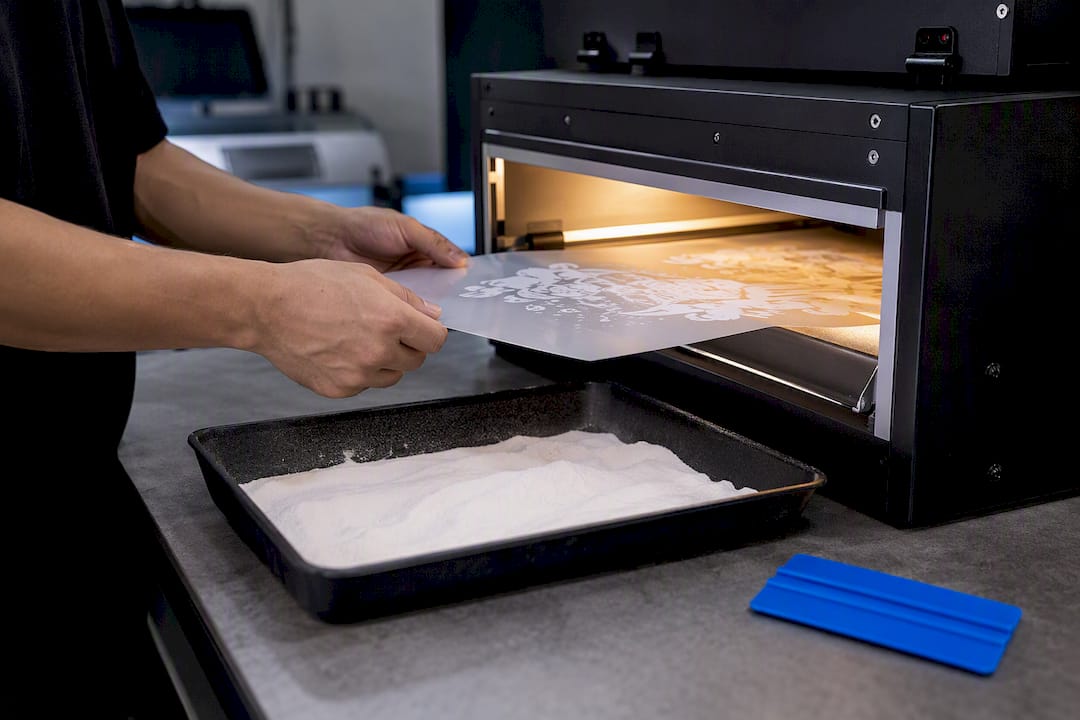
Pressing is the final step, and it usually happens twice. The first press, typically 300 to 325 degrees for 10 to 15 seconds, bonds the transfer to the garment. Peeling happens cold or warm depending on the film type. A second, lighter press afterward seats the adhesive fully and smooths the surface, and skipping it is one of the most common reasons DTF transfers crack early.
DTF strengths, in plain terms:
- No cutting or weeding at all, regardless of design complexity.
- Photographic and gradient artwork prints as easily as a simple logo.
- Works across polyester, nylon, blends, and cotton, which reduces the dye-migration problems that plague vinyl on high-polyester fabrics.
- Correctly cured and pressed, transfers can reach a soft, almost fabric-like hand rather than a stiff plastic feel.
The failure points are real, though. White ink is thick and prone to settling, which clogs printheads if the shop doesn’t run daily agitation or circulation. Powder application is manual on smaller setups, and uneven dosing leaves patches that peel prematurely. Very large prints covering most of a shirt front can also reduce breathability, since the cured film doesn’t stretch or breathe like the fabric underneath.
Pro Tip: Keep a logbook of press temperature, dwell time, and pressure for every DTF batch. When a customer calls about a transfer that cracked after six washes, that log tells you in thirty seconds whether it was a press problem or a bad roll of film.
Wash-life is where DTF tends to outperform, assuming the process was dialed in. Properly applied DTF transfers commonly reach 35 to 50 washes or more, with some tests reporting up to 100 washes under ideal curing and pressing conditions. That range depends heavily on press calibration and consistent film and powder chemistry, which is why shops running DTF at scale invest in experienced operators and matched consumables rather than swapping suppliers every few months. Our own DTF process guide covers press settings in more detail if you’re troubleshooting a specific batch.
What Is HTV and How Does the Cutting-and-Pressing Workflow Go?
HTV starts with a vinyl cutter, which slices a design out of a solid sheet of colored polyurethane or PVC film using a small blade instead of ink. Weeding comes next: the operator peels away every scrap of vinyl that isn’t part of the final design, using a hook tool to pick out small letters and tight curves. That step is where HTV either stays cheap or gets expensive fast.
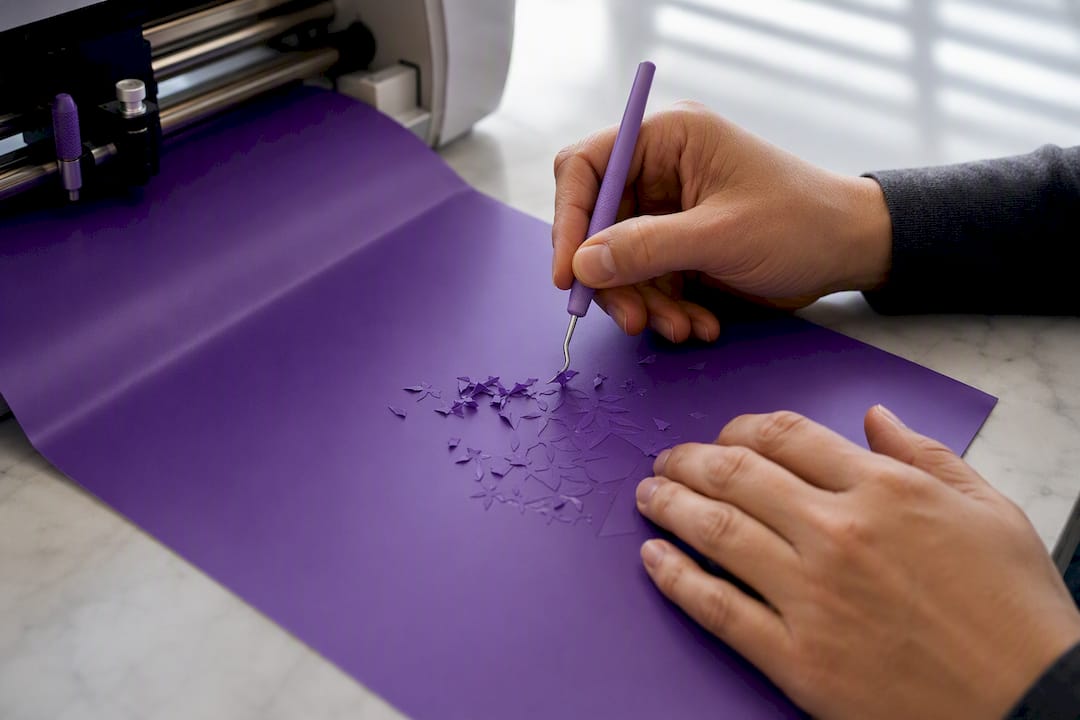
Once weeded, the design (still on its clear carrier sheet) gets pressed onto the garment at a set temperature and dwell time, usually 305 to 320 degrees for 10 to 15 seconds depending on the vinyl type. Some films peel hot immediately after pressing; others require cooling first. Getting that peel timing wrong is a common reason for edges lifting later.
Where HTV wins:
- Lower startup cost. A cutter and a mid-range heat press get a shop running for a fraction of DTF’s entry price.
- Ideal for simple one or two-color designs, like team names or basic logos.
- The only real option for specialty finishes: glitter, puff (raised, foam-backed vinyl), flock (fuzzy texture), and metallic foils all come exclusively in HTV form.
- Fast turnaround on true one-offs, since there’s no printer warm-up or curing cycle involved.
The catch is labor. Every additional color in an HTV design usually means cutting and weeding a separate layer, and that time adds up in a way DTF’s per-piece process doesn’t. The weeding step is a genuine labor cost that shows up on the invoice whether you bill for it or not. Push past two or three colors and per-piece labor climbs steadily, which is exactly where many shops start shifting volume toward DTF.
Durability also splits differently than most people expect. Industry wash testing puts HTV’s edge-lifting point around 25 to 30 washes on average, noticeably earlier than well-applied DTF. Cracking tends to start at stress points, like under the arm or across a fold line, especially on vinyl pressed at slightly low temperature to avoid scorching a delicate fabric. Polyester athletic wear is a particular caution zone: heat from pressing can pull dye up through lighter-colored vinyl, a problem DTF’s ink layer largely avoids.
Pro Tip: Test a scrap piece of any new polyester fabric before running a full HTV order. A five-second press at your standard settings will show dye bleed almost immediately, before you’ve wasted material on the real job.
Printable HTV, a hybrid film you can run through an inkjet or laser printer before cutting, extends HTV into simple multi-color and photo-style work. It still requires cutting around the printed shape and doesn’t match DTF’s color range or hand feel, so most shops treat it as a niche tool rather than a DTF replacement.
How Do You Choose Between DTF and HTV for a Job?
Run the decision through a short checklist before quoting any job. Six factors decide the answer almost every time: design complexity, the fabric mix on the order, run size, turnaround window, available capital, and who’s operating the equipment.
- Count the colors and check for gradients. Two colors or fewer, simple shapes: HTV is competitive. Photographic art, shading, or more than three colors: DTF wins on both speed and quality.
- Check the fabric mix. An order with mixed cotton, polyester, and blend garments favors DTF, since it applies consistently across all three without adjusting for dye migration risk.
- Estimate the run size. Somewhere between 1 and 10 pieces of a simple design, HTV’s low setup cost usually beats DTF’s per-piece film and powder cost. Past roughly 12 to 15 repeat pieces of anything with real color complexity, DTF’s flat labor curve takes over.
- Confirm the turnaround window. A same-day single shirt favors HTV; a next-week order of 200 favors DTF’s batch efficiency.
- Weigh your capital position. A new shop testing the market often starts with HTV’s lower buy-in and adds DTF once volume justifies the printer and curing equipment.
- Match the job to operator skill. DTF rewards a consistent operator who logs press settings; HTV rewards someone patient enough to weed cleanly without nicking small letters.
Before committing to either method with a new supplier or piece of equipment, ask a short list of questions:
- What temperature, pressure, and dwell time do you recommend for this specific film or ink, and does that change by fabric?
- How consistent is your consumable supply, meaning film, powder, or vinyl stock, month to month?
- Can I see a sample that’s been through 20+ wash cycles, not just a fresh press?
- What’s your typical turnaround for a reorder if my first batch has a quality issue?
Red flags worth taking seriously: a supplier who can’t answer basic press-setting questions, wildly inconsistent samples between orders, or a quoted turnaround that keeps slipping. Any of those is a signal to look at outsourcing the transfer work rather than absorbing the quality risk in-house.
What Do DTF and HTV Actually Cost Per Piece?
Startup investment tells only half the story. A basic HTV setup, a mid-range cutter plus a decent heat press, typically runs a fraction of what a production DTF setup costs once you add a printer, curing unit, and powder shaker. That gap is real, and it’s why so many shops start with HTV.
The math flips once you factor in labor. HTV’s per-unit material cost on a simple design is low, but weeding time scales directly with color count and detail. A three-color design forces linear labor growth as complexity rises, while DTF’s per-piece time (essentially press plus peel) stays flat no matter how many colors are in the art.
Run the numbers on two realistic 25-shirt orders:
- A 25-shirt full-color run with photographic art: DTF wins clearly. There’s no cutting, no weeding, and the printer treats a five-color gradient the same as a solid block. Labor stays confined to loading the press and peeling film.
- A 25-shirt one-color name-and-number set: HTV often comes out ahead on raw cost, since a single-color cut with minimal weeding is fast, and the vinyl material cost per shirt is low.
The break-even point moves fast once color count or fabric variety increases. Two colors on a mixed-fabric order can tip the math toward DTF simply because the operator no longer has to babysit two separate weeding passes and adjust press settings between polyester and cotton pieces. Shops running consistent multi-color volume often find it cheaper to send the film work to an outside DTF supplier than to staff and maintain a printer, powder shaker, and curing line themselves, particularly if that volume doesn’t fill a full production day. If you’re weighing that build-versus-buy decision, our DTG startup guide walks through similar capital tradeoffs for another print method.
Can You Combine DTF and HTV on the Same Garment?
Plenty of shops don’t pick one method exclusively. A common hybrid workflow presses an HTV texture base, glitter or puff vinyl, for instance, and then applies a DTF transfer over or alongside it for full-color detail. This lets a shop offer a raised, textured team logo with a photographic mascot printed cleanly next to it, something neither method alone handles well.
The sequence matters. Press the HTV layer first and let it cool fully before positioning the DTF piece, since re-heating already-set vinyl can cause it to shift or lift at the edges. Careful registration, lining up the two transfers precisely before the second press, prevents visible gaps or overlap.
Specialty scenarios where the method choice is close to mandatory:
- Cheer and dance uniforms: HTV glitter or metallic finishes, since DTF can’t produce that shine.
- Puff-print team names: HTV puff vinyl exclusively.
- Full-roster jerseys with photo-quality sponsor logos: DTF for the graphics, HTV for player numbers if a raised finish is wanted.
- Athletic wear with heavy polyester content: DTF, to sidestep dye migration entirely.
Pro Tip: When stacking HTV and DTF on one garment, press a test swatch through both cycles first. Some puff vinyls flatten slightly under a second heat cycle, which changes how much texture survives the finished piece.
Why Most Shops End Up Running Both Methods
Shops that treat this as a permanent either-or decision usually end up leaving money on the table. The research consistently frames the choice around the job, not around which method is objectively “better,” and that framing holds up against everything we’ve built and repaired in the shop. A quick-turn single tee with a puff logo has an obvious answer. A 300-piece order of a five-color photographic design has a different obvious answer. The shops that struggle are the ones that bought one machine and now force every job through it.
Press calibration is where most quality complaints actually originate, more often than material quality. A heat press drifting five to ten degrees off its display reading will cause inconsistent adhesion long before anyone suspects the film or vinyl itself. Queue transfers by fabric type, not by order number, so you’re not swinging temperature settings up and down all day between polyester and cotton runs. Keep a running QA checklist: press temperature logged weekly against a separate thermometer, peel test on every new film or vinyl roll, and a wash test sample pulled from each new consumable batch before it goes into full production.
Our own rule of thumb: below roughly 15 pieces of a complex, multi-color design, keep it in-house on HTV or send it to a DTF partner rather than buying equipment you’ll underuse. Past that volume, especially with mixed substrates in the same batch, dedicated DTF production almost always pays for itself within a season.
— Christian
Let Tekton LA Handle Your DTF and Hybrid Production Runs
If the math above points you toward DTF but you’re not ready to buy a printer, powder shaker, and curing line, Tekton LA runs that production for you with no minimum order quantity, so a 12-piece test batch and a 300-piece rollout get the same quality control.
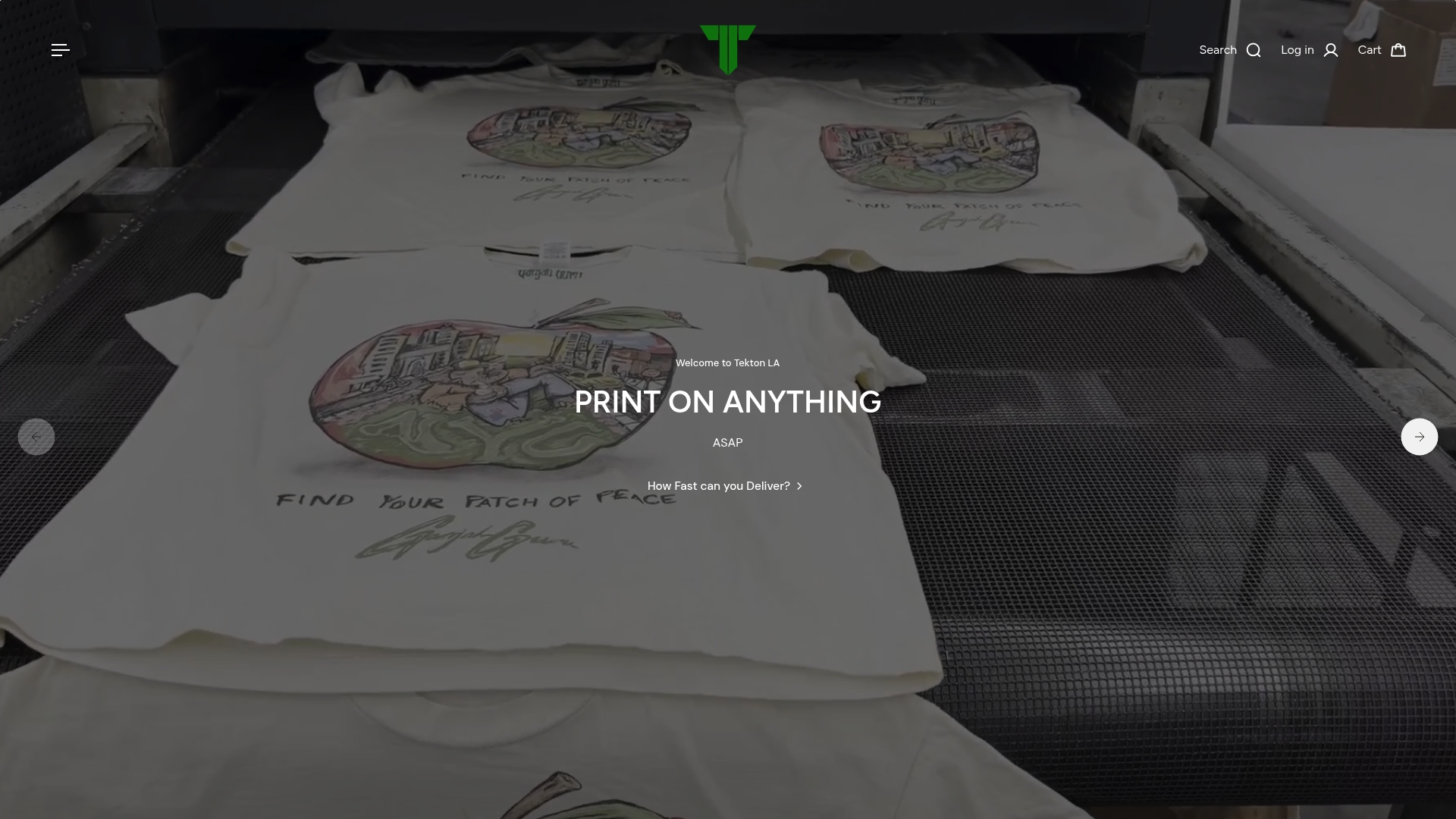
Tekton LA handles DTF transfers, private label programs, and hybrid HTV-plus-DTF builds for shops that need mixed substrates, specialty finishes, or fast turnaround without adding equipment to the floor. That’s the practical case for outsourcing: you skip the white-ink maintenance, the powder dosing, and the press calibration headaches, and you get a consistent transfer every time. It’s a good fit when your order mixes cotton and polyester in the same run, when a client wants glitter and full-color detail on one garment, or when a branding project needs woven labels and banners alongside the shirts themselves.
Browse Tekton LA’s product lineup to see blank options ready for DTF application, or head to the Tekton LA homepage to start a quote on your next run.
Sources
- DTF vs HTV (Heat Transfer Vinyl): Full Comparison – DTFTransfers
- DTF Printing vs. Heat Transfers | What To Know
- DTF vs HTV: Which One is Better? - A Good Printer (2026 Guide)