

Reflective heat transfers use glass-bead films or metallic inks to bounce light back toward its source, making apparel visible in headlights or low light. For most safety and sports jobs, manufacturer-rated reflective HTV (like glass-bead films from Siser or Stahls) is the strongest choice; decorative fashion work leans on screen-printed reflective inks instead. Hire a professional for ANSI/ISEA compliance jobs, headwear, or anything on stretch fabric.
TL;DR:
- Glass-bead reflective heat transfer vinyl is highly durable, suitable for safety gear, and maintains its reflective properties after many washes.
- Screen-printed reflective inks offer a subtle daylight shine and reflect light only when directly hit at night, making them ideal for fashion but not safety standards.
- Proper application requires precise temperature, peel type, and pressure settings, with testing on actual fabric before full production to prevent failures.
- Cotton and cotton-poly blends are the most reliable fabrics for reflective HTV, while synthetics like polyester and nylon need lower temperatures and careful testing.
- Professional application ensures consistency and compliance, especially for large or safety-critical orders, and is more cost-effective than DIY for volumes over a few garments.
Table of Contents
- What Types of Reflective Heat Transfers Exist?
- How Do You Apply Reflective Heat Transfers Correctly?
- Which Fabrics Work Best With Reflective Transfers?
- How Long Do Reflective Transfers Actually Last?
- How Do You Choose the Right Reflective Material for Your Project?
- Why Work With a Professional Print Shop on Reflective Jobs?
- What Do Reflective Heat Transfers Cost?
- DIY or Professional Application: Which Makes Sense?
- Where the Conventional Advice Gets This Wrong
- Get Reflective Transfers Done Right the First Time
- Sources
What Types of Reflective Heat Transfers Exist?
Not all reflective materials work the same way, and picking the wrong one wastes both money and a garment.
Reflective heat transfer vinyl (HTV) built on glass-bead technology is the workhorse of this category. Thousands of microscopic glass beads are embedded in the film, and each one catches light and sends it straight back to the source, which is why a jogger’s vest lights up like a mirror in a car’s headlights. Siser EasyReflective is a common example, marketed for workwear, sportswear, and uniforms because it holds up under repeated pressing and washing.
Screen-printed reflective inks work differently. They use metallic silver pigment that reads as a subtle shine in daylight and reflects light only when hit directly at night, according to Transfer Express. That makes them a better fit for streetwear brands chasing a metallic aesthetic than for anyone needing certified visibility.
Silicone and RFX-style transfers flex with stretch fabric, which is why they show up on athletic gear, leggings, and performance jerseys where a rigid film would crack.
Name and number reflective transfers for team sports use the same glass-bead or metallic base but come pre-cut into letterforms, so application settings mirror standard reflective HTV.
A quick way to sort your options:
- Safety visibility, roadside or fleet gear: glass-bead reflective HTV or 3M-based film
- Fashion accents, subtle shine: screen-printed reflective ink
- Stretch fabric, athletic wear: silicone/RFX reflective transfers
- Team jerseys: reflective name and number sets
How Do You Apply Reflective Heat Transfers Correctly?
Getting the press settings wrong is the single biggest reason reflective transfers fail early, and different products want different numbers.
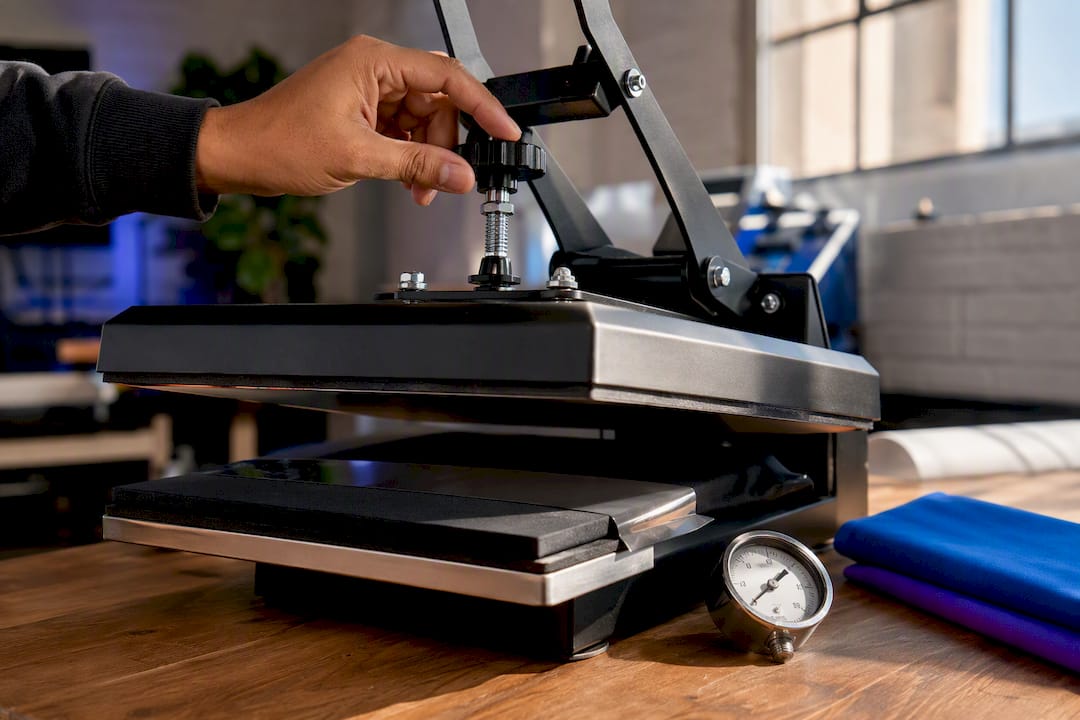
- Set your temperature by product, not habit. SupaReflective recommends 300 to 320°F for 12 to 15 seconds at medium to firm pressure with a cold peel. Stahls’ CAD-CUT Reflective II runs cooler, at 290 to 302°F for 10 to 12 seconds. Siser’s EasyReflective uses a warm peel at roughly 305°F for 15 seconds.
- Match the peel type to the product. Cold peel means you wait until the transfer is fully cool; warm peel means you pull it while it’s still slightly warm. Pulling the wrong way on the wrong film tears the design or leaves adhesive residue.
- Never stack layers. Stahls explicitly warns against multi-layer reflective HTV applications, and the reason is structural: the glass-bead surface doesn’t bond well to a second layer of film, so builds that look fine off the press often crack or peel within a few washes.
- Use a heavy Teflon or silicone cover sheet on curved or textured surfaces, including caps and structured bags, and press in two shorter cycles rather than one long one to avoid scorching foam-panel headwear.
Pro Tip: Test one full press cycle on a scrap swatch of your actual production fabric before running a full order. Reflective film reacts differently to poly blends than to 100% cotton, and a 10 degree miss can mean the difference between a clean bond and a transfer that lifts at the corners.
If adhesion still fails after matching settings, check pressure first. Most home presses drift low over time, and reflective film needs firmer, more even pressure than standard vinyl.
Which Fabrics Work Best With Reflective Transfers?
Cotton and cotton-poly blends take reflective HTV cleanly and are the safest starting point for a first order. Polyester and nylon need more care: some synthetics scorch or shrink near 300°F, which is why lower-temperature products designed for synthetics matter on those jobs.
- Cotton and cotton-poly: reliable results with standard reflective HTV settings
- 100% polyester and nylon: use lower-temperature films and test press time carefully
- Mesh and performance knits: silicone/RFX transfers flex better than rigid HTV
- Seams and structured headwear: expect uneven pressure; use extra cover sheets and shorter, repeated presses
- High-stretch athletic fabric: standard glass-bead HTV can crack over time; silicone-based options hold up longer
When in mind, request a pre-production sample on the exact substrate and quantity you’re ordering rather than trusting a generic swatch. A supplier willing to run a small test batch before full production is worth paying slightly more for.
How Long Do Reflective Transfers Actually Last?
By the numbers: SupaReflective cites roughly 30 home washes as a durability benchmark for its glass-bead HTV under proper care, a figure worth asking any supplier to match or explain if they claim otherwise.
That number assumes correct application and correct laundering, not just a good press cycle. Ask vendors two direct questions before ordering: what wash-testing method produced their durability number, and will they send a physical sample you can wash yourself before committing to a full run. A supplier who dodges either question is one to watch closely.
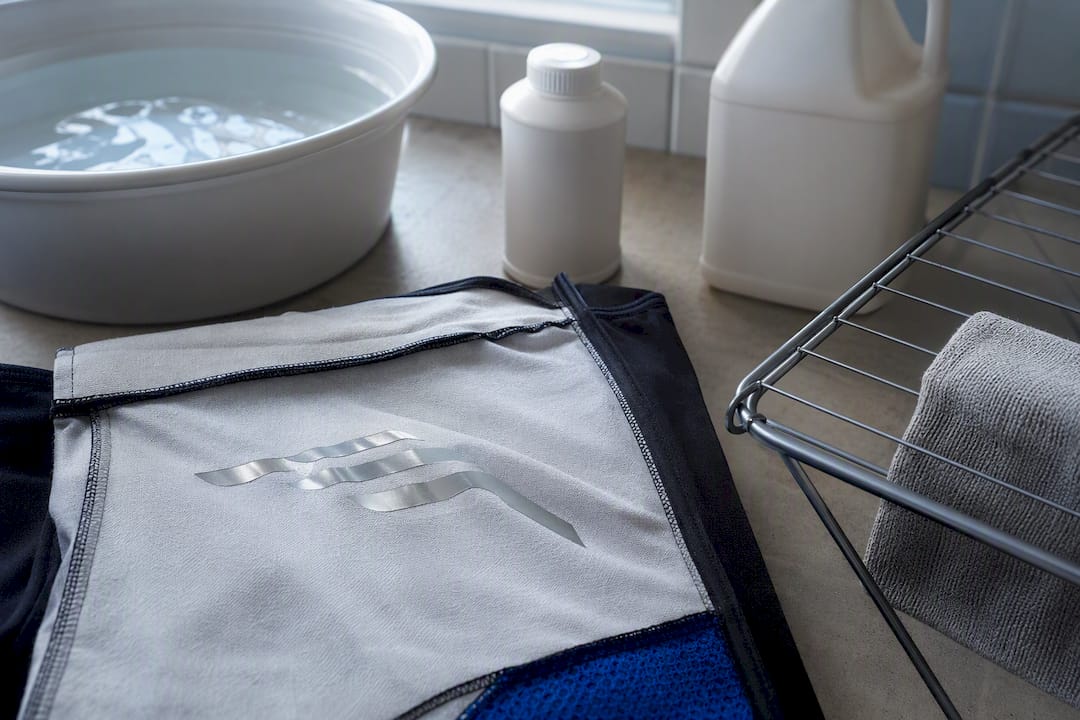
Care instructions matter as much as the pressing itself. Wash reflective garments inside out, dry on low heat or hang dry, and skip bleach and fabric softener, both of which degrade the adhesive bond and dull the glass-bead surface over time.
How Do You Choose the Right Reflective Material for Your Project?
Start with what the garment actually needs to do, not what looks best on a screen.
- Define the visibility requirement. A construction crew vest needs certified retroreflective performance; a streetwear hoodie just needs to catch a phone camera flash. These call for different materials entirely.
- Check whether ANSI/ISEA 107 applies. If the garment is going to a job site or fleet operation, ask for materials explicitly rated for that standard, such as 3M-based reflective films, rather than assuming any shiny film qualifies.
- Match substrate to product family, using the compatibility notes above.
- Set a realistic wash-life expectation based on how often the garment gets laundered.
- Ask suppliers five specific questions: press settings, peel behavior, substrate limits, sample or return policy, and turnaround time on custom runs.
Budget and finish come last, not first, because a beautiful reflective print that fails compliance or falls apart in six washes costs more in reprints than it ever saved upfront.
Why Work With a Professional Print Shop on Reflective Jobs?
Reflective transfers punish guesswork more than standard vinyl does, and that’s exactly where professional production earns its keep. Tektonla runs DTG, DTF, screen printing, and embroidery alongside reflective transfer application, with no minimum order quantity on blanks, which means a 12-piece team order gets the same attention as a 500-piece run.
- Pre-production samples before committing to a full batch
- Small-run test presses on your actual substrate, not a generic swatch
- Locally sourced, eco-conscious materials for brands that care about sourcing
- Live event printing across California for teams and organizers who need reflective gear on-site
| When to hire a pro | Why it matters |
|---|---|
| ANSI/ISEA compliance jobs | Certification requires verified materials and correct application |
| Multi-substrate orders | Different fabrics need different press settings on the same run |
| Headwear or structured bags | Curved surfaces need cover sheet technique and pressure control |
| High-stretch athletic garments | Wrong material choice cracks under movement within weeks |
When you request a quote, include the substrate, expected wash frequency, placement, and quantity. That single brief cuts back-and-forth and gets you an accurate turnaround estimate faster.
What Do Reflective Heat Transfers Cost?
Pricing scales with material type, order size, and design complexity, and the gap between options is wider than most first-time buyers expect.
Basic glass-bead reflective HTV letters or small logos, cut to shape, tend to sit at the lower end of custom decoration pricing, especially for name-and-number sets ordered in bulk for a team roster. Screen-printed reflective ink adds a setup cost tied to screen creation, so it pencils out better on larger runs, typically 24 pieces or more, where that setup gets spread across more units. Silicone and RFX transfers cost more per piece than standard HTV because the material itself is pricier and often requires more precise pressing.
Custom orders, meaning original artwork cut into reflective film or a custom screen-printed design, add design and setup fees on top of the base material cost. A single custom logo run will always cost more per piece than a stock name-and-number set, simply because there’s no shared tooling to spread across other customers.
Volume is the biggest lever here. A five-piece order and a 200-piece order using the identical reflective film can differ dramatically in per-unit cost, since setup and press time get amortized across more garments. If your project might grow (a team that adds players, a brand that reorders seasonally) ask your print shop about reorder pricing before the first run, not after.
DIY or Professional Application: Which Makes Sense?
A heat press at home and a heat press at a print shop are not the same tool once reflective materials enter the picture.
DIY works fine for small, low-stakes runs: a handful of shirts for a running club, a one-off gift, a personal project where a slightly imperfect press isn’t a disaster. The upfront cost is lower and turnaround is whatever your schedule allows. But reflective film is less forgiving than standard vinyl, and a home press with inconsistent pressure or a few degrees of temperature drift produces exactly the adhesion failures and cracking covered earlier.
Professional application costs more per piece but buys consistency across an entire order, which matters enormously once you’re past a dozen garments or dealing with compliance requirements. A shop running commercial presses holds temperature and pressure evenly across every piece, catches substrate problems before a full run gets ruined, and turns around orders in days rather than however long a hobbyist press allows between other commitments.
The honest breakeven point: if you’re doing five or fewer pieces with no compliance requirement and standard cotton, DIY is reasonable. Past that, or the moment ANSI/ISEA compliance, stretch fabric, or headwear enters the picture, professional application pays for itself in avoided reprints alone.
Where the Conventional Advice Gets This Wrong
Most guides to reflective transfers treat every glass-bead film as interchangeable, and that’s the mistake that causes the most reprints. A product rated for a 305°F warm peel and one rated for a 290°F medium-pressure cold peel are not swappable just because they look identical off the roll. Skimming a generic tutorial instead of the specific manufacturer’s datasheet is how most DIY failures happen, not bad luck or a cheap press.
The other blind spot is treating “reflective” as one visibility tier. A metallic screen-printed accent and an ANSI/ISEA-rated 3M film solve completely different problems, and conflating them is how safety-critical orders end up with decorative ink that looks right in a photo and does nothing in the dark.
If there’s one thing worth prioritizing above material choice, it’s asking for a real sample on your actual fabric before committing to volume. Wash-life claims and press settings are only useful once you’ve confirmed they hold on the substrate you’re actually printing, not the one in a supplier’s marketing photo.
— Christian
Get Reflective Transfers Done Right the First Time
Ordering reflective heat transfers online means guessing at press settings and hoping a stock film matches your fabric. Tektonla skips that gamble: our Downtown Los Angeles shop runs pre-production samples on your actual substrate before committing to a full order, so you know the adhesion, peel behavior, and finish before a single garment gets pressed at volume.
Whether you’re outfitting a team with reflective name and number sets, adding ANSI-style accents to workwear, or testing a stretch-fabric athletic line, our team handles DTG, DTF, screen printing, and embroidery with no minimum order quantity on blanks, so a small test run costs you nothing extra to explore. Start with a printers shirt sample or send us your substrate, expected wash frequency, and quantity for a quote, and we’ll tell you straight whether your project needs a pro or can handle DIY.
Sources
- SupaReflective Heat Transfer
- Siser® EasyReflective® Silver — 305°F Warm Peel
- POLI-TAPE® POLI-FLEX® REFLEX Heat Transfer Vinyl - FDC Series REF
- Reflective Screen Printed Transfers | Heat Transfers