


If you’ve been researching what is print on demand business, you’ve probably seen it described as passive income or easy money. That framing is misleading. The print on demand business model is genuinely powerful, but it rewards the entrepreneurs who treat it as a real business, not a shortcut. At its core, POD lets you sell custom products without holding any inventory. A third-party supplier produces and ships each item only after a customer buys it. The global POD market crossed $12 billion in 2025, and the opportunity is real. But so is the competition.
Table of Contents
- Key takeaways
- What is print on demand and how the business model works
- Benefits and challenges of print on demand
- Choosing products, niches, and POD suppliers
- How to launch and grow your POD store
- What I’ve learned actually drives POD success
- How Tektonla supports POD entrepreneurs
- FAQ
Key takeaways
| Point | Details |
|---|---|
| No inventory required | POD suppliers produce and ship each product only after a customer places an order. |
| Marketing drives success | Demand creation through branding and marketing matters more than fulfillment efficiency. |
| Supplier choice is critical | Production speed, shipping costs, and return policies directly affect your customer experience and margins. |
| Niche focus outperforms broad appeal | Targeting a specific audience with consistent branding builds loyalty faster than generic product catalogs. |
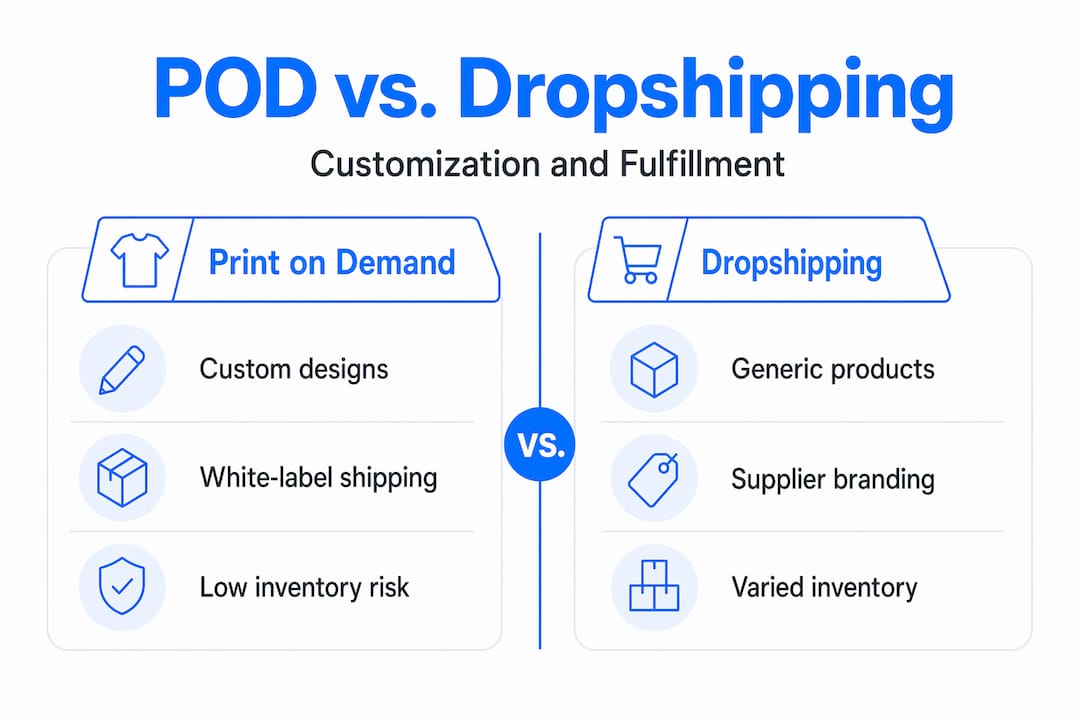
| POD beats dropshipping for branding | Unlike standard dropshipping, POD lets you put your designs and brand on every product you sell. |
What is print on demand and how the business model works
Print on demand is a fulfillment method where you design a product, list it in your online store, and a third-party supplier prints, packs, and ships the item only after a customer purchases it. You never touch inventory. You never pre-buy stock. The supplier handles the physical side of the operation entirely.
Here is how the standard POD workflow runs from start to finish:
- Create your design. You produce artwork, graphics, or text that will appear on the product. This can be anything from a logo to a full illustrated print.
- Upload to a POD catalog. You connect your design to a specific product in your supplier’s catalog, such as a t-shirt, mug, tote bag, or phone case.
- List the product in your store. Your online store displays the product with your branding, your price, and your product description.
- Customer places an order. A buyer finds your product and completes a purchase through your store.
- Order is forwarded to the POD supplier. Either automatically or manually, the order details go to your supplier.
- Supplier fulfills and ships. The supplier prints, packs, and ships the item directly to your customer, often under your brand name.
This white-label approach means the customer receives a package that looks like it came from your brand, even though you never handled the product.
POD is frequently confused with standard dropshipping, but there is a meaningful difference. Traditional dropshipping moves generic, pre-made inventory from a supplier to a customer. POD specializes in custom, on-demand printing, which means you control the design and the branding on every product. That distinction matters enormously when you are trying to build a recognizable brand rather than just move commodity goods.
Pro Tip: Start with a tight product range, two or three items max. Spreading yourself across 20 product types at launch dilutes your focus and makes it harder to build a recognizable brand identity.
Common POD products include apparel (t-shirts, hoodies, hats), accessories (bags, phone cases), home goods (mugs, pillows), and printed media (books, calendars). Apparel consistently dominates because of the direct connection to personal identity and style.
Benefits and challenges of print on demand
The appeal of the POD model is real and well-founded. But so are the friction points. Here is an honest breakdown of both.
What makes POD genuinely attractive:
- Low financial risk. Because inventory is made only after a sale, you are not tying up capital in stock that might not sell.
- Design flexibility. You can test new designs quickly without committing to a print run. If a design flops, you simply remove it.
- No warehousing. You run the business from a laptop. There are no storage costs, no packing stations, and no shipping accounts to manage.
- Scalability. Adding new products takes hours, not weeks. You can respond to trends and seasonal demand faster than brands with traditional inventory.
Where POD businesses actually struggle:
- Production and shipping times tend to be longer than standard ecommerce. A customer used to two-day Amazon delivery will notice a 7 to 10 day wait.
- Margins can be thin. Supplier costs are higher per unit than bulk manufacturing, so pricing strategy matters a lot.
- Returns and quality control sit largely with the supplier. If a print comes out wrong, your brand takes the reputational hit.
- Marketing is entirely your responsibility. The supplier handles fulfillment. You handle everything else.
“Businesses fail by focusing on demand fulfillment alone. Demand creation drives long-term growth.” — Mark Pomerantz
That last point cannot be overstated. The print on demand business model hands you a production and logistics system. It does not hand you customers. The entrepreneurs who build successful POD brands treat marketing and community building as their primary job, not an afterthought.
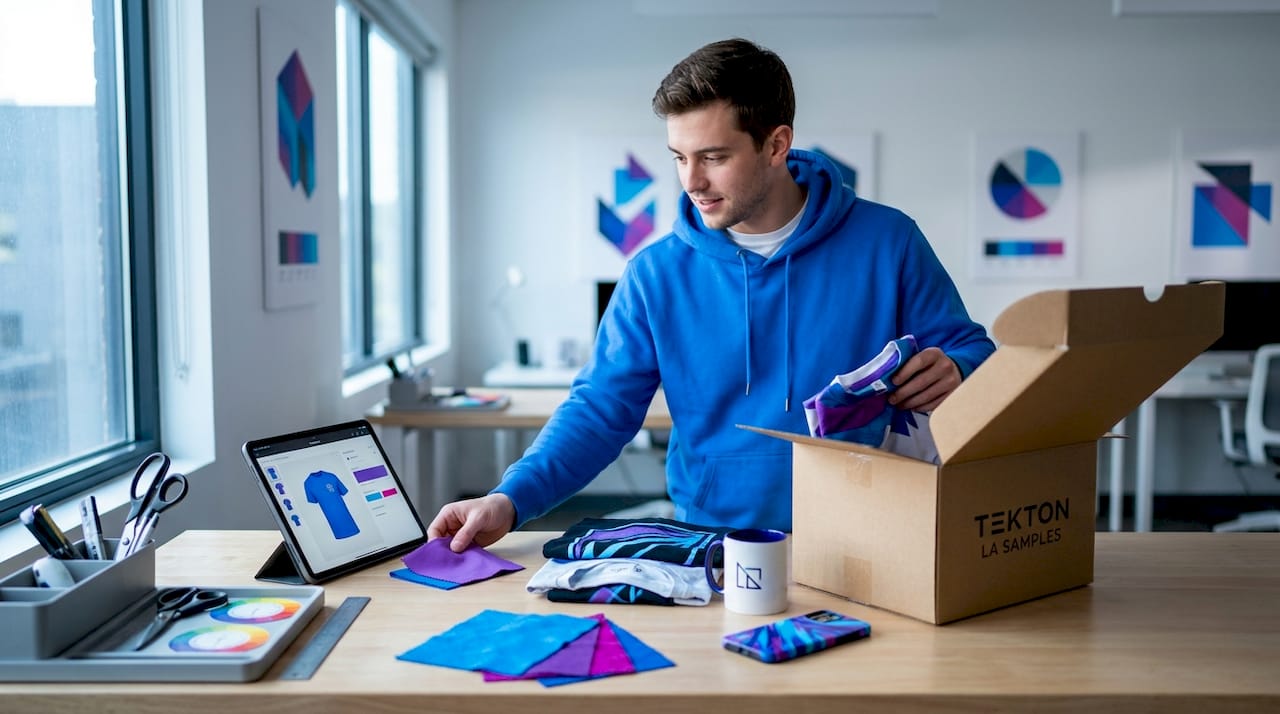
Pro Tip: Order samples of every product before you list it for sale. You cannot write accurate product descriptions or catch quality issues without holding the physical item yourself.
Choosing products, niches, and POD suppliers
This is where most beginners make their first critical mistake: picking products before picking a niche. Your niche defines your audience, your design aesthetic, your marketing channels, and your pricing power. A store serving outdoor adventure enthusiasts sells completely different products than one serving pet owners, even if both sell t-shirts.
A profitable niche has three qualities. It is specific enough to have a dedicated community. It has buyers who spend money on branded merchandise. And it is not so saturated that established players dominate every keyword and search result.
What to look for in a POD supplier
Choosing the right POD provider comes down to four variables that directly affect your customer experience and your margins:
- Print quality and product range. Request samples. Check stitching, print vibrancy, and garment feel before committing.
- Production speed. Some suppliers turn orders around in 2 to 3 business days. Others take 7 or more. That gap shows up in your reviews.
- Shipping costs and regions. A supplier based in the US may be fast for domestic orders but expensive for international customers. Know your audience’s geography.
- Return and reprint policies. When a product arrives damaged or misprinted, how fast does the supplier make it right? This is your customer service backup.
Comparing popular POD platforms
| Platform | Best for | Key strength | Weakness |
|---|---|---|---|
| Printful | Apparel brands | High print quality, branding options | Higher per-unit cost |
| Printify | Cost-conscious sellers | Wide supplier network, lower prices | Inconsistent quality across providers |
| Gelato | International sellers | Global print network, fast delivery | Smaller product catalog |
| Redbubble | Artists and designers | Built-in marketplace traffic | Limited brand control |
For entrepreneurs building their own store rather than selling on a marketplace, understanding garment printing techniques is worth your time. Different methods, including DTG, screen printing, and sublimation, produce different results on different fabrics. Knowing the difference helps you set accurate customer expectations.
Packaging and branding details also deserve attention. Many POD suppliers offer custom labels, pack-ins, and branded packaging at an added cost. These details are often what separate a forgettable purchase from one that earns a repeat customer.
How to launch and grow your POD store
Starting a print on demand business is accessible, but launching one that actually grows takes a structured approach. Here is a practical sequence:
- Pick your platform. Shopify gives you the most control and integrates cleanly with most POD suppliers. Etsy offers built-in search traffic but limits your brand presence. TikTok Shop is emerging fast for visual, trend-driven products.
- Create and test your designs. Use tools like Adobe Illustrator, Canva, or Procreate. Keep designs print-ready (300 DPI minimum, transparent backgrounds for apparel).
- Build product mockups. Realistic mockups are your storefront. A well-executed mockup can be the difference between a scroll-past and a purchase. Learn how to create mockup designs that present your products at their best.
- Set your pricing. Your price needs to cover supplier cost, platform fees, return reserves, and ad spend, and still leave a margin worth your effort. A solid breakdown of custom apparel pricing will help you avoid underpricing.
- Market before you expect sales. Build social media presence around your niche before launch. Post behind-the-scenes content, design process videos, and community content. TikTok and Instagram Reels have driven significant organic traffic for POD brands in 2025 and 2026.
- Analyze and adapt. Use your platform’s analytics to track what converts and what does not. Drop underperforming designs fast. Double down on what resonates.
The brands that grow in POD are the ones that build genuine communities around a specific identity. Niche focus paired with consistent marketing efforts is what separates brands with loyal repeat customers from stores that get one sale and never hear from the buyer again. Trends like puff print streetwear show how fast product aesthetics shift, which is another reason staying close to your niche community pays off.
What I’ve learned actually drives POD success
I’ve worked with a lot of entrepreneurs and creators entering the POD space, and I see the same pattern play out repeatedly. Someone spends weeks perfecting a product catalog, connecting their Shopify store to a supplier, setting up beautiful mockups, and then wonders why sales don’t come. The store is fine. The products are fine. But there is no audience, no content strategy, and no reason for anyone to find the brand.
The core advantage of POD is that it delegates physical operations to the supplier so you can focus entirely on design, merchandising, and marketing. Most beginners invert this. They spend 80% of their energy on the operational setup and 20% on actually getting customers. It should be the other way around.
What I’ve found actually works is treating your POD brand like a media brand first and a product brand second. Create content your niche genuinely cares about. Build an email list from day one. Collaborate with micro-influencers who already have the audience you want. Then the products are a natural extension of a community you have already built.
The other thing beginners overlook is supplier quality as a brand variable. Your supplier’s production speed and print quality are your brand’s delivery promise, whether you like it or not. Operational variables like production speed and return handling affect your reputation as directly as your designs do. Choose your supplier like you are choosing a business partner, because you are.
— Christian
How Tektonla supports POD entrepreneurs
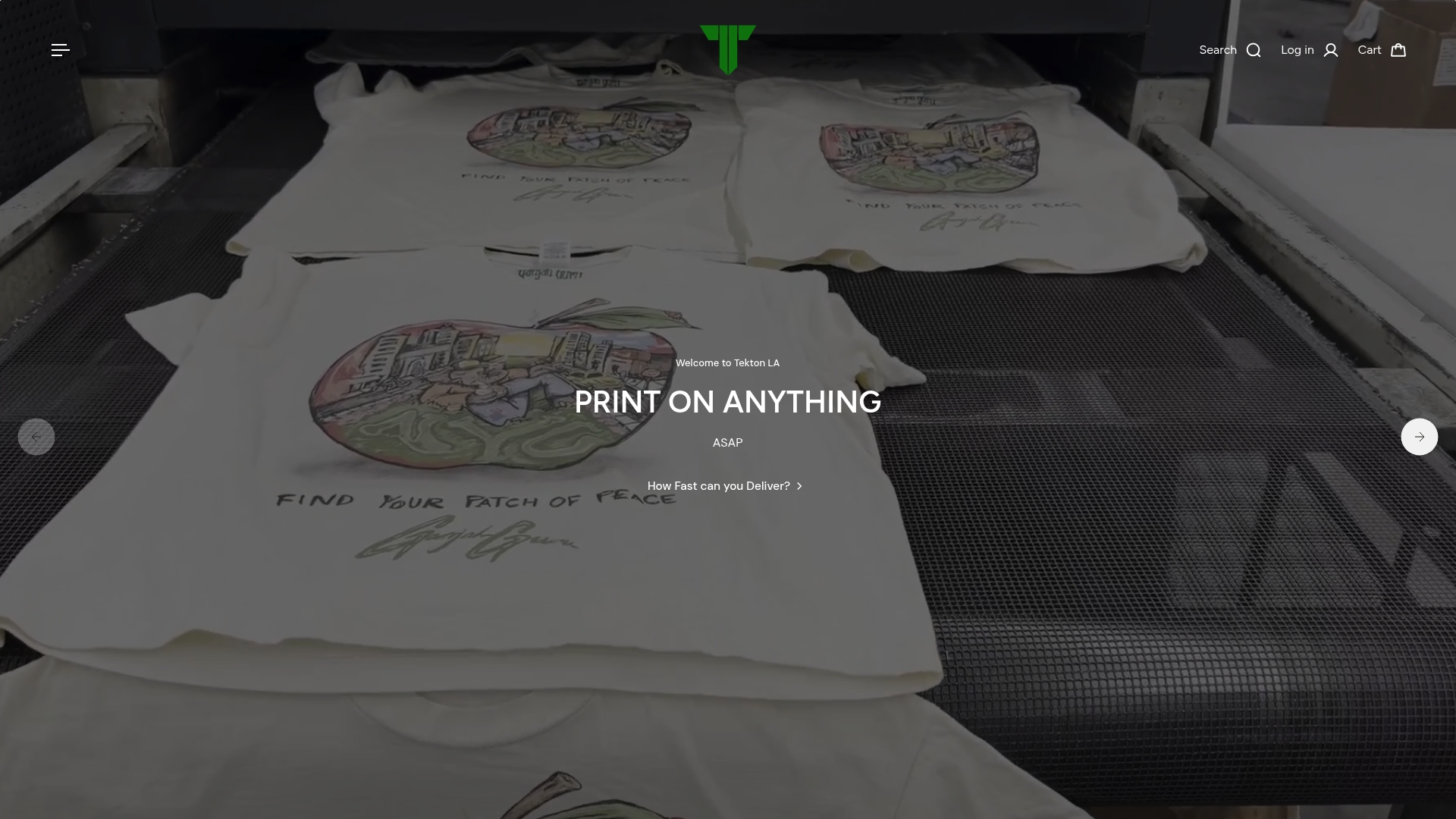
If you are building a POD apparel brand and want products that actually hold up to customer expectations, the supplier you work with will make or break you. Tektonla, based in Downtown Los Angeles, offers exactly the kind of quality and production flexibility that growing POD brands need. From premium garment dye shirts to crisp screen printed apparel, Tektonla’s fast turnaround and no-minimum-quantity model fits the on-demand workflow. Their DTG, DTF, embroidery, and screen printing services cover the full range of techniques that serious apparel brands rely on. For POD entrepreneurs who want to offer better quality than the average platform supplier can provide, Tektonla is worth exploring. Browse their product range and custom printing services to see what fits your brand.
FAQ
What is a print on demand business?
A print on demand business sells custom products that a third-party supplier produces and ships only after a customer places an order. The seller never holds inventory and focuses on design, marketing, and customer experience.
How does print on demand differ from dropshipping?
POD allows full product customization with your designs and branding, while standard dropshipping typically moves generic pre-made products. POD gives sellers more control over their brand identity on every item sold.
What are the biggest challenges in print on demand?
The main challenges are longer production and shipping times compared to standard ecommerce, thin profit margins per unit, and the full responsibility of marketing falling on the seller since the supplier only handles fulfillment.
What products sell well in print on demand?
Apparel including t-shirts and hoodies consistently performs best, followed by accessories like tote bags and phone cases. Products tied to a specific niche community tend to outperform generic designs.
How much does it cost to start a print on demand business?
Startup costs are low since you pay no inventory upfront. Main expenses include your ecommerce platform subscription, design tools, product samples, and marketing. Many creators launch for under $200.