


Screen printing is often written off as the old-school option, something brands graduate away from once digital printing becomes accessible. That assumption is costing some independent brands real money and real quality. The reason why streetwear brands use screen printing isn’t nostalgia. It’s durability, tactile impact, and a visual punch that digital methods still can’t fully replicate on dark fabric at scale. If you’re building a streetwear label and trying to decide where to put your production budget, this guide will give you the honest, specific reasons screen printing continues to dominate.
Table of Contents
- What makes screen printing ideal for streetwear designs
- The importance of plastisol ink curing for quality and longevity
- Cost and production considerations for streetwear brand owners
- Practical tips to optimize your streetwear screen printing outcomes
- Why screen printing still matters in the digital age of streetwear apparel
- How Tekton LA supports high-quality streetwear screen printing
- Frequently asked questions
Key Takeaways
| Point | Details |
|---|---|
| Durability through curing | Properly cured screen printing uses heat to create long-lasting, washable designs that stand out in streetwear. |
| Tactile aesthetic appeal | Screen printing’s thick ink layers provide a unique physical feel that digital prints cannot replicate. |
| Cost trade-offs by volume | Screen printing is cost-effective for larger runs but less so for small batches with frequent design changes. |
| Critical curing balance | Maintaining correct temperature and dwell time avoids common print failures like cracking or peeling. |
| Support from garment suppliers | Choosing garments designed for screen printing enhances final product quality and production efficiency. |
What makes screen printing ideal for streetwear designs
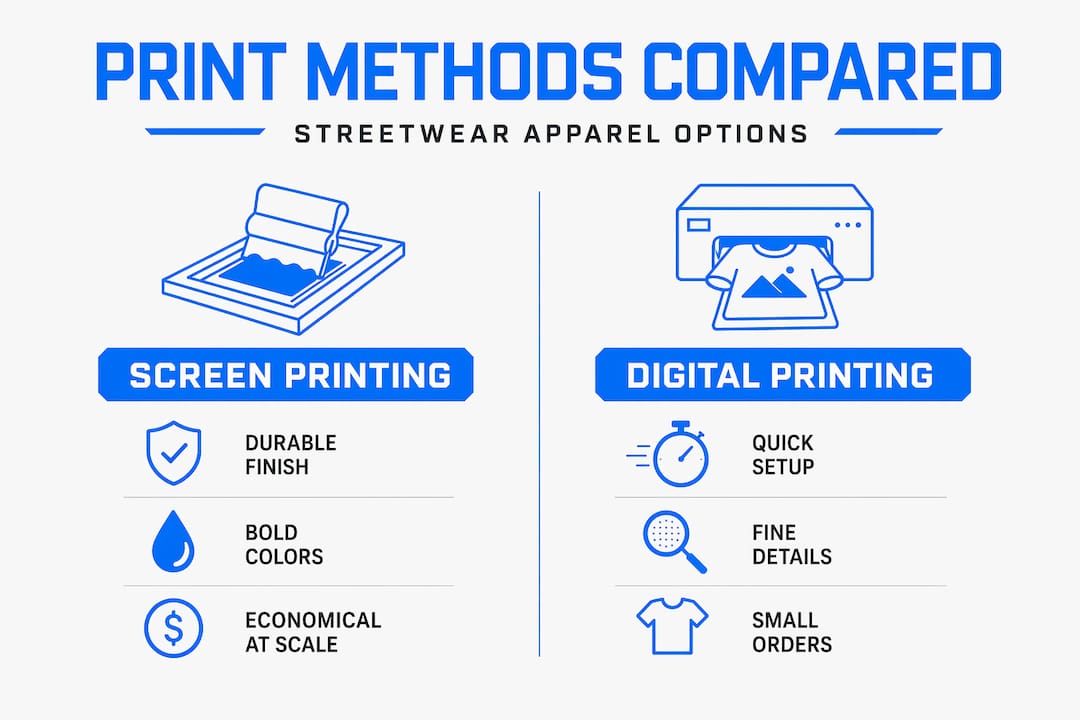
The core advantage of screen printing isn’t just about how a garment looks on a hanger. It’s about how it survives. Screen printing durability is built into the process itself. Ink is pushed through a mesh stencil and deposited in thick layers directly onto the fabric surface. When cured correctly, that ink bonds to create a durable finish that holds up through repeated washing in ways that many digital methods simply don’t match.
For streetwear specifically, this matters. Your customers aren’t buying a piece to frame it. They’re wearing it hard, washing it often, and expecting it to still look right two years later. A faded, cracked logo signals cheapness. A bold, intact print signals a brand that cares.
The other factor is color behavior on dark textiles. Screen printing forces ink opacity because you’re physically layering pigment, not printing pixels. On a black hoodie, a screen-printed white graphic pops with real brightness. Digital printing, particularly direct-to-garment, struggles to achieve the same opacity on dark fabrics without significant pre-treatment. Screen printing techniques like underbase printing (laying a white foundation layer before the color layers) solve this problem entirely.
Beyond standard inks, silkscreening offers unique tactile results that digital methods can’t replicate, including puff ink that raises off the fabric, metallic finishes that catch light, and glow-in-the-dark effects that have become a genuine design category in streetwear. These aren’t gimmicks. They’re design tools that let you build a signature look no algorithm can copy.
Here’s what screen printing brings to the table for streetwear brands:
- Opacity on dark fabric without complex pre-treatment processes
- Thick ink deposits that create a raised, tactile surface
- Specialty ink options including puff, metallic, and glow effects
- Color vibrancy that stays consistent across large production runs
- Long-term durability through wash cycles without cracking or fading
Pro Tip: If your brand relies on bold, single or two-color graphics, screen printing’s garment printing advantages will consistently outperform digital on cost per unit at volume and on visual impact.
The importance of plastisol ink curing for quality and longevity
Here’s where most independent brands lose control of their quality without realizing it. Screen printing is only as good as its cure. Plastisol ink is the industry standard for streetwear screen printing because it sits on the fabric surface and delivers that thick, opaque result. But it doesn’t air dry. It requires heat.
Curing plastisol ink correctly means reaching approximately 320°F (160°C) throughout the entire ink layer, not just at the surface, with enough dwell time for full polymerization. Under that temperature, or through the belt too fast, and you get what looks like a finished print but will peel after the first wash.
“Under-curing is the number one reason prints fail after washing. The ink looks dry, but the polymer chains haven’t linked properly. A temperature strip tells you what’s actually happening inside the ink, not just at the fabric surface.”
This is worth repeating because under-curing is the leading cause of print failure. Infrared temperature guns measure surface temperature. They don’t tell you whether the full ink thickness reached cure temp. Temperature strips placed inside the print are the only reliable way to know.
The curing process for sweatshirts and heavier fleece requires extra attention because the thicker fabric absorbs heat differently than a standard tee. You need to slow the conveyor belt to compensate.
Common curing steps to follow for every production run:
- Set your dryer to 320°F and confirm the setpoint with a calibrated thermometer
- Use temperature strips inside the ink layer, not just on the fabric surface
- Run a test garment at your standard speed before the full run
- Slow the belt for heavier garments like fleece or heavyweight blanks
- Wash test the first confirmed sample before approving the full production run
Pro Tip: Screen printing curing quality is where production discipline separates brands that get returns from brands that build loyal customers. Build the wash test into your standard quality process, not an afterthought.
Cost and production considerations for streetwear brand owners
Screen printing is economical at scale. That’s the honest framing. The setup cost per color, cutting screens, mixing inks, and running registration, means your first 50 units carry a significant overhead. At 500 units with a two-color design, the math flips entirely and screen printing becomes one of the most cost-effective production methods for custom apparel.
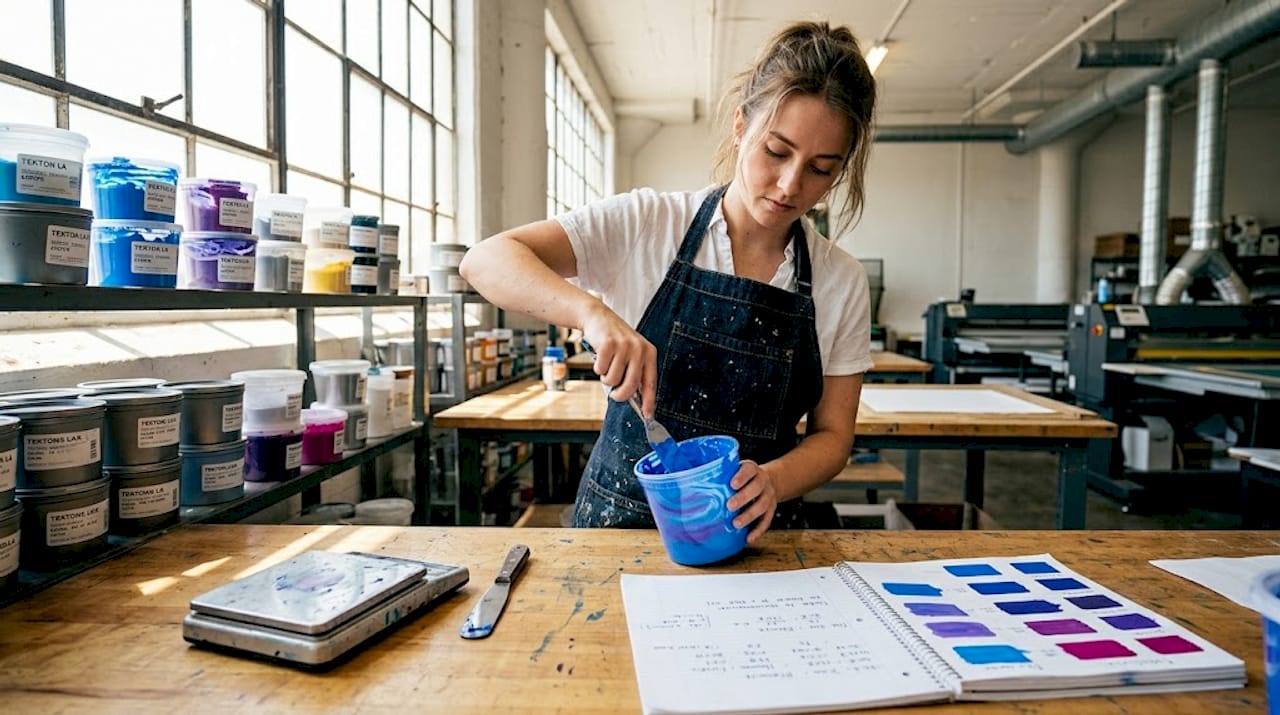
Screen printing’s front-loaded costs are offset by its low per-unit cost at volume. That’s why it works so well for seasonal drops, capsule collections, and branded staples that you’ll reorder. Where it breaks down is high design churn. If you’re changing your graphic every 100 units, screen printing’s tooling costs will negate any savings you thought you were getting.
| Factor | Screen printing | Digital (DTG/DTF) |
|---|---|---|
| Setup cost | Higher per design | Low or none |
| Per-unit cost at volume | Lower | Higher |
| Color complexity | Best with 1-4 colors | Handles full color |
| Tactile finish | Thick, raised, opaque | Thinner, softer |
| Dark fabric performance | Excellent | Requires pre-treatment |
| Minimum quantity | 50-100 recommended | No minimum |
| Specialty effects | Puff, metallic, glow | Limited |
| Reorder economics | Strong | Less advantaged |
The practical decision rule: if you’re planning a seasonal drop of 300 or more units with a consistent logo or graphic, screen printing is your method. If you’re testing a new design, selling under 100 pieces, or working with complex photographic artwork, digital is the better starting point.
Here’s what to factor into your decision:
- Design change frequency: frequent changes favor digital; stable designs favor screen printing
- Run size: below 100 units, digital wins on cost; above 300, screen printing does
- Color count: every additional color is another screen and more setup cost
- Reorder potential: a design you’ll run three times a year justifies the screen investment
Practical tips to optimize your streetwear screen printing outcomes
Knowing why screen printing works is useful. Knowing how to make it work every time is what actually builds a brand. These are the production habits that separate consistent results from inconsistent ones.
- Use temperature strips on every run. Infrared guns measure surface heat. Strips measure what’s happening inside the ink layer where it actually matters.
- Leave 3-inch gaps between garments on the conveyor belt. Stacking garments or running them too close disrupts airflow and creates uneven heat zones.
- Slow your belt for fleece and heavyweight blanks. Thick fabric acts as insulation. The ink layer needs more time at temperature to cure fully.
- Flash cure between layers until tacky, not hard. On multi-color designs, flash curing multi-layer prints correctly means the previous layer is set enough to print over without mixing, but not so hard that the next layer can’t bond.
- Plan your design around color count. Every screen is a setup cost. A two-color design at 500 units is a completely different economics conversation than a six-color design at 500 units.
- Do a wash test before approving production. Wash the test garment three times and inspect for cracking, peeling, or color shift. This is the only real quality confirmation.
- Work with custom apparel design mockups before you cut screens. Catching a registration issue in a digital mockup costs nothing. Catching it after screen setup costs real money.
Dwell time and heat penetration are as critical as the temperature setpoint itself. A dryer at 320°F that moves too fast is functionally identical to a dryer at 280°F. The time in heat is the variable most brands underestimate.
Pro Tip: Ask your print shop for temperature strip documentation from your run. Professional shops that take curing seriously won’t hesitate to provide it. Those that can’t probably aren’t following screen printing best practices consistently.
Why screen printing still matters in the digital age of streetwear apparel
Here’s something most brand advice gets wrong. The conversation about screen printing versus digital printing is usually framed as old versus new. That’s the wrong frame entirely.
Screen printing’s continued relevance isn’t resistance to change. It’s a response to what streetwear customers actually value. When someone puts on a piece with a raised, opaque, tactile graphic, they feel the quality before they think about it. That sensory experience is part of the brand. Screen printing builds sensory identity in a way that a thin digital print on a garment simply doesn’t communicate.
Streetwear has always been connected to craft. The hip hop influence on streetwear created a culture where the physical quality of what you wore signaled belonging, taste, and authenticity. That culture didn’t go away when DTG printers got affordable. If anything, it made the tangible quality of screen printing more meaningful by contrast.
The brands that treat screen printing as purely a cost decision are missing something. It’s a positioning decision. A thick, cured plastisol print on a garment-dyed blank says something about your brand’s standards that a thin digital print doesn’t. Customers feel the difference in their hands, and those tactile impressions build repeat purchases more reliably than any campaign.
The discipline side matters too. Brands that master curing, that control their production process, that understand screen printing’s sensory impact, stand out in a market saturated with brands that just upload a file and call it a day. The barrier to screen printing quality is real. That barrier is also your advantage.
How Tekton LA supports high-quality streetwear screen printing
Building a streetwear brand on screen printing means the garment you print on matters as much as the print itself. A poorly constructed blank with inconsistent weight and uneven dye absorption undermines even a perfect cure.
At Tekton LA, our garment-dyed shirts and garment-dyed sweatshirts are built for exactly the kind of tactile, high-impact streetwear production this article describes. The garment-dye process creates a worn-in aesthetic that pairs naturally with bold screen-printed graphics, and the consistent fabric weight ensures your plastisol ink cures evenly across the entire run. We work with independent brand owners who want production support, not just a vendor. Whether you’re sourcing blanks for your own print shop or looking for guidance on which garments hold up best under plastisol ink, Tekton LA is built to help you get it right from the start.
Frequently asked questions
Why is screen printing more durable than digital printing for streetwear?
Screen printing uses thick ink layers cured at high temperatures, creating bold prints that withstand heavy washing better than many digital prints. Screenprinting is highly durable when the ink is properly cured, sitting on the fabric surface and bonding to form a lasting finish.
What curing temperature is needed for plastisol inks in screen printing?
Plastisol inks require curing at about 320°F (160°C) with proper dwell time to polymerize fully and avoid cracking or peeling. Reaching the correct cure temperature throughout the entire ink layer, not just the surface, is what determines whether the print lasts.
Is screen printing cost-effective for small orders?
Screen printing’s high setup costs make it less cost-effective for small or frequently changing designs compared to digital methods. Screen printing’s front-loaded cost becomes a margin issue if you’re running small batches or changing designs often.
How can I ensure the best print durability from screen printing?
Monitor curing temperature and dwell time with temperature strips, space garments on the dryer belt, and conduct wash tests to confirm print durability. Slowing the belt and using strips ensures heat penetrates fully through the ink layer, not just the fabric surface.
Can screen printing achieve special visual effects on streetwear?
Yes, screen printing supports specialty inks like puff, metallic, and glow-in-the-dark that create unique tactile and visual effects. These specialty ink capabilities are a primary reason brands committed to streetwear aesthetics continue to choose screen printing over digital alternatives.