


Pick sublimation when you’re printing on white or light-colored polyester, or on poly-coated hard goods like mugs and metal signs, and you want zero hand feel. Pick DTF when you’re printing on cotton, dark garments, or blends, or your design needs white ink. Sublimation wins on softness and permanence; DTF wins on fabric flexibility. Neither one replaces the other, and most working shops run both.
TL;DR:
- Sublimation only works on polyester or poly-coated surfaces and cannot print white or bright colors on dark garments.
- DTF printing is suitable for cotton, blends, and dark fabrics, thanks to its white underbase layer that provides opacity and vibrant color on any material.
- Sublimation offers a softer, fabric-integrated design ideal for hard goods and sportswear, while DTF provides more flexibility for natural fibers and complex fabrics with a slight texture.
- Starting costs are generally lower for sublimation, but DTF involves more consumables such as film, adhesive powder, and white ink, increasing per-piece expenses.
- Both methods require sample testing on actual fabrics before large production runs, with DTF needing careful attention to curing and pressure to ensure durability.
Table of Contents
- Sublimation vs DTF: What Sublimation Actually Is
- Sublimation vs DTF: How Does DTF Printing Work?
- Sublimation Printing vs DTF: The Decision Dimensions That Matter
- Sublimation vs DTF: Costs, Equipment, and Startup Considerations
- Production Speed, Scalability, and Order-Size Rules
- Which Blanks and Products to Use With Each Method
- Care, Durability, and Quality-Control Checks Before You Ship
- Comparing the Environmental Footprint of Each Method
- Tekton LA’s Shop Rules for Choosing a Method
- Get Sample Prints Before You Commit to a Production Run
- Sources
- FAQ
Sublimation vs DTF: What Sublimation Actually Is
Sublimation isn’t really “printing” in the way most people picture it. Solid dye particles get heated until they turn into a gas, and that gas bonds directly with polyester fibers rather than sitting on top of them. That’s the whole trick, and it’s also the source of every limitation the process has.
Because the dye needs polyester to bond with, sublimation only works reliably on polyester fabric or poly-coated surfaces. Sublimation does not hold ink well on 100% cotton tees, and a 50/50 blend gives you a faded, washed-out version of the design. The other limitation catches new shop owners off guard: sublimation ink has no white pigment. It can’t print white, so it can’t print bright colors on a dark shirt either. The background garment color becomes part of the artwork whether you want it to or not.
The upside is what you don’t get: no plastic layer, no texture, no cracking. The design becomes the fabric.
A standard sublimation setup includes:
- A dye-sublimation printer with sublimation-specific inks
- Sublimation transfer paper
- A heat press or a specialty press for mugs, tumblers, or flat goods
- Heat-resistant tape and butcher paper to prevent ghosting
Maintenance tends to be lighter than you’d expect for a specialty process. There’s no powder to manage and no white underbase to calibrate. The printer heads still need regular use to avoid clogging, but for a hobbyist or small operator working exclusively with compatible blanks, sublimation can actually be the simpler machine to own.
Sublimation vs DTF: How Does DTF Printing Work?
DTF, or direct-to-film, solves the exact problem sublimation can’t touch: printing bright colors on cotton and dark fabric.
The DTF transfer process runs in five stages. First, the design prints onto a special PET film using DTF inks. Second, a white underbase layer prints on top of (technically underneath, from the wearer’s view) the colored ink, giving it opacity. Third, while the ink is still wet, adhesive powder gets dusted across the print and the excess shaken off. Fourth, the film goes through a curing oven or heat press to melt that powder into a bonding layer. Fifth, the cured transfer gets pressed onto the garment and peeled away, leaving the design behind.
That white underbase is why DTF works on anything: black hoodies, navy polos, heather gray blends, raw canvas. The ink doesn’t need to bond with a specific fiber type because it never touches the fiber directly. It sits on top, held there by the melted adhesive.
That’s also the tradeoff. The finished print is a thin plastic film. It has more hand feel than sublimation, and on thin or stretchy fabric you can feel a slight edge around the design.
DTF equipment runs more complex than a sublimation setup:
- A DTF printer with white and CMYK ink channels
- PET film rolls
- A powder shaker and curing oven (or a combo unit)
- A heat press with consistent pressure control
The printhead clogs more easily because white ink pigment settles faster than colored ink, so DTF requires more active maintenance than sublimation, especially if the printer sits idle for more than a day or two.
Sublimation Printing vs DTF: The Decision Dimensions That Matter
Fabric and color decide almost everything else in this comparison. Once you know what you’re printing on, the rest of the decision mostly makes itself.
- Fabric compatibility. Sublimation needs polyester or poly-coated surfaces, full stop. DTF works across cotton, polyester, blends, canvas, and most woven or knit fabrics.
- Color and white ink. Sublimation cannot print white or hold color on dark fabric. DTF’s white underbase makes dark garments and vivid color equally viable.
- Hand feel and breathability. Sublimation leaves the fabric untouched, with the same stretch and airflow as the blank. DTF adds a thin surface layer that reduces breathability slightly, more noticeable on lightweight or athletic fabric.
- Durability and wash performance. Sublimation dye becomes part of the fiber, so it can’t crack, peel, or fade the way a surface print can. DTF holds up well for years when the pressing and curing steps are done correctly, but a rushed press or a hot-peel mistake shows up as cracking within a dozen washes.
- Startup cost and complexity. Sublimation setups skip the powder and underbase steps, which keeps day-to-day operation simpler. DTF has more moving parts and more consumables to manage.
- Production speed and scalability. DTF transfers can be printed in batches ahead of time and pressed on demand, which suits an assembly-line workflow for medium runs. Sublimation is fastest for all-over or edge-to-edge designs pressed directly onto pre-cut polyester panels or hard goods.
- Suitable product types. Sublimation dominates mugs, tumblers, metal signs, and all-over athletic wear. DTF dominates retail cotton tees, hoodies, and dark-garment merchandise.
Color vibrancy deserves its own note here. Sublimation produces genuinely seamless, edge-to-edge color because the dye becomes the fabric’s surface. DTF is also praised for vivid, saturated color, and its white underbase actually makes colors pop harder on dark backgrounds than sublimation ever could, since sublimation has no way to compete on a black shirt at all.
For batch production, the two methods behave differently on the shop floor. DTF transfers can be printed, cured, and stacked in advance, then pressed onto shirts as orders come in, which is a real advantage for pre-order drops. Sublimation for all-over apparel usually means printing and pressing panels before the garment is even sewn together, which suits designs planned around production, not one-off customization on a finished blank.
Sublimation vs DTF: Costs, Equipment, and Startup Considerations
Startup cost splits along the same fabric line as everything else. A basic sublimation setup, printer plus heat press plus ink, tends to run lower than a comparable DTF rig once you add the curing oven and powder shaker. Sublimation’s ongoing costs are lighter too. There’s no adhesive powder to buy, no white ink channel to keep flushed, and no film to stock.
DTF’s per-piece cost is driven by consumables most people underestimate:
- PET film, priced by the roll or the linear foot
- Adhesive powder, which needs to match your fabric type (soft-hand vs. all-purpose)
- White ink, which clogs faster and gets used up quicker than any other channel
- Curing energy costs from running an oven for every batch
For a small brand not ready to own a printer at all, buying pre-made DTF transfers and running only a heat press is the lowest-friction entry point into custom apparel. Sublimation rarely offers that same shortcut. It generally means owning the printer from day one, since sublimation transfers aren’t as commonly outsourced piece by piece the way DTF transfers are. If the math on owning either machine doesn’t pencil out yet, comparing DTF against screen printing break-even points is worth doing before you commit to hardware.
Production Speed, Scalability, and Order-Size Rules
DTF fits an assembly-line rhythm: print a batch of transfers, cure them, then press them onto shirts as orders roll in. That separation between printing and pressing is what makes DTF scale well for medium runs, say 50 to 500 pieces, since the printing step doesn’t have to happen in real time with fulfillment.
Sublimation is more of a single-step operation for the garment itself. You print the transfer, then press it immediately onto the polyester blank or hard good. There’s no “bank of finished transfers waiting to be pressed later” workflow in the same way, unless you’re printing for hard goods with standardized sizing.
A few throughput habits separate a smooth production day from a messy one:
- Run a cold-peel test on every new DTF film batch before committing to a full run.
- Match cure time and temperature to the specific adhesive powder, not a generic setting borrowed from a different supplier.
- Check press pressure with a test square before starting a batch, not after the first shirt comes out wrong.
- For sublimation, always use fresh butcher paper on each press to avoid ghosting between pieces.
Large sublimation runs of 500+ identical items, like team jerseys, are efficient because the design rarely changes between pieces. DTF’s flexibility actually costs a little speed when every order is a different design, since each film needs its own print and cure cycle.
Which Blanks and Products to Use With Each Method
The buying rule is short: check the fiber content, then check the color.
Sublimation blanks: white or light heather polyester tees, polyester-blend performance wear, poly-coated mugs, tumblers, mousepads, and metal or ceramic signage. Anything with a poly-coating that accepts dye gas is fair game.
DTF blanks: 100% cotton tees, dark or heather-colored garments in any fiber, cotton/poly blends, canvas totes, and even some polyester pieces where a printed transfer is more practical than direct sublimation.
A quick way to run the checklist on a new order: ask whether the blank is polyester and light-colored. If yes to both, sublimation is on the table. If either answer is no, DTF is the safer route. A navy poly-blend hoodie, for instance, fails the color test even though it passes the fabric test, so DTF wins that one. A white poly tee for an all-over sublimated design is the clean case for sublimation. A black cotton crewneck with a colorful front graphic has only one real answer: DTF.
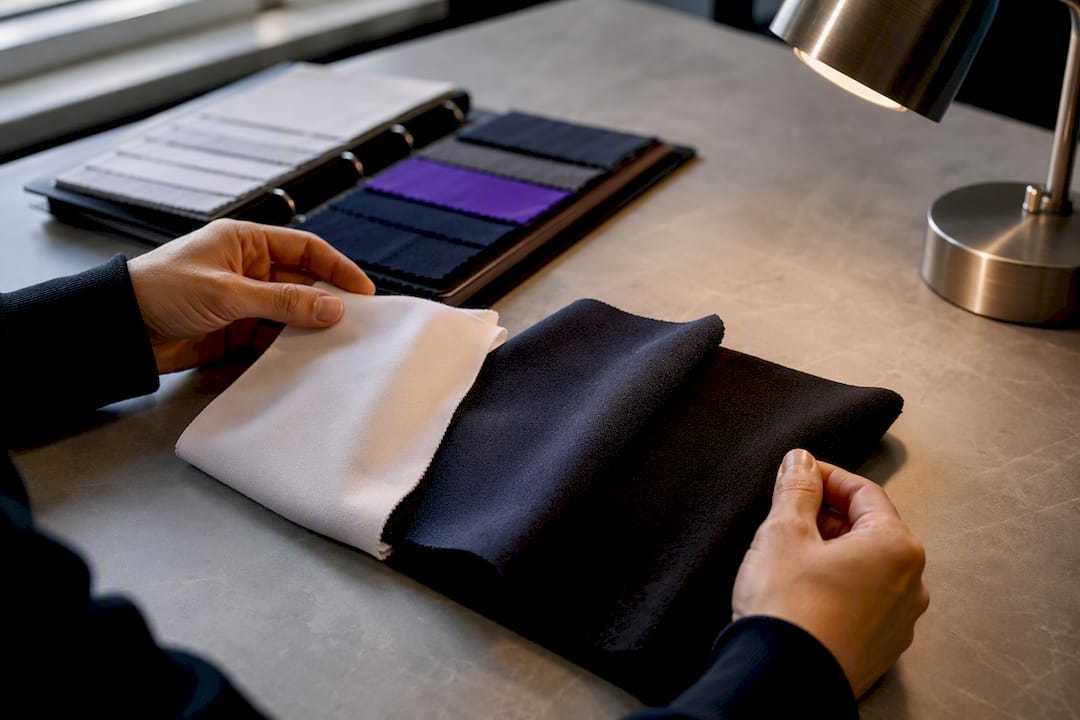
Pro Tip: Keep a small swatch binder of your most-used blanks with notes on which method worked and which failed. Six months in, that binder saves more guesswork than any spec sheet from a supplier.
Tekton LA stocks blanks like the premium short-sleeve tee that work well with DTF transfers for exactly this reason: cotton feel, dark-color options, no fiber-content surprises.
Care, Durability, and Quality-Control Checks Before You Ship
Sublimated garments wash like the fabric they’re printed on, since the dye is part of the fiber. There’s no special care instruction beyond what the polyester blank itself needs.
DTF prints need a bit more attention. Washing inside-out in cold or warm water, skipping fabric softener, and avoiding high-heat dryers all extend the life of the transfer. DTF holds up well for years when pressed and cured correctly, but three mistakes account for almost every failure a shop sees:
- Insufficient pressure during the final press, which leaves the adhesive only partially bonded to the fabric.
- Wrong cure temperature or time, which either under-melts the powder (weak bond) or scorches the film (brittle, cracked print).
- Hot-peeling too early, pulling the film off before the adhesive has set, which lifts fine detail right off the shirt.
A five-wash test on a sample piece before a production run catches most of these problems before they reach a customer. Flex the print by hand, check for cracking at the edges, and run it through a normal wash and dry cycle. If it survives clean, the batch settings are dialed in. Tekton LA’s own wash-test comparison for film-based methods uses the same logic to judge print durability before committing to a full production run.
Comparing the Environmental Footprint of Each Method
Neither method is inherently “green,” but the waste profiles differ in specific ways worth knowing before you scale production.
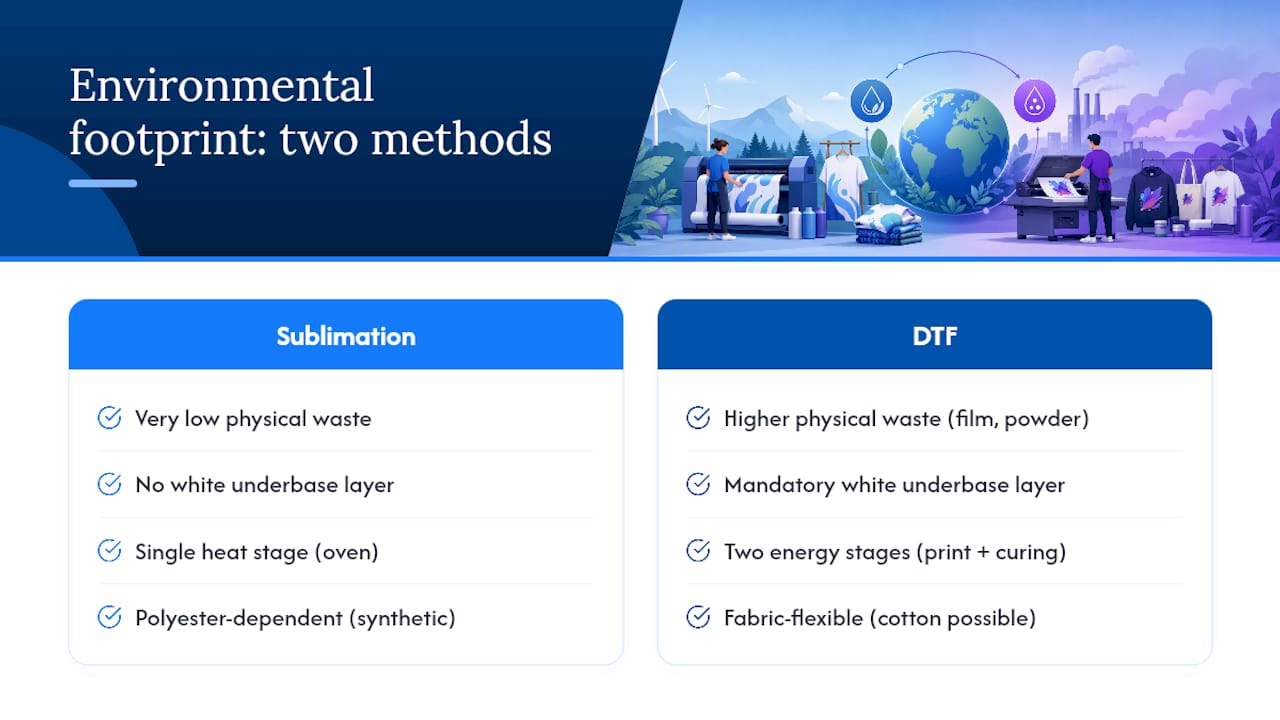
Sublimation produces very little physical waste. There’s no powder, no separate underbase layer, and the transfer paper is the main consumable, most of which either transfers fully or gets discarded as a thin sheet. The dye-gas process does require sustained heat for several minutes per press, and repeated runs add up in energy use, particularly for shops running large-format sublimation ovens for all-over garment printing.
DTF generates more physical waste per piece: film scraps, excess adhesive powder that doesn’t stick during the shake-off step, and higher ink consumption from the mandatory white underbase layer on every print. The curing oven step also adds a second energy-intensive stage that sublimation skips.
On the fabric side, sublimation’s dependency on polyester ties it to a synthetic, petroleum-based textile that doesn’t biodegrade. DTF’s fabric flexibility means it can print on natural fibers like cotton, which have a different environmental footprint tied to water use in cultivation rather than plastic persistence. Neither tradeoff is clearly better across the board. It depends on whether your priority is reducing print-process waste or reducing reliance on synthetic textiles further up the supply chain.
Small shops looking to lower their footprint on either method tend to focus on the same levers: buying garment blanks made from recycled or locally sourced materials, minimizing test prints, and choosing suppliers who reclaim or recycle film and paper waste rather than sending it to landfill.
Tekton LA’s Shop Rules for Choosing a Method
Running both processes under one roof means every order gets sorted by the same two questions: what’s the fabric, and what’s the color? Some shops offer DTG, DTF, sublimation, screen printing, and embroidery, with no minimum order quantity on blanks, which means the method gets picked for the job, not for whatever machine happens to be free.
The shop-level checklist looks like this: polyester and light-colored means sublimation is on the table, especially for anything requiring an all-over print. Cotton, dark colors, or a blend automatically routes to DTF. If the client wants a soft hand feel and the fabric allows it, sublimation wins even when DTF is technically possible.
Two scenarios show the pattern clearly, and for durable branding on workwear, custom patches offer a premium option for related decoration that complements these printing methods. A youth sports league ordering 200 matching jerseys in white poly mesh goes straight to sublimation. Full edge-to-edge color, zero texture, and identical designs across every size make it the obvious call. A streetwear brand launching a small-batch drop on black cotton tees goes straight to DTF, since sublimation can’t touch dark cotton at all, and the brand needs bright, opaque graphics that survive regular washing.
— Christian
Get Sample Prints Before You Commit to a Production Run
Choosing between sublimation and DTF gets easier once you can hold both on the actual fabric you’re planning to sell, not just read specs about them. Some print shops run both processes in-house, along with DTG, screen printing, and embroidery, so a mixed catalog with polyester hard goods and cotton tees doesn’t mean juggling two separate vendors.
Start by requesting a sample on a blank close to what you’re planning, like the garment dye shirt for a DTF cotton run or a poly tee if sublimation fits your design better. Upload your artwork, tell the team the fabric and color you’re working with, and you’ll get material advice back before you commit to a full batch. No minimum order quantities on blanks means you can test a method on a handful of pieces before scaling to hundreds. Head to Tekton LA to start a sample order or ask a question about which method fits your next drop.
Sources
For deeper technical detail on either process, see Shopify’s sublimation vs DTF breakdown, its direct-to-film explainer, and Atomm’s fabric compatibility guide.
- Sublimation vs. DTF Printing: Which Is Right for Your Business? (2025) - Shopify
FAQ
Is Sublimation or DTF More Expensive?
Sublimation typically costs less to start and run day-to-day since it skips adhesive powder, white ink, and a curing oven. DTF’s per-piece cost runs higher due to film, powder, and faster white-ink consumption, though buying pre-made transfers lowers the entry cost significantly.
Which Is Better, Sublimation or DTF?
Neither is universally better. Sublimation wins for light polyester and hard goods with zero hand feel, while DTF wins for cotton, dark garments, and blends where white ink is required.
Can DTF Print on the Same Fabrics as Sublimation?
Yes, DTF works on polyester too, though sublimation still produces a softer result with no surface texture on compatible light-colored polyester blanks.
Does DTF Feel Different From Sublimation on a Shirt?
Yes. Sublimation leaves no texture since the dye bonds into the fiber, while DTF leaves a thin film on the surface that’s slightly noticeable to the touch, especially on lightweight fabric.
How Many Washes Should a DTF Print Survive Before It’s Considered Good Quality?
A five-wash test with inside-out laundering and no fabric softener is a practical benchmark small shops use to confirm a DTF press was cured and pressed correctly before running a full order.