

Pick vinyl if your banner lives outdoors, gets handled roughly, or needs to hit a tight budget. Pick fabric if it’s going indoors, in front of cameras, or on a plane with your sales team. The real trade-off is simple: vinyl wins on weather resistance and cost, fabric wins on look and portability, and glare is the deciding factor more often than people expect.
TL;DR:
- Vinyl banners are ideal for outdoor use and large-scale jobs due to their weather resistance, durability, and lower cost per square foot.
- Fabric banners excel indoors, especially for photography, because they have a matte finish, richer color saturation, and easier portability.
- Proper finishing, such as matte laminates for vinyl and blackout backing for fabric, is essential to prevent glare and ensure high-quality presentation.
- Shipping and handling differ significantly: vinyl requires core rolling for transportation, while fabric folds flat and fits comfortably in luggage.
- Requesting a sample or proof before ordering helps prevent costly reprints, especially for brand-critical or color-sensitive projects.
Table of Contents
- Vinyl vs Fabric Banner: Comparing the Core Material Properties
- Vinyl Banner Advantages and Drawbacks
- Fabric Banner Benefits and Limitations
- Which Banner Material Fits Your Event or Display?
- How Long Each Material Lasts and How to Care for It
- How Printing Method Affects Color and Finish
- Shipping, Setup, and On-Site Handling
- What Vinyl and Fabric Banners Actually Cost
- How to Choose: A Quick Decision Checklist
- What Tekton LA Sees Across Vinyl and Fabric Orders
- The Real Deciding Factor Nobody Talks About Enough
- Order Your Banner With a Team That Prints Both Materials In-House
- Sources
Vinyl vs Fabric Banner: Comparing the Core Material Properties
Vinyl banners are built from PVC scrim, a plastic mesh coated in vinyl, typically weighing a typical weight range around mid-teens ounces per square yard. That density is what makes it waterproof, tear-resistant, and tough enough to survive months bolted to a fence. Fabric banners, by contrast, are woven polyester, usually in the 200 to 300 gsm range, printed through dye-sublimation so the ink becomes part of the fibers rather than sitting on top of them.
That difference in construction drives almost everything else. Vinyl feels stiff and a little plasticky in hand. Fabric feels closer to a tablecloth or an athletic jersey, soft enough to fold into a duffel bag without cracking.
Here’s how the two stack up across the factors that actually matter when you’re placing an order:
- Durability: Vinyl shrugs off rain, wind, and rough handling; fabric holds up fine indoors but isn’t built for sustained weather exposure.
- Appearance: Vinyl can develop glare under stage lighting or camera flash unless you specify a matte finish; fabric has a naturally matte, non-reflective surface.
- Portability: Vinyl needs to be rolled around a core to avoid creasing; fabric folds flat and packs into a standard suitcase or tote.
- Maintenance: Vinyl wipes clean with a damp cloth; fabric can be gently machine washed or steamed.
- Cost: Vinyl runs cheaper per square foot in most cases, since PVC material and printing are generally less expensive than dye-sublimated fabric, according to industry sources.
Neither material is objectively “better.” A 10 foot vinyl banner zip-tied to a chain-link fence at a 5K race has completely different needs than a 8 foot fabric backdrop behind a product launch step-and-repeat. Match the material to the job, not the other way around.
Vinyl Banner Advantages and Drawbacks
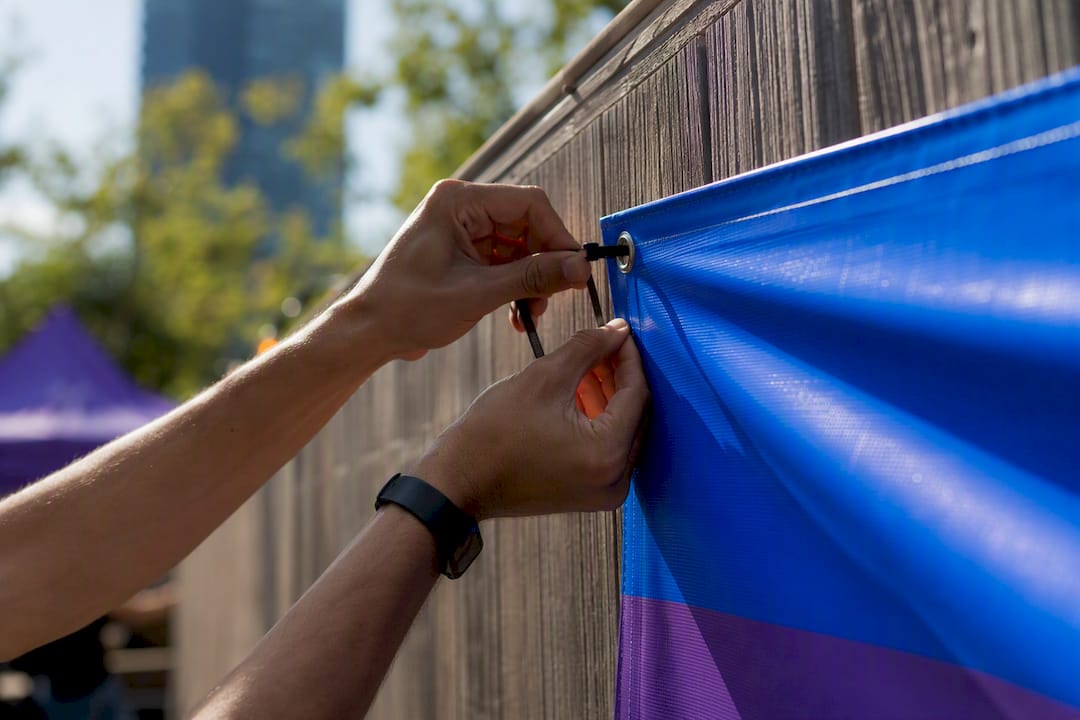
Vinyl earns its reputation as the workhorse material because it does one thing extremely well: it survives punishment. Rain, direct sun, wind load, dragging across a loading dock. None of that bothers a properly finished vinyl banner.
Where vinyl wins:
- Excellent weather and abrasion resistance, especially with UV-stable inks and welded hems for long-term outdoor installs.
- Wipes clean with soap and water, no special care required.
- Grommets and pole pockets attach easily to fences, scaffolding, or frame systems.
- Lower cost per square foot, making it the go-to for large-format jobs like building wraps or construction fencing.
Where it falls short:
- Glossy laminates can throw glare under stage lights or camera flash.
- Must be rolled on a core for storage and shipping; folding it creates permanent creases.
- Feels less premium in an indoor, brand-forward setting like a trade show booth.
Pro Tip: If your vinyl banner is going in front of a camera or under bright event lighting, ask your printer for a matte or matte-laminate finish. It’s a small upgrade that solves most glare complaints before they happen.
When the job is outdoors, high-traffic, or budget-driven, vinyl is usually the smarter spend. You get more banner for less money, and it’ll still look fine after a summer of sun.
Fabric Banner Benefits and Limitations
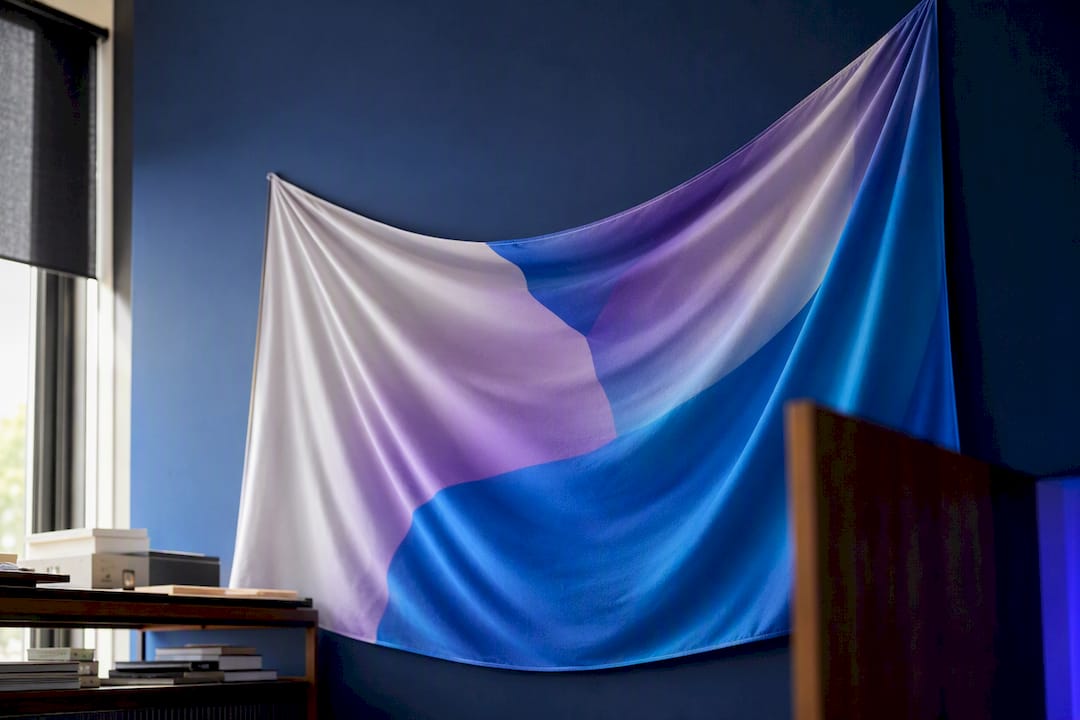
Fabric earns its place in trade show halls and photo backdrops for a reason that has nothing to do with durability: it looks better on camera. The dye-sublimation process pushes ink directly into the polyester fibers, which produces rich color saturation without the reflective sheen vinyl can develop.
Where fabric wins:
- Matte, non-glare finish that photographs cleanly under flash or stage lighting.
- Folds flat for travel, so a team can pack a backdrop in a rolling bag instead of a banner tube.
- Sewn hems and pole pockets give a tailored, upscale look compared to a stiff vinyl edge.
- Steaming or a gentle wash removes wrinkles after transport, no permanent creasing.
Where it falls short:
- Costs more per square foot than vinyl for comparable size and print quality.
- Not built for sustained outdoor exposure to rain or direct sun over long periods.
- Single-layer fabric can show some translucency, which matters for double-sided displays.
Pro Tip: If you need a double-sided fabric banner with no bleed-through, ask your printer for a blackout backing or double-layer construction instead of assuming a standard single layer will handle it.
Fabric costs more upfront, but for a brand that’s photographed constantly, that cost buys a noticeably more polished result.
Which Banner Material Fits Your Event or Display?
Matching material to scenario is where most of the guesswork disappears. Here’s how the common cases break down:
- Outdoor events and street signage. Vinyl, without much debate. Weather exposure alone rules out fabric for anything left outside overnight.
- Building wraps and construction fencing. Vinyl again, reinforced by grommets or pole pockets and, where relevant, tied into event fence rental setups for temporary barrier signage.
- Trade show booths and step-and-repeat photo walls. Fabric. The matte finish and richer sublimated color hold up under flash photography far better than glossy vinyl.
- Retail interiors and showroom displays. Fabric, both for the premium look and because it won’t develop the plastic sheen vinyl can pick up under fluorescent lighting.
- Covered outdoor spaces, like a tent or pavilion. This is the gray area. Fabric can work short-term if it’s shielded from direct rain, but vinyl is still the safer call for multi-day exposure.
- Traveling sales or marketing teams. Fabric, purely for the packing advantage. A folded backdrop fits in checked luggage; a rolled vinyl banner usually needs its own tube.
Before ordering, check what hardware your venue or booth system expects. Some pop-up frames are built specifically for fabric sleeves, while others use grommet-and-bungee setups designed for vinyl. Getting that mismatched is a common, avoidable headache. For sizing questions across either material, a banner size guide is worth a look before you finalize dimensions.
How Long Each Material Lasts and How to Care for It
Outdoor vinyl banners, properly finished with UV-stable inks, generally hold up well for extended outdoor stints before fading becomes noticeable, according to industry guidance on outdoor banner material. Fabric banners, kept indoors, tend to outlast that timeline in visual quality since they’re never exposed to UV degradation or rain in the first place.
Maintenance is where the two diverge most clearly:
- Vinyl: wipe down with mild soap and water; avoid solvents that can degrade the coating.
- Fabric: machine wash on gentle or hand wash, then steam or iron on low heat to remove wrinkles.
- Storage: roll vinyl around a core, never fold it; fold fabric flat or roll it loosely to avoid mildew in humid storage.
- Repairs: small vinyl tears can sometimes be patched with adhesive vinyl tape; fabric snags usually mean a reprint is the cleaner fix.
Pro Tip: Store both materials somewhere dry. Vinyl that sits folded for months develops permanent creases along the fold lines, and fabric left damp in a bag is a fast track to mildew spots that won’t wash out.
How Printing Method Affects Color and Finish
Fabric banners run through dye-sublimation, where ink becomes part of the fiber itself. Vinyl typically runs through UV, latex, or solvent printing, where ink sits on the surface as a layer. That distinction explains why fabric colors look woven-in and vinyl colors look more like a coating, sometimes glossy, sometimes matte depending on the laminate.
- Finish choice matters for photography. A matte laminate on vinyl or the inherent matte texture of fabric both reduce glare under camera flash or stage lights.
- Art prep differs slightly by material. Fabric handles fine gradients and photographic imagery cleanly through sublimation; vinyl needs attention to bleed and resolution since ink sits on top rather than absorbing in.
- Double-sided or backlit displays need a blackout layer on fabric to stop show-through, while vinyl can be printed opaque more easily by default.
For deeper detail on how printing techniques shape final output, this garment printing techniques guide covers the same underlying principles that apply across fabric and apparel substrates. And if you’re weighing how much color fidelity actually matters for your brand, print quality’s impact on event merch is worth a read before finalizing files.
Shipping, Setup, and On-Site Handling
Getting a banner to the venue in good shape depends almost entirely on how it’s packed.
- Roll vinyl on a core for shipping. Folding it even once creates a crease that won’t fully disappear.
- Fold or loosely roll fabric. It travels well in a suitcase or garment bag, which is why trade show teams increasingly favor fabric to cut down on shipping and drayage costs tied to long vinyl tubes.
- Check venue drayage rules before shipping vinyl in bulk tubes. Some convention centers charge by package size, and long tubes aren’t cheap to handle.
- Plan for setup speed. Fabric sleeves slide onto pop-up frames fast; vinyl grommet systems need more time and sometimes a second person.
- Fix wrinkles on-site with low heat. A handheld steamer works for fabric; vinyl generally just needs to hang and relax overnight.
What Vinyl and Fabric Banners Actually Cost
Vinyl is the cheaper material almost across the board, which is why it’s the default choice for large-format or budget-sensitive jobs. Fabric’s higher per-square-foot cost reflects the sublimation process and the finishing work like sewn hems.
- Quantity and size still drive per-unit price more than material choice alone.
- Turnaround speed can add cost on either material if you need next-day production.
- Hidden costs often show up in shipping tubes, hardware, and drayage fees rather than the banner itself.
- Spending more on fabric upfront can save money over several events if it means skipping banner tube shipping every time.
How to Choose: A Quick Decision Checklist
Run through this before you request a quote:
- Where will it live? Outdoors or exposed to weather means vinyl. Indoors and photographed means fabric.
- Will it travel? If it’s flying with a sales team, fabric’s foldability wins.
- What’s the lighting? Camera flash or stage lights favor fabric’s matte finish or a matte-laminated vinyl.
- What’s the budget ceiling? Vinyl stretches further for large or multiple banners.
When you talk to a printer, ask these specific questions: What print method will you use, and what’s the material weight? What finishing options come standard, grommets, pole pockets, sewn hems? Is blackout backing available for double-sided fabric? What’s your sample policy, and what’s the lead time?
Watch for vague quotes that don’t specify material weight or finish type. That’s usually where corners get cut.
Pro Tip: For anything brand-critical, request a physical sample or a short test print before committing to a full run. A screen preview never tells you how a color will actually look on vinyl versus fabric.
What Tekton LA Sees Across Vinyl and Fabric Orders
Tekton LA runs both dye-sublimation fabric printing and vinyl printing in-house, including eco-conscious fabric options for brands prioritizing sustainability. Fast turnaround is standard, but for color-critical jobs, requesting a proof or sample print first avoids the kind of reprint headaches that cost both time and budget. There’s no substitute for seeing the actual material under real lighting before a full production run ships.
The Real Deciding Factor Nobody Talks About Enough
Most comparisons frame vinyl versus fabric as a durability question. It isn’t, not really. The more useful question is: who’s going to be looking at this banner, and under what light? Outdoor banners get judged from a moving car at 40 miles an hour. Indoor banners get scrutinized up close, in photos, sometimes for years on a company’s own marketing materials.
That’s why I think buyers overweight cost and underweight glare. A cheap vinyl banner with a glossy laminate can undercut an otherwise good brand impression the moment someone snaps a photo under harsh event lighting. Spend the extra few dollars on a matte finish if there’s any chance a camera will be pointed at it.
If you’re still torn between the two, the fastest path forward is asking a printer to walk you through both materials for your exact use case before you commit to a full order.
— Christian
Order Your Banner With a Team That Prints Both Materials In-House
Choosing between vinyl and fabric shouldn’t mean guessing which printer specializes in which. Tekton LA runs both under one roof in Downtown Los Angeles: dye-sublimation fabric for photo-heavy indoor displays, durable vinyl for outdoor and high-traffic jobs, plus eco-friendly fabric options for brands that care about sourcing. Turnaround is fast, and there’s no minimum order size holding you back from a single test banner.
If your event is coming up fast, request a proof or sample print before committing to a full production run, especially if brand colors are non-negotiable. Reach out through Tekton LA to talk through material options for your specific venue, lighting, and travel needs, or browse their screen print capabilities to see the kind of turnaround and quality you’ll be working with. Getting the material right the first time beats reprinting under a deadline.
Sources
- Vinyl Banners vs Fabric Banners: Which Is Better for Your Trade Show Booth?
- Fabric vs. Vinyl: The Best Material For Banner Printing
- Vinyl vs Fabric Banners | PostNet Denver
- The ultimate guide to outdoor banner material