


The highest-impact corporate swag ideas in 2026 fall into five categories: branded apparel, everyday drinkware, practical tech accessories, remote-work onboarding kits, and eco-friendly items. A 2026 industry trend report confirms what most seasoned marketing teams already suspect: fewer, better items outperform large volumes of throwaway giveaways every time.
Here are quick per-person budget ranges to anchor your planning:
- Entry tier ($5–$15): Stickers, tote bags, branded pens, seed cards, lanyards
- Mid tier ($20–$50): Custom tees, insulated mugs, power banks, branded notebooks
- Premium tier ($60–$150+): YETI-style tumblers, Hydro Flask bottles, wireless earbuds, curated gift boxes
For apparel-first programs that need low minimums and fast turnaround, a specialist custom-print partner like Tektonla handles everything from direct-to-garment tees to garment-dyed hoodies with no minimum order on blanks. The sections below break down every major category with concrete examples, production notes, and budget guidance.
Key Takeaways
The highest-ROI corporate swag programs tie every item to a specific moment, a hire’s first day, a milestone, a launch, and invest in packaging and personalization as much as the item itself.
| Point | Details |
|---|---|
| Match item to moment | Swag tied to a specific event or recognition milestone gets kept; generic giveaways get donated. |
| Budget by tier | Entry ($5–$15) for events, mid ($20–$50) for onboarding, premium ($60–$150+) for VIPs and milestones. |
| Plan lead times early | Apparel takes 7–14 business days in production; add 2–5 days for kitting and 3–7 for shipping. |
| Certify sustainability claims | Ask for GOTS, GRS, or Fair Trade documentation before making eco-friendly claims on packaging. |
| Tektonla for apparel programs | No-minimum blanks, fast turnaround, garment-dye and DTG options make pilot batches practical before full runs. |
Table of Contents
- 1. Corporate swag ideas that start with apparel
- 2. Drinkware people use every single day
- 3. Tech accessories that actually get kept
- 4. Remote-work and onboarding kits that improve retention
- 5. Wellness and self-care swag that supports employee wellbeing
- 6. Eco-friendly swag that holds up to scrutiny
- 7. Bags and travel swag that go everywhere
- 8. Event and tradeshow giveaways that draw traffic
- 9. Premium gifts for VIPs and executive relationships
- 10. Custom packaging and the unboxing experience
- How to choose swag: a practical decision framework
- Legal and branding compliance for corporate swag
- Typical costs and lead times by budget tier
- Client appreciation vs. employee recognition: different goals, different swag
- Handling and managing swag inventory
- What most teams get wrong about swag programs
- Tektonla handles the apparel side so you can focus on the program
- Sources
- FAQ
1. Corporate swag ideas that start with apparel
Branded apparel is the single most visible swag category because recipients wear it outside the office. A well-fitted hoodie or jacket becomes a walking billboard in coffee shops, airports, and gyms, none of which you paid to advertise in.
The items with the best day-to-day retention are premium tees, midweight hoodies, zip-up fleeces, and structured hats. Cheap, boxy tees get donated or trashed within weeks. Fit is the deciding factor: when people feel good wearing something, they wear it repeatedly.
- DTG (direct-to-garment): Best for small runs, photographic prints, or multicolor designs. No setup fees, so it works for pilot batches of 12–24 pieces.
- Screen printing: Cost drops sharply at volume (typically 48+ pieces). Ideal for one- to four-color logos on tees and hoodies. Screen printing for bulk orders is the most cost-efficient method for large corporate programs.
- Embroidery: Adds perceived value and durability on polos, caps, and outerwear. Embroidery in corporate apparel holds up through repeated washing far better than heat-transfer alternatives.
- Garment dye: Produces a vintage, lived-in aesthetic that employees actually choose to wear off the clock. Tektonla’s garment-dye shirts are a strong option for brands that want something that feels less corporate and more lifestyle.
Pro Tip: Design for the wearer, not the brand manager. The latter gets worn far more often.
Always collect size data before ordering. Dead stock in XS and XXL is one of the most common (and avoidable) budget drains in corporate apparel programs.
2. Drinkware people use every single day
Insulated drinkware has one of the highest retention rates of any swag category because it solves a daily problem. A quality tumbler or bottle sits on a desk, in a car cupholder, or on a gym bag for years.
By use case:
- Insulated tumbler (20–30 oz): The commute and desk workhorse. YETI Rambler and Hydro Flask Wide Mouth are the benchmark consumer products; branded versions at similar quality tiers command the same loyalty.
- Stainless steel bottle (18–24 oz): Lighter than a tumbler, better for gym bags and travel. Works well for wellness-themed programs.
- Ceramic mug: Best for desk gifting and onboarding kits. Lower cost, but not durable for field use.
Decoration tradeoffs:
- Full-wrap print: Maximum visual impact, higher cost, longer lead time (add 3–5 business days).
- Spot logo: Clean, professional, faster turnaround. Works on most bottle shapes.
- Laser etch: Premium look, no ink to fade or peel. Adds $3–$8 per unit but dramatically increases perceived value on stainless pieces.
Budget ranges run roughly low to moderate prices for ceramic mugs, mid-range prices for stainless bottles, and higher prices for premium insulated tumblers at the YETI quality level. Reusable drinkware also reinforces sustainability messaging in a way recipients can see and feel every day, which matters when your brand has ESG commitments to communicate.
3. Tech accessories that actually get kept
Tech swag has the highest perceived value of any category, but it also carries the highest risk of ending up in a drawer. The items that survive are the ones that solve a friction point the recipient encounters daily.
Employee recognition research shows recognition programs tied to tangible, useful items correlate with measurably higher engagement and retention. Tech accessories that fit that profile include:
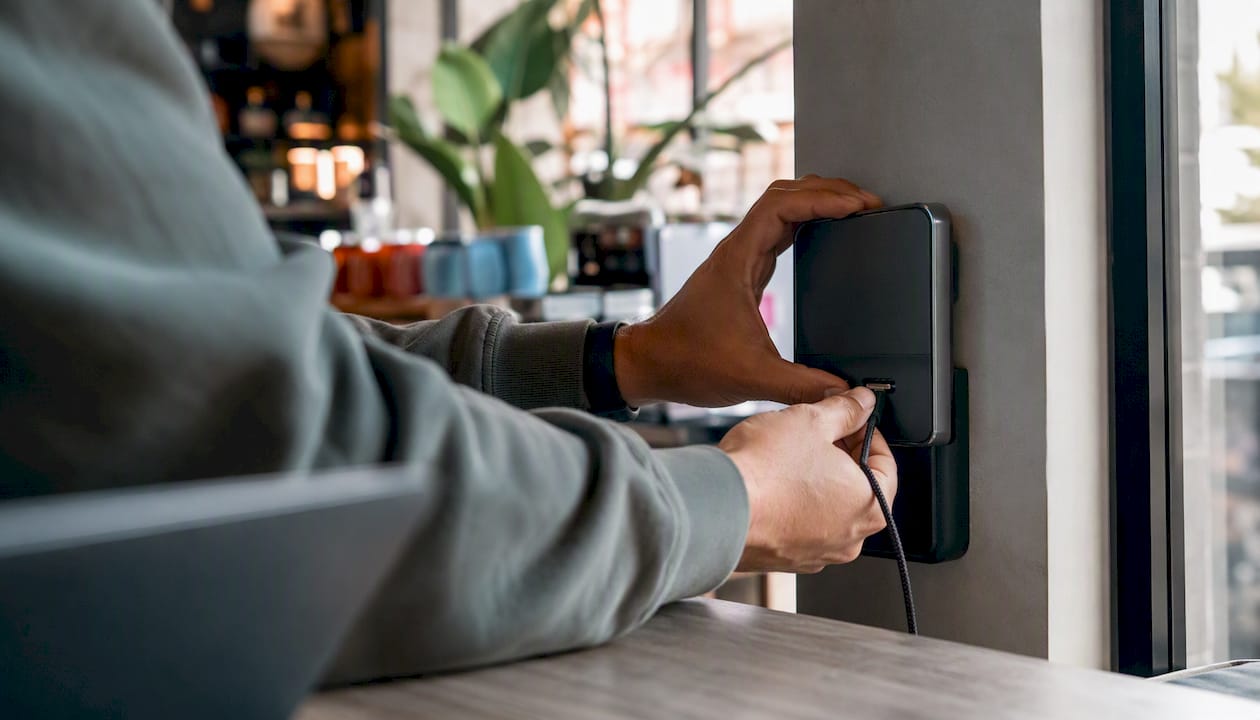
- Fast chargers (USB-C, 20W+): Universally useful. Branded charging bricks or cables are low-cost ($8–$18) and used constantly.
- Wireless charging pads: Desk-friendly, mid-tier ($20–$40). Works well for client gifts and onboarding kits.
- Branded power banks (5,000–10,000 mAh): High perceived value, strong for travel-heavy employees and event giveaways. Budget $25–$55.
- AirTag holders / tracker accessories: Apple AirTags are a common premium add-on for executive kits. Branded leather or silicone AirTag holders ($8–$20) pair well with luggage or key accessories.
- Bluetooth speakers: Mid-to-premium tier ($30–$80). High visibility at home and outdoors, but choose compact designs that travel well.
Battery and compliance note: Any swag containing lithium batteries (power banks, wireless earbuds, speakers) must ship via ground or comply with IATA/DOT regulations for air freight. Always confirm your supplier sources UL- or CE-certified components. Uncertified batteries are a liability risk, not just a quality issue.
For client gifts, branded AirPods-style earbuds or premium wireless earbuds ($60–$120) signal a higher investment level. For internal employee rewards, fast chargers and power banks deliver the best value-to-cost ratio.
Pro Tip: When budget is tight, skip the branded electronics and go for branded accessories instead. A custom AirTag holder or a logo-printed charging cable costs a fraction of a speaker and gets used just as often.
4. Remote-work and onboarding kits that improve retention
A well-built welcome kit does two things a single swag item cannot: it signals that the company thought about the new hire as a person, and it gives them everything they need to feel set up on day one. Psychological research confirms that meaningful recognition and small tokens of appreciation positively influence perceived organizational support, which is exactly what a first-week kit delivers.
Three kit templates to work from:
- Welcome essentials ($30–$50 per person): Branded tee or hoodie, custom notebook, pen, sticker pack, and a welcome card with a QR code linking to a video from the team.
- Elevated welcome ($75–$120 per person): Premium tee, insulated mug, wireless charging pad, branded tote, and a handwritten note. Add a Slack or Teams onboarding guide printed on a card.
- Role-specific kit ($120–$200+ per person): Everything in the elevated kit plus items tied to the role. A sales hire gets a branded travel pouch and portable charger. A designer gets a custom sketchbook and a premium stylus.
Distribution options: Drop-shipping directly to a new hire’s home address removes the need for centralized warehousing and works well for fully remote teams. Centralized fulfillment (kitting in-house or through a third-party fulfillment partner) gives you more quality control and is more cost-efficient at scale (50+ kits per quarter).
Pro Tip: Add the new hire’s name to one item in the kit, even just a printed insert card. Personalization at this level costs almost nothing extra but dramatically increases how valued the recipient feels.
Lead times for kitted boxes run 10–20 business days when custom-printed apparel is included. Order apparel first; kit assembly can happen in parallel.
5. Wellness and self-care swag that supports employee wellbeing
Wellness swag works best when it connects to something the company is already doing, a fitness challenge, a mental-health day program, or a step-count competition. Without that context, a resistance band or a yoga mat is just clutter.
Peer-reviewed research links workplace physical activity programs to improved employee performance and well-being. Harvard Business Review reinforces this, noting that regular exercise supports cognitive function and task performance. Swag that facilitates movement, even modestly, can be a legitimate investment in productivity.
Items that work:
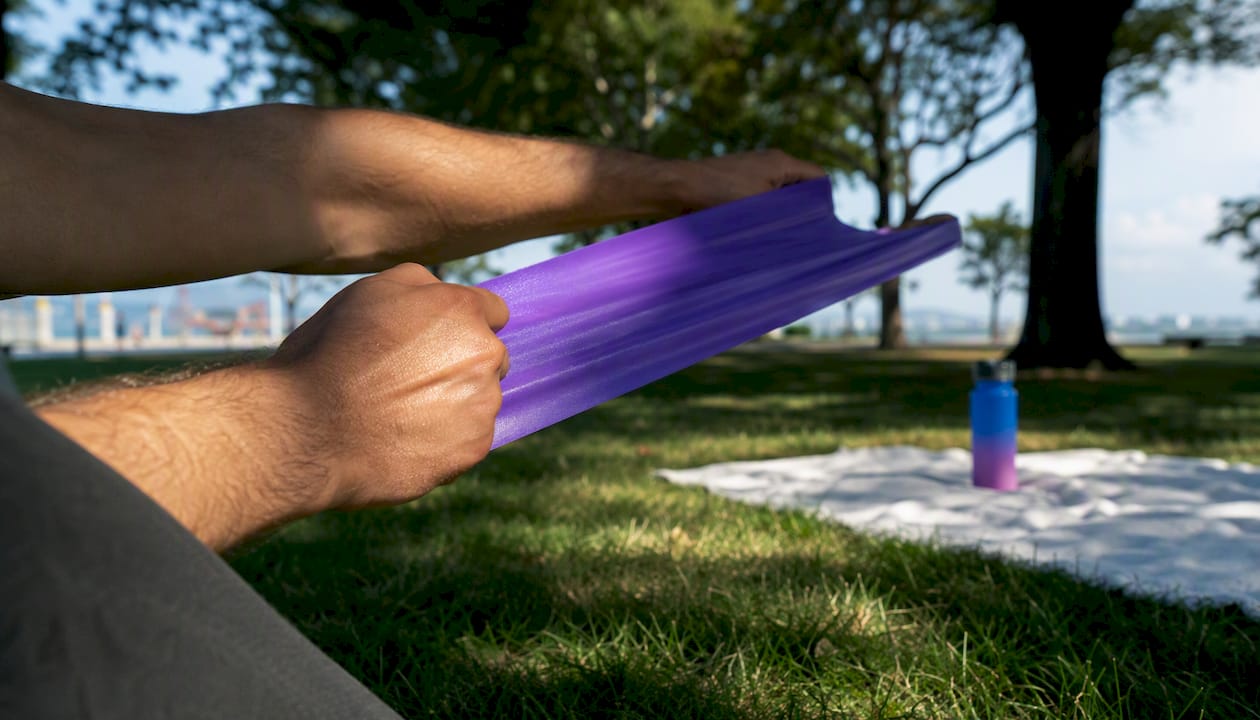
- Resistance bands: Compact, inexpensive ($6–$14), and genuinely useful for desk workers. Include a QR code linking to a 10-minute routine.
- Foam rollers (compact): Mid-tier ($18–$30). Best for teams with a fitness challenge component.
- Aromatherapy or self-care kits: Candles, essential oil rollers, or bath salts in branded packaging. Works well for mental-health day programs and holiday gifting.
- Fitness trackers / branded pedometers: Entry-level pedometers ($12–$25) for step challenges; premium fitness trackers ($80–$150) for executive or milestone gifts.
Safety and labeling note: Any wellness item with a health claim (supplements, topical products, aromatherapy) must comply with applicable FDA labeling requirements. Stick to items that support activity or relaxation rather than making therapeutic claims, and always source from suppliers who provide safety data sheets.
Pro Tip: Pair wellness swag with a program, not just a date. A resistance band given during a “Move More in March” challenge gets used. The same band in an onboarding box without context gets forgotten.
6. Eco-friendly swag that holds up to scrutiny
Sustainability credentials are increasingly a deciding factor when marketing teams choose swag. The risk is greenwashing: slapping “eco-friendly” on a product that has no third-party backing. Certifications are the shortcut past that problem.
Ask suppliers for these specifically:
- GOTS (Global Organic Textile Standard): Covers organic fiber content and processing for apparel.
- Global Recycled Standard (GRS): Verifies recycled content in fabrics and materials.
- Fair Trade Certified: Covers labor and supply chain conditions.
- One Percent for the Planet membership: Signals that the supplier commits 1% of revenue to environmental nonprofits. Useful for brand storytelling on packaging.
Research on sustainable consumer behavior suggests certified recycled and durable products tend to have longer use-lives and higher perceived value, which means the sustainability investment pays off in retention, not just optics.
High-impact sustainable items include recycled-polyester fleece jackets, refillable stainless bottles, plantable seed paper cards, and organic cotton totes.
Pro Tip: Print the certification name and a short explanation directly on the packaging insert. “Made with GRS-certified recycled polyester” tells a story in six words. Most recipients never look it up, but seeing it reinforces the brand’s values at the moment of unboxing.
7. Bags and travel swag that go everywhere
Bags are one of the highest-visibility swag categories because they travel. A branded tote or backpack gets seen by dozens of people every time it leaves the house.
- Canvas tote: The most cost-effective bag option ($8–$18). Works for events, conferences, and light everyday use. Imprint area is large, which is good for bold logo work.
- Commuter backpack: Best for hybrid employees ($35–$80). Look for padded laptop sleeves, USB pass-through ports, and durable YKK zippers. These get used for years.
- Packing cubes (branded set): Niche but memorable for road-warrior executives or sales teams that travel frequently ($20–$40 per set).
- Luggage tags: Low-cost ($5–$12), high-visibility for traveling employees and conference attendees. Leather or silicone options both work.
Durability is the variable that separates a bag people keep from one they donate after a month. Reinforced stitching at stress points, quality zippers, and water-resistant fabric all extend the life of the item and the brand impression it carries.
Imprint area matters more for bags than almost any other category. A backpack with a small logo on a side pocket gets less brand exposure than a tote with a full front-panel print. Match the decoration placement to how the bag will actually be carried.
Industry roundups consistently rank bags among the top-retained swag items, alongside apparel and drinkware, because they serve a real function rather than sitting on a shelf.
8. Event and tradeshow giveaways that draw traffic
The goal at a tradeshow booth is not to give away the most stuff. It is to give away the right stuff to the right people and capture enough contact information to follow up. That changes the math on what to order.
| Budget Tier | Typical Item | Retention / Visibility |
|---|---|---|
| Low ($3–$8) | Branded pen, sticker set, seed card | Low retention, high volume distribution |
| Mid ($15–$35) | Custom tee, insulated mug, power bank | Moderate-to-high retention, selective distribution |
| Premium ($50–$120) | Curated gift box, wireless earbuds, quality jacket | High retention, reserved for qualified leads |
The follow-up gift lands when the prospect is back at their desk and actually has time to think about you.*
Production and shipping for events requires more lead time than most teams plan for. Plan multiple weeks for custom-printed apparel, drinkware, and non-printed items accordingly. Crate shipping to a convention center has its own logistics rules; confirm the venue’s advance warehouse deadlines before you finalize quantities. Fast-turnaround event merch is possible, but only if artwork is approved before production begins.
9. Premium gifts for VIPs and executive relationships
Premium swag is not about price. It is about specificity. A $200 gift that feels generic lands worse than a $60 gift that feels considered.
- Curated gift boxes: Combine three to five items with a theme (travel, wellness, home office) in premium branded packaging. The curation signals effort more than any single item does.
- Engraved drinkware or leather goods: Monogramming or engraving adds $5–$15 per unit but converts a product into something the recipient keeps indefinitely.
- High-end apparel: A North Face jacket or a premium fleece with subtle embroidery reads as a wardrobe piece, not a giveaway. Recipients wear these for years.
- Experiential gifts: Event tickets, cooking class memberships, or charitable donations in the recipient’s name often outperform physical items for senior executives who already have everything.
For art and experiential corporate gifts, the selection process matters as much as the item itself. Matching the gift to the recipient’s known interests is the single biggest driver of perceived value.
Fulfillment for premium items needs extra attention. Use insured shipping for anything over $75, and consider discreet outer packaging (no branded boxes on the outside) for home delivery, since recipients may not want neighbors to see a corporate package.
Pro Tip: For board-level or C-suite gifts, skip the logo entirely. A beautifully made item with a small, tasteful brand mark says “we have good taste.” A logo-heavy item says “we want you to advertise for us.”
10. Custom packaging and the unboxing experience
Packaging is the first thing a recipient sees, and it sets the expectation for everything inside. A premium item in a plain poly mailer feels cheaper than it is. The same item in a structured box with tissue paper and a printed insert feels like a gift.
Packaging elements that move the needle:
- Rigid outer box (vs. poly mailer) for anything over $30 in value
- Tissue paper or crinkle fill in brand colors
- Printed insert card with a personal message or QR code
- Branded tape or sticker seal on the outer box
Packaging tiers and cost delta:
- Simple: Poly mailer with a printed label. Adds $0.50–$2 per unit. Fine for high-volume event distribution.
- Branded: Custom-printed mailer or kraft box with tissue and insert card. Adds $3–$8 per unit. Right for onboarding kits and client gifts.
- Premium: Rigid lift-lid box, full-color interior print, magnetic closure, ribbon pull. Adds $12–$25 per unit. Reserved for VIP and executive programs.
On sustainability: corrugated cardboard and kraft paper are recyclable and communicate eco-credentials without extra cost. Avoid plastic inserts, foam padding, and non-recyclable ribbon when your brand has sustainability commitments to back up.
For in-house kitting, you need warehouse space, labor, and a reliable pick-and-pack process. Third-party fulfillment partners make more sense once you exceed roughly 200 kits per quarter or when items ship to multiple addresses. The cost per kit typically runs $3–$8 for fulfillment labor, separate from materials.
How to choose swag: a practical decision framework
Start with the audience, not the item. The question is not “what’s a cool swag idea?” It is “what does this specific person need, and what do I want them to feel when they receive it?”
Decision sequence:
- Audience: New hire, existing employee, client, event attendee, VIP?
- Use case: Daily use, one-time event, milestone recognition, seasonal gift?
- Budget tier: Entry ($5–$15), mid ($20–$50), or premium ($60–$150+)?
- Personalization level: Generic logo, name-printed, fully bespoke?
- Fulfillment: Ship to office, drop-ship to home, distribute at event?
Lead-time planning (typical ranges):
| Stage | Typical Duration |
|---|---|
| Artwork approval | 1–3 business days |
| Production (apparel, DTG/screen print) | 7–14 business days |
| Production (drinkware, tech accessories) | 5–10 business days |
| Shipping (domestic ground) | 3–7 business days |
| Kitting and fulfillment | 2–5 business days |
Supplier checklist before you commit:
- Verify certifications (GOTS, GRS, Fair Trade) if sustainability claims are made
- Check third-party reviews and BBB business profiles before large orders
- Confirm minimum order quantities and per-unit pricing at your volume
- Ask for a physical sample before approving a full run
- Clarify who owns artwork files and what the reorder process looks like
Measurement: Track usage rate (how many items are still in use 90 days post-distribution), social shares (employees posting photos with swag), and net promoter score changes in post-onboarding surveys. Employee recognition data shows recognition programs tied to tangible items correlate with higher engagement scores, so tie your measurement to existing HR metrics where possible.
Pro Tip: Run a pilot batch of 25–50 units before committing to a full program order. The feedback you get from the first cohort will change the item selection, the sizing mix, and the packaging almost every time.
Legal and branding compliance for corporate swag
A few compliance areas catch marketing teams off guard, especially on first programs.
Trademark and logo use: Confirm your brand guidelines cover swag applications before sending files to a printer. Logo minimum sizes, color restrictions, and clear-space rules all apply to physical products, and violations on printed items are harder to fix than on digital assets.
Regulated product categories: Anything consumable (food, supplements, skincare) requires FDA-compliant labeling. Alcohol gifts trigger state-specific shipping regulations. Electronics with batteries must meet UL or CE certification standards for domestic distribution. If you are shipping internationally, customs documentation and country-specific import restrictions add another layer.
Tax and gift reporting: The IRS treats employee gifts over $25 in value as taxable compensation in most cases. Client gifts have a separate $25 deductibility cap per recipient per year under IRC Section 274. Consult your finance team before finalizing premium gift programs, particularly for executive-level items.
Supplier contracts: Specify who owns the artwork, what happens to overstock, and whether the supplier can use your branded items in their own marketing. These are standard clauses that many buyers skip and later regret.
Typical costs and lead times by budget tier
These ranges reflect standard market conditions for custom-branded items ordered in the United States. Prices vary by supplier, quantity, and decoration complexity.
Entry tier ($5–$15 per person): Stickers, tote bags, branded pens, seed cards, lanyards, and ceramic mugs. Production typically runs 5–10 business days. Works for high-volume event distribution where per-unit cost must stay low.
Mid tier ($20–$50 per person): Custom tees, insulated mugs, power banks, branded notebooks, and canvas backpacks. Production runs 7–14 business days for apparel, 5–10 for non-apparel items. The sweet spot for onboarding kits and employee recognition programs.
Premium tier ($60–$150+ per person): YETI-quality tumblers, Hydro Flask bottles, wireless earbuds, curated gift boxes, North Face jackets, and engraved leather goods. Production and fulfillment can run 14–21 business days when custom packaging is included. Budget an additional 5–7 business days for kitting if items ship from multiple suppliers.
The most common delay in any swag program is not production. It is artwork approval.
Client appreciation vs. employee recognition: different goals, different swag
The distinction matters more than most teams realize. Client swag is about relationship maintenance and brand recall. Employee swag is about belonging, recognition, and daily utility.
For client appreciation: Prioritize items the client will use in their professional life (premium drinkware, quality bags, tech accessories) or experience (curated gift boxes, event tickets). Keep branding subtle. The goal is for the client to associate the item with positive feelings about your company, not to turn them into a walking advertisement. Elegant corporate gifting ideas that lean into quality and curation tend to outperform logo-heavy alternatives at this level.
For employee recognition: Utility and wearability matter most. Employees use items daily, so fit, quality, and practicality drive retention. Recognition-tied swag (a milestone hoodie, a work-anniversary gift box) carries emotional weight that a generic giveaway does not. APA research confirms that meaningful recognition positively influences well-being and perceived organizational support, which is the outcome you are actually buying.
The overlap: both audiences respond well to personalization. A name, a date, or a specific message converts a product into a keepsake. The cost difference between a generic item and a personalized one is usually $3–$10 per unit. The perceived value difference is far larger.
Handling and managing swag inventory
Swag inventory is where programs quietly bleed budget. Overordering, poor size distribution, and no reorder process are the three most common failure modes.
Storage options: In-office storage works for small programs (under 200 units). Once you exceed that, a third-party fulfillment partner or a dedicated swag management platform makes more sense. These services handle warehousing, pick-and-pack, and direct-to-recipient shipping, usually for a monthly storage fee plus a per-shipment fulfillment cost.
Adjust based on your actual employee or audience data. Ordering without size data almost always results in excess inventory at the extremes.
Reorder triggers: Set a reorder point before you run out, not after. For ongoing programs, a 4–6 week lead time buffer is standard. Track inventory in a shared spreadsheet or a dedicated platform and assign one person to own the reorder process.
Expiration and obsolescence: Swag tied to a specific event or campaign has a shelf life. Build a disposal or donation plan into the program from the start. Leftover branded items from a campaign two years ago are a storage cost and a brand liability.
What most teams get wrong about swag programs
The conventional wisdom says spend more per item and you will get better results. That is partially true, but it misses the real variable: connection to context.
A $15 tee given during a team launch event, with a story behind the design and a moment of recognition attached to it, outperforms a $60 jacket mailed in a plain box with no explanation. The item is not the program. The program is the program. Swag is the physical artifact that makes the program tangible.
The teams that get the best ROI from swag are the ones that tie every item to a specific moment: a hire’s first day, a product launch, a sales milestone, a wellness challenge finish line. That context is what converts a branded object into something a person keeps and talks about.
The second mistake is treating swag as a one-time decision. The best programs have a cadence: a welcome kit, a six-month recognition item, a holiday gift, an event piece. Each touchpoint reinforces the relationship. A single swag drop, no matter how good, fades faster than a program with rhythm.
Finally, most teams underinvest in packaging relative to the item itself. A $40 tumbler in premium packaging feels like a $70 gift. The same tumbler in a poly mailer feels like a $25 afterthought. Packaging is not overhead. It is part of the product.
Tektonla handles the apparel side so you can focus on the program
Custom apparel is the category where production decisions have the biggest impact on whether swag gets worn or gets donated. Tektonla, based in Downtown Los Angeles, handles the full production stack: DTG, DTF, screen printing, embroidery, dye sublimation, and embossing, with private-label and woven-label options for brands that want a fully finished product.
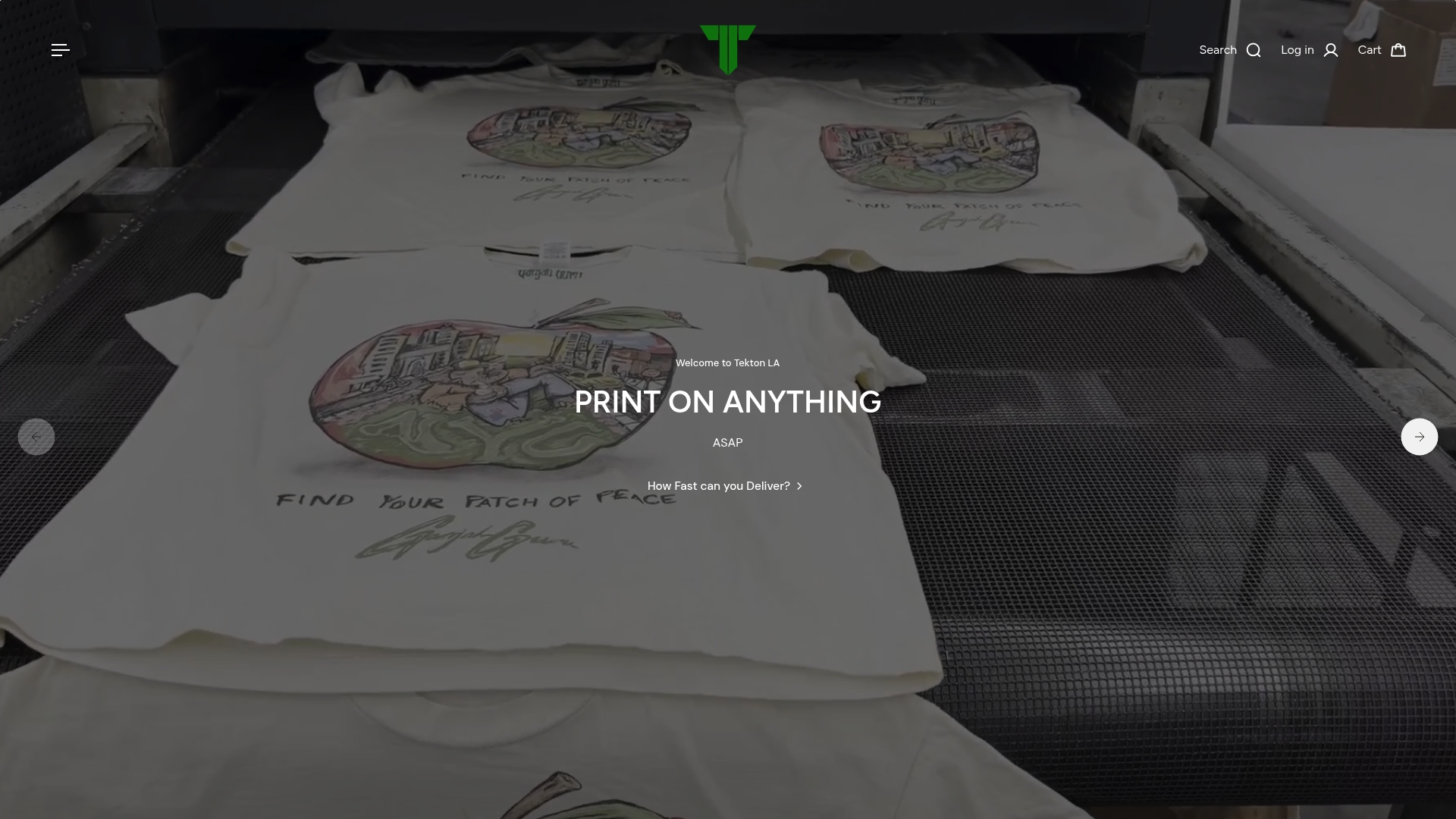
The practical advantage for corporate programs is the no-minimum order on blanks, which means you can run a pilot batch of 20 garment-dyed hoodies before committing to 500. Tektonla also offers live event printing in California, which turns apparel production into an experiential marketing moment at launches and activations. Eco-conscious programs benefit from locally sourced materials and garment-dye processes that reduce water and chemical waste compared to conventional dyeing.
For apparel-first swag programs, start with Tektonla’s garment-dye shirt or premium tee pages to request samples, or visit Tektonla to get a quote for your next program.
Sources
- PMC — article on workplace physical activity and work performance
- Harvard Business Review — To improve your work performance, get some exercise
- One Percent for the Planet
- APA PsycNet — study on recognition and well-being
FAQ
What are the best corporate swag ideas for 2026? The highest-retention categories are branded apparel (especially garment-dyed tees and hoodies), insulated drinkware, practical tech accessories (fast chargers, power banks), and curated onboarding kits. The 2026 trend is quality over quantity: fewer, better items that employees and clients actually keep.
How much should a company spend per person on swag? Entry-tier programs run $5–$15 per person (events, high-volume giveaways), mid-tier programs run $20–$50 (onboarding, employee recognition), and premium programs run $60–$150+ (VIP gifts, executive milestones). Budget for packaging separately; it adds $2–$25 per unit depending on the tier.
How long does it take to produce custom corporate swag? Apparel with screen printing or DTG typically takes 7–14 business days in production. Drinkware and tech accessories run 5–10 business days. Add 2–5 days for kitting and 3–7 days for domestic ground shipping.
What is the difference between swag for employees vs. clients? Employee swag prioritizes daily utility, wearability, and recognition context. Client swag prioritizes relationship signaling, quality, and subtle branding. Both benefit from personalization, but the framing differs: employee swag says “you belong here,” while client swag says “we value this relationship.”
How do I avoid greenwashing with eco-friendly swag? Ask suppliers for third-party certifications: GOTS for organic textiles, Global Recycled Standard for recycled content, and Fair Trade for labor practices. Print the certification name on packaging inserts so recipients can verify the claim. Avoid vague terms like “sustainable” or “eco-friendly” without backing documentation.
What are the most common mistakes in corporate swag programs? Overordering without size data (leading to dead stock), skipping the pilot batch, underinvesting in packaging, and distributing swag without a program context. The item alone rarely drives engagement. The moment and the story around it do.