

DTG wins for soft-hand, photo-detail prints on cotton, especially in small runs. DTF wins for mixed fabrics, dark garments, caps, bags, and any workflow where you want to print transfers ahead of time. Neither one beats the other outright. Durability and hand feel come down to curing quality and fabric choice as much as the method itself. The details below will tell you which one actually fits your next order.
TL;DR:
- DTF is ideal for mixed fabrics, dark garments, caps, and bags, especially when transfers are pre-printed and pressed on demand for speed.
- DTG offers superior hand feel and detail quality on cotton and cotton-heavy fabrics but requires pretreatment and longer individual garment processing time.
- Proper curing and powder handling are critical for DTF durability, while pretreatment quality and timing are key for consistent DTG results.
- Batch printing transfers with DTF enhances scheduling flexibility, whereas DTG excels in small runs and one-off customizations.
- The best choice depends on fabric types, order volume, and desired finish, with many shops successfully using both methods for different product lines.
Table of Contents
- What Is DTF Printing and How Does It Work?
- What Is DTG Printing and How Does It Work?
- DTF vs DTG: How Do They Compare Across the Details That Matter?
- Which Method Should You Choose for Your Business?
- What Tekton LA’s Shop Floor Teaches About DTF and DTG in Practice
- What Actually Matters When You’re Choosing Between These Two
- Get Both Methods Right With One Print Partner
- Sources
What Is DTF Printing and How Does It Work?
DTF, or direct-to-film, prints your design onto a special PET film first, then transfers it to the garment with heat and pressure. It’s a two-stage process, and that split is the whole reason DTF has taken over so much of the custom apparel world in the last few years.
Here’s the actual workflow, step by step:
- Print the design in reverse onto PET film using a DTF printer loaded with pigment ink and a white underbase.
- Apply hot-melt adhesive powder over the wet ink while it’s still tacky.
- Shake off the excess powder, then cure the film in a dryer or oven to melt the adhesive into a stable layer.
- Heat-press the cured transfer onto the garment at the right temperature, time, and pressure.
- Peel the film, either hot or cold depending on the adhesive type, and the design stays put.
The equipment list runs a DTF printer, PET film rolls, adhesive powder, a curing oven or heat tunnel, and a heat press. That’s more hardware than a screen printing setup in some ways, but it’s far more flexible once it’s running.
The upside is real. DTF works on cotton, polyester, blends, leather, and other synthetics without any pretreatment, which makes it the default choice for caps, bags, and polyester sports jerseys where DTG simply can’t perform. Because printing and pressing are separate steps, you can batch-produce transfers in advance and press them on demand, which is huge for event merch tables or pop-up drops where you need speed on-site rather than a full print shop.
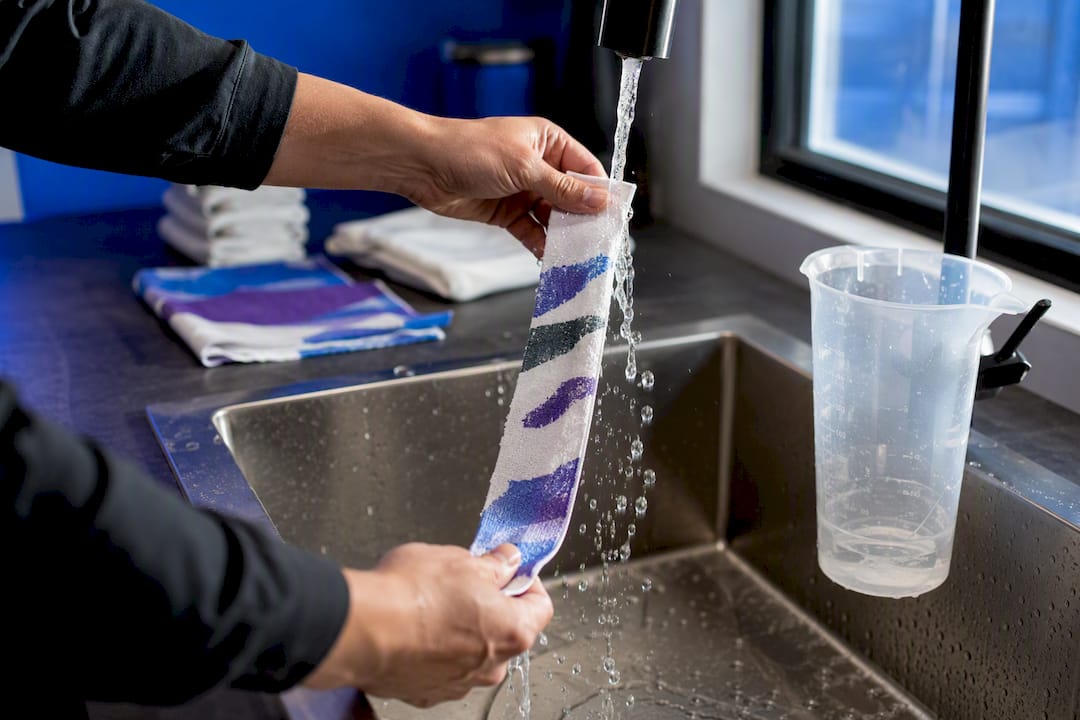
The tradeoffs are on the finish side. Fresh DTF prints can feel slightly thicker and plastic-like right off the press, though that softens with a few washes. Powder handling also takes discipline. Uneven dosage or an undercured transfer is the leading cause of cracking or edge lift down the line.
Pro Tip: Run a five-minute wash-and-stretch test on every new fabric type before committing to a full order. It costs you almost nothing and it catches curing problems before your customer does.
What Is DTG Printing and How Does It Work?
DTG, or direct-to-garment, prints ink straight into the fabric using a specialized inkjet printer, the same basic idea as a desktop printer but built for shirts instead of paper. It’s the technology that made single-shirt, full-color printing commercially viable in the first place.
The process looks like this:
- Pretreat the garment with a liquid solution, required for dark and often for light cotton to help ink bond and stay vibrant.
- Load the garment onto the printer’s platen and print the design directly into the fibers.
- Cure the print with heat, usually in a conveyor dryer or under a heat press, to set the ink permanently.
You’ll need a DTG printer, a pretreatment station or sprayer, and a curing oven or heat press. That’s a smaller equipment list than DTF’s, but each printed shirt takes longer to produce because pretreatment and drying happen per garment rather than in a batch.
Where DTG pulls ahead is finish quality. Because the ink actually embeds into the fabric fibers rather than sitting on top of them, prints feel soft and breathable, almost like the design was woven in rather than added on. For photo-real gradients, fine detail, and one-off or small-batch cotton tees, DTG is still the benchmark.
The limitation is fabric range. DTG performs best on cotton and cotton-heavy blends. Polyester and dark garments both add friction: polyester doesn’t hold water-based ink well, and dark fabric needs that pretreatment step just to keep colors from looking muddy. If you’re building a premium cotton line, that constraint rarely matters. If you’re printing sports jerseys or tech fabric, it matters a lot.
Pro Tip: Pretreatment solution has a shelf life and a sweet spot for drying time. Too wet or too dry before printing, and you’ll see dull colors or ink that won’t cure properly no matter how good your printer is.
DTF vs DTG: How Do They Compare Across the Details That Matter?
The difference between DTF and DTG isn’t really about which one is “better.” It’s about which tradeoffs match your product mix. Here’s how they stack up across the factors that actually change your workflow:
| Factor | DTF | DTG |
|---|---|---|
| Fabric compatibility | Cotton, polyester, blends, leather, synthetics | Best on cotton and cotton blends |
| Hand feel | Slightly thicker at first, softens after washing | Soft, embedded into fabric from the first wash |
| Color on darks | Strong, no pretreatment needed | Requires pretreatment, adds a step |
| Durability | High with correct curing; risk of cracking if undercured | Strong when cured properly, ink is part of the fiber |
| Production speed | Transfers can be pre-printed and pressed on demand | Each garment is pretreated, printed, and cured individually |
| Consumables | Film, adhesive powder, printer ink | Pretreatment solution, printer ink |
| Non-flat items | Works on caps, bags, seams, collars | Limited to flat-bed printable areas |
The fabric-compatibility gap is the biggest structural difference between the two methods. DTG’s white underbase and pretreatment chemistry are built around cotton fiber, which is exactly why it struggles on synthetics and needs an extra step for anything dark. DTF skips pretreatment entirely and sticks a printed, adhesive-backed layer onto whatever’s underneath, so it doesn’t care much what the garment is made of.
That same decoupling is DTF’s other structural advantage: transfers can be printed today and pressed weeks later, which turns printing into a batch job instead of a per-order task. For mixed-fabric or larger orders, that difference in scheduling flexibility often outweighs everything else on this table.
Durability tells a more nuanced story than most comparisons let on. With correct curing, DTF prints hold up across a wide range of fabrics and often outlast expectations on dark or synthetic garments specifically. But that “with correct curing” clause is doing real work. Undercured DTF is the single most common cause of a print cracking or lifting at the edges after a few wash cycles, which is a process failure, not a limitation of the method itself.
DTF also handles geography that DTG physically can’t reach. Because transfers are pressed rather than printed flat, they can be applied near seams, collars, and other tight zones that a flatbed DTG printer’s platen simply won’t fit.
Which Method Should You Choose for Your Business?
The right answer depends less on which technology is “newer” and more on what you’re actually printing and how often. Run through this checklist before you commit to equipment or a print partner:
- Identify your primary fabric. If it’s 90% cotton tees, DTG’s soft hand feel is worth the extra pretreatment step. If you’re mixing cotton, poly, and blends, DTF removes that headache entirely.
- Decide how much hand feel matters to your customer. Premium fashion and art prints lean DTG. Streetwear, sports merch, and event gear tolerate DTF’s slightly thicker feel just fine, especially after a wash or two.
- Map your order cadence. Frequent small batches or one-offs favor DTG’s per-garment flexibility. Seasonal drops or bulk runs favor DTF’s ability to pre-print transfers and press in bulk later.
- Check your heat-press capacity. DTF depends entirely on consistent press time, temperature, and pressure. If your press setup is inconsistent, that’s a curing problem waiting to happen.
- Factor in storage. DTF transfers store flat and stay usable for months, which is useful if you want inventory ready before a launch. DTG has nothing comparable since it prints straight to the finished garment.
- Budget your consumables. DTG needs pretreatment solution and ink. DTF needs film, powder, and ink. Neither is dramatically cheaper across the board. It depends on your volume and garment mix.
For caps, bags, and non-flat items, DTF is close to the only practical option. For a cotton-first apparel line built around softness and photographic detail, DTG remains the standard.
Pro Tip: Before committing to a full production run on either method, order a small pilot batch and put it through a real wash and stretch test. It’s the cheapest quality-control step you’ll ever run, and it will tell you more than any spec sheet.
What Tekton LA’s Shop Floor Teaches About DTF and DTG in Practice
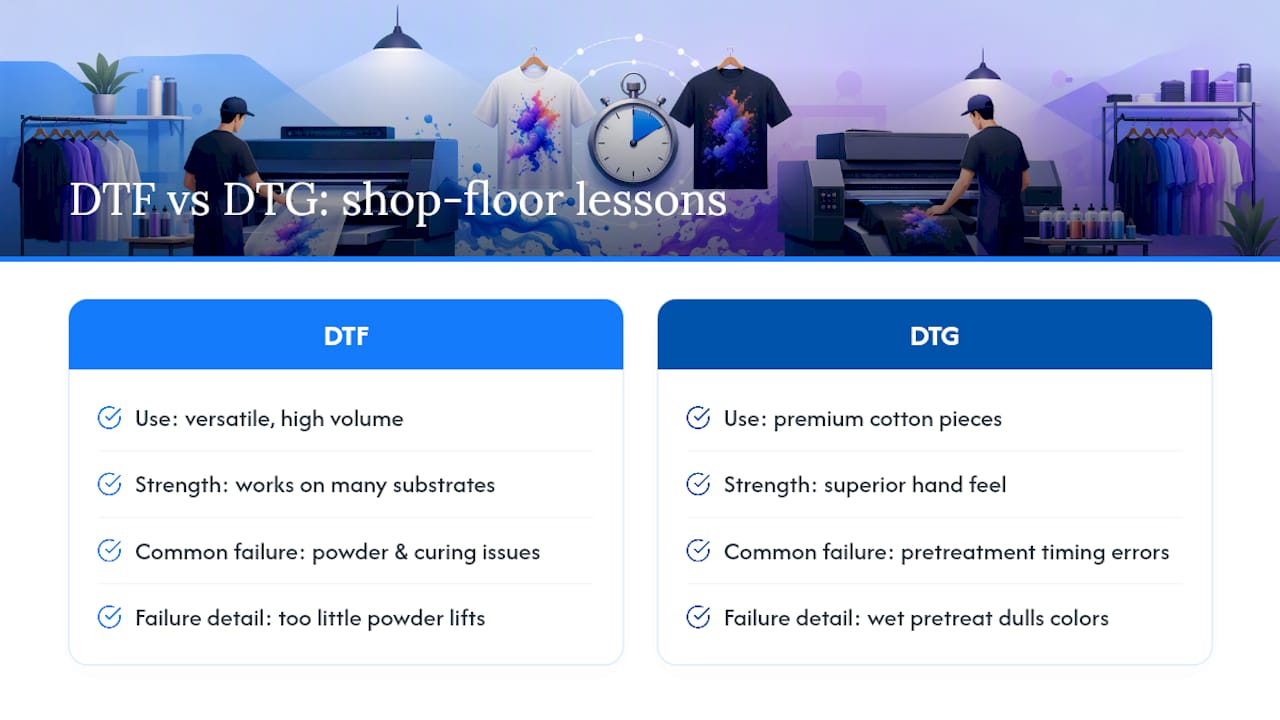
Most established print shops don’t pick one method and stick with it forever. They run DTF and DTG side by side, using DTF for versatility and volume while reserving DTG for premium cotton pieces where hand feel is the whole point. A brand running a core tee line alongside a hat or tote bag SKU almost always ends up needing both.
The recurring failure point on the DTF side isn’t the printer. It’s powder dosage and curing consistency. Too little powder and the print lifts at the edges after a few washes. Too much heat too fast and you get scorching instead of a clean cure.
On the DTG side, the recurring mistake is timing: printing on pretreatment that’s too wet or that’s been sitting too long, which dulls colors before the ink even hits the curing stage.
[author_bio] [brand_signal]
What Actually Matters When You’re Choosing Between These Two
The conventional advice treats DTF vs DTG like a bracket, where one method has to win. That framing misses the point entirely. The research and the shop-floor reality both point the same direction: this is a fabric-and-use-case decision, not a technology preference.
What’s overrated is hand feel as a tiebreaker. Yes, DTG feels softer out of the gate, but DTF softens meaningfully after a few washes, and most customers never notice the difference once a shirt has been through the laundry twice. What’s underrated is curing discipline. Nearly every complaint about either method, cracking, dullness, edge lift, traces back to a rushed pretreatment step or an inconsistent press cycle, not a flaw in the technology itself.
If you’re a small brand trying to decide, prioritize your fabric mix first, your order cadence second, and hand feel third. Get those three right and the rest of the decision mostly makes itself.
— Christian
Get Both Methods Right With One Print Partner
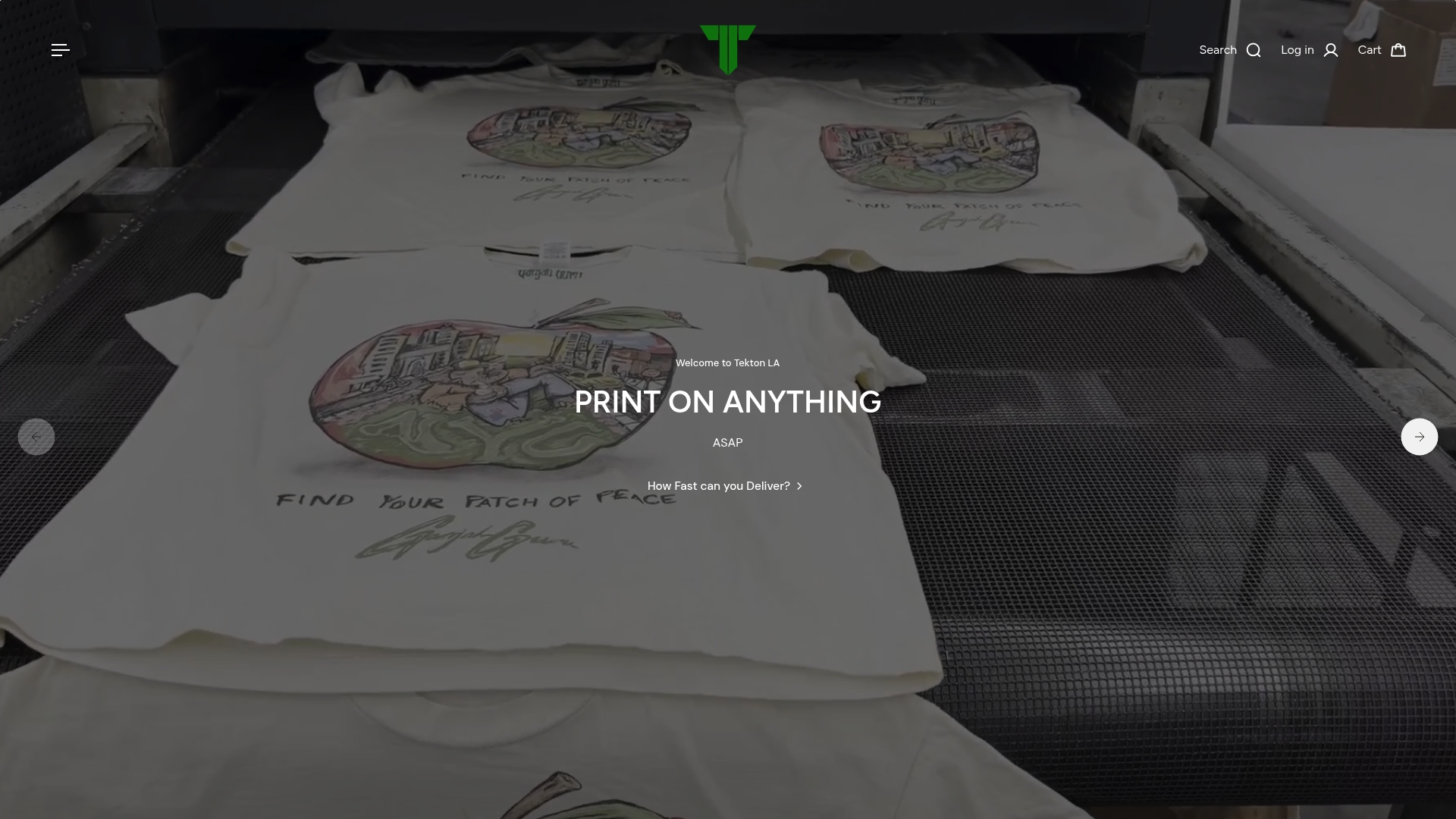
Running DTF and DTG side by side sounds complicated until you have a shop that’s already dialed in both. Tektonla handles direct-to-garment for soft-hand cotton pieces and direct-to-film for mixed-fabric, dark, or bulk orders, so you’re not stuck picking one technology and living with its limits.
That matters most for brands whose product line doesn’t fit neatly into one category: a cotton tee here, a poly hoodie there, a cap or tote bag rounding out the drop. Instead of hunting down two separate print vendors and matching quality between them, you get one shop with no minimum order quantities on blanks, so a small test run costs you the same attention as a bulk order. Tektonla also handles pretreatment timing, powder dosage, and curing profiles as part of the job, which is exactly where most DIY setups run into trouble.
If you’re planning your next drop, start by browsing a piece like the Printers Shirt to see the finish quality firsthand, or head to Tekton LA to talk through your fabric mix and get a quote for your next production run.
Sources
- DTF vs DTG Printing - The Technologies Shaping Today’s Custom Merchandise Market - News - Mimaki Europe
- DTG vs DTF (Shopify blog)
- DTG vs DTF: Key Differences, Costs and Which to Choose (2026) - ATOMM