


On-site garment printing is the process of customizing apparel by printing designs directly onto garments at the point of sale, event booth, or retail location, delivering finished pieces to customers in minutes. The industry term for this practice is live printing, and it relies on portable versions of technologies like direct-to-garment (DTG) printing, heat press transfers, and screen printing adapted for quick setup. For individuals and small business owners, understanding what is on site garment printing means understanding both the technology and the operational discipline required to pull it off profitably. This guide covers every layer: equipment, methods, benefits, challenges, and practical workflow tips.
What is on-site garment printing and how does it work?
On-site garment printing is defined as a production model where apparel is customized at the customer’s location rather than in a remote print facility. The core appeal is immediacy. A customer picks a blank shirt, selects a design, and walks away wearing a finished product within minutes. Live printing creates excitement and a personal connection with shoppers while eliminating overstock waste entirely.
The on-site printing process follows four consistent steps regardless of which technology you use. First, the design is loaded into the printer software or prepared as a pre-cut transfer. Second, the garment is prepared, which may include pretreating the fabric with a chemical solution for DTG, or simply smoothing the surface for heat transfer. Third, the print is applied. Fourth, the garment is cured or pressed to lock in the ink or adhesive.
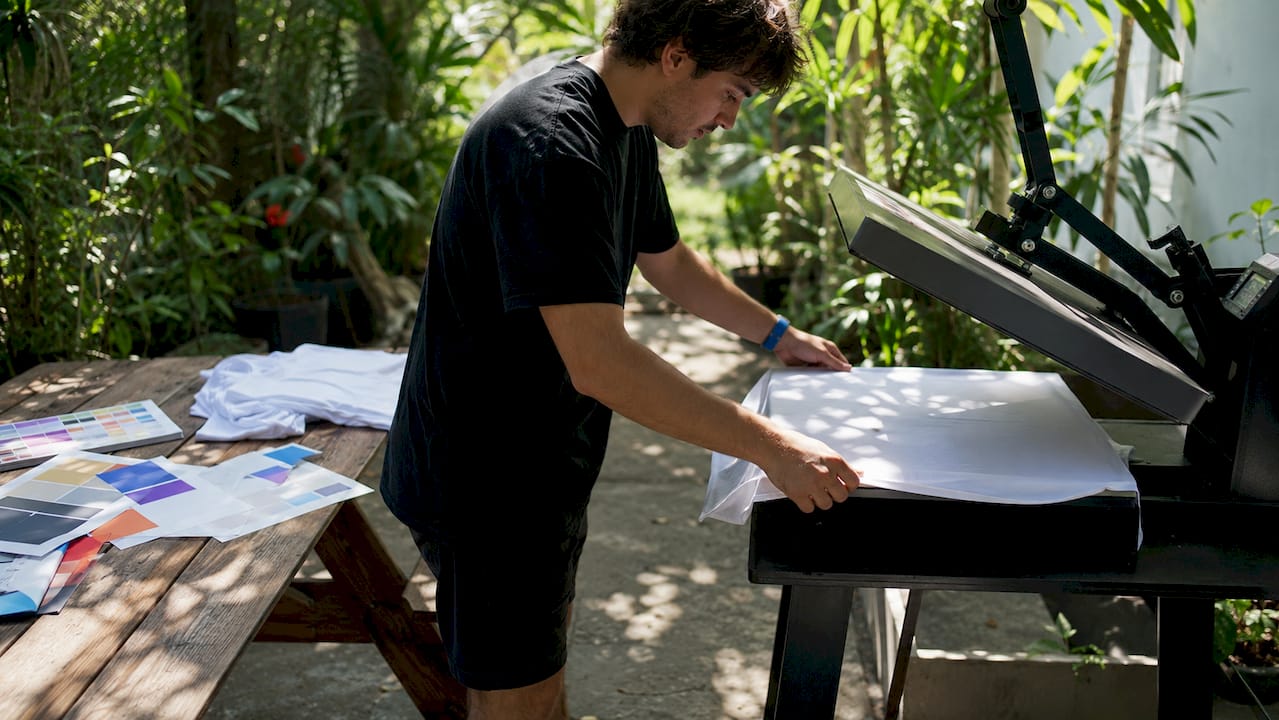
Equipment requirements vary by method, but all on-site setups share three non-negotiables: a reliable power source, a compact footprint, and fast cycle times. A portable DTG printer like the Brother GTX Pro handles full-color prints on cotton in under 90 seconds per shirt. A quality heat press, such as the Hotronix A2Z model, recovers heat quickly between presses, which matters enormously when you have a line of 30 customers waiting.
Pro Tip: Confirm the electrical circuit capacity at your venue before the event. Most professional heat presses draw 15 to 20 amps. Running them on an extension cord or a shared circuit is a safety risk and a productivity killer.
Power planning is not optional. Confirming electrical requirements and avoiding extension cords are listed as critical safety considerations by STAHLS’, one of the most referenced authorities on garment decoration. Treat your electrical setup with the same attention you give your print quality.
Types of on-site printing methods and how they compare
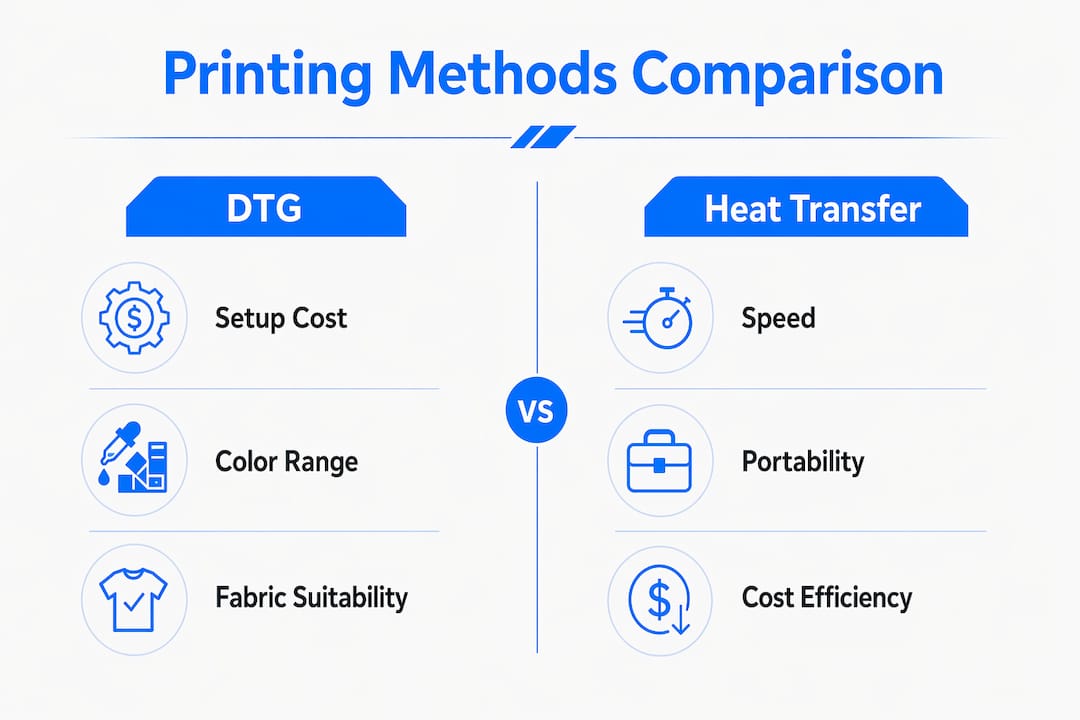
Three methods dominate live printing setups: DTG, heat transfer printing, and portable screen printing. Each has a distinct profile of speed, cost, and output quality.
Direct-to-garment (DTG) printing uses inkjet technology to print full-color images directly onto fabric. DTG prints on various apparel types, with a white underbase applied first on dark fabrics to make colors pop. The tradeoff is setup time. DTG printers require pretreatment for dark garments and a curing step, which adds 2 to 3 minutes per piece. DTG is the right choice when your designs are photographic, highly detailed, or change frequently between customers.
Heat transfer printing is the fastest method for on-site use. You press a pre-printed transfer onto the garment using a heat press, and the job is done in 10 to 15 seconds. Goof Proof Screen Printed Transfers from STAHLS’ are a popular choice because their short press time and pre-cut format make them ideal for high-volume event conditions. The limitation is that designs must be prepared in advance, so spontaneous custom artwork is not possible.
Portable screen printing suits events where you are printing one or two designs in large quantities, such as a festival selling branded merchandise. Setup is more involved, but throughput per design is unmatched. Color options are limited to what you load on the press, typically one to four colors.
| Method | Setup cost | Speed per piece | Color capability | Best fabric |
|---|---|---|---|---|
| DTG | High | 90 to 120 seconds | Unlimited, full color | 100% cotton |
| Heat transfer | Low to medium | 10 to 15 seconds | Pre-set design colors | Most fabrics |
| Screen printing | Medium | 5 to 10 seconds | 1 to 4 colors | Most fabrics |
Different on-site methods vary significantly in setup cost, speed, color complexity, and fabric compatibility. Choosing the wrong method for your event type is one of the most common and most avoidable mistakes in live printing.
Advantages and challenges of on-site printing for small businesses
The business case for on-site garment printing is strong. Consumers pay roughly 20% more for personalized apparel, and local print-on-demand with DTF or heat transfer improves margins while reducing the inventory risk that kills small apparel businesses. You are not printing 500 shirts and hoping they sell. You are printing exactly what customers want, when they want it.
The advantages of garment printing on-site extend beyond pricing power:
- Reduced inventory risk. You stock blank garments in a handful of popular styles and sizes rather than pre-printed inventory across dozens of SKUs.
- Premium pricing. The live experience justifies a higher price point. Customers are paying for the moment, not just the shirt.
- Brand visibility. Watching a shirt get printed in real time is a marketing event in itself. It draws foot traffic and social media attention organically.
- Faster fulfillment. There is no shipping wait. The customer receives their product immediately, which removes a major friction point in the buying experience.
The challenges are real, though. Managing a queue at a busy event is harder than it sounds. If your press takes 90 seconds per shirt and 20 people are waiting, you need a system. Booth designs for printing events separate demo, consultation, and storage zones to optimize flow and safety. Without that separation, your booth becomes chaotic fast.
Pro Tip: Offer a QR code that lets customers place an order for shipping if you sell out of a size or style. You capture the sale, avoid turning anyone away, and build your email list at the same time.
Space and power constraints are the other major operational hurdles. Most event venues do not have dedicated circuits for printing equipment. You need to scout the venue in advance, confirm amperage availability, and build your booth layout around your power access points rather than your aesthetic preferences.
How to implement on-site garment printing successfully
Execution is where most first-time live printers stumble. The printing itself is straightforward. The operations around it determine whether you profit or just break even.
-
Limit your blank selection. Sticking to popular blanks in manageable size ranges reduces decision fatigue for customers and bottlenecks for your team. Offer two or three styles in sizes S through XL. That is enough variety without overwhelming your inventory or your workflow.
-
Pre-stage your transfers. If you are using heat transfers, have them cut, organized by design, and ready to press before the event opens. Every second you spend searching for a transfer is a second a customer is waiting.
-
Map your booth layout before you arrive. Separate your printing station, customer consultation area, and blank storage. Proper booth layout keeps your team moving efficiently and prevents customers from wandering into your equipment zone.
-
Confirm your electrical setup. Contact the venue coordinator at least one week before the event. Ask for dedicated 20-amp circuits if possible. Bring a power strip with surge protection as a backup, but never rely on extension cords for your primary press connection.
-
Plan for your peak hour. Estimate your maximum throughput based on your press cycle time and staff count. If you expect 200 customers in a four-hour window, you need a press that can handle 50 pieces per hour. If your method cannot hit that number, bring a second press or switch to a faster transfer method.
-
Use a backup order system. A simple QR code linking to your online store, such as your Tektonla product catalog, lets you capture sales even when you run out of stock on-site. It also extends the customer relationship beyond the event.
For a deeper look at print file preparation before your event, Tektonla’s guide covers the exact file specs that prevent print errors on the day.
Key takeaways
On-site garment printing succeeds when the operational setup matches the printing technology, not the other way around.
| Point | Details |
|---|---|
| Choose the right method | Match DTG, heat transfer, or screen printing to your event volume and design complexity. |
| Plan power and space first | Confirm circuit capacity and map your booth layout before selecting equipment. |
| Limit blank options | Fewer styles and sizes reduce customer hesitation and speed up your production queue. |
| Price for personalization | Consumers pay roughly 20% more for personalized apparel, so charge accordingly. |
| Build a backup system | A QR code for online orders captures sales when on-site inventory runs out. |
Why on-site printing is more of an operations problem than a printing problem
I have watched a lot of small business owners invest heavily in great printing equipment and then lose money at their first live event because they did not think through the workflow. The press was perfect. The transfers were beautiful. But the booth was a mess, the queue was unmanaged, and customers left frustrated.
The uncomfortable truth about live printing is that the printing part is the easy part. Any competent operator can learn to run a heat press in an afternoon. What takes real planning is the 90 minutes before the event opens: staging your blanks, confirming your power, setting up your zones, briefing your team on the queue process. That is where events are won or lost.
I also think small business owners underestimate how powerful the live printing experience is as a marketing tool. When you print a shirt in front of someone, they pull out their phone. They film it. They post it. That organic content is worth more than most paid advertising budgets at the same scale. The event merch experience is a brand-building moment, not just a transaction.
The technology is getting better and more accessible every year. Portable DTG units are smaller and faster than they were three years ago. Heat transfer quality has improved to the point where most customers cannot tell the difference between a transfer and a screen print. If you are a small business owner sitting on the fence about live printing, the barrier to entry has never been lower. The only thing stopping most people is not knowing where to start.
— Christian
Start your on-site printing setup with Tektonla
Tektonla stocks garments built for the printing methods covered in this guide. The Printers Shirt is designed specifically for compatibility with DTG, heat transfer, and screen printing, making it one of the most reliable blanks for live printing events. For a premium finish, the Garment Dye Shirt delivers rich color depth that makes prints stand out on the rack and on camera. Tektonla operates out of Downtown Los Angeles with no minimum order quantities on blanks, so you can stock exactly what you need for your next event without committing to bulk inventory. Explore the full Tektonla catalog to find the right garments for your setup.
FAQ
What is on-site garment printing?
On-site garment printing is the process of customizing blank apparel with printed designs at the customer’s location, such as an event, pop-up, or retail space, using portable printing equipment like heat presses or DTG printers.
What equipment do I need for live garment printing?
The core equipment includes a heat press or portable DTG printer, pre-made transfers or design software, pretreated blank garments, and a reliable power source with sufficient amperage for your press model.
Which printing method is fastest for events?
Heat transfer printing is the fastest on-site method, with press times of 10 to 15 seconds per garment. Goof Proof Screen Printed Transfers from STAHLS’ are a widely recommended option for high-volume event conditions.
How do I manage long queues at a live printing event?
Limit your blank styles to two or three options, pre-stage all transfers before the event opens, and separate your consultation and printing zones. A QR code for online orders handles overflow when stock runs low.
What fabrics work best for on-site garment printing?
DTG printing works best on 100% cotton. Heat transfer printing is compatible with most fabric types, including polyester blends, making it the more versatile choice for events where you cannot control which garments customers select.