


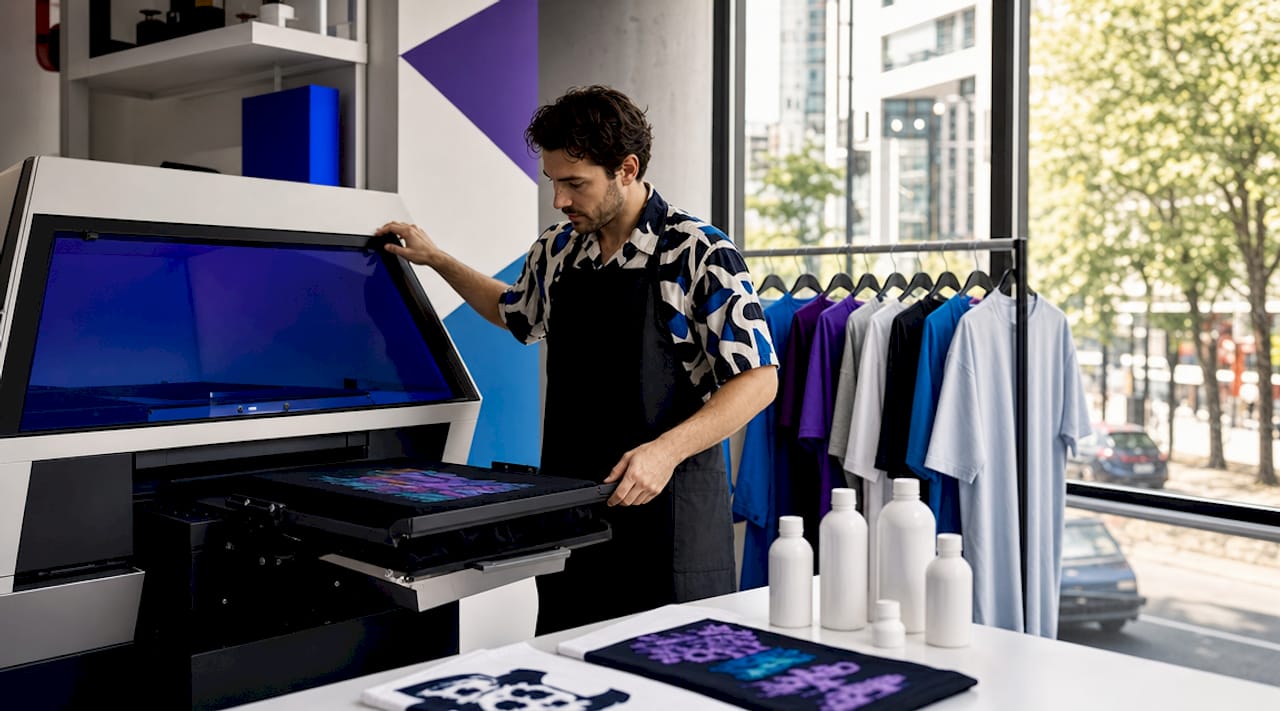
Direct-to-garment (DTG) printing is defined as a process that applies water-based inks directly onto fabric using modified inkjet technology, producing photo-quality prints with no screen setup or minimum order requirements. For entrepreneurs starting a DTG printing business, this matters because you can fulfill a single custom order as profitably as a run of fifty. This dtg printing startup apparel guide covers every stage from equipment selection to scaling, with named tools like Shopify, Canva, and MTuTech DTG printers anchoring each recommendation. If you want to launch an apparel brand without warehousing thousands of units, DTG is the most direct path.
What equipment and budget do you need to start a DTG printing business?
The initial equipment investment for a professional-grade DTG startup ranges from $13,500 to $30,000. That range reflects real choices, not padding. Where you land depends on whether you buy entry-level or commercial-grade machinery.
The core equipment stack breaks down as follows:
| Equipment | Price Range | Purpose |
|---|---|---|
| DTG printer (e.g., MTuTech, Epson F2100) | $10,000 – $20,000 | Prints directly onto garments with inkjet precision |
| Heat press | $500 – $2,000 | Cures ink and sets pretreatment for wash durability |
| Pretreatment machine | $1,500 – $4,000 | Applies pretreatment solution to cotton for ink adhesion |
| Blank apparel inventory | $500 – $2,000 | T-shirts, hoodies, and tote bags as print substrates |
| Design software (Adobe Illustrator, Canva Pro) | $0 – $600/year | Creates and prepares print-ready artwork files |
The printer is your biggest cost driver and your biggest quality variable. An Epson F2100 produces commercial output and holds its value. A budget DTG unit under $5,000 will frustrate you with inconsistent color and frequent maintenance calls. Buy for the production volume you plan to hit in year two, not year one.
Pro Tip: Factor ink and maintenance costs into your monthly overhead before you buy. DTG printers require regular head cleaning cycles and ink circulation, which consume supplies even on days you print nothing. Budget $200 to $500 per month for consumables alone.
Workspace setup adds another layer of cost that most startup guides ignore. You need a clean, well-ventilated room because pretreatment chemicals require proper airflow and chemical storage compliance. Zoning and ventilation requirements are a hidden risk that threatens DTG startups, and 40% of small businesses face legal issues from ignoring exactly these compliance details.
How to design your apparel line and set up an efficient DTG production workflow
Start your apparel line with a niche, not a catalog. A startup that prints for local music venues, youth sports leagues, or wellness brands has a defined customer and a repeatable design language. A startup that prints “anything for anyone” has neither. Niche focus also sharpens your social media content and makes paid advertising far more efficient.

Design file preparation is where many first-time operators lose money. DTG printing requires high-resolution files, typically 300 DPI at print size, saved as PNG with a transparent background. Canva Pro handles basic designs well, but Adobe Illustrator or Photoshop gives you the control needed for complex artwork. Follow print file best practices from the start to avoid reprints caused by pixelation or color shift.
The production workflow follows five steps in sequence:
- Pretreatment: Apply pretreatment solution evenly to the garment, then heat press to activate. This step is non-negotiable for cotton fabrics. Skipping or rushing it causes ink to sit on top of fibers rather than bond with them, leading to cracking after the first wash.
- Printing: Load the pretreated garment onto the platen, align the print area, and run the file. Consistent platen pressure and garment positioning determine registration accuracy.
- Curing: Heat press the printed garment at the correct temperature and dwell time, typically 320°F for 60 to 90 seconds. Under-curing is the leading cause of wash-fade complaints.
- Quality control: Inspect each piece for ink coverage, color accuracy, and smearing before it leaves the press. A five-second check at this stage prevents a return or a refund later.
- Packaging: Fold, tag, and bag finished garments consistently. Branded packaging adds perceived value at minimal cost.
High-quality ink and cotton blends improve DTG print durability and color vibrancy. Lower-grade materials lead to fading and customer dissatisfaction, which means your blank selection is as important as your printer settings. Stick with 100% ring-spun cotton or high-cotton blends for the sharpest results.
Pro Tip: Build a batch testing protocol before you take customer orders. Print the same design on three different blank styles, wash each one twice, and photograph the results. This gives you real data on which blanks perform best with your specific printer and ink combination.
What marketing strategies drive growth for a DTG apparel startup?
Social media platforms like Instagram and TikTok are the primary marketing channels for DTG apparel startups, and 70% of customers prefer personalized products, making targeted ads and influencer partnerships effective growth tools. That preference is your competitive advantage over mass-market apparel brands.
Your content strategy should show the process, not just the product. A 30-second TikTok of a garment going from blank to finished print generates more engagement than a static product photo. Behind-the-scenes content builds trust and positions your brand as a craft operation rather than a generic print shop.
Quick marketing tactics that work for DTG startups:
- Post three to five times per week on Instagram and TikTok, mixing process videos, finished product shots, and customer reposts.
- Run Meta ads targeting interest-based audiences relevant to your niche. A $10 to $20 daily budget is enough to test creative before scaling spend.
- Partner with micro-influencers (10,000 to 50,000 followers) in your niche. They convert better than celebrity accounts for custom apparel because their audiences trust their recommendations.
- Build your Shopify or WooCommerce store with SEO-optimized product pages. Each product description should include the garment type, print method, and care instructions as natural keyword opportunities.
- Launch a newsletter from day one. Email converts at three to five times the rate of social media for repeat purchases.
- Use limited edition drops to create urgency. A run of 50 units with a clear end date sells faster than an open-ended listing.
For e-commerce product launches specifically, digital branding strategies that emphasize product storytelling and targeted paid traffic outperform generic promotional posts. Your product page is a sales tool, not a form. Treat it that way.
How do you manage challenges and scale a DTG printing business?
Nearly 60% of new DTG businesses underestimate startup capital, causing cash flow problems within the first six months. The fix is not raising more money upfront. The fix is validating demand before committing to large inventory or equipment upgrades.
Run pilot batches of 12 to 50 units before scaling any design or product category. This approach targets 35 to 45% gross margins by aggregating orders onto shared production runs, which maximizes machine utilization without overproducing. A design that sells out a 25-unit pilot in two weeks earns a larger reorder. A design that moves three units in a month gets retired.
Scaling follows a predictable sequence for most successful DTG operations:
| Growth stage | Key focus areas |
|---|---|
| Launch (months 1 to 6) | Equipment mastery, workflow consistency, first 50 customers |
| Early growth (months 7 to 18) | Repeat customer rate, product line expansion, first hire |
| Scaling (months 19 to 36) | Second printer or outsourced overflow, wholesale accounts, brand licensing |
Expanding your product line to hoodies, tote bags, and baby onesies achieves 50 to 70% gross profit per item because these categories carry higher retail prices with similar production costs. Diversification also increases average order value and lifetime customer value, two metrics that matter more than raw sales volume for a startup’s survival.
Staff training and maintenance schedules are not optional at this stage. The learning curve of DTG equipment management is a leading cause of startup failure. Build a written maintenance checklist and train every operator on it before they touch a production run. Downtime on a commercial DTG printer costs you orders, not just hours.
Key takeaways
A DTG printing startup succeeds by combining disciplined equipment investment, tight production workflows, and demand-validated scaling rather than chasing volume before the fundamentals are solid.
| Point | Details |
|---|---|
| Budget realistically | Startup costs range from $13,500 to $30,000; factor in consumables and compliance from day one. |
| Master pretreatment first | Consistent pretreatment is the single biggest variable in print quality and wash durability. |
| Validate before scaling | Run pilot batches of 12 to 50 units to confirm demand before expanding inventory or equipment. |
| Market the process | Behind-the-scenes content on Instagram and TikTok outperforms static product photography for apparel startups. |
| Diversify your product line | Adding hoodies, tote bags, and accessories can push gross profit per item to 50 to 70%. |
Why most DTG startups stall in year one (and how to avoid it)
I’ve watched a lot of apparel startups make the same mistake: they invest heavily in equipment, launch with a broad catalog, and then wait for orders that don’t come fast enough to cover overhead. The problem isn’t the printer. The problem is treating DTG as a production business before it’s a marketing business.
The operators who succeed early are the ones who pick one niche, build a small but loyal audience around it, and use pilot orders to fund their next production run. They treat the first six months as a research project, not a revenue sprint. They also learn their equipment obsessively. I’ve seen a single miscalibrated platen pressure setting waste an entire day’s worth of blanks before anyone noticed.
If I were starting today, I’d spend the first 30 days printing nothing for customers. I’d run test batches, wash them, photograph them, and document every setting that produced a result I was proud of. That documentation becomes your standard operating procedure, and it’s worth more than any marketing budget in the early months. The DTG startup guide framework Tektonla uses with new clients reflects exactly this approach: build the process before you build the brand.
One more thing worth saying plainly: don’t scale until your reorder rate tells you to. A 30% reorder rate from your first 50 customers is a green light. Anything below 15% means you have a product or positioning problem that more volume will only make more expensive.
— Christian
Start with the right blanks from Tektonla
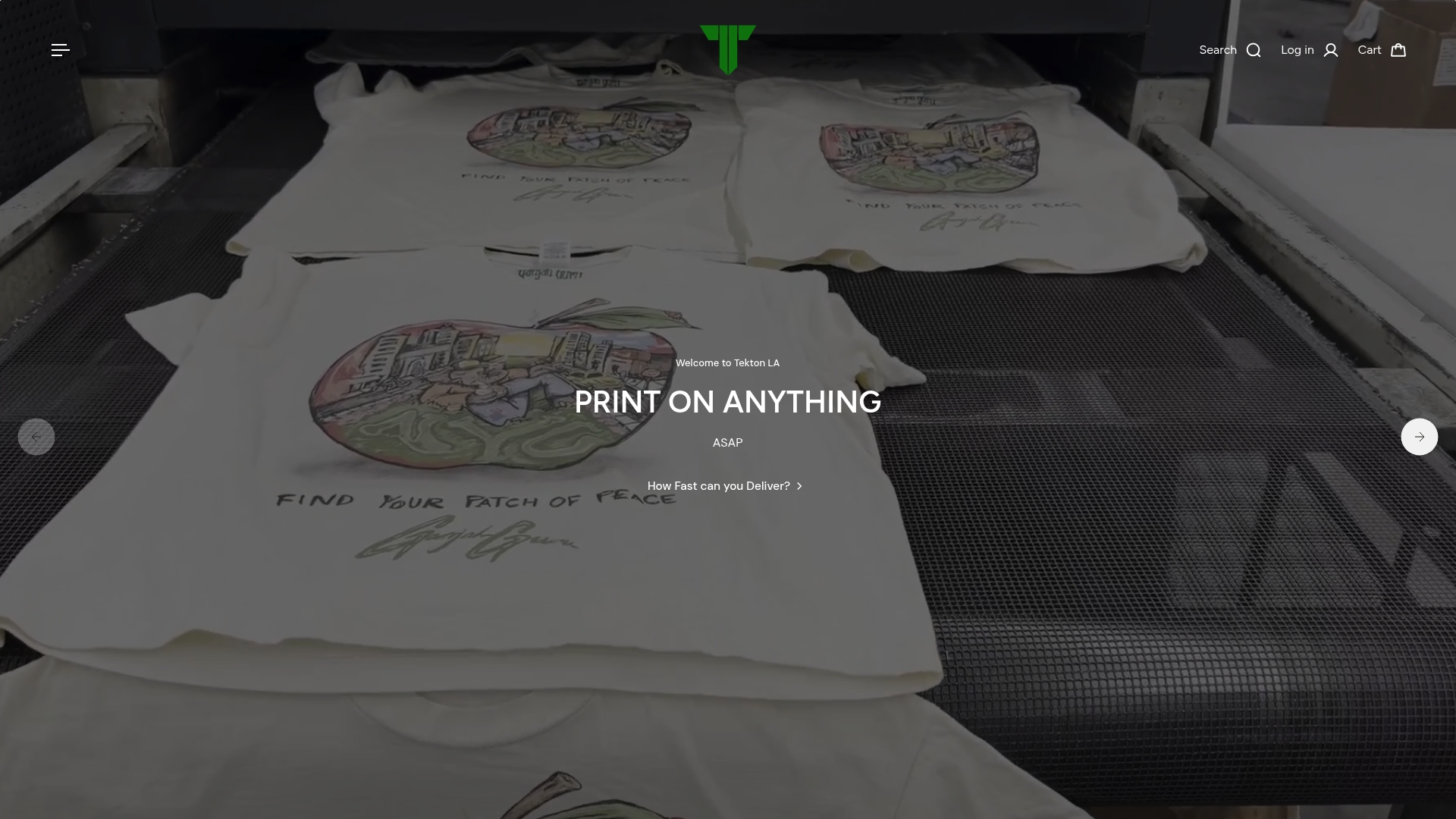
The quality of your blank apparel determines the ceiling of your print quality. Tektonla stocks premium blanks built specifically for DTG production, including the Printers Shirt, a high-fabric-quality tee engineered for ink adhesion and wash durability. For startups that want to stand out with fashion-forward options, the Garment Dye Shirt delivers a vintage aesthetic that pairs beautifully with DTG artwork. Tektonla carries no minimum order quantities on blanks, which means you can test new styles without committing to bulk inventory. Browse the full range at tektonla.com and build your sample kit before your first production run.
FAQ
What is the startup cost for a DTG printing business?
The startup cost for a DTG printing business ranges from $13,500 to $30,000, covering a DTG printer ($10,000 to $20,000), heat press, pretreatment machine, and initial blank inventory. Monthly consumables add $200 to $500 in ongoing overhead.
What is the best apparel for DTG printing?
100% ring-spun cotton garments produce the sharpest DTG results because the fabric accepts water-based inks most evenly. High-cotton blends (at least 80% cotton) also perform well, while polyester-heavy fabrics require specialty inks and produce less vibrant color.
How do you prepare design files for DTG printing?
DTG printing requires 300 DPI PNG files at actual print size with a transparent background. File preparation errors like low resolution or incorrect color profiles are among the most common causes of reprints and wasted blanks.
How profitable is a DTG printing startup?
Successful DTG startups target 35 to 45% gross profit margins by running micro-batches of 12 to 50 units and aggregating orders onto shared production runs. Expanding into higher-ticket items like hoodies and tote bags can push per-item margins to 50 to 70%.
How do you market a DTG apparel startup with a small budget?
Start with organic content on Instagram and TikTok showing your production process, then layer in Meta ads at $10 to $20 per day targeting niche interest audiences. Micro-influencer partnerships and a Shopify store with SEO-optimized product pages complete a low-cost launch stack that scales with revenue.