


Custom printed employee apparel is defined as branded workwear produced with a company’s logo, colors, or messaging to represent the organization through its people. The benefits of custom printed employee apparel extend well beyond aesthetics. Research from White Cotton shows that upgrading from low-cost onboarding merchandise to quality branded kits pushed employee wear rates from 38% to 91%, a number that proves apparel quality directly drives adoption. For HR managers and business owners, that single metric reframes the entire conversation. Custom employee uniforms are not a cost center. They are a workforce engagement and brand visibility tool with measurable returns.
1. Benefits of custom printed employee apparel on morale
Custom printed apparel gives employees a tangible signal that the company invests in them. That signal matters more than most HR teams realize. When people wear something they are proud of, their sense of belonging increases, and belonging is one of the strongest predictors of discretionary effort at work.
Uniform programs now prioritize employee satisfaction over rigid matching designs, offering mix-and-match options that maintain brand cohesion while giving individuals more personal expression. Caleb Churchill, cited by Print & Promo Marketing, points directly to wearer comfort as the defining shift in how companies approach uniform programs today. Comfort and choice are not soft benefits. They reduce daily friction and make people more likely to wear the gear consistently.
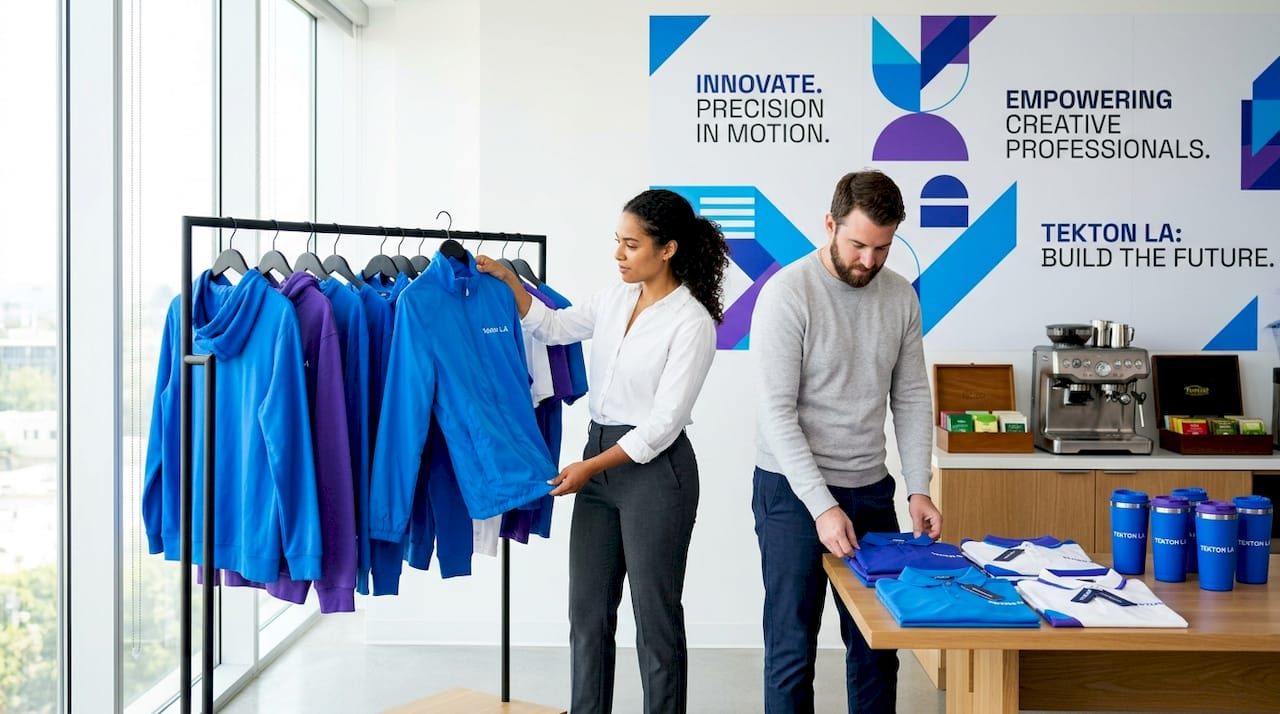
Tradestaff Workwear identifies branded workwear as a team cohesion tool that builds shared identity across departments and roles. When a warehouse worker and a customer service rep wear the same branded shirt, the visual equality reinforces that they are part of the same team. That psychological effect compounds over time into stronger collaboration and lower turnover signals.
Key morale drivers from personalized workwear programs include:
- Choice within guidelines: Letting employees pick from approved styles increases wear frequency and satisfaction without sacrificing brand consistency.
- Fit and comfort: Apparel that fits well gets worn. Apparel that does not gets left in a drawer.
- Pride of association: A well-designed logo on quality fabric communicates that the company takes its brand seriously, and employees internalize that standard.
Pro Tip: Run a brief internal survey before ordering. Ask employees about preferred fit, fabric weight, and sleeve length. Three questions can prevent an entire order from sitting unused.
2. How branded apparel builds corporate visibility
Every employee who wears your logo outside the office is a mobile brand impression. That is not a metaphor. It is a measurable marketing channel that most companies undercount when calculating their apparel program’s value.
The Financial Brand reports that brand apparel strengthens employee bonds while creating walking billboard visibility in local communities. For retail financial institutions and community-facing businesses, this effect is especially strong because employees interact with neighbors, not strangers. Trust transfers from the person to the brand they represent.
Consistent branded apparel also removes ambiguity for customers. When every team member wears the same custom logo clothing, customers know exactly who to approach. That clarity reduces friction in service environments and reinforces a professional image that competitors without uniform programs simply cannot replicate. For more on deploying apparel as a brand channel, Tektonla’s guide on custom apparel at events covers the outdoor and experiential side of this strategy in detail.
The visibility advantages of advantages of branded apparel stack quickly:
- Consistent logo placement across all staff creates a unified visual identity that customers recognize and remember.
- Employees wearing branded gear on commutes, at lunch, and at community events generate impressions at zero additional cost.
- Social media posts featuring employees in branded apparel extend reach organically, particularly when the design is retail-quality rather than generic.
3. Quality and design choices that drive adoption
The single biggest mistake companies make with custom employee uniforms is prioritizing unit cost over garment quality. The White Cotton case study from a Dubai fintech company is the clearest evidence available. Replacing cheap merchandise with European-made onboarding kits pushed the wear lifespan from 8 weeks to over 12 months and eliminated replacement orders entirely. The upfront cost was higher. The total program cost was lower.
Print method and fabric selection are equally critical. Global Asia Printing’s guidance on aligning decoration methods with workflow makes the point clearly: a screen-printed cotton tee works for a retail floor but fails in a kitchen or outdoor environment where moisture and heat degrade the print. Direct-to-garment printing suits complex, full-color designs on soft fabrics. Embroidery adds durability and a premium feel for client-facing roles. Matching the method to the context is not optional. It determines whether the apparel lasts.
| Print method | Best use case | Durability |
|---|---|---|
| Screen printing | High-volume, simple logos on cotton | High with proper care |
| Direct-to-garment (DTG) | Full-color, detailed designs on soft fabrics | Moderate to high |
| Embroidery | Client-facing roles, polos, caps | Very high |
| Sublimation (DTF) | Polyester, activewear, all-over prints | High on synthetic fabrics |
Design placement also affects adoption. New print placements on sleeves and back shoulders add retail-style appeal that employees actually want to wear off the clock. Left-chest embroidery is professional but predictable. A well-placed sleeve graphic or a back-shoulder logo can turn a uniform into something that feels current.
Pro Tip: Check seasonal fabric options before placing a bulk order. A heavyweight fleece that works in January becomes unwearable in July. Tektonla’s garment dye options include lighter-weight styles suited for year-round programs.
4. ROI and cost considerations for apparel programs
Pitching a custom apparel program to leadership requires a different financial frame than most HR managers use. Purchase price per unit is the wrong metric. Wear frequency and cost per month of use tell the real story.
The White Cotton case study demonstrates this precisely. Tracking wear rates and replacement frequency revealed that cheap kits with an 8-week lifespan cost more annually than premium kits lasting 12-plus months. When you divide the cost of a $40 shirt worn for 12 months by the cost of a $12 shirt replaced four times in the same period, the math favors quality every time. HR teams that measure wear rates build a defensible business case for premium investment.
Beyond direct cost savings, the ROI of personalized workwear benefits includes factors that are harder to quantify but still real:
- Reduced onboarding friction: New hires who receive quality branded gear on day one report higher initial engagement scores in post-onboarding surveys.
- Organic social media exposure: Employees who are proud of their apparel post it. Each post reaches their network at no media cost to the company.
- Customer trust signals: Uniformed staff in retail and service environments consistently score higher on customer trust metrics than non-uniformed counterparts.
For a detailed look at how to price and structure apparel programs for different workforce sizes, Tektonla’s apparel pricing guide breaks down cost structures that apply directly to internal programs.
5. Avoiding the forced-fit trap
Apparel programs that feel forced reduce wear and eliminate the brand visibility benefits the program was designed to create. This is the most underreported failure mode in corporate apparel. Companies spend budget on gear that employees tolerate rather than wear, and the walking billboard effect never materializes.
Cultural alignment is the fix. When apparel reflects the actual aesthetic of the workplace, employees adopt it naturally. A tech startup with a casual culture needs different branded gear than a financial services firm. The logo is the same. The garment, fit, and finish should not be. Tektonla’s corporate apparel options guide covers how to match apparel style to company culture across different industries.
Fabric choice, decoration, and fit must be coordinated for the specific wearing environment. A heavy embroidered logo on a thin summer shirt creates discomfort and print failure. Getting these decisions right before production saves money and produces apparel that employees actually reach for.
Key takeaways
Custom printed employee apparel delivers measurable returns on morale, brand visibility, and program cost when quality, fit, and cultural alignment are prioritized over unit price.
| Point | Details |
|---|---|
| Wear rate over unit cost | Premium apparel worn daily outperforms cheap gear replaced quarterly on total program cost. |
| Employee choice drives adoption | Mix-and-match options within brand guidelines increase wear frequency and satisfaction. |
| Print method must match context | DTG, embroidery, and screen printing each suit different roles and environments. |
| Branded apparel is a marketing channel | Employees wearing logos in the community generate brand impressions at zero incremental cost. |
| Forced programs fail | Apparel that ignores culture and comfort sits unused, defeating the entire investment. |
Why I stopped thinking of employee apparel as a uniform problem
Most HR managers frame this as a logistics question: how do we get everyone into the same shirt? That framing produces exactly the wrong outcome. You end up with a shirt everyone tolerates and nobody wears on a Saturday.
The programs I have seen work best treat apparel as a culture artifact. The gear reflects who the company actually is, not just what the brand guidelines say. When a company in Downtown LA outfits its team in garment-dyed tees with a subtle chest logo, employees wear them to the farmers market. That is free advertising, but more importantly, it signals that the company has taste. Taste attracts talent.
The technology side has also shifted the calculus. Direct-to-garment printing and DTG for startups means you no longer need a 500-piece minimum to get quality results. Small teams can run pilot programs, collect wear data, and iterate before committing to a full rollout. That removes the biggest risk in the old model.
My honest recommendation: start with 20 to 30 pieces in two or three styles, give employees real choice, and measure who wears what after 60 days. The data will tell you exactly what to order at scale. Skipping that step and going straight to a bulk order is how companies end up with a storage room full of branded hoodies nobody wanted.
— Christian
Get your team wearing your brand with Tektonla
If you are ready to move from generic workwear to apparel your employees actually want to wear, Tektonla makes the process straightforward. Based in Downtown Los Angeles, Tektonla offers direct-to-garment, screen printing, embroidery, and garment dye options with no minimum order requirements on blanks, which means you can pilot a program before scaling it.
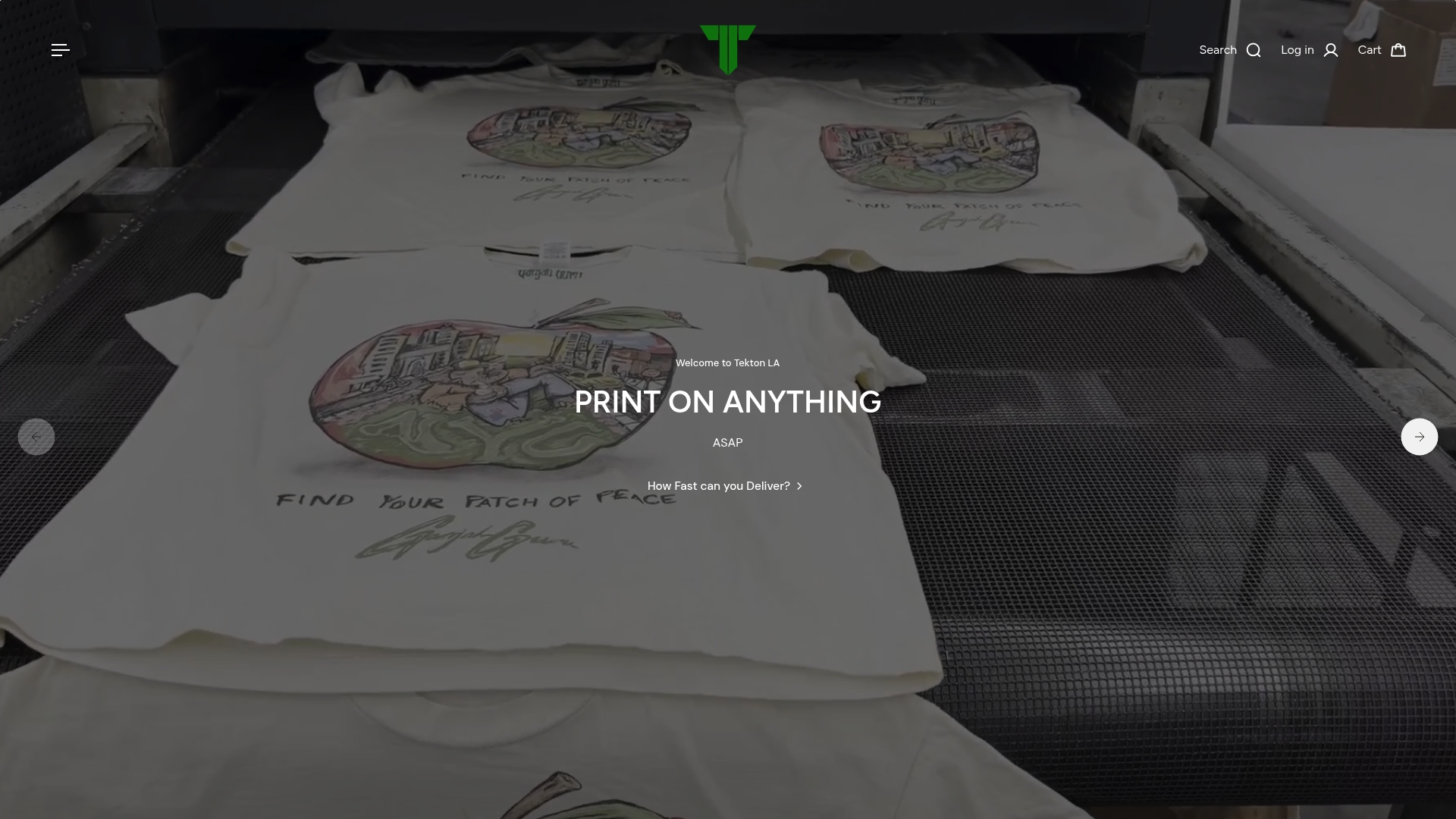
The Printers Shirt is a strong starting point for workforce programs. It is built for daily wear, holds print detail well, and works across industries from retail to tech. For teams that want a more elevated look, the Garment Dye Shirt 3.0 delivers a premium finish that employees reach for outside work hours. Tektonla also offers 2-color screen printing for high-volume orders where cost efficiency and brand consistency both matter.
FAQ
What are the main benefits of custom printed employee apparel?
Custom printed employee apparel builds team cohesion, increases brand visibility in the community, and improves employee morale by giving staff a shared identity. Research shows quality branded kits can push wear rates above 90%, turning apparel into a measurable engagement and marketing asset.
How does apparel quality affect program ROI?
Higher-quality garments last significantly longer and get worn more frequently, reducing replacement costs and increasing brand impressions per dollar spent. The White Cotton case study found that premium onboarding kits eliminated replacement orders entirely over a 12-month period.
What print method works best for employee uniforms?
The right print method depends on the role and environment. Embroidery suits client-facing positions and adds durability, screen printing works for high-volume cotton-based programs, and DTG handles complex or full-color designs on softer fabrics.
How do you get employees to actually wear branded gear?
Give employees choice within brand guidelines, prioritize fit and comfort over rigid uniformity, and select garment styles that match your company’s actual culture. Programs that feel forced produce low wear rates and eliminate the brand visibility benefits.
Can small businesses run a custom apparel program without large minimums?
Yes. Providers like Tektonla offer no minimum order quantities on blanks, which allows small teams to run pilot programs, test styles, and collect wear data before committing to a full-scale order.