


Choosing the right custom logo apparel options for corporate teams sounds simple until you’re three weeks out from a company event, dealing with vendor delays, inconsistent logo colors, and an inbox full of sizing complaints. The stakes are real. Branded apparel for teams reinforces shared organizational goals and strengthens workplace identity in ways that few other investments can match. This guide walks you through everything from garment type and print method to supplier selection and budget planning, so you can make the call with confidence.
Table of Contents
- Key takeaways
- 1. Essential selection criteria for custom logo apparel in corporate settings
- 2. Popular custom logo apparel options: polos, t-shirts, hoodies, and outerwear
- 3. Comparison of printing and embroidery methods for logo application
- 4. Head-to-head comparison of custom apparel suppliers and their services
- 5. How to decide which custom logo apparel is right for your corporate team
- My honest take on corporate apparel selection
- How Tektonla can outfit your corporate team
- FAQ
Key takeaways
| Point | Details |
|---|---|
| Match apparel to the role | Customer-facing staff need polished options like embroidered polos; event crews can work well with printed tees. |
| Print method affects total cost | Embroidery costs more per unit but lasts longer; screen printing saves money at high volumes for simple designs. |
| Plan early to avoid rework | Poor planning leads to sizing errors and mismatched colors that hurt both budget and brand image. |
| One supplier reduces headaches | Consolidating orders under one vendor improves logo consistency and cuts administrative time significantly. |
| Total cost beats unit price | Factor in replacement cycles, laundering, and employee satisfaction before committing to any one option. |
1. Essential selection criteria for custom logo apparel in corporate settings
Before you pick a garment or print method, you need a framework. The best custom logo apparel options for corporate teams share a few non-negotiable qualities: they fit the team’s daily environment, survive repeat washing, and represent the brand accurately every time they’re worn.
Here is what to evaluate before placing any order:
- Garment type and fit. A warehouse crew needs something durable and breathable. A sales team meeting clients needs structure and a polished silhouette. Never apply a one-size approach across departments.
- Print or decoration method. Embroidery favors polos and outerwear; screen printing works well on t-shirts for events. The wrong pairing affects both appearance and durability.
- Durability vs. comfort. Daily wear demands fabrics that hold up wash after wash without fading or shrinking. Event-only pieces can tolerate lighter materials and simpler decoration.
- Budget: unit cost vs. lifecycle cost. Pricing models should consider replacement cycles, laundering, and the effect of employee satisfaction on how long apparel stays in rotation.
- Brand color accuracy. Pantone matching matters. A logo that ships slightly off-color from what’s on your brand guide creates inconsistency across every customer touchpoint.
- Logistics and sizing. Bulk orders require size breakdowns across your full team. Underestimating the number of XL and XXL units is one of the most common and costly mistakes in corporate clothing solutions.
Pro Tip: Request a physical sample before approving a bulk run. Colors and textures look different on screen than on fabric, and catching a problem at the sample stage costs a fraction of what it costs after 200 units are printed.
2. Popular custom logo apparel options: polos, t-shirts, hoodies, and outerwear
The four most common apparel categories for corporate teams each serve a distinct purpose. Knowing where each one excels makes the selection process much faster.
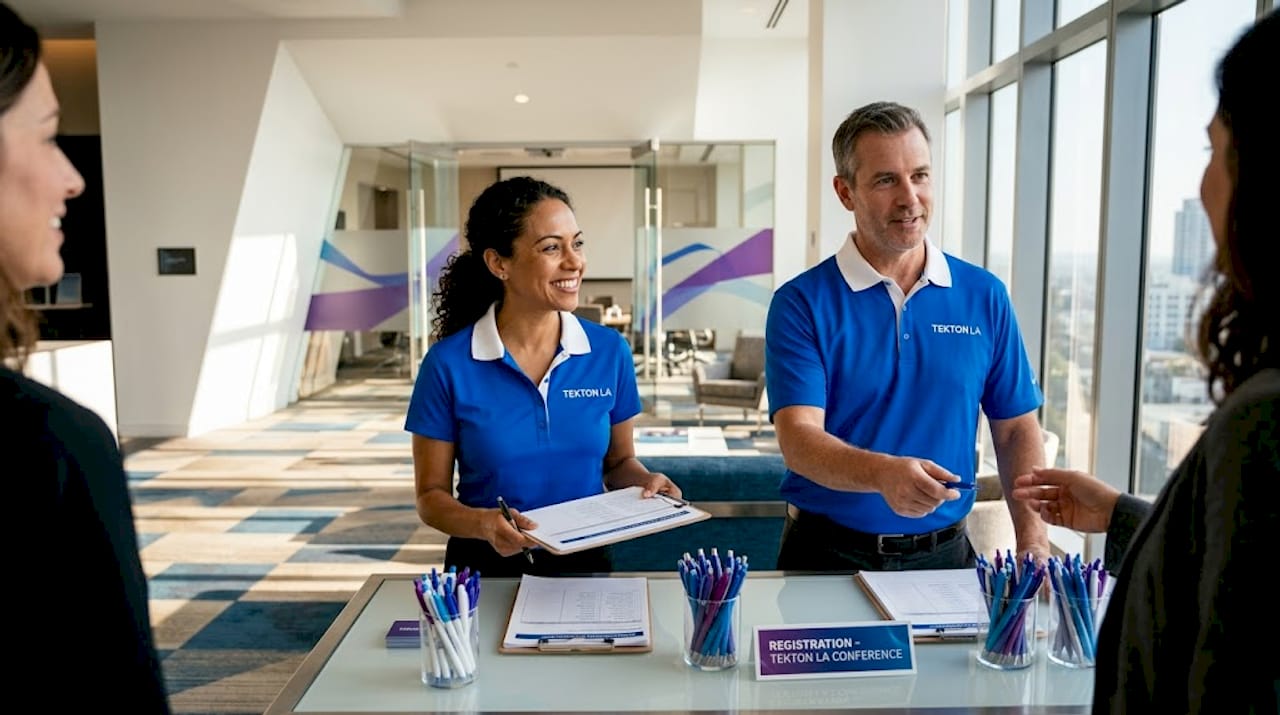
Polos are the default choice for customer-facing and event staff. Polos with embroidery deliver a professional appearance without crossing into formal territory, which makes them ideal for trade shows, retail environments, and hospitality teams. They cost more per unit than tees, but the structured look justifies the price for roles where first impressions matter.
T-shirts are the workhorses of promotional clothing options. They cost less per unit, accept screen printing beautifully, and scale easily to large groups. For internal team events, volunteer days, or product launches, a well-designed t-shirt gets the job done at a price point that keeps finance happy.
Hoodies and sweatshirts sit in a comfortable middle ground. They photograph well, employees actually want to wear them outside of work, which extends the brand’s reach, and they signal that the company invests in its people. A premium crewneck sweatshirt with a clean chest logo works as both a team gift and a uniform piece for casual Fridays.
Outerwear (softshell jackets, fleece layers, branded vests) carries the highest per-unit cost but also the longest visibility window. Employees wear jackets for years. That makes outerwear the highest return-on-investment category in employee apparel customization when quality is prioritized.
3. Comparison of printing and embroidery methods for logo application
The decoration method you choose affects how your logo looks on day one and how it looks after 50 washes. Here is a direct comparison of the four main techniques used in corporate apparel:
| Method | Best for | Volume | Durability | Cost range |
|---|---|---|---|---|
| Embroidery | Polos, jackets, structured caps | Small to mid | Very high | Higher per unit |
| Screen printing | T-shirts, hoodies, tote bags | Large runs | High | Lower at volume |
| Direct-to-garment (DTG) | Complex designs, small batches | Small | Moderate | Moderate per unit |
| Heat transfer | Personalization, names, numbers | Very small | Lower | Low setup cost |
Screen printing excels in volume with bold, simple graphics but requires setup time and minimum quantities to justify the cost. Embroidery produces a textured, premium finish that reads as high-quality to anyone who sees or touches it. The trade-off is that overly complex logo details often need simplification to maintain visual clarity through stitching, so work with your designer before sending files to production.
Heat transfer and DTG printing offer flexibility for smaller runs or pieces with individual names and numbers, but they may not hold up as well through repeated industrial washing. They are excellent for one-time events or personalized recognition gifts rather than daily uniform programs.
Pro Tip: Different fabrics affect how ink or thread bonds to the garment. A 100% cotton tee and a poly-blend perform very differently with the same print method. Always confirm fabric composition with your supplier before finalizing the decoration technique.
For a deeper look at which technique fits which scenario, the garment printing techniques guide from Tektonla breaks this down clearly.
4. Head-to-head comparison of custom apparel suppliers and their services
Not all suppliers offer the same capabilities, and the gap in service quality becomes obvious the moment you need to handle a rush order or coordinate apparel across multiple departments. Here is what to compare when evaluating vendors for your logoed apparel for businesses:
| Feature | Full-service supplier | Print-only vendor |
|---|---|---|
| Logo consistency across items | High (centralized files) | Variable |
| Rush order capability | Usually yes | Depends |
| Sample approval process | Standard | Often skipped |
| Packaging and distribution | Available | Rarely offered |
| Multi-item campaign support | Yes | Limited |
Consolidating apparel, promotional, and event merchandise under one supplier reduces administrative burden and keeps logo reproduction consistent across every item. When you split orders across three vendors, color drift becomes almost inevitable.
Some suppliers also offer rental programs for uniform management. Renting uniforms can reduce upfront costs for industrial or high-turnover roles by including laundering, repairs, and replacements in one monthly fee. This model is not right for every team, but for operations that cycle through staff frequently, it is worth evaluating against a straight purchase program.
Turnaround time is another factor most buyers underestimate. A supplier who can handle rush orders without sacrificing quality is worth a small premium, especially when event dates are fixed and non-negotiable.
5. How to decide which custom logo apparel is right for your corporate team
With options mapped out, the decision framework comes down to matching apparel to context. Here is how to work through it:
- Define the primary use case first. Daily staff wear, a single event, or a client-facing uniform program each have different requirements. Build your spec sheet around the use case, not the other way around.
- Segment by team role. Operations and warehouse staff need durability and practicality. Sales and reception teams need polish. Treat these as separate procurement decisions even if they share a logo.
- Balance quality with budget realistically. Premium outerwear for 10 regional managers makes sense. Spending the same per-unit budget on 300 event volunteers does not. Set a tiered budget by garment category.
- Order samples and approve proofs before committing. This single step eliminates most of the common failures in custom team uniforms. Review the physical garment, not just a digital mockup. Learning how to mock up designs accurately before production saves time and money.
- Plan your timeline backward from the need date. Production, shipping, and distribution all take time. For embroidery and screen printing, budget at least two to three weeks. Rush orders cost more and carry more risk.
- Integrate apparel into your broader brand strategy. The best logo apparel for companies is not an afterthought. It should align with your brand guide, reinforce internal culture, and show up consistently at every public-facing touchpoint.
Visual unity through branded apparel remains one of the strongest tools to strengthen team connection and accountability. When employees wear the same logo, they show up differently, not just to customers, but to each other.
My honest take on corporate apparel selection
I’ve seen corporate apparel programs succeed and fail, and the difference almost never comes down to budget. It comes down to clarity of purpose before anyone places an order.
The teams that get this right ask one question first: “What do we actually need this apparel to do?” That question changes everything. A company that needs uniforms for a customer-facing retail team has completely different requirements than one trying to build morale through branded hoodies for a remote workforce.
The most common pitfall I see is underestimating sizing diversity. Orders come in biased toward medium and large, and then you have employees who either can’t find their size or are stuck with something uncomfortable. That kills adoption fast. Apparel that sits in a drawer does nothing for your brand.
The other mistake is treating the supplier relationship as purely transactional. The vendors who will pull through for you when a shipment is delayed or a proof needs to be revised overnight are the ones you’ve built an actual working relationship with. Price matters, but a supplier who knows your brand files, your deadlines, and your team size is worth more than saving a dollar per unit.
I also think companies undervalue what good apparel does for morale. When someone receives a quality piece with their company logo and it actually fits well and looks great, that signals investment. It signals that leadership pays attention to the details. That’s not a soft benefit. It directly affects how people represent the brand in public.
— Christian
How Tektonla can outfit your corporate team
When you are ready to move from planning to production, Tektonla offers the full range of corporate clothing solutions from a single location in Downtown Los Angeles.
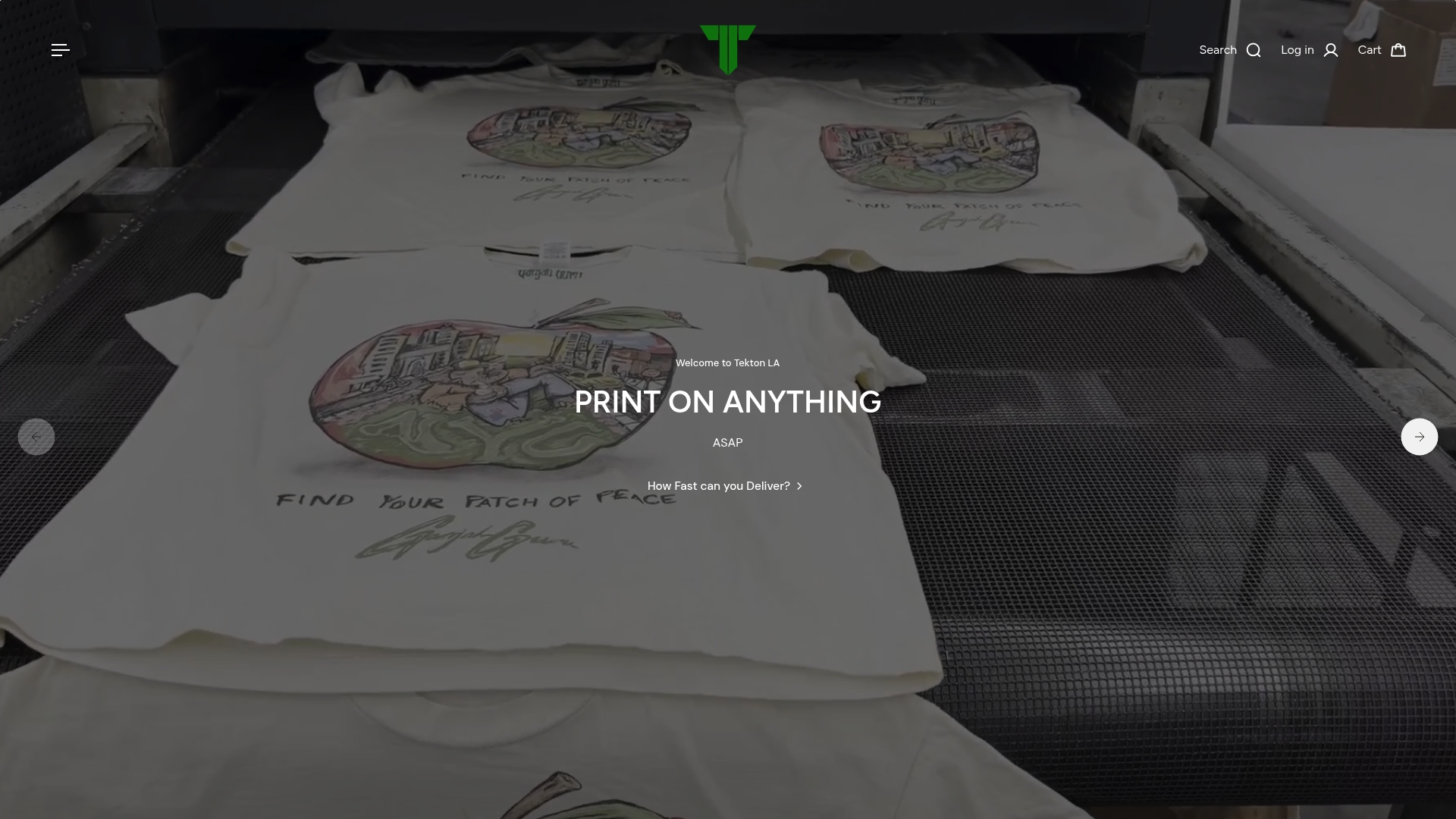
Start with their Printers Shirt, a premium, customizable base garment built for consistent branding across large team orders. For teams that want something with more texture and character, the Garment Dye Shirt 3.0 delivers unique colorways and a comfortable fit that employees will actually wear. Tektonla supports embroidery, screen printing, DTG, and sublimation under one roof, which means your logo stays consistent across every item in your order. They also offer no minimum order quantities on blanks and fast-turnaround production for teams working against tight event deadlines. If you need branded apparel that performs at events, their guide on brand impact at events is a strong starting point for planning your next campaign.
FAQ
What is the best apparel type for customer-facing corporate teams?
Embroidered polos are the most widely used option for customer-facing staff because they deliver a professional appearance without requiring formal attire. They hold up well through repeated washing and carry a premium look that reflects well on the brand.
How many colors can I use in a screen-printed logo?
Screen printing is most cost-effective with one to three colors. Each additional color adds setup cost, so simple and bold logo designs perform best. For complex, full-color artwork, direct-to-garment printing is a better fit.
How early should I place a corporate apparel order?
For embroidery or screen printing orders, plan for at least two to three weeks of production time, plus shipping and internal distribution. For large orders or complex designs, four to six weeks is a safer buffer.
Is it better to rent or buy corporate uniforms?
Buying works best for stable teams where branding consistency is critical. Rental programs suit high-turnover or industrial environments where laundering and replacement services justify the ongoing cost over a bulk purchase.
Can I order different apparel types with the same logo from one supplier?
Yes, and doing so is strongly recommended. Single-vendor procurement keeps logo files centralized, reduces color drift across garment types, and simplifies deadline management across your entire order.